
With the California primary fast approaching, Berkeley-based KPFA Radio invited Hillary Clinton supporter Tom Hayden and Bernie Sanders supporter Norman Solomon to debate. Hayden declined to participate in a direct debate but agreed to back-to-back live segments, which aired on May 31. The opening comments from Hayden and Solomon are interspersed below.
KPFA Radio host Brian Edwards-Tiekert: Tom Hayden … is a veteran activist who spent 50 years in radical and progressive circles including 18 in the California Assembly and Senate…. About six weeks ago in an article printed in The Nation magazine, he came out as a progressive who had defected from the Bernie Sanders camp and intends to cast his California primary vote for Hillary Clinton…. Well, what accounts for the conversion?
Tom Hayden: I didn’t defect, I think it was just a headline. What I said was that I was at first supportive of Bernie when he came to Los Angeles for his first rally, I was there, I was supportive. But I was in the category of people who thought that his campaign was worthy, even noble and it would push Hillary to the left. And then as his campaign expanded and became very, very historic, I had to try to take a look at the numbers….
And I’ve always been very close to my friends and allies in the black community, the Latino community and organized labor and it just seemed to me that the numbers were not gonna be there for him. It was gonna be a close race, it was gonna be a historic race. It was gonna be a race that set a foundation for the Left in the future. But given the math, I didn’t think he was gonna make it. And so I started to shift to Hillary and to discussions of the platform and discussions of what to do after this coming week.
And I still think Bernie could win California this week, who’s to say. But she’ll have the overwhelming support in terms of the popular vote, the pledged delegate vote and the unpledged delegates.
So we’re looking at a quandary here where Bernie’s the winner on a moral and even a political basis. He’s made history, and she’s the winner on the mathematical basis. And then you have Trump. So it could be the tightest, most hazardous race in political history and we can’t afford to allow Trump to slither through. So that’s where I’m at.
Q: Well, I understand the mathematical argument and I think you’d find few rational people who disagree with you that the numbers are extremely daunting for the Bernie Sanders campaign.
Hayden: Right.
Q: But it doesn’t speak to the question of why you would choose to cast your ballot for the Clinton campaign if you think your politics are more aligned with the Sanders campaign.
Hayden: It’s because all my life I’ve been involved with racial politics. I was a Freedom Rider in the South. I was the author of books on gang violence, I was a community organizer in Newark, New Jersey, and when I spoke to the Black Caucus, congressional and state, I realized they were going all the way for Hillary and so was the Latino caucus in Sacramento and I asked myself this question: “Do I really want to cast my vote against these people who have been central to my life and to the soul of the country?” And so I went with them. Period.
Q: Our conventional idea of politics is you have a set of principles; you vote for the candidate who best represents those principles. It seems like you’re doing a kind of politics by proxy.
Hayden: No, my politics are based on long relationships.
Q: OK, but fair enough, let’s go back eight years, the 2008 ballot. African Americans broke 70 percent in favor of a ban on same-sex marriage in California. That didn’t make you cast a ballot for Proposition 8 did it?
Hayden: No.
Q: So what’s different this time?
Hayden: Well, I mean what’s at stake is Trump. Trump is fascism, that’s all, so we have to find a way to work it out between Hillary and Bernie.
** ** ** ** **
Brian Edwards-Tiekert: The last time we had Norman Solomon on, his organization had just issued a press release calling for the Bernie Sanders campaign to take clearer positions on questions of foreign policy, and voiced some criticism about remarks Bernie Sanders had said about the potential role of Saudi Arabia in solving regional conflicts. Now, Norman Solomon is set up to be a delegate for Bernie Sanders at the Democratic National Convention…. So, has your thinking about the Sanders campaign changed since we spoke last fall?
Norman Solomon: Well, I think that the critical support that you mentioned was always based on an understanding — we understood that Bernie Sanders gave us an opportunity to help build a movement. And so in terms of critical support, that’s been the case then, it’s the case now. I think that a look at what Bernie has been saying in the last many months has shown a positive trend in terms of foreign policy.
He stopped saying what RootsAction.org objected to last summer and fall, which was that Saudi Arabia should quote “get its hands dirty” unquote in the Middle East — we know that there’s enough blood on Saudi Arabia’s hands already in terms of intervention in Yemen, for instance — so this is a work in progress in terms of a campaign. And having been one of the approximately 30,000 people in downtown Oakland yesterday at the rally hearing Bernie Sanders, I have to say that this is a very important campaign and progressive movements are strengthening the campaign and being strengthened by it.
Q: There’s an argument that comes from the hard left that this is a bit of a distraction. At this point the Sanders campaign is basically running for a strong second place, for as many delegates as possible at the Democratic National Convention, and what they can achieve there is window-dressing. Sure, he’s got almost half the platform committee, but who cares what the party platform is. What do you think you can actually accomplish in Philadelphia?
Solomon: I’ve been pleasantly surprised by how much across-the-board support there is from progressives. I mean you referred to the “hard left” but I’ve really heard an enormous amount of enthusiasm from a wide range of people. From groups for instance that I’ve considered to be way too supportive and non-critical of the Obama administration such as MoveOn and Democracy for America have been very strongly behind Bernie. And on the other hand, even at the Green Party a lot of talk and actually an invitation for Bernie Sanders to run at the top of the Green Party ticket, presuming he’s not nominated by the Democrats, and that’s a surprising invitation as well.
But I think there’s a good understanding that what has happened in the building of this campaign behind a self-described democratic socialist is a sea change in the political discourse of this country. And “hard left” or not, whatever you want to call it, many many people across the broad perspective of progressives understand that a class analysis for the first time has taken center stage in a positive way in presidential politics in this country.
Q: So let’s stipulate that without something approaching an 80 percent landslide in California it is highly unlikely that Bernie Sanders will become the Democratic Party nominee. Short of becoming the party nominee, what good will come of the campaign?
Solomon: Well, I think we’ve already seen that there’s a tremendous amount of capacity to organize that people have shown. And Tom Hayden, who we just heard — who has really saddened me and many other people because he’s thrown his lot in with the war hawk and corporatist Hillary Clinton — has acknowledged himself that there’s been enormous coalescence behind Bernie Sanders’ campaign and that it’s prefigurative of what can be accomplished in the electoral and non-electoral arenas.
That is for us the challenge ahead — that we need to understand election campaigns are not movements, and that while we can enhance movements with electoral campaigns and vice versa, ultimately it’s about building grassroots capability.
And so this remains to be seen. This is not a passive operation to be engaged in elections or anything else. I was disturbed to hear Tom Hayden — who sadly declined to be in direct debate here and so we’re sequential instead of simultaneous dialogue — he sounded like a horse racer. And progressives should be change makers, not horse racers. We’ve got to organize continually behind what we believe in, not what we think is a way to go with the math that already exists in the electoral arena or anywhere else.
** ** ** ** **
Brian Edwards-Tiekert: How do you counter the argument from the Sanders camp that he polls better against Donald Trump in match-up polls than Hillary Clinton does?
Tom Hayden: My experience tells me that that’s more propaganda than fact because not a penny has ever been spent in negative advertising or campaigning against Bernie. And I think the Republicans like Rove are salivating at the chance to go after Bernie on the usual grounds and I’m skeptical that he would hold up.
Q: What do you think those attacks would look like?
Hayden: It’d be sophisticated and clever and then a fringe of the Republicans would be so off the wall that they would turn people off. But — it’s not gonna happen first of all. She’s gonna get the nomination anyway, and then the real showdown starts and we’ll see what goes from there, but suffice to say I don’t trust the argument that because he does better than Trump in match-ups he would be the nominee and prevail, because I’ve just never seen any negative advertising used against him. Hillary wants his base so she’s not attacking him. And Trump occasionally makes jokes but the Republicans want him.
So, anyway, it’s virtually over. It’s a very, very narrow race and we’ll have to see what we can do to build a united front against Trump.
Q: What about the question of what’s beyond the election? The Sanders campaign has mobilized millions of people; it’s put together the strongest fundraising apparatus that’s ever been behind a progressive insurgency in a Democratic primary. What about the idea of supporting the campaign for the sake of developing some kind of movement infrastructure that persists past Election Day?
Hayden: I strongly support the development of a movement infrastructure; I don’t know if the Left is capable of uniting around such a thing. But there certainly will be long-term impact, I think because the early signs are already there of all kinds of people running their own campaigns, I mean somebody’s even running a campaign against the chair of the Democratic Party. There’s dozens of these campaigns, so —
Q: Timothy Canova, we’ve had him on as guest several times as an economic analyst.
Hayden: Yeah, it will have a long-term effect that way, whether there are divisions or splinterings, I’m not able to tell you, I just don’t know for sure, but it would take Bernie’s leadership and some serious central office for it to be more than a phenomenon but for it to be an ongoing Left organization into the future around issues and around candidates.
Q: On the issues: Are you concerned that the Clinton campaign in contrasting itself to the Bernie Sanders campaign has basically couched itself as the campaign of diminished expectations? Everything he’s promising but less so and more incrementally.
Hayden: Well, you can view it either way, as she’s been moved somewhat to the left by Bernie and the center in terms of American politics has moved in a very progressive direction over the past years since 2008 in particular, so if she’s still a centrist, which she is, the center has moved left and she’ll have to deal with that, and I think we all have to be grouped around specific movements and causes and have political clout. The Black Lives Matter movement, Presente!, the women’s movement, LGBT movement.
Above all I think we’re gonna have to reconfigure or reconstitute an anti-war movement which doesn’t really exist at the present. And she’s been much more hawkish than Bernie, although you never know about these things. But definitely that’s the top of my agenda. And I’m working with Barbara Lee’s office on some kind of plan because I think it’ll need people in the streets, I think it will need the revival of a congressional peace caucus led by somebody like Barbara Lee as well, and unity around foreign policy that’s very hard to come by on the Left, but I think it has to be done because that’s the only pressure that will contain Hillary from going down the path of the past practices like intervention in Libya and so on.
Q: Right, I mean I think probably for people who are familiar with your work, this would probably be the biggest area of surprise hearing that you’re intending to cast your vote for Hillary Clinton. By many measures she is the most hawkish major party candidate left in the race, even when compared to Donald Trump. She supported the invasion of Afghanistan, she supported the invasion of Iraq, she beat the drums of war around Iran and Libya. Even Donald Trump at this point is coming across as more of an isolationist than she is. How do you square supporting her with your principles?
Hayden: Well, Trump is for the revival of torture to the extreme, let’s not forget what Trump stands for. And he’s a belligerent, irrational candidate, potentially with a nuclear capability. I think what has happened is that she’s won the nomination, virtually, and that’ll happen soon enough, and plans have to be laid now to construct a new resistance to the wars, and it has to include congressional resistance, and that alone will move her, that alone — I guess failure in wars might move her too, but that’s too frightening to imagine. But that’s what we have to do, and it’s not happening.
Q: But isn’t there a case that if you want the leverage to move her, then give her as strong a run for her money in the primary as possible, throw all your weight behind the Sanders campaign at this moment?
Hayden: You’re talking about something that’s five or six days away, so let’s see, but certainly she’s gotten all the push that she can get from Bernie. All the numbers are there. Bernie’s platform is pretty good, somewhere between pretty good and very good on regime change and war, so I think we’ll have to force her to adjust or contain her impulses that you describe correctly, starting this week, next week in the platform discussion and in the general campaign. I’m not sure why she would become more hawkish in a general election against Trump, but she might resort to that path, you’re right, it’s a great danger because we’ve lost the leverage of the peace movement.
** ** ** ** **
Brian Edwards-Tiekert: I guess the question is, you’re basically inside the campaign now, you’re signed up as a Sanders delegate, so what preparations are underway to have an organization or an infrastructure that will persist past the last primary?
Norman Solomon: At RootsAction.org as well as among a number of other groups, with delegates who are headed to the convention floor in Philadelphia, we’re already engaged in a lot of dialogue and organizing. First we need to have ways to reach all of the Bernie delegates, and some of them have yet to be selected. There’s a statewide meeting of all Democratic National Convention delegates set for Long Beach in a few weeks, and that — as we found in Nevada recently — as a statewide venue can be very important, because there are some delegates yet to be chosen in this state, what they call “at large.”
But most crucially, I think, first are the next seven days. A lot of what is going to be possible at the convention will hinge on what kind of momentum the Bernie campaign has going into it. And whether Bernie can carry California on June 7th is tremendously important.
And that’s where, again, I’m going to differ with Tom in that while he claimed to be descriptive of the math and the politics in this campaign, it’s actually a prescriptive position that he’s taking. He’s gotten behind Hillary Clinton even before the New York primary, and what we’ve got to do I think is carry California with as big as possible a margin for Bernie Sanders, so that the extremely hawkish politics of Hillary Clinton and her demonstrated affinity for Wall Street, for instance, her indifference to issues of poverty and universal health care in reality in terms of policies, and so many other things — that we can challenge that, not only in terms of platform, but, lest we forget, there’s this position called vice president of the United States, and it’s an open question about whether if Hillary Clinton is the nominee she’s going to select somebody from the traditional corporate wing of the Democratic Party hierarchy or whether we can push her, for whatever reasons she might come to fathom, to have a more progressive person on the ticket.
Q: So the vice presidential pick, the party platform which gets determined at the Democratic National Convention — these are two things the Sanders campaign can influence without actually winning the nomination. What else?
Solomon: A third thing is that what we do in the next few weeks, and what we can do during and after the convention this year, will be prefigurative. And we have a horrible historical record in the last eight years of what happens when progressive groups and individuals defer to the Democrat in the White House. We’ve had as many bombs dropped under the Obama administration on the Middle East and Afghanistan as by the George W. Bush administration. We have a deep-seated pattern where many people go back to sleep and trust the Democrat who puts his, in the past, his feet up on the desk in the Oval Office. We’ve got to change that pattern.
And it’s very dangerous, at any stage, whether it’s now or in Philadelphia or anywhere else, if people defer to Hillary Clinton and the forces she represents. We’ve got to be willing to speak clearly and honestly about the warfare state, about the corporatist state, and on and on, all the time. And again, that’s something we can accomplish ongoing.
Q: That said, if Hillary Clinton takes the nomination, and we have you back in these studios two months from now, won’t you be making the case for voting for her versus Donald Trump?
Solomon: In California, I won’t care. Because in California, Donald Trump is not a threat to get any of the electoral votes. In perhaps 15 states in this country, where they are genuinely swing states, I think it would be an abomination to assist Trump to become president of the United States. I agree with the position that Noam Chomsky articulated a couple of weeks ago on “Democracy Now,” which is if you live in a swing state and Hillary Clinton is the nominee up against Donald Trump, you do what you need to do to prevent, help prevent Trump from becoming president, and as Chomsky said, hold your nose and vote for Hillary Clinton in that situation. But in California, it’s not an issue.
Q: You enumerated as one of the areas where the Sanders campaign could make inroads even without winning the nomination as influencing the Democratic Party platform, and I guess the question is: Why does it matter? It’s not like a contract, it’s not like it binds Hillary Clinton or any congressional candidates to abide by its policy positions. There’s been lots of feel-good measures in there before that never came close to making it into policy, even when Democrats controlled every branch of government.
Solomon: Yes, well, what does it matter when we message around the country? A platform is not binding, but when you consolidate a political position and you articulate it and you propagate it around the country, and you say this is a majority viewpoint, that helps — and so what happens with this platform will be important in sending a message as where the momentum is, where the center of gravity has become.
And the fact that we’ve got people like Bill McKibben, Keith Ellison, Cornel West, on that platform committee, because of the strength of the campaign behind Bernie Sanders, I think it’s an epic change. Also, Jim Zogby as well. We’ve already seen that, where the New York Times on the front page is freaking out because so many people on the platform committee of the Democratic Party are advocates for Palestinian rights. Imagine that — so many people who are behind human rights who’ll be on the official national party platform committee. So it’s a step, it’s not a cure-all or the peace equivalent of a silver bullet, but it’s an important development.
Q: You talked about the importance of pushing Hillary Clinton to the left. I had a lengthy interview with Doug Henwood, where he pointed out she’s been happy to move in whatever direction she’s had to at various points in her career. The one thing you can’t count on is her staying with that position.
Solomon: Yeah, it goes to that point that what we do now, what we do at the convention and beyond, is prefigurative. And we need a different relationship with people in office. I mean, we started out by talking about RootsAction’s critical support for Bernie Sanders last summer, because he was talking about Martin Luther King Jr. but never mentioning the need to challenge what King called “the madness of militarism.” And so it goes to: we need to get rid of this idea that because you support a candidate, or were responsible for helping a candidate come into office, then you’ve got to lie about that person and lie about the positions or distort or soft-peddle or euphemize what they’re doing. So I think that is a challenge that we have going forward.
KPFA Radio has posted audio of the full interviews with Tom Hayden and Norman Solomon.
Tom Hayden is a veteran activist who has spent five decades in radical and progressive circles, including 18 years in the California Assembly and Senate. His most recent book is Listen Yankee! Why Cuba Matters.
Norman Solomon, a long-time progressive activist and media critic, is a co-founder of RootsAction.org. His books include War Made Easy: How Presidents and Pundits Keep Spinning Us to Death.
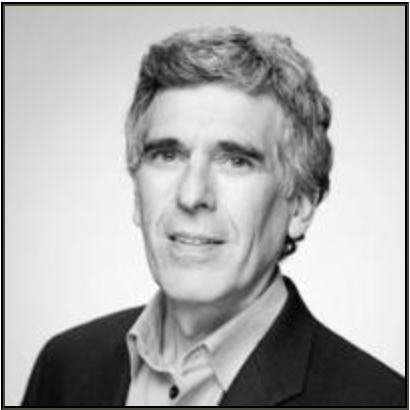
Norman Solomon is the national director of RootsAction.org and executive director of the Institute for Public Accuracy. The paperback edition of his latest book, War Made Invisible: How America Hides the Human Toll of Its Military Machine, includes an afterword about the Gaza war.
ZNetwork is funded solely through the generosity of its readers.
Donate


4 Comments
I just have to say that Tom Hayden comes across here as a completely ignorant, and quite deliberate, imbecile. He apologizes for, excuses, dismisses, and ignores HRC’s long track record as a neoliberal, militaristic, Zionist, corporate-owned war monger and war criminal. Hillary has had a direct role in subterfuging a single-payer health care program, and has consistently aligned herself in favor of socially and economically disastrous “trade” agreements (and who wants to bet that she won’t turn her coat again on the TPP? After all, she has a great resume as a political charlatan), and has been instrumental in repeated violations of international law in denying Haitians free elections, in orchestrating coups against popularly elected governments in Honduras, Venezuela, and elsewhere, for gun-running to ISIS in Syria at the expense of a relatively stable Libyan government, for supporting (along with her wet Willie) a murderous Indonesian campaign against E. Timor independence, for supporting a psychopathic, retbributive pro-Zionist Israeli government in its attempts at extirpating Palestinians, etc. etc. etc.
Vacuous, contemptuous political nitwits like Tom Hayden have no place on ZNet or any other so-called progressive website. This man, like so many fellow neoliberal apologists and facilitators, is an enemy of the people — everywhere. Neoliberal, faux-progressive sociopaths like Hayden, and their political icons like Clinton, Obama, Biden, Feinstein, all have the track records of the imperial ruling class. Trump is an unproven scrub in comparison.
“Solomon: In California, I won’t care. Because in California, Donald Trump is not a threat to get any of the electoral votes. In perhaps 15 states in this country, where they are genuinely swing states, I think it would be an abomination to assist Trump to become president of the United States. I agree with the position that Noam Chomsky articulated a couple of weeks ago on “Democracy Now,” which is if you live in a swing state and Hillary Clinton is the nominee up against Donald Trump, you do what you need to do to prevent, help prevent Trump from becoming president, and as Chomsky said, hold your nose and vote for Hillary Clinton in that situation. But in California, it’s not an issue.”
Even though this electoral tactic is attributed to Noam Chomsky (is Solomon afraid to own it?), it is flat out wrong. A vote for the buffoon fascist Trump or the bureaucratic fascist Clinton is still a vote for a fascist.
It wreaks of the “logic” of Stalin’s pact with Hitler. We all see how that worked out for millions of Eastern Europeans and Russians who paid so dearly for it.
But Hillary and even Trump no Hitler or Stalin. Well, look at the imperial monster that they want to be the face of and do some hard historical comparisons.
Correction: “But Hillary and even Trump are not Hitler or Stalin…”
I really have trouble seeing how warmongering and plutocracy are going to be helpful to the Black and Latino communities. Agreed: Trump is bad. But war and imperialism also feed fascistic politics at home, too.