
We activists much less radicals much less revolutionaries face many difficulties. I don’t mean the pain and suffering imposed by grotesque social institutions all around us. I do mean the repression we encounter, either. I mean, when we face all that, when we seek to end all that, the difficult conditions within us that obstruct our progress.
I have in mind, for example, our insufficient visionary and strategic, insights. Our relative lack of sincere mutual connections and trust. And our limited practice of needed skills as well. Plus our insufficient confidence and initiative. All these deficits are hopeful in one sense. they mean we can do better.
Consider the following quotations:
Steven Biko told us, “The most potent weapon of the oppressor is the mind of the oppressed.” Emma Goldman reported that, “The most violent element in society is ignorance.” Mark Twain had his own sarcastic version of the same message, “In the first place, God made idiots. That was for practice. Then he made school boards.”
One could multiply such comments without limit. And we would all smile and nod. Indeed, I doubt that there is a single soul who seeks to help create a better world who would deny the desirability of consciousness raising, especially at a time when schools and media so aggressively smother creative aspirations.
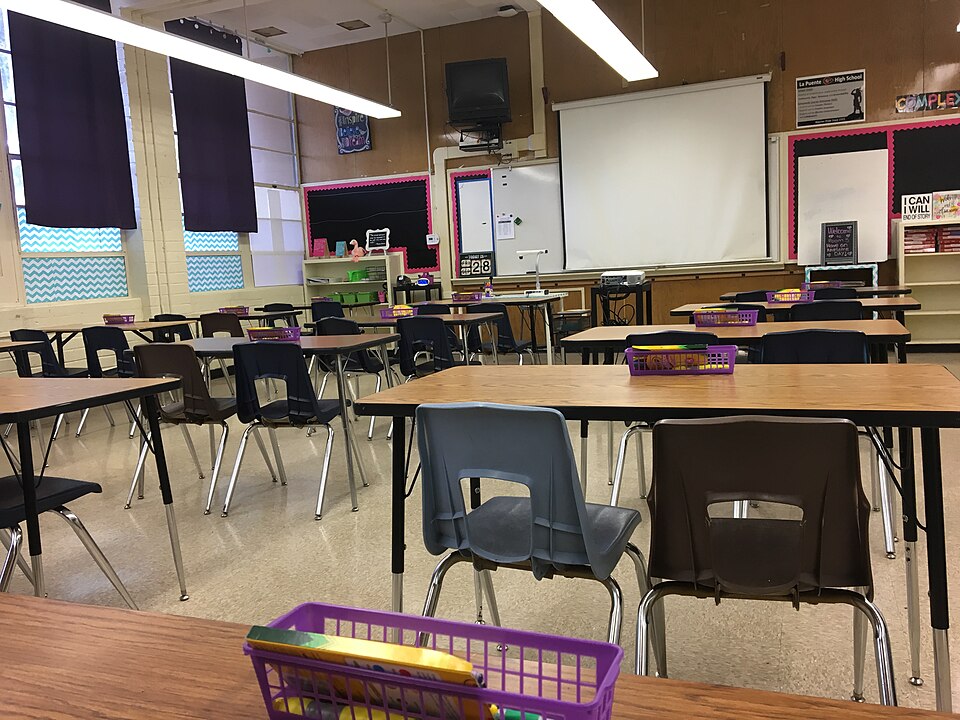
What? Schools smother thought? You bet they do. Schools exist to prepare people for their societal futures. So far, that seems not so bad. After all, we do need to be prepared, don’t we? But for what future?
Some at school become prepared to rule, to make decisions, to become the masters of the universe. Others at school become prepared to follow instructions, to take orders, to keep our heads down, to obey.
The former group are imbued with the ridiculously false notion that they are superior. The latter group are imprinted with the imposed condition of being subordinate.
The former future masters become confident. The latter future subordinates become reticent. Neither group is supposed to think too creatively, too outside the box about their own situations or about anyone else’s.
Schools prepare us to enforce continuity and obedience. Whether we are destined, read channelled, to ourselves be above or below. Whether destined to ride in the saddle or be ridden by those in the saddle we learn our place.
To be on top we learn to be callous or better oblivious toward others’ pain. To be on top we learn to be atomized and compete. We are imbued to believe that what now is, is what will always be. Except, of course, for something new, shiny, and really profitable for the few.
Education to prepare us to slot neatly into our societies is tightly constrained as to means and methods. Yet, I think we who want a better world take as a given that to reach a better world we need lots of learning.
We would agree, for example, that people who are first encountering new topics and first becoming adept at understanding them need lots of learning. That people pretty familiar with some areas, but becoming increasingly so, or people diversifying their awareness, need lots of learning. More, that the learning we all need needs to transcend merely imbibing information, merely memorizing what we are fed. We would agree that we additionally require comprehension, skill at utilizing insights, means to evaluate options, and talent at communicating desires. And we also know it wouldn’t hurt at all, indeed it would only be beneficial, if somehow those in tightly restrictive schools that teach most attendees overwhelmingly how to endure boredom and how take orders (or at elite levels how to manifest elite prerogatives and ignore the pain of others) had a path to see more clearly than the blurry images their teachers impose.
Consider the social forces that seek major changes in the U.S., my home country, and also around the world. How might these forces, both individuals and organizations, better pursue increased awareness and creativity for those we solicit and for ourselves as well?
Truth be told, can we really deny it, we pursue greater consciousness and skill not very effectively. In fact, often, we pursue these essentially not at all.
Schools and really all social institutions and habits spit out wanna-be owners and (what I call) coordinators who are largely blind to freedom and dignity for anyone but themselves and spit out exhausted stifled workers who expect little from life and are prepared to endure it.
So, what do we do about all this? One thing we might do is to seek improvements in existing mainstream education. To do that has great merit, but I suspect we can agree that the deep rooted problems of all existing mainstream education systems make it quite difficult though we can nonetheless certainly imagine teachers and parents, not to mention students, giving it a go. They could reject disempowering methods and curriculums. They could think creatively about what ought to happen in classrooms during the day, and for that matter in schools after the school day ends and at night, under the auspices of local communities.
Okay, but do we have another way to accelerate consciousness raising? We can read, write, study, give talks, and, while more difficult, we could even hold face-to-face educational gatherings. Nowadays we have proliferating online forums by three or four people, with lots of audience who are home in their rooms, seated at their desks. That is better than nothing. It can even be done creatively, though let’s be honest, it often isn’t. Those kinds of knowledge pursuit are to real, collective, engaged learning a little like a tweet or a quick video is to a serious text or movie, I suppose.
At any rate, however good or not so good what we now have may be, what about adding to the mix sustained schools of our own? What about having lasting institutions which persistently facilitate individual and collective consciousness raising? Can we have schools in that enlightened sense entirely under our own purview? Schools that actively engage their participants? Schools that powerfully empower all who attend? Can we have that within our reach? Online, but also even b rick and mortar face to face schools for consciousness raising and not system reproduction?
I bet everyone who wants a better would agree that to have that would be wonderful. But then we would likely add that it would involve huge costs that most social change projects can’t muster.
Demands by teachers and communities can move toward all that, sure, and they should. But even now, not yet able to enact what is optimal, couldn’t we exploit technological connectivity to create a relatively inexpensive online project able to at least somewhat accomplish the same aim?
One possibility would be to have online schools, sponsored by various organizations, in the same way that many universities sponsor online learning – but with a social change oriented curriculum of available courses and a priority to address social change and facilitate cross constituency connectivity.
Z Communications, some years back, embarked on just that path, calling the project, ZSchool. Students were able to sign up and take courses that faculty seekers-of-a-better-world designed and hosted. That experiment had 8 week sessions, and then a month off, and then another 8 week session, and so on. For the first session, with no financial backing, it had 14 courses in place. For the second it had over 20. And the hope was ZSchool could grow from there, pending interest from potential students – which in this case mainly meant, interest from Z’s audience.
Well, okay, it was a good experiment. It was a good try at creating a consciousness raising institution whose merit we could assess in action. But, what if, as indicated above, our real goal is much larger, how might we expand on this idea? What if, as one approach, we were to think of such an online school as just one component of something much larger?
How about if we were to imagine other components hosted by various other media outfits, political parties, unions, organizations, or movements? Suppose each participating organizational host sponsored a school populated by faculty and students from their organizational ranks and related constituencies. And then suppose also that all the hosts together collectively promoted the entire online school, and all its courses, the sum of all the hosted schools, to each of their full audiences.
For example, suppose ten or twenty or more organizations worked cooperatively to do that – some of them very large, some more modest in size. They generate a big, encompassing entity and within the whole there are lots of components each of which is organized by a particular host organization. Sort of like departments in a college.
If so, there could easily be 100 or more courses offered per session. All students would be able to sign up for any course. The entire world of progressive, radical, and revolutionary audiences would likely hear about such a composite school from their respective host organizations as well as from other organizations not yet hosting a school, but nonetheless supporting the project and directing people to it.
What’s more, students would not only take particular courses of their own choosing from one or more components of the whole, they would also be part of an entire “student body” that would span all the hosted components, and thus all those constituencies could share their experiences.
Think of the benefits this type of cross fertilizations could have not only on consciousness raising within each course but on developing trust and shared understanding across the involved constituencies inside particular countries and even from country to country.
The per student cost of courses to provide means to people for teaching and maintenance would steadily drop due to economies of scale, even while host organizations and faculty did well enough to help finance their own activism better than in the past – all this on top of spreading ideas and skills.
One could even imagine the overarching whole entity periodically hosting live face to face events in particular regions.
Before you tell me, sure, nice dream, but it is too big, it would involve too much trust, it would have too many moving parts – consider, are we seriously talking about creating new societies? If we are, how can this type project be ruled out as too big or too complex? Okay, so why not imagine it as a prelude to planning for it and implementing it?
Suppose we look down the road and see at some future point that there are 10,000 students and ex-students, or even 100,000, or more. With a wide array of host organizations involved, such numbers are not fanciful and may even wind up, in time quite conservative. After all, Mamdani’s campaign, just in NYC, had 100,000 volunteers.
And not only would there be the benefits of direct learning and sharing for all those students individually due to their participation in one or likely more than one component school, and from one to another in the classes they would all take, but the whole 100,000 or more could become socially entwined – and networked – in a manner that would transcend the far more limited dynamics of the usual forms of social networking.
Would this type of overarching school with many hosted components associated with numerous organizations be hard to build? Yes, sure it would, but not, I think, for the usual reasons. The technology is easily to hand. Years ago, Z Communications, all alone, and relatively small, created ZSchool and other projects did similar things in their own ways as well. And it would be technically easy to entwine component schools, each autonomous but all mutually aiding one another.
In fact, once the template for a component school was in place, it would be rather simple for additional media operations, political organizations, political parties, unions, etc. to add their own efforts, with each of those other organizations having to do only the most minor labors, besides promoting courses to their constituencies.
The technology is simply not a problem. Indeed, maintenance would not be a problem. And to judge by the ease with which we signed up a first group faculty years back to initiate the Z version of such a project, faculty wouldn’t be a problem, either. Costs would be manageable and in fact generate surplus to go to the hosting organizations for their own activist efforts. There are more than enough highly informed and creative people to have a surfeit of wonderful courses, though I think there would be a learning curve to having courses well matched to activist needs and well able to promote confidence and creativity among their students. So why do I and I bet most of you reading this still suspect that creating this type radical cross constituency school would be hard?
Because it would require commitment, which in turn would require what we might call anti-skepticism. It would need initiative. Potential students, potential faculty, and most especially potential host organizations, would all have to be willing to dare to make it happen, to share with others involved, the opposite of atomized relations, and to do all this in the face of uncertainty that enough others would as well. The disinclination to risk a large collective effort, or even any collective effort at all, would be a formidable obstacle.
I bet you can imagine naysayers aggressively urging that “you can’t work together. You have nothing worth teaching, sharing, working on together much less with people who have different main priorities.” The main impediment, dare I suggest it, would be a fear of working together – and even a fear of success – much less of failure. A fear that others wouldn’t deliver.
We have all seen those factors scuttle many a good idea, many a powerful potential. Yet even so, this particular possibility, while it is big time is also quite straightforward.
We do certainly need consciousness raising of multitudinous sorts. Partly for ourselves, progressives. And then of course, for everyone who has gone through mainstream education and come out stunted rather than liberated.
And we do certainly need intercommunication among diverse constituencies from many different organizations and many different places.
So we do need lasting structures for consciousness raising and assessing, and we need material benefits for diverse organizations and for social change activism writ large.
An obvious question arises: Why not make it so? We had that thought in mind, years back, when a bunch of us worked very hard on ZSchool. We hoped that when others took a look at that first component, not only would some who did so be interested in taking one course or another that was already offered, but, even more so, some organizations with substantial constituencies would be interested in hooking up with this effort so as to have their own school, gain their own income stream, benefit their own constituency, help the overall prospects of activist consciousness raising, and perhaps most exemplary, so as to work together across constituencies and agendas developing trust and shared methods and aims.
Imagine doing it all even also for existing current students addressing topics they have mainstream courses in, but doing so with uplifting curricula augmenting, challenging and correcting, the decrepit limitations and lies of their mainstream lessons.
Our more modest experiment worked but it didn’t spread. What happened instead was massive growth of mainstream social media which on top of steadily worsening mainstream education – and this was even well before Trump, much less now – facilitated some possibilities but largely demolished tight collective ties, shrunk attention spans, and attenuated time given to reading much less to seriously examining and discussing until commercialized social media merely replicated compulsive, largely conformist, atomized resignation.
So can we make better happen? Can we provide education that conveys hope and confidence? Education that empowers all involved? Education based on and that produces mutual aid and critical thinking?
Why not? There is no law of nature, not even a constraint of technical difficulty blocking our way. Indeed isn’t the biggest obstacle externally imposed doubts we could throw off?
So, will we make real extensive empowering consciousness raising possible? That is always the question for any new project proposal. Will we or won’t we?

Michael Albert`s radicalization occurred during the 1960s. His political involvements, starting then and continuing to the present, have ranged from local, regional, and national organizing projects and campaigns to co-founding South End Press, Z Magazine, the Z Media Institute, and ZNet, and to working on all these projects, writing for various publications and publishers, giving public talks, etc. His personal interests, outside the political realm, focus on general science reading (with an emphasis on physics, math, and matters of evolution and cognitive science), computers, mystery and thriller/adventure novels, sea kayaking, and the more sedentary but no less challenging game of GO. Albert is the author of 21 books which include: No Bosses: A New Economy for a Better World; Fanfare for the Future; Remembering Tomorrow; Realizing Hope; and Parecon: Life After Capitalism. Michael is currently host of the podcast Revolution Z and is a Friend of ZNetwork.
ZNetwork is funded solely through the generosity of its readers.
Donate


2 Comments
This is a great idea!
And, it could be so much more than just for activist education, it could one day organize the whole world.
I think the two biggest obstacles would actually be how to maintain trust between all involved, and whether or not the organizers of such a project would be willing to relinquish ideological control. Organizations reach size limits not, as you say because of a ‘law of nature’, but rather because the organizers can’t agree on ideology, and don’t trust each other. Movements, political parties, and religions typically splinter into smaller groups because of those two reasons.
I think there is a relatively simple solution to that problem though:
1 – All of humanity is already organized into communities in which we know and trust each other (our workplaces, schools, neighborhoods, religious and cultural communities…)
2 – The internet provides a way to organize those communities globally if we build an open-source, democratic, platform-cooperative which REQUIRES users to register a REAL community that they belong to. This would remove anonymity from the mix which is the downfall of most online platforms. Each individual’s behaviour on the platform would then be self-policing, just as we all behave within our communities, for the simple reason that they will have to explain themselves to their own registered community if they behave in an anti-social way on the platform.
We can think of it as a global digital community centre, with only one requirement for membership: registration of a real community that we belong to. As individuals choose to join the platform, which would obviously have to be worth joining, they will be simultaneously connecting the community they’ve chosen to register, to the growing democratic network of real communities. With this design, it should be able to scale up to eventually include all of humanity.
As David Graeber wrote about the embryonic democratic system developing during Occupy Wall Street, “but was it our job to come up with a vision for a new political order, or to help create a way for everyone to do so?”
The problem with Graeber’s comment is that “everyone” is never everyone, ever, and actually can’t be.