
Recorded at MIT, Boston by Stuart Platt. Questions by Gordon Asher, Leigh French and Stuart Platt
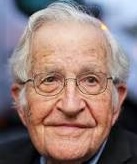
Noam Chomsky (born on December 7, 1928, in Philadelphia, Pennsylvania) is an American linguist, philosopher, cognitive scientist, historical essayist, social critic, and political activist. Sometimes called "the father of modern linguistics", Chomsky is also a major figure in analytic philosophy and one of the founders of the field of cognitive science. He is a Laureate Professor of Linguistics at the University of Arizona and an Institute Professor Emeritus at the Massachusetts Institute of Technology (MIT), and is the author of more than 150 books. He has written and lectured widely on linguistics, philosophy, intellectual history, contemporary issues, and particularly international affairs and U.S. foreign policy. Chomsky has been a writer for Z projects since their earliest inception, and is a tireless supporter of our operations.
ZNetwork is funded solely through the generosity of its readers.
Donate


2 Comments
On his return from interviewing Chomsky – Stu Platt also filmed myself (Gordon Asher) and Leigh French talking about the questions and Chomsky’s responses to them. Any thoughts, questions, critiques, contributions to critial dialogues etc. most welcome
The link to the film of that discussion is here – http://www.youtube.com/watch?v=A3y_6aG6bxc
Noam Chomsky has shown his luminous, charismatic brilliance again quite eloquently in discussing Scottish independence and other themes like the nature and structure of power and exploitation; the nationalistic movements for independence; the artificial constructs of nation states; how nations need to adapt to living harmoniously in a global financial system; and the importance of cooperative movements and other movements for fundamental social, economic, and political change like the civil rights movement un America. For example, he explains that the strong thrust for Scottish independence can be explained by the fact that many nations are artificial constructs imposed upon different ethnolinguistic groups that have totally different values, cultures, language, religions, norms, and customs that make it difficult for them to stay together in a national union. He also points out that in order for Scottish independence to succeed and become viable, it must adapt to the global realities of the international finance system and the global geopolitical system, and make the necessary pragmatic political, economic, and social reforms to make their independence successful and viable. He adds that these reforms should be mild reforms that should be done gradually in order for their new nation to live harmoniously and viably within the global political economy rather than being done drastically that could turn out to be very destructive to their new nation. In conclusion, he demonstrates enormous wisdom, insight, pragmatism, realism, and understanding of history and its dynamics, concerning these themes, and an ingenious analysis of them and a vision of the possibility of a much better world.