
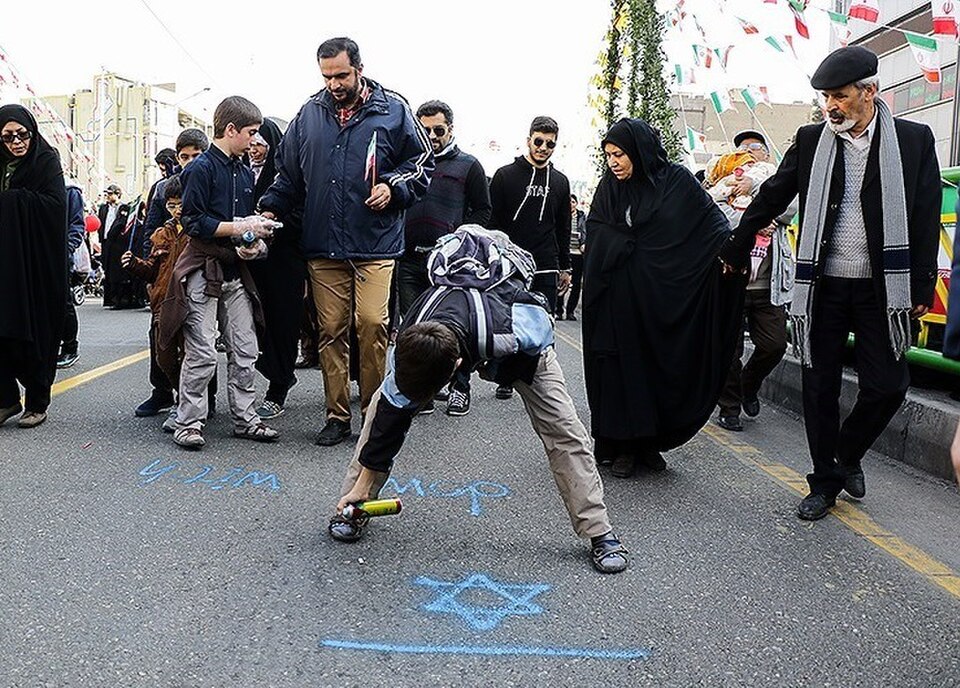
For decades, the political landscape of the Middle East has been shaped by a momentous ideological collision. On one side stands Zionism; and on the other, Islamic political activism, Islamism.
Zionism, an ethno-nationalist project that materialized through the establishment of Israel in 1948, has continued to expand its physical footprint through militarism, territorial expansion, forced displacement and Western backing.
Islamism, a 20th century political/religious phenomenon, emerged as secular Arab governments, Gulf monarchs and international organizations failed to secure justice for the indigenous populations of the Middle East, particularly the Palestinians.
By wedding absolute moral conviction to disciplined organizational structures, Islamism manifested as the primary ideological force standing in direct opposition to the hegemonic objectives of Zionism.
It should be noted that a majority of Islamists—a designation that often leads to media stereotyping —reject as blasphemous groups such as ISIS (Islamic State of Iraq and Syria), ISIL (Islamic State of Iraq and the Levant), or as it is often called in the Arab world, Daesh.
Until the 1979 Iranian Revolution and the establishment of the Islamic Republic of Iran, Islamism had limited impact. Since then, it has become the most powerful ideological force across the Muslim world. Islamist movements have provided the structural organization for resistance; and its uncompromising political ideology has enabled and provided a counter against Zionism and Western imperialism.
Perhaps Israel’s most consequential, yet rarely acknowledged impact on the region, has been its role in accelerating the death of secular politics and the rise of militant Islam.
To understand why Islamism has ascended as the primary vehicle of resistance, it is important to revisit the geopolitical architecture of the post-colonial Middle East,
and to recognize Israel’s crucial role in inflaming the fracture and militancy that defines the region today.
For a short-lived period (1945-1970), the geopolitical horizons of the Arab world looked radically different.
Led by Egyptian President Gamal Abdul Nasser (1954-1970), the era was distinguished by modernization, socialist reforms and the bold language of pan-Arab nationalism and the promise to liberate Palestine.
After decades of internal corruption and authoritarian governance, the dream of sovereign nation-states—built on shared linguistic and cultural identity—collapsed following the decisive and humiliating defeat of the Arab armies in the 1967 Arab-Israeli War.
The collective consciousness and confidence of the Arab world was further eroded
as its leaders struck compromises and signed unilateral peace agreements with Israel; as Egypt did in 1979 and Jordan in 1994.
An ideological void emerged, as Arab states prioritized regime survival over confrontation. For populations suffering and witnessing regional devastation, these state-led efforts at normalization were viewed as capitulation.
The loss of faith in the ideology of secular nationalism cleared the way for the genesis of a national political identity based in faith. Islamism presented a worldview entirely independent of Western-drawn borders, post-colonial state loyalties and Western ideology.
These movements offered a vision that secular regimes found difficult to counter. By shifting the paradigm from secular nationalism to religious jihad—armed struggle in defense of the Muslim community (the ummah)—Islamism provided a new framework for mobilization. It also turned the ongoing frustration and disappointment over Palestinian dispossession and military humiliations into fuel for transnational unity.
The mantle of external struggle fell to non-state Islamist groups such as Hamas, Palestinian Islamic Jihad and Lebanon’s Hezbollah, supported in their resistance to U.S.-Israel hegemony by the revolutionary government of Iran.
Political theorists and proponents argue that Islamism possesses unique structural advantages that make it, unlike secular nationalism, formidable in confronting Zionism; most notably:
- Transcendence of artificial borders: Islamism derives its influence from its trans-national identity with the ummah, rising above the divisive borders carved by European colonialism. Regional Arab states, on the other hand, have been constrained by economic involvement and military dependence on the U.S. and the West, as well as fragile domestic coalitions.
- The power of ideological resilience: Secular militant movements can be degraded through conventional warfare, elite cooptation, or political compromise. In contrast, Islamist movements exhibit a high degree of resolution and organizational resilience, which is in large part due to their shared theological belief in divine justice, martyrdom and moral duty. To a believer, the struggle against territorial dispossession is a sacred obligation, not merely a political grievance; making resoluteness a core doctrine.
- Moral and popular legitimacy: In addition to political resistance, Islamist movements also frequently act as community anchors, providing needed social services. Because of the help they provide to populations alienated by repressive or indifferent central governments, these groups build strong grassroots support that protects them from state military annihilation.
Ultimately, the conflict between Islamism and Zionism is a struggle between two
deeply-rooted and complete belief systems. Zionism seeks absolute control through exclusive ethno-religious dominance over Palestinian land. Islamism counters with a vision that totally rejects the legitimacy of that supremacy, utilizing faith as both armor and weapon.
Amid a landscape of autocratic regimes, failing international laws and failed secular diplomacy that has yielded decades of suffering and territorial loss, Islamism offers its followers an unyielding defense against the systematic erasure of Palestinians and loss of regional sovereignty.
American militarists and their Zionist allies have tried to carve out and secure footholds across the Middle East through armed conquest and genocide. In this jockeying, nations and borders have been treated as pieces on a chessboard, with heavy focus on territorial dominance and force to guarantee servitude to the West. Military violence, deceit and futile olive branches, however, cannot anchor a hostile foreign ideology or presence in a landscape deeply-rooted in history, culture and faith.
In stark contrast, Islamist groups do not rule over territory or maintain exclusive control over national governments. Their regional strength and endurance is won through ideological resonance.
Islamists operate on an ideological and grassroots level, aiming directly at the spiritual, emotional and social core of the populous. In a community exhausted by foreign domination, Islamism has captured the hearts and minds of everyday believers by offering a compelling narrative of justice, identity and belonging.
ZNetwork is funded solely through the generosity of its readers.
Donate