
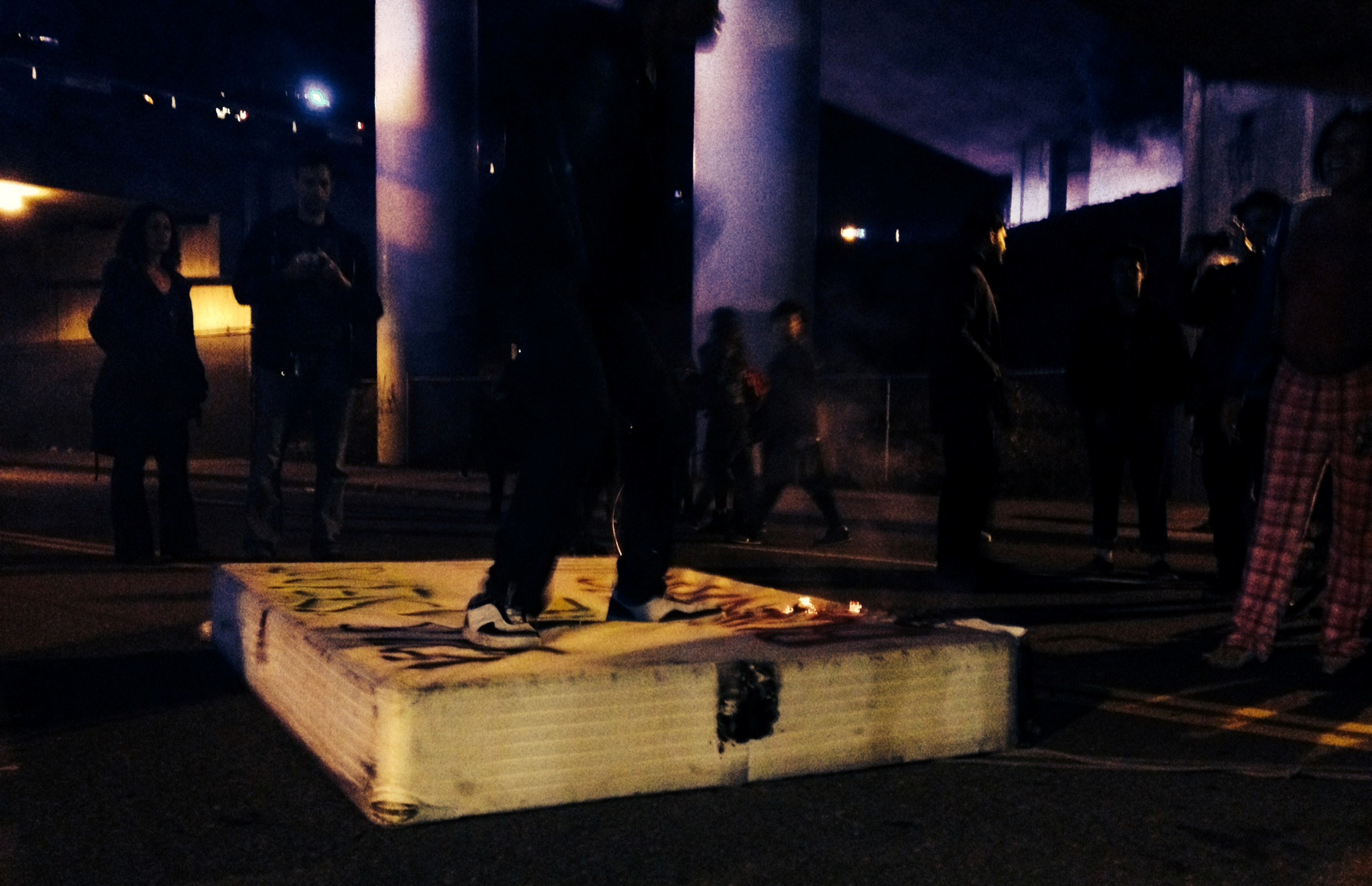
(All photographs taken by me)
I’m still trying to process everything I experienced during my time at the protests in Oakland/Berkeley this past week, but for now I wanted to write about the looting that I witnessed first-hand. What I observed has taught me so much—far more than I would have ever imagined—that it’s hard to know where to begin. But I think the key takeaway is that we have learned nothing from Dr. Martin Luther King Jr. I know Dr. King is a revered figure in America—as well he should be—but we do ourselves no favors when we invoke his name but pay no heed to his words.
Many people are familiar with Dr. King’s observation that “a riot is the language of the unheard,” but few seem to know the context in which he said that. And as my high-school history teacher used to tell me: context is everything. So I looked into the matter, and turns out Dr. King made the comment in his 1967 speech at Stanford University entitled The Other America. Just prior to noting that riots are the language of the unheard, Dr. King made clear that he “will continue to condemn riots” because he found them “destructive and self-defeating.” I can agree with that sentiment based on what I saw—surely the looting of numerous shops on Broadway and Telegraph will do nothing for Mike Brown, Eric Garner, or anyone else. There can be little doubt that looting does not get us closer to solving the issues at hand. But then Dr. King gets to the crux of the matter, making a point that most seem to have forgotten:
“But at the same time, it is as necessary for me to be as vigorous in condemning the conditions which cause persons to feel that they must engage in riotous activities as it is for me to condemn riots. I think America must see that riots do not develop out of thin air. Certain conditions continue to exist in our society which must be condemned as vigorously as we condemn riots.”*
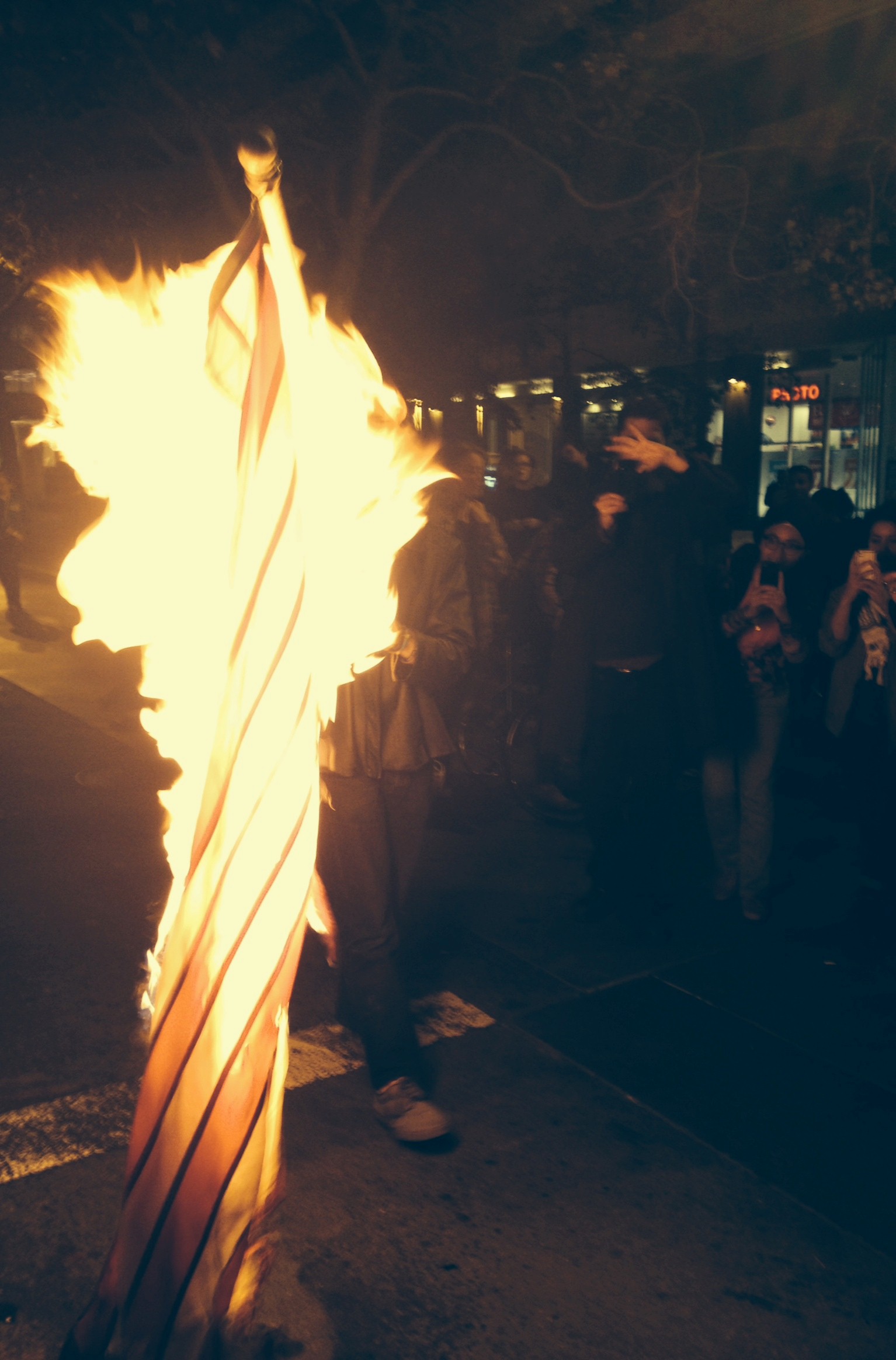
I find it difficult to read those words and not conclude that we’ve failed Dr. King, for it seems that 2014 America believes riots do develop out of thin air. Even the Bay Area, which is considered by many to be one of the most liberal and progressive places in the country, does not seem to take Dr. King’s words to heart. I’ve heard innumerable people and newspapers here condemn the looting, but I’ve seen virtually no one comment on the other side of Dr. King’s equation: condemning the conditions that give rise to these riots.
And what are those conditions, you ask? Dr. King answered that question in the title of that very speech, when he spoke of the “other America”—the America that is broke, hungry, and restless. In short, it all comes down to socio-economic inequality. As Dr. King said: “In this America millions of work-starved men walk the streets daily in search for jobs that do not exist. In this America millions of people find themselves living in rat-infested, vermin-filled slums. … They find themselves perishing on a lonely island of poverty in the midst of a vast ocean of material prosperity.”
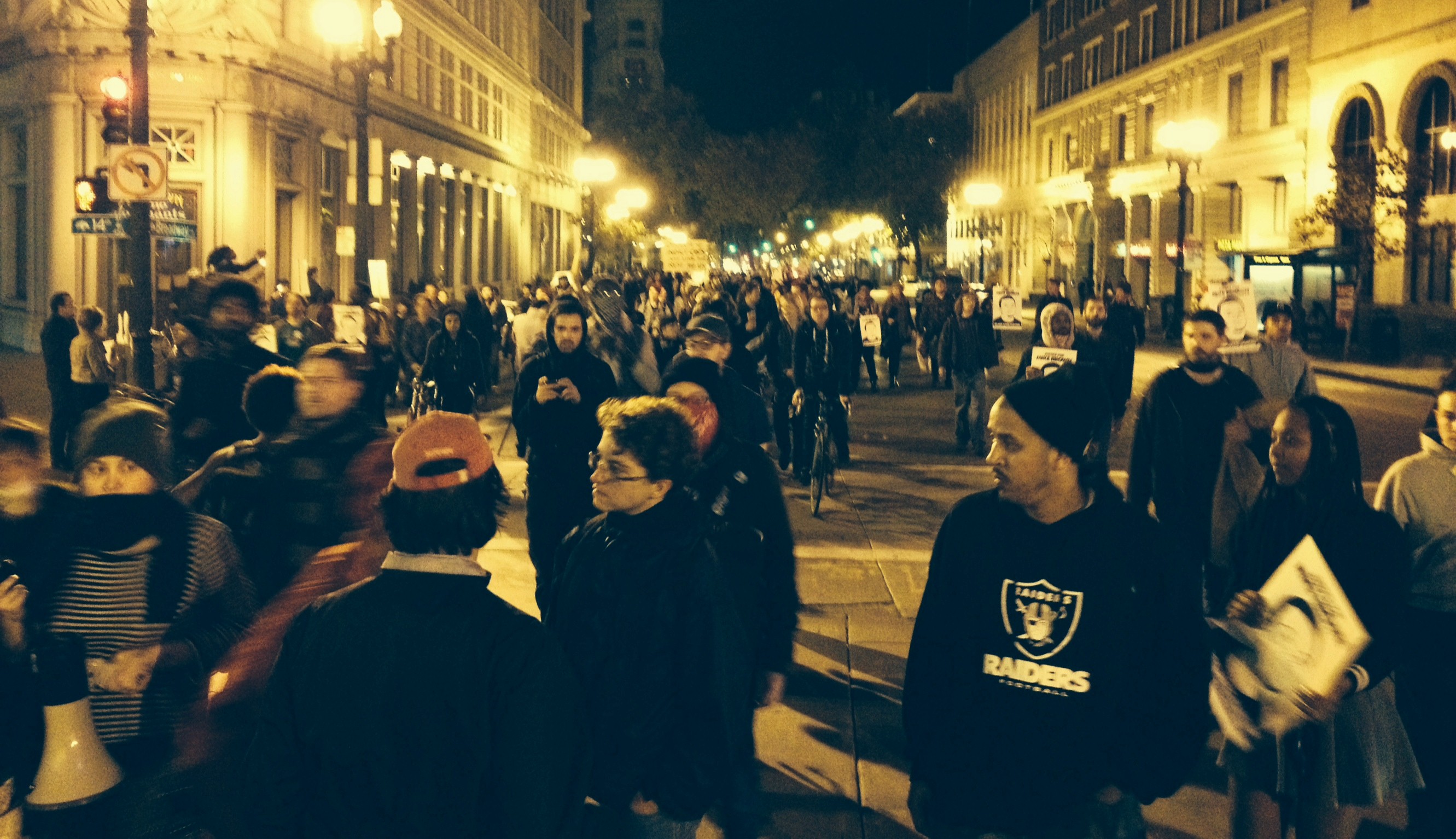
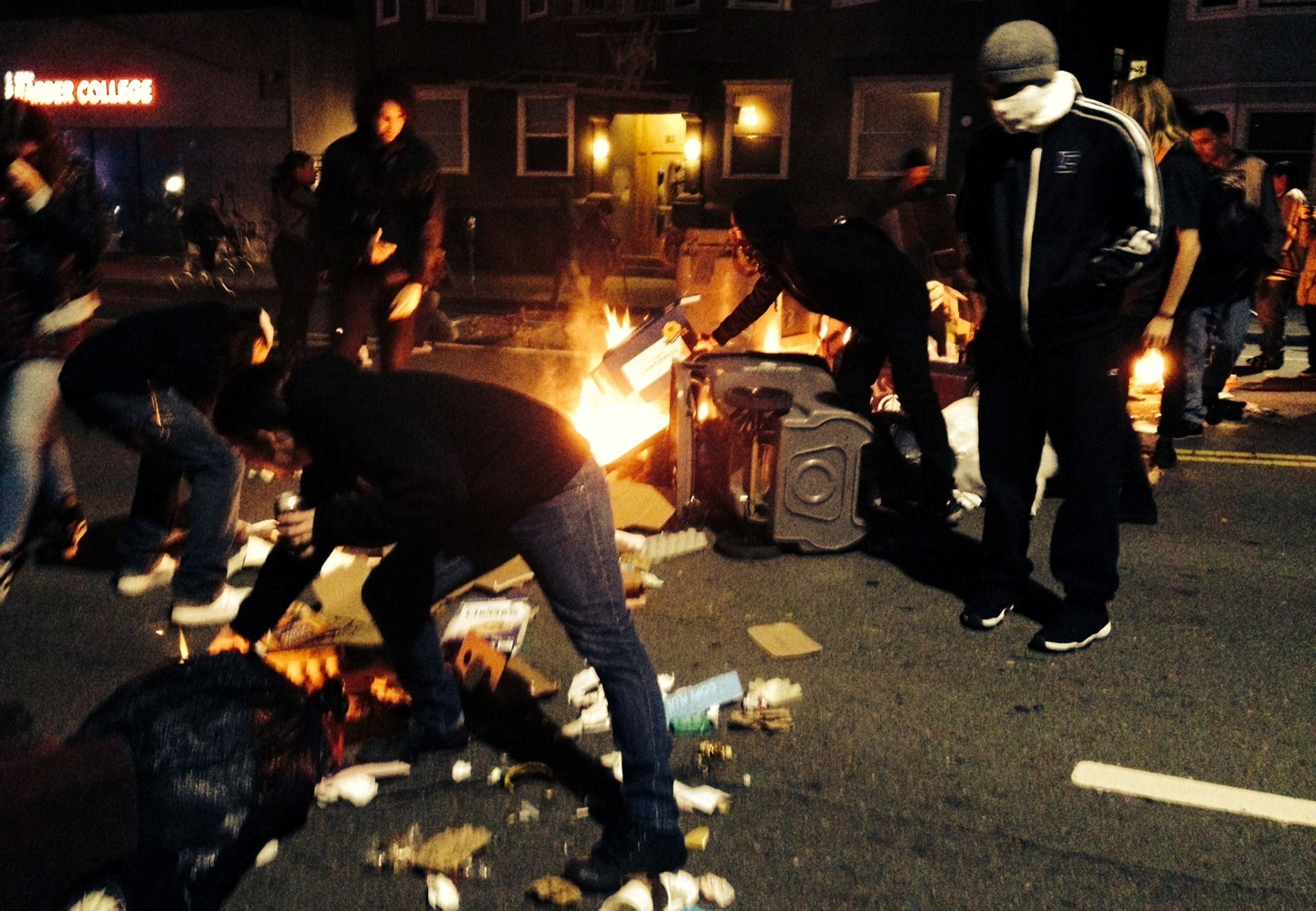
When I was at the Oakland/Berkeley protests, I saw Dr. King’s words materialize right before my eyes. For example, at one point in the night two black women—who presumably suspected this man of looting—started to harangue a white man whose face was covered, saying things like “The fuck you gonna loot here for? You don’t even live in Oakland! You probably came in from Alameda or somethin’ just to cause a ruckus.”
At which point, the anonymous bandana-clad man snapped.
“What the fuck do you know about me?!” he shouted. “Do you know anything about me? Can you see through this mask? Huh, can you?! Didn’t think so. I work for minimum-fucking-wage, OK? Do you know how many hours I work at some bullshit job that gives me nothing? Do you know where I sleep at night? No! So shut the fuck up!”
I was about ten feet from this exchange, just observing and taking notes as it unfolded. My mind raced back to Dr. King once again—still that same speech—and his line about those who have “come to feel that life is a long and desolate corridor … with no Exit sign.” I took a closer look at the hooded man and realized at once that’s what was unveiling before me. And as I looked around the crowd, trying to scan the faces of everyone I saw looting to see what I could learn, I realized that I was seeing the physical manifestation of what it means to have no money and no hope.
In short, Dr. King was right: riots are the language of the unheard. I mean, think about it. Have you heard about the riots in Atherton, Tiburon, or Pacific Heights lately? No, you haven’t, because there haven’t been any riots there. That’s really no surprise, considering the people who live there are among the wealthiest in the nation—and we all know too well that the concerns of the socio-economic elite get listened to and addressed every day. But there have been incidents of looting in Oakland, Ferguson, and other places where people find themselves in “a lonely island of poverty in the midst of a vast ocean of material prosperity.”
And yet those who claim to carry the progressive torch today fail to recall the full context of Dr. King’s words, fail to condemn the conditions that gave rise to the looting, and fail to make the connection, as Dr. King so eloquently did, between looting and rampant socio-economic inequality. Let me be clear: I say “rampant” because there’s simply no other word for it. By way of example, here’s but two of many reference points from this 2014 OXFAM report on economic inequality (all internal citations omitted):
- “The bottom half of the world’s population owns the same as the richest 85 people in the world.”
- “In the US, the wealthiest one percent captured 95 percent of post-financial crisis growth since 2009, while the bottom 90 percent became poorer.”
In other words, approximately 85 people have as much wealth as some 3.5 billion people, and 95% of the economic growth post-recession has trickled-up to those Americans who were already wealthy beyond your wildest dreams. The world’s wealth has been allocated to those who need it least. (As someone once observed, “trickle-down economics feels a lot like getting pissed on”). And that’s exactly where we fail Dr. King in honoring his legacy.
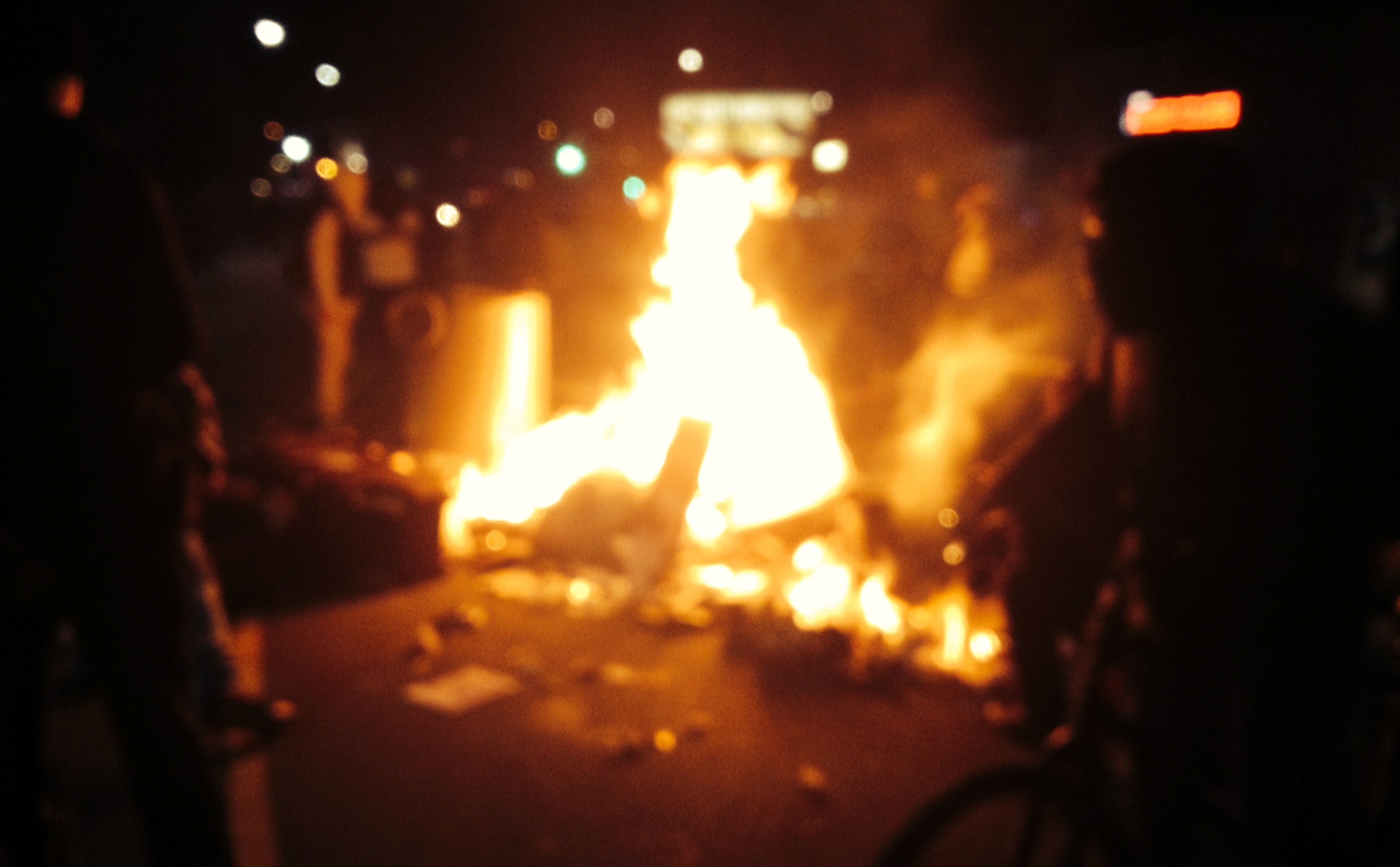
We lambast looters, but don’t ask questions about the socio-economic conditions that give rise to the looting. And so the post-Ferguson national debate comes down to body-cams, DOJ investigations, and Obama’s ceaseless conversations. When Dr. King noted that “it’s much easier to integrate a lunch counter than it is to guarantee a livable income and a good solid job,” my mind travels here to 2014: it’s much easier to talk about body-cams than it is to talk about a society in which the few live luxuriantly on the backs of many. So long as we continue to assess lootings rather than the conditions that caused them, we will find ourselves in a death-spiral of dead-end initiatives and investigations that attempt to cure a cancer with a band-aid. Yesterday I already wrote about how that won’t work.
You know, a friend of mine the other day asked me about my experiences in Oakland/Berkeley and asked what I thought about the looting that I had witnessed. I sat for a minute, thinking of what to say, when I realized that was precisely it: I had nothing to say. I didn’t condemn the looting, nor did I praise it. I had merely observed it for what it was: the language of the unheard. I was—and remain—more concerned about the socio-economic conditions that gave rise to the riots than I am about the riots themselves.
And make no mistake about it: although Dr. King’s speech on the Other America is largely about race, read the speech in its entirety and it’s quite clear that Dr. King is talking about socio-economics. Indeed, he himself notes that “many people of various backgrounds live in this other America” and that “millions of them are Appalachian whites,” concluding that black Americans are disproportionately poor and thus living in a living “in a triple ghetto. A ghetto of race, a ghetto of poverty, [and] a ghetto of human misery.” (NB: black Americans have remained disproportionately poor since at least the 1960s, see here, here, here, and here).
But in the wake of the Oakland/Berkeley protests, I’m not hearing much about the underlying socio-economic conditions that may have given rise to the looting. I hear about looting, police brutality, systemic racism, body-cams, federal investigations, and so on. Comparatively little is said about socio-economic inequality, the financial lot of most black Americans (which has fallen under Obama), or the lack of opportunity for young folk in this country. Perhaps the old saying is true: the more things change, the more they stay the same.
I began this entry invoking Dr. King’s Other America speech, and so perhaps it’s only fitting to end with it too. I’ll leave him with the last word, for if Berkeley/Oakland have taught me anything, it’s that we don’t listen to his words enough.
“And what is it that America has failed to hear? It has failed to hear that the plight of the Negro poor has worsened over the last few years. It has failed to hear that the promises of freedom and justice have not been met. And it has failed to hear that large segments of white society are more concerned about tranquility and the status quo than about justice, equality, and humanity. And so in a real sense our nation’s summers of riots are caused by our nation’s winters of delay.”
—Winston A.
ZNetwork is funded solely through the generosity of its readers.
Donate

