
Could it be put down to a measure of confidence on his part? On this occasion, Israeli Prime Minister Benjamin Netanyahu had, in the Wing of Zion, been less cautious in making a journey to Washington through European airspace. In September 2025, French airspace was avoided during a flight to New York. Most European states, with occasional hiccups of complaint, remain signatories of the Rome Statute, that document founding the International Criminal Court (ICC). The Israeli PM, along with his former defence minister Yoav Gallant, have extant arrest warrants for alleged war crimes in Gaza.
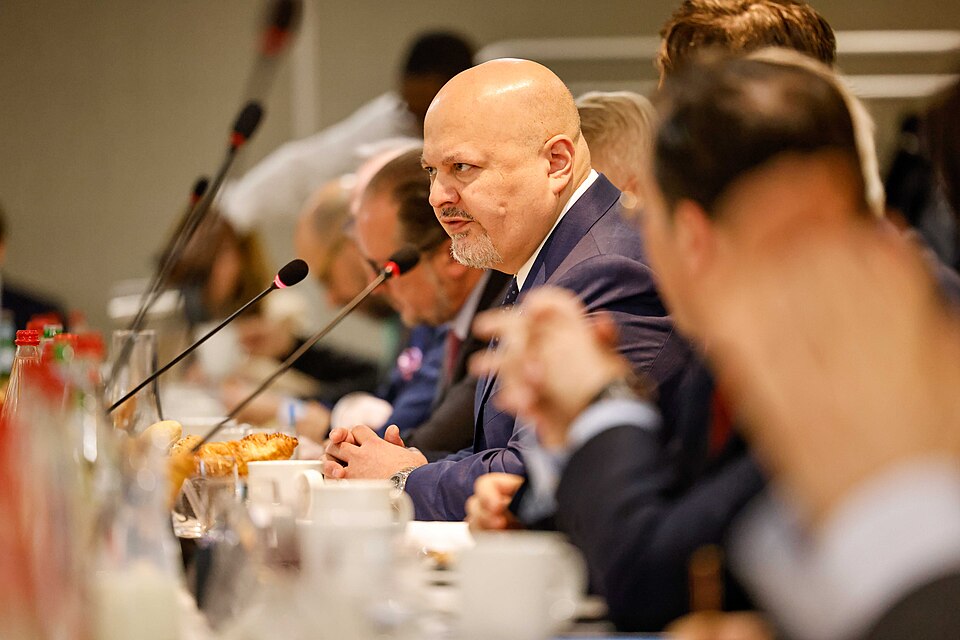
This confidence might have been instilled by the removal of Karim Khan as the Court’s chief prosecutor, who faced allegations of sexual misconduct made by a member of his staff. The result arose from a majority vote of the Court’s member states – 82 in favour of removal, 13 against, with 15 abstentions. The decision was reached on July 24 at an emergency session at the UN headquarters in New York.
Khan has certainly had his problems at an organisation that even optimists can describe as dysfunctional. The Independent Expert Review in 2020 made numerous findings, including “low morale in Chambers.” This included the absence of opportunities for promotion, a perceived “degree of arbitrariness or lack of consistency in management decisions” and “instances of harassment and bullying by some Judges, which have not been sufficiently tackled”. The Office of the Prosecutor was also governed by an “unclear” regulatory framework and a working environment marked by “personality-driven working methods”, with a rampant perception about “a lack of accountability”, notably at the higher levels.
Khan’s own promised efforts to reform his office made little headway. Then came an investigation into claims made by Sarah (as identified by CNN), a lawyer from Malaysia who had worked for the ICC since 2017, and as Khan’s assistant from February 2023 that she had been allegedly harassed and subjected to non-consensual sexual acts by the prosecutor.
In November 2024, the ICC sought an investigation by the UN Office of Internal Oversight Services (OIOS) into “alleged misconduct by the ICC prosecutor” after the complainant refused to cooperate with the ICC’s own investigative body. Curiously enough, the OIOS has no formal mandate for such a function, and certainly none stipulated under the Rome Statute. Khan took a leave of absence pending the OIOS investigation in May 2025. In December 2025, the findings of the OIOS investigation, which covered one allegation of “unwelcome conduct of a sexual nature” and abuse of authority, and three allegations of retaliation against members of the Prosecutor’s office, were received by a panel of expert judges appointed by the Bureau of the Assembly of the States Parties (APS).
In March this year, the Bureau received the findings. Judges Leona Theron of South Africa’s Constitutional Court, Paul Lemmens of Belgium, and Seymour Panton of Jamaica surveyed and digested the materials reviewed by the OIOS before reaching their firm conclusion: “The Panel is unanimously of the opinion that the factual findings by OIOS do not establish misconduct or breach of duty under the relevant legal framework”.
This was clearly not to the satisfaction of the Bureau, whose membership seemed disposed to seeking a scalp. The body made a preliminary determination that further examination was warranted, inviting Khan to submit another round of written observations and evidence, with the alleged victim being given a chance to respond. An assessment, drawing from the OIOS report, the broader evidence, the advice of the expert panel and written submissions was duly made on June 8: Khan would be referred to disciplinary proceedings of the Assembly, his suspension from duty taking place with immediate effect. The finding by the judicial experts had been purely decorative to the final decision. The sense of the political had triumphed.
This entire process reeked of what has been described, rather mildly, as one filled with “procedural anomalies”. The notable advocate Sir James Eadie KC had warned the President of the Bureau in a private legal opinion from November 2025 that the OIOS investigators should not have strayed beyond simple collation and recording of “what may appear from documents and who said what”. The judicial experts would have been left with the determination of the facts. “It would be entirely inappropriate in principle for the investigator (in effect the prosecutor of the misconduct charges) also to be the judge.” He also suggested that, at the barest minimum, some judicial process involving an oral hearing before a panel of judges to test the allegations and determine the facts which could be proved beyond reasonable doubt would be required. “It is entirely inappropriate for the determinative function to be undertaken by executive or political bodies.”
Despite efforts to disentangle Khan’s fate from alleged “misinformation” about the nexus between the prosecutor’s decision to issue the warrants and Israeli and US efforts to seek his ouster, such claims tend to sink in the enfolding quicksand of international relations and expediency. Any international body dedicated to the oft impugned concept of international justice remains vulnerable to lobbies of brute power and firm persuasion. The notion of neutrality in this area remains, at best, specious. And while the individual circumstances of Khan’s alleged misconduct remain specific to himself and his accuser, the sexual remains political. Figures who take the reins in pursuing powerful figures and muddying waters of contentment have found themselves facing charges and accusations (dubious moral character, sexually irregular, flesh fiddler).
The moment the Bureau decided to ignore the judicial assessment on the Khan case, it became political, perceived or otherwise. The Israelis were particularly enthused by the allegations against Khan, seeing another addition to their war chest of claims in discrediting him and inflicting a blow against the court’s functions. Israeli journalist Guy Azriel of the TV channel i24NEWS has been open about the fact that “Israeli Foreign Minister Gideon Sa’ar played an active role in efforts to advance the move [to remove Khan]. According to the [senior] Israeli official, Sa’ar oversaw a dedicated task force and employed intensive diplomatic efforts aimed at securing Khan’s removal from office.” Barak Ravid, global affairs correspondent for Axios, reiterates the same claim from the senior official – presumably the same – that Sa’ar and Israel’s network of embassies “have been working to mobilize as many countries as possible to vote in favor of his dismissal.”
Khan’s now former employer has also received a sustained, libellous assault from various non-signatory powers against its office holders and activities, with the United States taking the lead. On February 6, 2025, President Donald Trump issued Executive Order 14203, a muscular measure sanctioning any person or organisation engaged in efforts to aid the ICC “investigate, arrest, detain, or prosecute a protected person without consent of that person’s country of nationality.” Protected persons covered in the order included armed personnel, current and former, of the US and its allies, and current or former elected or appointed officials of the US government. Khan was the first to be sanctioned. This was followed by members of the ICC judiciary who have, effectively, been subjected to financial ostracization.
This month, US Secretary of State Marco Rubio beat the war drum against the tribunal in a cranky opinion piece in the Wall Street Journal suggesting that more was to come. Among its supporters, he detected the rank smell of fifth column types – leftists, globalists, Third (for Trump, turd, no doubt) World governments – backing an institution that dared investigate, however weakly, the depredations of power. “Independence is our birthright,” he roundly declared. “We don’t intend to trade it for rule by a self-appointed priesthood of ‘international law.’” The Trump administration had therefore taken upon itself the work along with allies to “dismantle the ICC – brick by brick, if necessary.” No less than the entire reserves of the State Department would be deployed against the ICC and its allies, urging member states to exit the regime altogether.
The termination of Khan’s brief is certainly the removal of one of those bricks. It has sent a jitter and chilling shudder through the international legal establishment, leading to some dramatic, even hyperbolic commentary. “The dismissal of Karim Khan as the ICC prosecutor is perhaps the most significant event in the 24-year-old long institutional history of the ICC,” rues Sergey Vasiliev, professor of international law at Open University in the Netherlands. It posed “the greatest setback to the Court’s efforts to pursue justice in situations implicating major powers and their allies not party to the Court, including the US, Israel and Russia.”
Despite the bureaucratic decapitation, the warrants continue to be active, and member states have thus far not indicated a willingness to exit the ICC family. But it remains undeniable that international justice, whatever Khan’s conduct, has been bruised and tarnished by political dictates. Eadie’s sober advice should not be forgotten: “If such officials can be removed or disciplined without a proper adjudication of the allegations against them, against the political context, the integrity of the ICC and its perceived integrity will be fundamentally undermined.” As, indeed, it has been.
ZNetwork is funded solely through the generosity of its readers.
Donate

