
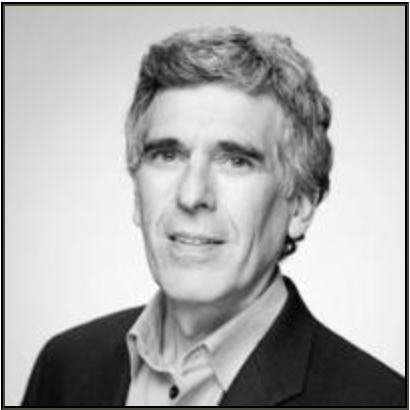
As we continue to mark the 20th anniversary of the U.S. invasion of Iraq, we look at how the corporate U.S. media helped pave the way for war by uncritically amplifying lies and misrepresentations from the Bush administration while silencing voices of dissent. Longtime media critic Norman Solomon says many of the same media personalities and news outlets that pushed aggressively for the invasion then are now helping to solidify an elite consensus around the Ukraine war. “In the mass media, being pro-war is portrayed as objective. Being antiwar is portrayed as being biased,” he says. Solomon is author of War Made Easy: How Presidents and Pundits Keep Spinning Us to Death and the forthcoming War Made Invisible: How America Hides the Human Toll of Its Military Machine.
Transcript
AMY GOODMAN: This is Democracy Now!, democracynow.org, The War and Peace Report. I’m Amy Goodman.
As we continue to mark the 20th anniversary of the U.S. invasion of Iraq, we look now at how the mainstream U.S. media helped to pave the way for war by uncritically amplifying the lies of the Bush administration, for example, around weapons of mass destruction, while silencing voices of dissent.
In 2003, the media watchdog group FAIR, Fairness & Accuracy in Reporting, published a report titled “In Iraq Crisis, Networks Are Megaphones for Official Views.” The report found, in the weeks leading up to the invasion, the nation’s four top nightly news programs interviewed 267 current or former government or military officials; just one of them expressed skepticism or opposition to the war.
In a moment, we’ll be joined by the longtime media critic Norman Solomon. But first let’s turn to an excerpt of the documentary War Made Easy: How Presidents & Pundits Keep Spinning Us to Death, produced by the Media Education Foundation, based on Norm Solomon’s book of the same name.
PRESIDENT GEORGE W. BUSH: We cannot wait for the final proof, the smoking gun, that could come in the form of a mushroom cloud.
NORMAN SOLOMON: As Americans, we like to think that we’re not subjected to propaganda from our own government, certainly that we’re not subjected to propaganda that’s trying to drag the country into war, as in the case of setting the stage for the invasion of Iraq.
PRESIDENT GEORGE W. BUSH: Saddam Hussein recently sought significant quantities of uranium from Africa.
VICE PRESIDENT DICK CHENEY: There is no doubt that Saddam Hussein now has weapons of mass destruction.
DEFENSE SECRETARY DONALD RUMSFELD: Weapons of mass destruction.
PRESS SECRETARY ARI FLEISCHER: Botulin, VX, sarin, nerve agent.
PRESIDENT GEORGE W. BUSH: Iraq and al-Qaeda.
RICHARD ARMITAGE: Al-Qaeda.
PRESIDENT GEORGE W. BUSH: Iraq and al-Qaeda.
UNIDENTIFIED: Terrorism.
DEFENSE SECRETARY DONALD RUMSFELD: Cyberattacks.
PRESS SECRETARY ARI FLEISCHER: Nuclear program.
SECRETARY OF STATE COLIN POWELL: Biological weapons.
DEFENSE SECRETARY DONALD RUMSFELD: Cruise missiles, ballistic missiles.
PRESS SECRETARY ARI FLEISCHER: Chemical and biological weapons.
DEFENSE SECRETARY DONALD RUMSFELD: Iraq has weapons of mass destruction.
PRESS SECRETARY ARI FLEISCHER: President Bush has said Iraq has weapons of mass destruction. Tony Blair has said Iraq has weapons of mass destruction. Donald Rumsfeld has said Iraq has weapons of mass destruction. Richard Butler has said they do. The United Nations has said they do. The experts have said they do. Iraq says they don’t. You can choose who you want to believe.
NORMAN SOLOMON: The war propaganda function in the United States is finely tuned, it’s sophisticated, and most of all, it blends into the media terrain.
SHEPARD SMITH: The White House says it can prove that Saddam Hussein does have weapons of mass destruction, claiming it has solid evidence.
DAN RATHER: The White House insisted again today it does have solid evidence.
NORMAN SOLOMON: It’s necessary to provide a drumbeat media echo effect.
JOHN GIBSON: They might fight dirty, using weapons of mass destruction — chemical, biological.
BILL O’REILLY: Anthrax, smallpox.
TOM BROKAW: Dirty bomb.
BRIAN WILLIAMS: Dirty bomb.
BRIT HUME: Iraq-al-Qaeda connection.
WILLIAM SCHNEIDER: Saddam Hussein and al-Qaeda share the same goal: Both of them want to see Americans dead.
NORMAN SOLOMON: And I was very struck by the acceptance, the tone of most of the media coverage, as the sabers were rattled, as the invasion of Iraq gradually went from possible to probable to almost certain.
DAVID LEE MILLER: The president essentially giving Saddam 48 hours to get out of Dodge. War now seems all but inevitable.
GREGG JARRETT: Short of a bullet to the back of his head or he leaves the country, war is inexorable.
UNIDENTIFIED: Well, I think that’s exactly right. War is inevitable, and it is approaching inexorably.
WOLF BLITZER: Is war with Iraq inevitable right now?
LAWRENCE EAGLEBURGER: I think it’s 95% inevitable.
CHRIS BURY: You, at this point, right now tonight, don’t see any other option but war.
RICHARD HOLBROOKE: Do you?
CHRIS BURY: I’m asking you, Ambassador.
WESLEY CLARK: I agree. I don’t think there’s a viable option for the administration at this point. We’re way too far out front in this.
MAJOR BOB BEVELACQUA: Send us over there, guys. Let’s get on with it. Let’s get it over with.
MSNBC AD: Showdown Iraq. If America goes to war, turn to MSNBC and “The Experts.”
NORMAN SOLOMON: And in many ways, the U.S. news media were equal partners with the officials in Washington and on Capitol Hill in setting the agenda for war.
MSNBC AD: We’ll take you there.
NORMAN SOLOMON: And although it’s called the liberal media, one has a great deal of difficulty finding an example of major media outlets, in their reporting, challenging the way in which the agenda setting for war is well underway.
AARON BROWN: We’ve got generals and, if you ask them about the prospects for war with Iraq, they think it is almost certain.
JOE SCARBOROUGH: Pay no heed to the peaceniks and the left-wing rock stars. They’ve had their 15 minutes of fame.
JONAH GOLDBERG: These people are essentially useless. They are reflexively opposed to war. It’s a principled position, but it’s the wrong position, and you can’t take them seriously as a strategic voice.
BILL O’REILLY: We expect every American to support our military, and if they can’t do that, to shut up.
NORMAN SOLOMON: And when that reporting is so much a hostage of official sources, that’s when you have a problem.
CNN ANCHOR: U.S. officials tell CNN —
CNN REPORTER: Bush official says —
CNN REPORTER: Analysts say —
AARON BROWN: Pentagon officials tell us —
DAVID MARTIN: According to U.S. intelligence —
NORMAN SOLOMON: Often we’re encouraged to believe that officials are the ones who make news.
JOHN KING: U.S. officials say —
U.S. officials say that —
U.S. officials here say —
Officials here at the White House tell us —
NORMAN SOLOMON: They are the ones who should be consulted to understand the situation.
GEN. COLIN POWELL: I just pull these two things out — I’ve laundered them, so you can’t really tell what I’m talking about, because I don’t want the Iraqis to know what I’m talking about, but trust me. Trust me.
NORMAN SOLOMON: If history is any guide, the opposite is the case: The officials blow smoke and cloud reality, rather than clarify.
VICE PRESIDENT DICK CHENEY: We will, in fact, be greeted as liberators.
PAUL WOLFOWITZ: The notion that it will take several hundred thousand U.S. troops are wildly off the mark.
DEFENSE SECRETARY DONALD RUMSFELD: So the money’s going to come from Iraqi oil revenue, as everyone has said. They think it’s going to be something like $2 billion this year. They think it might be something like $15, $12 [billion] next year.
PRESIDENT GEORGE W. BUSH: We seek peace. We strive for peace.
AMY GOODMAN: Those last words, George W. Bush, weeks before the U.S. invaded Iraq 20 years ago, an excerpt from the documentary War Made Easy: How Presidents & Pundits Keep Spinning Us to Death. It’s based on a book by the same name by our next guest, Norman Solomon, executive director of the Institute for Public Accuracy, co-founder of RootsAction.org. His forthcoming book titled War Made Invisible: How America Hides the Human Toll of Its Military Machine.
Your thoughts on this 20th anniversary, Norman Solomon? Because so many of the voices and faces we see in this documentary, so many of the commentators on television and the hosts are the same today.
NORMAN SOLOMON: Very much. In the mass media, being pro-war is portrayed as objective; being antiwar is portrayed as being biased. And very much so, the same media outlets, and often the same people, who lied, teamed up with the U.S. government to convey complete distortions to stampede the United States into war on Iraq two decades ago, these are the same media outlets that are, in the last few days, telling us what it all means.
And it reminds us, I think, of something that George Orwell said. He said those who control the past control the future; those who control the present control the past. He was alluding to the fight over history that’s so important, because when it is rendered in a distorted way, whether in real time — you know, journalism is supposed to be the first draft of history. In the U.S. mass media, it’s a distorted draft. Or, in retrospect, it’s also prefigurative.
And I think an example is how 20 years ago — actually, a little more than that — right after 9/11, President George W. Bush said, “Either you’re with us, or you’re with the terrorists.” And that was amplified, accepted, embraced by the U.S. mass media. Now, in the last year, we’re hearing from the current president: Either you’re with us, or you’re with the Russians.
Now, of course, what happened at 9/11 was horrible. It was a crime against humanity. The terrorists did a terrible, horrible thing, just as the Russians invading Ukraine have been doing a terrible thing. At the same time, I think we have to acknowledge that, as the saying goes, this is not really a Manichaean world. We can’t just simply divide the world into good or bad. And here’s an example. Our own president, President Joe Biden, tells us that the world is divided between those who believe in human rights and those who don’t. This is the guy who fist-bumped the leader of Saudi Arabia as that country continued to slaughter people with U.S. government help in Yemen. So, these are fictitious narratives, 20 years ago, now, that support U.S. militarism.
AMY GOODMAN: I want to go back to 2003, the legendary TV host Phil Donahue fired from his primetime MSNBC talk show during the run-up to the U.S. invasion of Iraq. The problem wasn’t his ratings, but, rather, his views. An internal MSNBC memo warned Donahue was a “difficult public face for NBC in a time of war,” providing a, quote, “home for the liberal antiwar agenda at the same time that our competitors are waving the flag at every opportunity.” Well, in 2013, Democracy Now! spoke to Phil Donahue about his firing.
PHIL DONAHUE: Well, I think what happened to me, the biggest lesson, I think, is the — how corporate media shapes our opinions and our coverage. This was a decision — my decision — the decision to release me came from far above. This was not an assistant program director who decided to separate me from MSNBC. They were terrified of the antiwar voice. And that is not an overstatement. Antiwar voices were not popular. And if you’re General Electric, you certainly don’t want an antiwar voice on a cable channel that you own; Donald Rumsfeld is your biggest customer. So, by the way, I had to have two conservatives on for every liberal. I could have Richard Perle on alone, but I couldn’t have Dennis Kucinich on alone. I was considered two liberals. It really is funny almost, when you look back on how — how the management was just frozen by the antiwar voice. We were scolds. We weren’t patriotic. American people disagreed with us. And we weren’t good for business.
AMY GOODMAN: So, that was Phil Donahue talking about what happened to him 20 years ago. Norman Solomon, if you could take it from there? And also talk about the double standard in how grief is covered — that’s grief of those within the U.S. and U.S.-allied countries versus the grief of everyone else. And also, your last book was War Made Easy. Your new book will be called War Made Invisible: How America Hides the Human Toll of Its Military Machine. Expand on that.
NORMAN SOLOMON: Yeah, so much of this is about corporate power — in media, the interlocks with the military-industrial complex, the huge amounts of money that continue to be made by supplying the Pentagon with the tools of the murderous trade of ongoing war. Anybody who thinks the lies and the profiteering from slaughter is just 20 years ago is mistaken. What we’re seeing now is a more invisibility of war, just as profitable, if not more so — massive arms sales to arm Ukraine, to build nuclear weapons in a new generation, as it’s called, and the air war that has largely supplanted the ground troops. Remember 10, 15 years ago, so many U.S. troops on the ground.
There are now, more than ever, in many respects, two tiers of grief from the U.S. mass media and those on Capitol Hill and the White House: grief that matters and grief that doesn’t. The grief that matters is those of Americans who suffer or the designated allies, such as Ukraine citizens. Well, of course, we should empathize and portray the suffering of everyone who endures war. War is a crime against humanity. But what we’re not getting is that other tier of grief being conveyed. As a matter of fact, 20 years ago to today, the victims of U.S. war, financed by or bombs dropped on these people, they are virtually nonpeople in the U.S. mass media. You can scour for thousands of pages of the Congressional Record and not find any empathy, any connection in human terms.
And so, really, Amy, I think when we get down to what’s really underneath so much of this is the tacit nationalism or explicit nationalism and racism and arrogance that says that some human beings really, really matter — which is correct — and other human beings really don’t matter, especially if they’re being slaughtered by U.S. weaponry, that is so profitable.
AMY GOODMAN: And finally, Norman Solomon, the coverage of the antiwar movement, bringing out the voices of those who are opposed to war, looking for a just peace?
NORMAN SOLOMON: Yes, this is part of the mythology of mass media that we live in this land of the free and home of the brave, and yet, when push comes to shove, we only get from the corporate media glorification or even substantial coverage of antiwar protesters when they’re in Moscow. And we should support the antiwar protesters in Moscow. We should also support and publicize and really convey to the American people the messaging of antiwar protesters and a deep reservoir of antiwar belief in this country.
AMY GOODMAN: Norman Solomon, I want to thank you for being with us, executive director of the Institute for Public Accuracy, co-founder of RootsAction.org, author of War Made Easy: How Presidents and Pundits Keep Spinning Us to Death. The film of that same title, War Made Easy, is produced by the Media Education Foundation. His forthcoming book is titled War Made Invisible: How America Hides the Human Toll of Its Military Machine.
A belated happy birthday to Tami Woronoff! Democracy Now! is currently accepting applications for a digital fellow. Learn more and apply at democracynow.org. Democracy Now! is produced with Renée Feltz, Mike Burke, Deena Guzder, Messiah Rhodes, Nermeen Shaikh, María Taracena, Tami Woronoff, Charina Nadura, Sam Alcoff, Tey-Marie Astudillo, John Hamilton, Robby Karran, Hany Massoud, Sonyi Lopez. Our executive director, Julie Crosby. Special thanks to Becca Staley, Jon Randolph, Paul Powell. I’m Amy Goodman.
ZNetwork is funded solely through the generosity of its readers.
Donate