
A basic rule of journalism is that there are almost always two sides to a story and that journalists should try to reflect that reality, a principle that is especially important when lives are at stake amid war fevers. Yet, American journalism has failed miserably in this regard during the Ukraine crisis.
With very few exceptions, the mainstream U.S. media has simply regurgitated the propaganda from the U.S. State Department and other entities favoring western Ukrainians. There has been little effort to view the worsening crisis through the eyes of ethnic Russian Ukrainians living in the east or the Russians witnessing a political and humanitarian crisis on their border.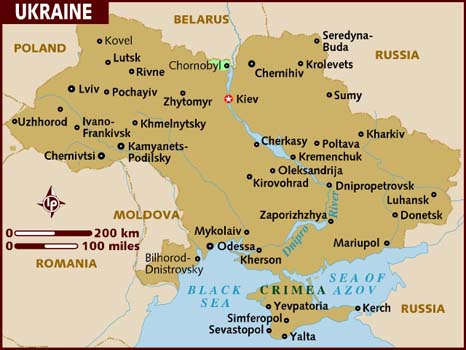
Frankly, I cannot recall any previous situation in which the U.S. media has been more biased – across the board – than on Ukraine. Not even the “group think” around Iraq’s non-existent WMDs was as single-minded as this, with the U.S. media perspective on Ukraine almost always from the point of view of the western Ukrainians who led the overthrow of elected President Viktor Yanukovych, whose political base was in the east.
So, what might appear to an objective observer as a civil war between western Ukrainians, including the neo-Nazis who spearheaded last year’s coup against Yanukovych, and eastern Ukrainians, who refused to accept the anti-Yanukovych order that followed the coup, has been transformed by the U.S. news media into a confrontation between the forces of good (the western Ukrainians) and the forces of evil (the eastern Ukrainians) with an overlay of “Russian aggression” as Russian President Vladimir Putin is depicted as a new Hitler.
Though the horrific bloodshed – more than 5,000 dead – has been inflicted overwhelmingly on the ethnic Russians in eastern Ukraine by the forces from western Ukraine, the killing is routinely blamed on either the eastern Ukrainian rebels or Putin for allegedly fomenting the trouble in the first place (though there is no evidence that he did, as even former Secretary of State Henry Kissinger has acknowledged.)
I realize that anyone who doesn’t accept the Official Washington “group think” on Ukraine is denounced as a “Putin apologist” – just as anyone who questioned the conventional wisdom about Saddam Hussein giving his WMDs to al-Qaeda was a “Saddam apologist” – but step back for a minute and look at the crisis through the eyes of ethnic Russians in eastern Ukraine.
A year ago, they saw what looked to them like a U.S.-organized coup, relying on both propaganda and violence to overthrow their constitutionally elected government. They also detected a strong anti-ethnic-Russian bias in the new regime with its efforts to strip away Russian as an official language. And they witnessed brutal killings of ethnic Russians – at the hands of neo-Nazis – in Odessa and elsewhere.
Their economic interests, too, were threatened since they worked at companies that did substantial business with Russia. If those historic ties to Russia were cut in favor of special economic relations with the European Union, the eastern Ukrainians would be among the worst losers.
Remember, that before backing away from the proposed association agreement with the EU in November 2013, Yanukovych received a report from economic experts in Kiev that Ukraine stood to lose $160 billion if it broke with Russia, as Der Spiegel reported. Much of that economic pain would have fallen on eastern Ukraine.
Economic Worries
On the rare occasions when American journalists have actually talked with eastern Ukrainians, this fear of the economic consequences has been a core concern, along with worries about the harsh austerity plan that the International Monetary Fund prescribed as a prerequisite for access to Western loans.
For instance, in April 2014, Washington Post correspondent Anthony Faiola reported from Donetsk that many of the eastern Ukrainians whom he interviewed said their resistance to the new Kiev regime was driven by fear over “economic hardship” and the IMF austerity plan that will make their lives even harder.
“At a most dangerous and delicate time, just as it battles Moscow for hearts and minds across the east, the pro-Western government is set to initiate a shock therapy of economic measures to meet the demands of an emergency bailout from the International Monetary Fund,” Faiola reported.
In other words, Faiola encountered reasonable concerns among eastern Ukrainians about what was happening in Kiev. Many eastern Ukrainians felt disenfranchised by the overthrow of their elected leader and they worried about their future in a U.S.-dominated Ukraine. You can disagree with their point of view but it is an understandable perspective.
When some eastern Ukrainians mounted protests and occupied buildings – similar to what the western Ukrainians had done in Kiev before the coup – these protesters were denounced by the coup regime as “terrorists” and became the target of a punitive military campaign involving some of the same neo-Nazi militias that spearheaded the Feb. 22 coup against Yanukovych.
Nearly all the 5,000 or more people who have died in the civil war have been killed in eastern Ukraine with ethnic Russian civilians bearing the brunt of those fatalities, many killed by artillery barrages from the Ukrainian army firing into populated centers and using cluster-bomb munitions.
Even Human Rights Watch, which is largely financed by pro-coup billionaire George Soros, reported that “Ukrainian government forces used cluster munitions in populated areas in Donetsk city” despite the fact that “the use of cluster munitions in populated areas violates the laws of war due to the indiscriminate nature of the weapon and may amount to war crimes.”
Neo-Nazi and other “volunteer” brigades, dispatch by the Kiev regime, have also engaged in human rights violations, including death squad operations pulling people from their homes and executing them. Amnesty International, another human rights group that Soros helps fund and that has generally promoted Western interests in Eastern Europe, issued a report noting abuses committed by the pro-Kiev Aidar militia.
“Members of the Aidar territorial defence battalion, operating in the north Luhansk region, have been involved in widespread abuses, including abductions, unlawful detention, ill-treatment, theft, extortion, and possible executions,” the Amnesty International report said.
The Aidar battalion commander told an Amnesty International researcher: “There is a war here. The law has changed, procedures have been simplified. … If I choose to, I can have you arrested right now, put a bag over your head and lock you up in a cellar for 30 days on suspicion of aiding separatists.”
Amnesty International wrote: “Some of the abuses committed by members of the Aidar battalion amount to war crimes, for which both the perpetrators and, possibly, the commanders would bear responsibility under national and international law.”
Neo-Nazi Battalions
And the Aidar battalion is not even the worst of the so-called “volunteer” brigades. Others carry Nazi banners and espouse racist contempt for the ethnic Russians who have become the target of something close to “ethnic cleansing” in the areas under control of the Kiev regime. Many eastern Ukrainians fear falling into the hands of these militia members who have been witnessed leading captives to open graves and executing them.
As the conservative London Telegraph described in an article last August by correspondent Tom Parfitt: “Kiev’s use of volunteer paramilitaries to stamp out the Russian-backed Donetsk and Luhansk ‘people’s republics’… should send a shiver down Europe’s spine.
“Recently formed battalions such as Donbas, Dnipro and Azov, with several thousand men under their command, are officially under the control of the interior ministry but their financing is murky, their training inadequate and their ideology often alarming. The Azov men use the neo-Nazi Wolfsangel (Wolf’s Hook) symbol on their banner and members of the battalion are openly white supremacists, or anti-Semites.”
Based on interviews with militia members, the Telegraph reported that some of the fighters doubted the Holocaust, expressed admiration for Adolf Hitler and acknowledged that they are indeed Nazis.
Andriy Biletsky, the Azov commander, “is also head of an extremist Ukrainian group called the Social National Assembly,” according to the Telegraph article which quoted a commentary by Biletsky as declaring: “The historic mission of our nation in this critical moment is to lead the White Races of the world in a final crusade for their survival. A crusade against the Semite-led Untermenschen.”
The Telegraph questioned Ukrainian authorities in Kiev who acknowledged that they were aware of the extremist ideologies of some militias but insisted that the higher priority was having troops who were strongly motivated to fight. [See Consortiumnews.com’s “Ignoring Ukraine’s Neo-Nazi Storm Troopers.”]
So, the current wave of U.S. propaganda condemning a rebel offensive for violating a shaky cease-fire might look different if seen through the eyes of a population under siege, being cut off from banking services, left to starve and facing “death squad” purges by out-of-control neo-Nazis.
Through those eyes, it would make sense to reclaim territory currently occupied by the Kiev forces, to protect fellow ethnic Russians from depredations, and to establish borders for what you might hope to make into a sustainable autonomous zone.
And, if you put yourself in the Russian position, you might feel empathy for people who were your fellow citizens less than a quarter century ago and who saw their elected leader ousted in a U.S.-backed coup. You also might be alarmed at the presence of Nazi storm troopers (considering the history of Hitler’s invasion) and the prospects of NATO moving up to your border with a possible deployment of nuclear weapons. You might even recall how agitated Americans got over nuclear missiles in Cuba.
Granted, some of these Russian fears may be overwrought, but the Kremlin has to worry about threats to Russia’s national security just like any other country does. If you were in Putin’s shoes, what would you do? Would you turn your back on the plight of the eastern Ukrainians? Would you let a hostile military alliance push up against your borders with a potential nuclear threat, especially given the extra-legal means used to remove Ukraine’s constitutionally elected president?
Even if the U.S. press corps fulfilled its obligation to tell both sides of the story, many Americans would still condemn Putin’s acceptance of Crimea’s pleas for reentry into Russia and his assistance to the embattled eastern Ukrainians. They would accept the U.S. government’s relentless presentation of the Ukraine crisis as “Russian aggression.”
And, they might still buy the story that we’re endlessly sold about the Ukraine crisis being a premeditated move by Putin in a Hitlerian strategy to conquer the Baltic States. Even though there’s zero evidence that Putin ever had that in mind, some Americans might still choose to believe it.
But my point is that American journalists should not be U.S. government propagandists. Their job is not to herd the American people into some “group think” corral. A good journalist would want to present the positions of both sides with some evenhandedness.
Yet, that is not what we have witnessed from the U.S. news media on the Ukraine crisis. It has been nearly all propaganda nearly all of the time. That is not only a disservice to the American people and to the democratic precept about an informed electorate. It is a reckless violation of professional principles that has helped lurch the world toward a potential nuclear conflagration.
Investigative reporter Robert Parry broke many of the Iran-Contra stories for The Associated Press and Newsweek in the 1980s. You can buy his latest book, America’s Stolen Narrative, either in print here or as an e-book (from Amazon and barnesandnoble.com). You also can order Robert Parry’s trilogy on the Bush Family and its connections to various right-wing operatives for only $34. The trilogy includes America’s Stolen Narrative. For details on this offer, click here.
ZNetwork is funded solely through the generosity of its readers.
Donate