

Economic Exploitation
Last March, I wrote an essay providing evidence of the inherent exploitation and undemocratic constructs in our economic model burdening working people.
This essay compliments that work and will show a fundamental reason why our economic model is structurally limited by attempts to reform it.
History
Our economic model is plagued with a history of periodic recessions and depressions.
That history is recorded by the National Bureau of Economic Research (NBER). Recessions and depressions are clinically presented as normal components of the “business cycle.” The NBER does not report the chronic instability and destruction of communities and working people’s lives by the “business cycle.”.
Many economists, psychologists and journalists have attempted to rationalize the chronic crisis in our economic model. These fanciful assertions are thoroughly inadequate. As Leo Huberman chronicled in Man’s Worldly Goods, some experts actually attributed the chronic crises to radiation from the sun or the path of the planet Venus.
Despite rapid advances in technology and financial instruments, chronic crises remain inherent in our economic model.
Competition is a significant component that contributes to these crises despite the stifling dominance by a few giant corporations in most industries. That structure contains one essential component which plagues all businesses.
It is the tendency of the profit rate to fall.
Profit Rate Basis
The tendency of the profit rate to fall is the basis of why our economic model cannot be meaningfully reformed.
The owner of a business must convert the expenditures that initiate and maintain the business into a profit. Profits are what remains after a business pays all of its costs.
Simply, the profit rate shows how many cents of profits are retained from every dollar earned. It is more important than aggregate profits because it measures efficiency of a company in comparison to other businesses.
A decline in the profit rate forces businesses to close doors and decimate the lives of its employees across states and communities.
Business Basics
The following is a simplified explanation of why profit rates tend to fall:
The process begins by establishing a business. The owner must allocate resources forprimary expenditures (CapEx) to acquire space, plant, machinery, tools, hardware, software, technological advances, and raw materials. This includes legal registrations, licenses, permits, and financial services.
The business owner must then add another cost which are secondary expenditures.
Secondary expenditures (OpEx) consist of wages or salaries paid to the employees who do the mental or physical work with their labor power. This creates profits for the owner including extra profits. Extra profits are what remains for the owner once wages or salaries are paid to the employees.
It is imperative that the owner continually spend more resources in primary expenditures for the business. This is due to competition with other business owners.
Primary Expenditures Increase
For the owner, the cost of primary expenditures usually increases as costs for goods and services increase. These increases can be the result of monetary policy, growth of the economy (GDP), corporate price gouging, misplaced tariffs or a scarcity of certain goods.
Some products may even see a temporary drop in prices due to technological advances.
However, the supply of goods and services that comprise primary expenditures invariably rises to the dismay of business owners.
Cost of living calculations also present data that strongly supports the assertion that primary expenditures for owners will never decrease in our economic model.
Primary expenditures are required to increase the amount of the product or service created by the employees.
The owner might consider borrowing funds from a financial institution to pay for primary expenditures. This can be problematic because financial institutions may decline to lend the money or advance at a glacial pace to finalize a loan.
The reason why the owner must continually increase spending on primary expenditures is directly related to the profit rate.
Profit Rate
The profit rate is obtained by dividing the total primary and secondary expenditures by the extra profit. (Multiplying by 100 converts a decimal into a percentage).
Example: Suppose the employees created $100 worth of total profit and are paid $40 in wages. That means the extra profit is $60.
Add the primary expenditures to the secondary expenditures and divide by the extra profit. In this example, the profit rate is 60%.
Now to show the tendency of the profit rate to fall, increase the primary expenditure to $60. Suppose there was a sale on tools at Home Depot and the owner purchased $10 worth of tools by transferring funds from the secondary expenditures to the primary expenditures.
The profit rate is now 55%. This is a significant drop despite the profit amount remaining the same. The owner increased the primary expenditures by transferring funds from the secondary expenditures.
The owner’s increased spending on primary expenditures in the form of new tools or machines may maintain the extra profits. They may even increase the production of each employee. The product or service may then be sold as less expensive. This is wonderful for the owner, but the crisis remains driven by competition.
Temporary Remedy
Other business owners are captured in this business model. Competition from other businesses drives the accumulation of primary expenditures and a decrease of secondary expenditures. This decrease results in cuts to employees’ wages, salaries, or job losses. A falling rate of profit means outside investment is less likely to occur signaling a crisis for the owner.
The owner must either increase primary expenditures to increase profit rates to compete with other businesses or increase secondary expenditures to allow employees to maintain themselves and their families.
The owner cannot do both. It is an inherent contradiction.
The remedy for the owner is to freeze or offer insufficient wages or salaries in order to maintain extra profits for the business. Without a militant union to fight with the employees, owners will deny employees’ requests for fair compensation and benefits.
The tendency of a profit rate to fall leads to the eventual closing of the business or the business moving to a location without employee rights, union rights, or environmental regulations.
Real Remedy
Thus, our business model results in chronic exploitation, deprivation and immiseration that cannot be eliminated by reform. Working people’s lives and their families are severely damaged, often forever.
The organization, production, and distribution of goods and services must be transformed into a democratic model.
One version of this model can be seen in the Mondragon Corporation in Spain. It is a highly successful, conglomerate created in 1956 by a Roman Catholic priest. It is based on democratic principles that are agreed on by the employees.
Economist Richard Wolff wrote that the important questions of what and how we produce are fundamental to theeconomy of any country. “Where” to produce as also a question within the organization of an economy. The employees who create the profits must have a voice in the production process. A democratic construct can vary according to the model selected but must begin at the ground level.
Transition to Democratic Economic Model
There are several methods that might serve as a guide to how such a transition may be realized in our economic model:
New companies may be based on the principles of worker cooperatives. Also, when a company fails, it must first offer the employees an option to purchase it. Lastly, owners who are retiring must offer the employees the first opportunity to purchase the business.
A transition to a democratic economic model must begin by political parties actually representing working peoples’ interests. Many progressives assert that democratic socialists must win elections as the way to dominate governments at local, state and federal levels. They assert that democratic socialism may be realized by means of evolution, not necessarily revolution.
If progressive critics are able to dominate the government, it could pave the way for a transition to a democratic socialist model with American characteristics. Since our. history is replete with democratic goals and objectives; a transition would be less problematic.
Political democracy demands economic democracy. We have statutes, laws, regulations and rules to protect the common good. Why not apply the same principles to the relations of production?
Implementing a democratic model will be met with an avalanche of ruthless, corporate lies to deceive and frighten working people.
Progressives have historical lessons to learn from the failures of countries that attempted a form of socialism to replace the miserable economic conditions inherent and inevitable in our economic model.
There are many forms of socialism that can be realized.
The former USSR is a Petrie dish of such failures. Government must work to organize economic production democratically from the ground up, not from the top down that doomed the Soviet model to largely failure.
The government under democratic socialist control will transition to a new economic model that will facilitate the positive development of various components of our culture. The voice of working people will make the economic decisions rather than a handful of spiritually vapid, wealthy oligarchs. These oligarchs ignore Christian,Jewish, Islam and Buddhism literature that advocate for various forms of democratic socialism.
Polls from the Wall Street Journal, CNN, Gallup and Fox News demonstrate that Americans are increasingly discontented with our economic model.
Working people can and must do better for themselves and their families. Recognizing the limits of economic reform is a beginning.
The article was updated on September 2, 2026 at the author’s request.
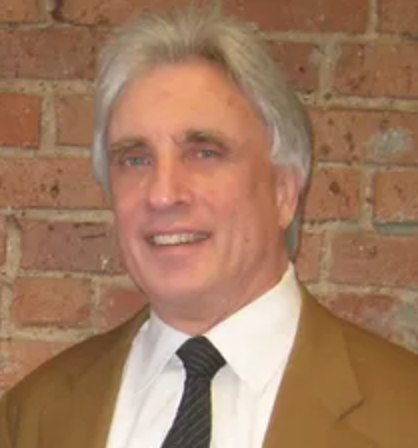
Bruce T. Boccardy serves as an Economics & Labor Advisor for Small Planet Institute, was president of the Massachusetts Service Employees International Union (SEIU) Local 888, represented labor on the Massachusetts Joint Labor-Management Committee (JLMC), serving firefighters and police and consulted to the National Association of Government Employees (NAGE).
ZNetwork is funded solely through the generosity of its readers.
Donate

