
On Sunday, September 21st, a huge crowd will march through the middle of Manhattan. It will almost certainly be the largest rally about climate change in human history, and one of the largest political protests in many years in New York. More than 1,000 groups are coordinating the march — environmental justice groups, faith groups, labor groups — which means there’s no one policy ask. Instead, it’s designed to serve as a loud and pointed reminder to our leaders, gathering that week at the United Nations to discuss global warming, that the next great movement of the planet’s citizens centers on our survival and their pathetic inaction.
As a few of the march’s organizers, though, we can give some sense of why we, at least, are marching, words we think represent many of those who will gather at Columbus Circle for the walk through midtown Manhattan.
We march because the world has left the Holocene behind: scientists tell us that we’ve already raised the planet’s temperature almost one degree Celsius, and are on track for four or five by century’s end. We march because Hurricane Sandy filled the New York City subway system with salt water, reminding us that even one of the most powerful cities in the world is already vulnerable to slowly rising ocean levels.
We march because we know that climate change affects everyone, but its impacts are not equally felt: those who have contributed the least to causing the crisis are hit hardest, here and around the world. Communities on the frontlines of global warming are already paying a heavy price, in some cases losing the very land on which they live. This isn’t just about polar bears any more.
But since polar bears can’t march, we march for them, too, and for the rest of creation now poised on the verge of what biologists say will be the planet’s sixth great extinction event, one unequalled since the last time a huge asteroid struck the Earth 66 million years ago.
And we march for generations yet to come, our children, grandchildren, and their children, whose lives will be systematically impoverished and degraded. It’s the first time one century has wrecked the prospects of the millennia to come, and it makes us mad enough to march.
We march with hope, too. We see a few great examples around the world of how quickly we could make the transition to renewable energy. We know that if there were days this summer when Germany generated nearly 75% of its power from renewable sources of energy, the rest of us could, too — especially in poorer nations around the equator that desperately need more energy. And we know that labor-intensive renewables would provide far more jobs than capital-intensive coal, gas, and oil.
And we march with some frustration: why haven’t our societies responded to 25 years of dire warnings from scientists? We’re not naïve; we know that the fossil fuel industry is the 1% of the 1%. But sometimes we think we shouldn’t have to march. If our system worked the way it should, the world would long ago have taken the obvious actions economists and policy gurus have recommended — from taxing carbon to reflect the damage it causes to funding a massive World War II-scale transition to clean energy.
Marching is not all, or even most, of what we do. We advocate; we work to install solar panels; we push for sustainable transit. We know, though, that history shows marching is usually required, that reason rarely prevails on its own. (And we know that sometimes even marching isn’t enough; we’ve been to jail and we’ll likely be back.)
We’re tired of winning the argument and losing the fight. And so we march. We march for the beaches and the barrios. We march for summers when the cool breeze still comes down in the evening. We march because Exxon spends $100 million every day looking for more hydrocarbons, even though scientists tell us we already have far more in our reserves than we can safely burn. We march for those too weak from dengue fever and malaria to make the journey. We march because California has lost 63 trillion gallons of groundwater to the fierce drought that won’t end, and because the glaciers at the roof of Asia are disappearing. We march because researchers told the world in April that the West Antarctic ice sheet has begun to melt “irrevocably”; Greenland’s ice shield may soon follow suit; and the waters from those, as rising seas, will sooner or later drown the world’s coastlines and many of its great cities.
We don’t march because there’s any guarantee it will work. If you were a betting person, perhaps you’d say we have only modest hope of beating the financial might of the oil and gas barons and the governments in their thrall. It’s obviously too late to stop global warming entirely, but not too late to slow it down — and it’s not too late, either, to simply pay witness to what we’re losing, a world of great beauty and complexity and stability that has nurtured humanity for thousands of years.
There’s a world to march for — and a future, too. The only real question is why anyone wouldn’t march.
Eddie Bautista is executive director of the New York City Environmental Justice Alliance. LaTonya Crisp-Sauray is the recording secretary for the Transport Workers Union Local 100. Bill McKibben is the founder of350.org and a TomDispatch regular.
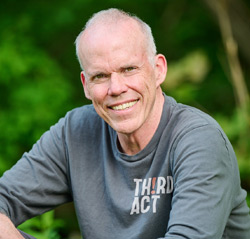
Bill McKibben is an author, environmentalist, and activist. In 1988 he wrote The End of Nature, the first book for a common audience about global warming. He is a co-founder and Senior Advisor at 350.org, an international climate campaign that works in 188 countries around the world.
ZNetwork is funded solely through the generosity of its readers.
Donate