
The U.S. Immigration and Customs Enforcement recruitment push on Stephen Miller’s social media feed inspired Andrea Alexander, an attorney, to attend a September 2025 ICE expo in Provo, Utah, where she applied to join the branch of ICE that argues cases in immigration court. When asked why by an NPR reporter, she was clear about her reasons: “I love Trump. I love his administration. I think he’s going to save our country.” Alexander was one of 200,000 people who applied to work for ICE in 2025.
Every experiment in populism, both left and right, mobilizes a base of non-elites and incorporates parts of it into the state. The form that mobilization and incorporation takes, however, varies sharply across projects. As a type of authoritarian populism, Trumpism involves both the construction of a base with a shared sense of meaning through mass rallies and social media spectacles and the incorporation of elements of that base into the government, including agencies that wield lethal violence. A democratic socialist form of populism would look fundamentally different. It would mobilize the base not through staged spectacles but by empowering the working-class organizations outside the state to pressure the state itself; it would incorporate that base into the state not to serve the leader’s will but to expand the democratic capacity of ordinary people to control the political decisions that shape their lives.
Trump’s success as an authoritarian populist may be his undoing. The same incorporation strategy that is turning the state into his playground also exposes the undeniably authoritarian character of the project to the broader and more heterogeneous coalition that elected him. The symbolic violence on Trump’s social media feed and in his rallies has in turn become deadly on U.S. streets and in the global theater. Facing a host of flailing plans from the tariff regime to bellicose foreign policy, the MAGA coalition is fracturing along multiple lines. A left populism by contrast would need to expand the coalition by bringing more and more working-class people into democratic politics itself.
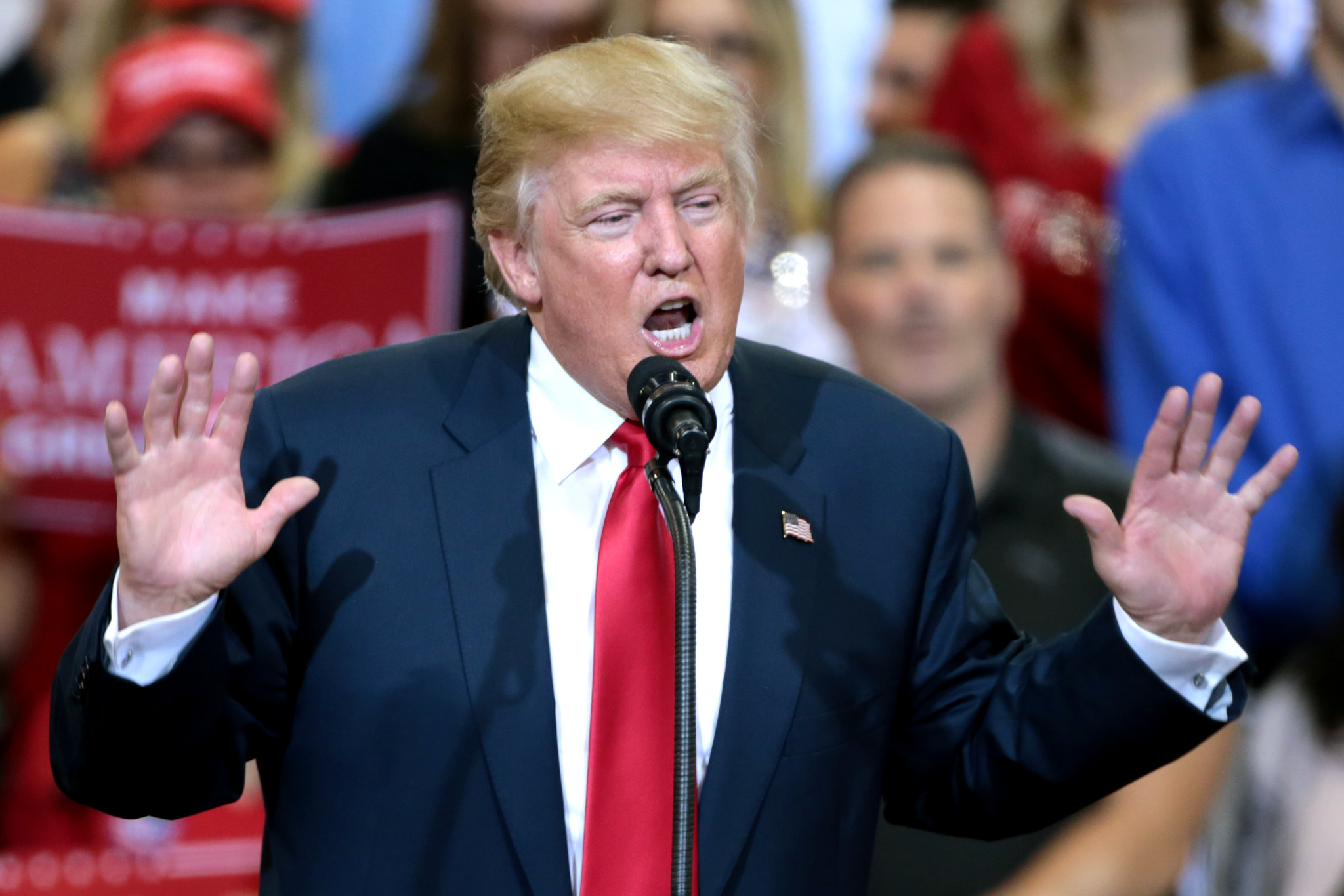
On Oct. 27, 2024, more than 20,000 people crammed into Madison Square Garden in New York City for a rally. Just a few miles from the courtroom where Trump was convicted of 34 felonies, people lined up in the street to see his bravado on the campaign trail firsthand. The rally was free, and admission was first come first served. The New York Times reported that speakers at the rally used degrading racialized code, describing Kamala Harris as a prostitute with “pimp handlers” and pointing out a Black man in the audience with a watermelon joke. The audience reveled in crude racist jokes about Latinos, Black people, Palestinians, and Jews most wouldn’t dare to say at work or in “mixed” company. Trump warned that America’s greatest threat was “the enemy within,” promising unrelenting “retribution” during his second presidency.
At Trump’s 80th birthday celebration on the White House lawn on June 14, 4,300 guests, including politicians and tech oligarchs such as Mark Zuckerberg, surrounded an octagon covered in crypto advertisements to watch men fight. The event converted the space usually reserved for turkey pardons into a bloody political spectacle. Non-elites were invited to watch the event in a park near the White House. In his victory speech, fighter Josh Hokit declared, “Michelle Obama is a man!”
But Trumpism doesn’t stir up supporters with spectacle alone. More than seven months into Trump’s second presidency, in late August 2025, around 3,000 people queued for an ICE job fair at an esports convention center in Arlington, Tex. The venue was temporarily rebranded as the public face of the state’s domestic enforcement apparatus, hosting something like an ICE trade show headlined by the agency’s new slogan, “Defend the Homeland.”
It’s possible that some were there just because they needed a well-paying job. But believing that overlooks the ideological character of this $100 million ICE recruitment drive, which functions as a continued mobilization of Trump’s base. The ads splashed across social media were highly targeted, using a technique known as geofencing to flood the social media feeds of people at or near UFC and Nascar events and gun trade shows.
ICE and Customs and Border Protection have received an astounding $246 billion in funding that will run through Sept. 30, 2029. Using these congressional funds, the administration aims to hire 10,000 new ICE officers to deport one million people a year. (For comparison, more than 500,000 people were deported in 2025, 650,000 in 2024, and 590,000 in 2023.) ICE offered signing bonuses up to $50,000, student loan payment forgiveness, and enhanced retirement benefits for recruits, prompting the Telegram account of the Toledo Proud Boys to post, “Toledo Boys living high on the hog right now!!” The Department of Homeland Security reported receiving more than 150,000 job applications and extending more than 18,000 tentative job offers by mid-September 2025. By November, the number of applications had risen to 200,000. The expansion was so aggressive and quick that at least one reporter found that it was possible to be hired without a background check.
This strategy of incorporation is not limited to ICE and the DHS but extends to the rest of the federal government. The Department of Justice and other cabinet agencies have purged lawyers and career employees to install loyalists. After the so-called Department of Government Efficiency decimated the Department of Health and Human Services, the Environmental Protection Agency, and the Department of Agriculture, the Office of Personnel Management required prospective federal employees to pass loyalty tests as part of Trump’s “patriotic” hiring plan. All federal government job applications now include the question “How would you help advance the President’s Executive Orders and policy priorities in this role? Identify one or two relevant Executive Orders or policy initiatives that are significant to you, and explain how you would help implement them if hired.” This is no airtight strategy: After Elon Musk cleared the way with DOGE, some federal employees were forced to hold their noses and sign loyalty pledges simply in order to get their jobs back.
At the ICE job fair in Arlington, reporters talked to people who, like Andrea Alexander in Provo, revealed plainly political motives for attending. A former MMA fighter felt he had hit a ceiling in his IT career because of Indian immigrants; a former Air Force pilot believed immigration forced people into drug and sex trafficking and wanted to do something about it; a Marine dishonorably discharged for refusing a Covid-19 vaccine was now enthusiastic about the mass deportation effort. Working for ICE would be more than a job for people who see ICE as a means to turn their political commitments into a career where they could “defend the homeland.” As many as 700 people were hired on the spot.
Trump’s very success contains a structural contradiction for his political project’s future. When the MAGA base crowds into a rally or an event, the violence it cheers on — apart from the bleeding split eyebrow or broken nose of a cage fighter — is mostly rhetorical or for sport. But when part of that base is issued badges, weapons, and the backing of the full force of the state, violence moves from fantasy to reality. The result is the ICE raids we saw in Chicago, Minnesota, and New York. Federal agents kill people, tearing families apart, and it is all consumed as a public spectacle played and replayed online from multiple angles. The Trumpian expectation is that his base will simply cheer it on like another fight in the UFC octagon. But while such violence probably amps up the most loyal members of Trump’s base, it causes some members of his coalition whose support was more conditional to question what exactly they originally signed up for. They might tolerate nasty words but recoil at videos of little children being ripped from their parents and innocent people being shot in the street. It is one thing to mock and degrade immigrants and political foes and another to kill them.
Given the turn from symbolic to real violence, it is perhaps no surprise that the most dramatic public opinion shift has come on immigration itself, the issue that once seemed to be the glue holding the MAGA coalition together. In June 2024, in the midst of a campaign steeped in anti-immigrant rhetoric, Gallup found that 88 percent of Republicans wanted immigration flows decreased. Just a year into Trump’s second presidency, that figure fell to 48 percent. By February 2026, 65 percent of all Americans polled said that ICE had “gone too far.”
The dismantling of the administrative state also has damaged Trump’s coalition. Among the veterans affected by delays in receiving medical benefits are Trump supporters. The same is true of farmers who suffer when the USDA cannot process payments and the war in Iran and the chaotic tariff regime cause fertilizer and diesel costs to skyrocket. The people waiting for hours for someone at the Social Security Administration to answer their calls include Trump supporters.
Trump prevailed with 48 percent of Latino voters in 2024. But by October 2025, his approval rating dropped from 44 percent just before he took office the second time to 25 percent among Latinos, whose families and friends have been targeted in immigration raids. Young men were among the fastest to join Trump, who won the election with approximately 54 percent of male voters aged 18 to 29. Today young men are the largest defectors from his coalition. By February 2026, his approval among the same demographic was just 32 percent. When Trump bombs Iran, kidnaps the president of Venezuela and his wife, backs Israel’s genocidal campaign in Gaza, and angles for regime change in Cuba, he alienates many of his voters who want to keep the U.S. out of wars. The inflation and price increases caused by tariffs and the blockade of the Strait of Hormuz leave many Trump supporters unable to get by. Catholics who voted for Trump in 2024 now recoil at his attacks on Pope Leo XIV and his Truth Social posts depicting himself as Jesus.
While in office, Joe Biden stuck to his party’s governing norms, presiding over an active demobilization of popular left movements through a technocratic approach to governance that insulated the administration from them. This is a trend that has remained relatively unbroken since at least the 1930s, when sections of the labor movement were incorporated into the New Deal coalition and even parts of the administrative state itself. In the following decades, the Democratic Party routinely substituted policy delivery for political organization, treating its working-class base as one constituency among many rather than a power to be built. That posture has become especially jarring since Obama was elected and Democratic administrations enter office on the pretext of change from below.
When Obama first ran for president, his campaign mobilized 2.2 million volunteers, creating a massive network of multiracial field organizers who were eager to continue their work after his election in 2008, what they called Movement 2.0. But Obama and his inner circle of D.C. insiders killed it and asked his base to go home once he was elected and leave the work of governing to the experts. Such a technocratic move was representative of the Democratic Party, but it was a mistake that paved the way for Trump’s first victory. Obama’s base was demobilized while Republicans built their Tea Party movement. This recent wave of discontent from below began under Obama, was weaponized and redirected under Trump, and was ignored by Biden.
Biden’s signature Inflation Reduction Act illustrates the failure of the Democratic Party to be a party of the people. It authorized $391 billion in climate investment (mostly in the form of tax credits) and created 170,000 clean energy jobs in its first year, a majority of them in Republican districts. But the IRA was designed and implemented as a shadowy, top-down service delivered by the EPA, the Treasury, and the Department of Energy in ways that were not only opaque to many voters but also actively demobilized the movements that put it on the agenda in the first place. Rhiana Gunn-Wright, an architect of the Green New Deal, has described how what had been won by a mutiracial climate coalition was transformed on delivery into a technocratic energy program that largely jettisoned the day-to-day concerns of climate justice organizers and the working-class communities they emerged from.
In a workshop I helped organize in 2022 with two of the Biden administration officials tasked with the IRA’s rollout, I suggested that the administration convene public assemblies not only to help disseminate knowledge about the act but also to empower working-class people to deliberate over how it should be utilized in the communities it was meant to serve. The response was immediately negative — their view was that any direct involvement of the people affected would risk derailing the IRA completely.
The Biden team avoided mass mobilizations altogether, and many liberal organizations that worked to elect Democrats collapsed entirely. Indivisible launched following Trump’s 2016 election and grew to thousands of chapters, with tens of thousands attending the 2017 Women’s March, town halls, and rallies. During Biden’s presidency, the organization largely became dormant. In a CNN interview, Indivisible co-founder Leah Greenberg put the demobilization in plain terms: “There were decisions that we made as an advocacy community to prioritize the legislative agenda” — the stimulus, voting rights, and Build Back Better — at the cost of mass mobilization. Channeling that organizational capacity into legislative lobbying meant to support the Biden administration hollowed out the #resistance. These shifts in strategy were in part driven by directives from the Biden administration and congressional Democrats themselves. Greenberg added, “We were not the only deciders on what got on the agenda and how it moved in the Biden years.”
The demobilization of popular protest under Biden became more visible after the genocide in Palestine began. Whatever Biden’s generally pro-union disposition did for building his coalition, that goodwill frayed leading into the 2024 primaries. In Michigan, more than 100,000 people (more than 13 percent of the Democratic electorate) voted “uncommitted” as a protest against the war in Gaza. The Biden administration did not merely ignore antiwar activists — it actively repressed their movements. The uncommitted movement and the Democratic Party activists behind it were largely sidelined at the Democratic National Convention. At the same time, protests against the war in Gaza and Palestinian solidarity encampments spread to more than 140 college campuses across 45 states and Washington, D.C. By July 2024, more than 3,100 pro-Palestinian activists had been arrested for their involvement in the protests, the bulk of them in blue cities in blue states.
The Palestinian death toll also mounted under Biden. The Lancet estimates that 75,200 violent deaths occurred in Gaza between Oct. 7, 2023, and Jan. 5, 2025, representing a loss of 3 to 4 percent of the entire population. In the U.S., more and more Democratic voters vowed to break with the party. The progressive organizations March for Our Lives, Indivisible, Gen Z for Change, the Progressive Change Institute, and the Sunrise Movement issued strong criticisms of the Biden administration for its stance on Israel and Palestine and called for a cease-fire. These are precisely the kinds of mobilizations from below that a left populist in office would need to support and reflect in their policy positions.
Politics is, in the words of the sociologist Max Weber, “a hard and slow boring of hard boards” that “takes both passion and perspective.” Though Trump’s substance is grandstanding authoritarian populism, in order to succeed at advancing a democratic agenda that benefits working-class people, democratic socialists need to maintain a mobilized base and incorporate parts of that base into the state to transform it from within. This is a strategy of both in and against. In an interview on The Adam Friedland Show almost three weeks after being elected mayor of New York City, Zohran Mamdani said: “The next challenge now is fulfilling the agenda. This excitement, inspiration, this hope, it will carry us through the beginning of the work, and then you have to start to deliver on the work.” He said, “You have to prove they were right to believe,” because “the point is to bring people into politics, not to condescend to them as to why they are not already there.”
Such democratic socialist sentiment cuts against the mainstream grain of the Democratic Party, which has been marked by technocratic governance norms and a profound mistrust of working-class people outside the political establishment. Trumpism instead puts his supporters into the service of a state project of retribution. But Mamdani’s comments gesture toward a democratic alternative, the hard and slow process through which popular movements and initiatives transform the state not by destroying it or by winning elections merely to govern from above, but by enabling working-class people to govern themselves.
Protests and rallies alone are not enough to empower working-class people and to build a coalition that can defeat Trumpism. After attending one, people go home. Instead, durable organizations need to be created. This much is clear in the case of Mamdani’s own Our Time organization, which was created as a 501(c)(4) nonprofit by New York City Democratic Socialists of America members to maintain the mobilization of Mamdani’s 100,000-plus volunteer army. Since his election, though, Our Time has been reduced to a single staffer. Yet none of the ambitious proposals that democratic socialists have put forward — such as Medicare for All, democratizing the workplace and the economy, getting money out of politics, and redistribution of wealth — would be possible without a mobilized and organized movement to force the state to do it.
But democratic socialists need to be inside the state as well. Left incorporation requires the creation of new institutions that durably transfer decision-making power to working-class communities. Examples around the world include the Porto Alegre participatory budgeting experiments established by the Workers’ Party in Brazil in 1989 and the creation of elected village (panchayat) and ward committees to determine development priorities in the Kerala People’s Campaign for Decentralized Planning in 1996 in India. They even stretch back to antiquity, such as the Tribune of the Plebs, created in ancient Rome in 494 B.C. to give a political voice to the plebeian class. These are political institutions that specifically empower the working classes to deliberate and make political decisions. The question for the governing left is not whether to mobilize and incorporate, but rather how to accomplish such mobilization and incorporation democratically, transforming the state into a site of popular power rather than fracturing authoritarianism.
Just one day into his role as mayor, Mamdani signed an executive order creating an Office of Mass Engagement. Its purpose is to bring the high level of volunteer participation from his campaign into city government. Former NYC-DSA co-chair Sumathy Kumar and the sociologist Gianpaolo Baiocchi recently called for the building of mass governance, where “the administration itself runs ongoing political education, helps organize neighborhoods, and opens up meaningful decision-making to neighborhood and borough assemblies to decisions on budgets, buses, and services.” The socialists Gabriel Hetland and Bhaskar Sunkara proposed the creation of popular assemblies to reshape “the relationship between the governed and the government.” Similarly, Representative Rashida Tlaib of Michigan and I have called for the need to extend democratic participation into the economy itself in order to give working-class people a meaningful voice in the allocation of public and private investments. The most durable coalitions are built when the working-class people who make them up have real power.
As a state institution built to generate direct pressure on the state itself, the Office of Mass Engagement in New York City offers, even if only at an embryonic stage, a refusal of the Democratic Party’s tendency toward demobilization. Its first major initiative, Organize NYC, held a series of hearings focused on the city’s Rent Guidelines Board, which sets the rent adjustments for the city’s nearly one million rent-stabilized apartments. Whether the OME can mobilize NYCHA’s half million public housing residents, who face different constraints partly set by the federal government, will be a crucial test of its ability to activate all the sections of New York’s working class. If Organize NYC actually succeeds, the people that it mobilizes and incorporates will be empowered to use their voices against the very government that mobilized them in the first place.
The degree to which Mamdani can provide a genuine space in New York City for democratic incorporation remains to be seen. The stalling out of Our Time and the somewhat slow start to the Office of Mass Engagement aren’t particularly good signs. At a larger scale, democratic demands will have to come from organizations outside the government, not from the mayor’s office itself. But that reflects the fundamental difference between authoritarian and democratic incorporation, between a government that arms the political base that elected it to enact violence and one that answers to the people. The left cannot win by policy promises or slogans alone. To win, people need a reason to come out in the cold to govern themselves.
ZNetwork is funded solely through the generosity of its readers.
Donate

