
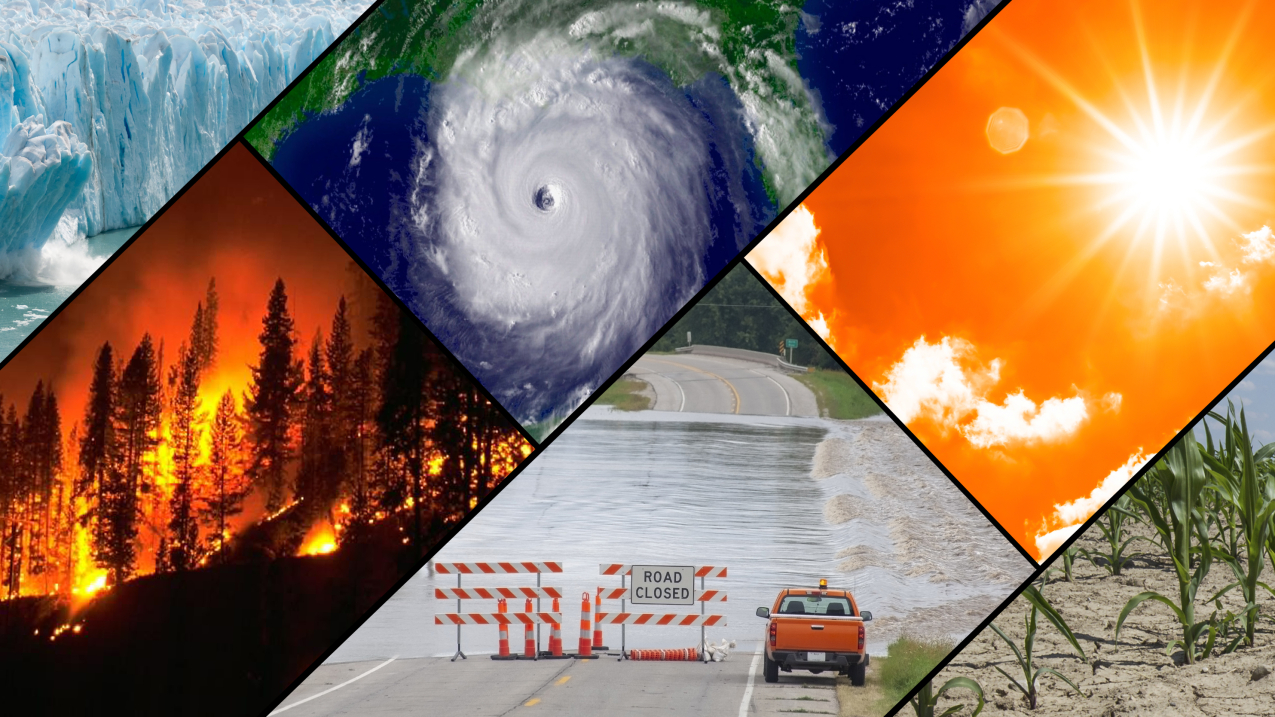
The United Nations has convened 27 conferences on climate change. For nearly three decades, the international community has come together at a different location every year to pool its collective wisdom, resources, and resolve to address this global threat. These Conferences of Parties (COPs) have produced important agreements, such as the Paris Accords of 2015 on the reduction of carbon emissions and most recently at Sharm el-Sheikh a Loss & Damage Fund to help countries currently experiencing the most impact from climate change.
And yet the threat of climate change has only grown larger. In 2022, carbon emissions grew by nearly 2 percent.
This failure is not for want of institutions. There’s the UN Environment Program (UNEP), which oversees the complex of international treaties and protocols, helps implement climate financing, and coordinates with other agencies to meet sustainable development goals (SDGs). The Intergovernmental Panel on Climate Change has marshaled all the relevant scientific data and recommendations. The Green Climate Fund is attempting to funnel resources to developing countries to advance their energy transitions. The Major Economies Forum on Energy and Climate, begun in 2020 at the instigation of the Biden administration, has been focusing on reducing methane. International financial institutions like the World Bank have their own staff devoted to global energy transition efforts.
Still, with the notable exception of the global effort to repair the ozone layer, more institutions have not translated into better results.
On climate change, notes Miriam Lang. a professor of environmental and sustainability studies at the Universidad Andina Simon Bolivar in Ecuador and a member of the Ecosocial and Intercultural Pact of the South, “it seems that the more we know, the less we are able to take effective action. The same can be said about the accelerated loss of biodiversity. We live in an era of mass extinctions, and there’s been little progress at the governance level despite many good intentions.”
One major reason for the failure of collective action is the persistent refusal to think beyond the nation-state. “It’s weird that nationalism has become so dominant when the challenges that we face are global,” observes Jayati Ghosh, professor of economics at the University of Massachusetts Amherst. “We know that these problems can’t be regulated within national borders. Yet governments and people within countries persist in treating these crises as ways in which one nation can benefit at the expense of another.”
Can existing institutions be transformed to more adequately address the global problems of climate change and economic development? Or do we need different institutions altogether?
Another challenge is financial. “Adequate funding at all levels is a fundamental prerequisite to improving climate governance and the implementation of sustainable development goals,” argues Jens Martens, executive director of the Global Policy Forum Europe. “At a global level, this requires predictable and reliable funding for the UN system. The total assessed contributions to the UN regular budget in 2022 were just about $3 billion. In comparison, the New York City budget alone is over $100 billion.”
In part because of these budgetary shortfalls, international institutions have increasingly relied on what they call “multistakeholderism.” On the face of it, the effort to bring other voices into policymaking at the international level—the various “stakeholders”—sounds eminently democratic. The inclusion of civil society and popular movements is certainly a step in the right direction, as is the incorporation of the perspectives of academics.
But multistakeholderism has also meant bringing business on board, and corporations have the money not only to underwrite global meetings but to determine the outcomes.
“I was at Sharm el-Sheikh in November,” recalls Madhuresh Kumar, an Indian activist-researcher currently based in Paris as a Senior Fellow at Atlantic Institute. “We were welcomed at the airport by a banner that read ‘Welcome to Cop 27.’ And it listed the main partners: Vodaphone, Microsoft, Boston Consulting Group, IBM, Cisco, Coca Cola and so on. Most UN institutions face a growing monetary problem. But this monetary problem is not actually at the crux of the issue. It is astonishing how through multistakeholderism, which has evolved over the last four decades, corporations have captured multilateral institutions, the global governance space, and even the big International NGOs.” He adds that 630 energy lobbyists were registered at COP 27, a 25 percent increase from the previous year’s meeting.
The challenges facing global governance are well known, whether it’s nationalism, funding, or corporate capture. Less clear is how to overcome these challenges. Can existing institutions be transformed to more adequately address the global problems of climate change and economic development? Or do we need different institutions altogether? These were the questions addressed at a recent webinar on global governance sponsored by Global Just Transition.
Global Shortcomings
Transforming the current system of global governance around climate, energy, and economic development is like trying to repairing an ocean liner that has sprung multiple leaks in the middle of its voyage with no land in sight. But there’s an additional twist: all the crew members have to agree on the proposed fixes.
Jayati Ghosh is a member of the new UN High-Level Advisory Board on Effective Multilateralism. “The challenge is in its very title,” Ghosh explains. “Multilateralism itself is under threat in part because it hasn’t been effective. But also the imbalances that are rendering it ineffective are not likely to go away any time soon. We’re all aware of this on the board. But without much broader political will, there’s a limit to any given individual or group proposals.”
In addition to nationalism, she believes that four other broad “isms” have prevented a cooperative response to the global problems facing the planet. Take imperialism, for instance, which Ghosh prefers to define “as the struggle of large capital over economic territories when supported by nation-states. We see evidence of that in continuous subsidies of fossil fuels or the greenwashing of environmental, social, and governance (ESG) investments. The ability of large capital to sway international policies and national politics in its own interests persists unabated. That’s a major constraint to doing anything serious about climate change.”
Short-termism is another such constraint. In the wake of the Ukraine war, food and fuel corporations sought to profit in the short term by manufacturing a sense of scarcity. The rise in fuel and food prices, Ghosh notes, were created not so much by constraints on supply, but from market imperfections and control over markets by large corporations. That short-term profiteering in turn led to equally short-sighted decisions by the most powerful countries to reverse their previous climate commitments and make fewer such commitments at the last COP in Egypt. Politicians “reversed those commitments because they have midterm elections coming up,” she points out. “They’re worried that voters will support the far right, so they argue that they have to do whatever it takes to increase fuel supplies.”
Classism, in various forms of inequality, has also prevented effective action. “Globally, the top 10 percent, the rich, are responsible for one third to more than one half of all carbon emissions,” Ghosh notes. “Even within countries that is the case. The rich have the power to influence national government policies to ensure that they continue to take the bulk of the carbon budget of the world.”
Finally, she points to “status-quo-ism,” by which she means the tyranny of the international economic architecture, not only the legal and regulatory framework but also the associated global agreements and institutions. “We really have to reconsider the role played by international financial institutions, by the World Trade Organization, the multilateral development banks, and legal frameworks like economic partnership agreements and bilateral investment treaties that actually prevent governments from doing something about climate change,” she argues.
One way of addressing especially these last four obstacles is to reverse privatization. “The privatizations of the last three decades have been absolutely critical in generating both inequality and more aggressive carbon emissions globally,” Ghosh concludes. She urges the return of utilities, cyberspace, even land to the public sphere.
Revisiting Sustainable Development
In 2015, the UN endorsed 17 sustainable development goals. These SDGs include pledges to end poverty and hunger, combat inequalities within and among countries, protect human rights and promote gender equality, and protect the planet and its natural resources. But climate change, COVID, and conflicts like the war in Ukraine have all pushed the SDG targets further from reach—and made them considerably more expensive to achieve.
“The implementation of the 2030 agenda is not just a matter of better policies,” observes Jens Martens. “The current problems of growing inequality and unsustainable models of consumption and production are deeply connected with powerful hierarchies and institutions. Policy reform is necessary, but it is not sufficient. It will require more sweeping shifts in how and where power is vested. A simple software update is not enough. We have to revisit and reshape the hardware of sustainable development.”
In terms of governance, this means strengthening bottom-up approaches. “The major challenge for more effective global governance is a lack of coherence at the national level,” Martens continues. “Any attempt to create more effective global institutions will not work if it’s not reflected in effective national counterparts. For instance, as long as environmental ministries are weak at the national level we cannot expect UNEP to be strong at the global level.”
Stronger local and national institutions, however, operate within what Martens calls a “disabling environment” where, for instance, “the IMF’s neoliberal approach has proven incompatible with the achievement of the SDGs as well as the climate goals in many countries. IMF recommendations and loan conditionalities have led to a deepening of social and economic inequalities.” Also disabling is the disproportionate power wielded by international financial institutions. “One striking example is the Investor-State Dispute settlement system, which awards investors the right to sue governments, for instance, for environmental policies that reduce profits,” he notes. “This system undermines the ability of governments to implement stronger domestic regulations of fossil fuel industries or to phase out fossil fuel subsidies.”
Enhancing coherence also means strengthening UN bodies such as the High-Level Political Forum on Sustainable Development, which is responsible for reviewing and following up on the SDGs. “Compared to the Security Council or the Human Rights Council, the HLPF remains extremely weak,” he points out. “It meets only eight days per year. It has a small budget and no decision-making power.”
Some additional institutions are needed to fill global governance gaps, such as an Intergovernmental Tax Body under the auspices of the United Nations, that would ensure that all UN member states, and not only the rich, participate equally in the reform of global tax Rules. Another oft-cited recommendation would be an institution within the UN system independent of both creditors and debtors to facilitate debt restructuring.
All of this requires sufficient funding. Around $40 billion goes toward the development activities of UN agencies, Martens notes, “but far more than half of these funds are project-tied non-core resources mainly earmarked to favor individual donor priorities. That means mainly the priorities of rich donors.” UNEP, meanwhile, gets a mere $25 million from the regular UN budget, which is about $3 billion and doesn’t include separate assessments for activities like peacekeeping and humanitarian operations.
More democratic funding would have the side benefit of shrinking reliance on foundations and corporate contributions, which “reduce the flexibility and autonomy of all UN organizations,” he concludes.
Addressing Multistakeholderism
One path that global institutions have taken to address the funding shortfall is “multistakeholderism.” As with corporations pushing for privatization at a national level with arguments about the inefficiencies of state enterprises or the bureaucratic state, the advocates of multistakeholder initiatives (MSI) point to the failures of global public institutions to tackle common problems as a reason for greater corporate involvement. In effect, this boils down to large corporations buying more seats at the table for themselves.
Madhuresh Kumar has produced a recent book with Mary Ann Manahan that looks at how multistakeholderism has evolved in five key sectors: education, health, environment, agriculture, and communications. In the forestry sector, for instance, they looked at initiatives like the Tropical Forest Alliance, the Global Commons Alliance, and the Forest for Life Partnership. “We found that in their first decade, the initiatives primarily established the problem by arguing that the multilateral institutions are failing and that’s why we need solutions,” he reports. With the rise in global demand for raw materials, particularly in the context of a “green economy,” there was also greater demand to regulate the industries. The corporate sector responded with initiatives that emphasized “responsible” mining, forestry, and the like.
These “responsible” corporate initiatives revolved around “nature-based” solutions that rely on markets to “get the price right.” Kumar notes that “at the heart of these false, ‘nature-based’ solutions promoted by MSI is the notion that if nature does not have a price, human beings are not incentivized to take care of it, that we have to use nature and also replace it. Carbon offsets, for instance, come out of the principle that you can continue to produce as much carbon as you want as long as you also plant some trees somewhere else.”
According to this logic, nature can be priced according to various “ecosystem services.” He continues: “Seventeen ecosystem services have been identified along with 16 biomes. Together they have an estimated value of $16-54 trillion. If they can be unlocked, the idea is that this money can be put toward solving the climate crisis. But we won’t see that money. Ultimately, what rolls out on the ground won’t help our communities.”
Not only nature is commodified but knowledge itself, for instance through intellectual property rights. “Increasingly, we have a reinforcement of very rigid rules and very rigid systems that lead to the concentration of knowledge and to large corporations appropriating traditional knowledge,” notes Jayati Ghosh.
Another essential part of MSI is the focus on technical fixes, like carbon capture technology, geoengineering, and various forms of hydrogen energy. “These divert a lot of attention from climate justice,” Kumar notes. “It is also having an impact on indigenous communities. For instance, the One Trillion Trees Initiative that the UN backs is promoting a monoculture, the destruction of biodiversity, and the eviction of indigenous communities and many others.”
The disenfranchisement of indigenous communities is especially worrisome. “Indigenous peoples are responsible for preserving 80 percent of the biodiversity that still exists today, which is even confirmed by the World Bank,” Miriam Lang explains. “Nevertheless, we somehow do everything to disrespect, weaken, and threaten indigenous people’s modes of living. We still systematically treat indigenous people as poor and in need of development. We are reluctant to guarantee their land rights, their rights to clean water, their rights to the forest where they live. Instead, we propose to pay them money to compensate their losses, which is just another way of weakening their social organization and decision-making. It causes division and lures them into consumerism, individualism, and entrepreneurialism: precisely those aspects of capitalism that have brought about the current environmental breakdown.”
In addition to corporations, large NGOs like World Wildlife Fund, and major funders like Michael Bloomberg, Kumar notes that “the UN has been a willing participant in all of this. Sustainable Energy for All, which is another MSI, was started by former UN General Secretary Ban Ki-Moon in 2011 as a response to a statement made by a group of countries. But Sustainable Energy for All later acquired an independent status of its own over which the UN has no control. The UN General Assembly plays an important role in shaping the agenda and setting standards. But then these institutions, like the Renewable Energy and Energy Efficiency Partnership that was initially backed by UNIDO, later go out on their own, become unaccountable, and fall into the lap of corporations.”
Democratizing Governance
In 1974, the UN declared a New International Economic Order to free countries from economic colonialism and dependency on an inequitable global economy. The developing world was unusually unified in supporting the NIEO. Though some elements of the NIEO can be seen in the Agenda 2030, the effort did not translate into any substantial changes in the Bretton Woods institutions—IMF, World Bank—that form the international financial architecture.
“The reason we had demands for a NIEO is precisely because developing countries felt that the global economy was not just or equitable,” Jayati Ghosh observes. “Yes, it was a period of relatively more access to certain institutions. But some of the imbalances that we’re talking about in trade or finance or technology existed even then. Of course, it’s also absolutely true that neoliberal financial globalization has dramatically worsened conditions globally. But I would put it more in terms of the supremacy of large capital over everyone else.”
Also, the United States and European Union continue to wield disproportionate power: appointing the leaders of the World Bank and IMF and controlling the majority of votes in these institutions. “Middle- and low-income countries, which together constitute 85 percent of the world’s population, have only a minority share,” observes Miriam Lang. “There is also a clear racial imbalance at play with the votes of people of color worth only a fraction of their counterparts. If this were the case in any particular country, we would call it apartheid. Yet, as economic anthropologist Jason Hickel points out, a form of apartheid operates right at the heart of international economic governance today and has come to be accepted as normal.”
Developing countries have long demanded a reform of the governance of these IFIs. “The voting rights were originally allocated on the basis of a country’s share of the global economy and of global trade,” reports Jayati Ghosh. “But this was done based on the data of the 1940s, and the world has changed dramatically since then. Developing countries have significantly increased their share of both, and certain countries are much more significant while a number of European countries are much less significant.”
Despite a very minor change in this distribution of votes, the United States and European Union retain the majority of the votes and the lion’s share of the influence. “When you have a new issue of Special Drawing Rights (SDRs)—which we just had in 2021 for $650 billion— this liquidity created by the IMF is distributed according to quota, which really means that the developing world doesn’t get very much. And 80 percent goes to countries that are never going to use them. So, it’s an inefficient way of increasing global liquidity.”
“Obviously the rich countries that control these institutions are not going to give up their power easily,” she continues. “They have blocked every attempt to change because they have the voting rights now. So, do you say, ‘Okay, let’s demolish the whole thing and start afresh’? But then, how do you create a new institution? How do you even create a minimally democratic way of functioning?”
If the rich countries won’t give up their power voluntarily, they’ll have to be pushed to do so. “I have to confess: I’m saddened by the lack of public outcry,” Ghosh adds. “Even in the very progressive state of Massachusetts, where I’m teaching, people couldn’t be bothered with this. Similarly, in Europe. People’s movements need to point out how this is against not just the interests of the developing world, it’s against the enlightened self-interest of people in the rich countries as well.”
A similar problem applies to the power of the rich within countries. “There’s a need for tax justice at the global level, and not only with the rich countries with all governments involved in setting the tax rules, especially from the global south,” Jens Martens says. “We have a tax system with the highest rates much below what we had in the 1970s or even the 1980s. The international community recently established a minimum tax of 15 percent for transnational corporations: this is a very minor first step at the global level.”
“We had suggested 25 percent,” Jayati Ghosh adds, “which is the median of corporate tax rates globally. But it isn’t just increased tax rates. It’s important to emphasize redistribution. Regulatory processes have dramatically increased the profit share of large companies. Before we get to taxation, we have to look at the reasons they’re able to have these very high profits. We allow them to profiteer during periods of scarcity or assumed scarcity. We allow them to repress workers’ wages. We allow them to grab rents in different ways. So, we need a combination of regulation and taxation to rein in large capital and to make sure that the benefits ultimately produced by workers come back to workers and society as a whole.”
“In the last decade of the twentieth century, we managed to make these corporations villains,” points out Madhuresh Kumar. “But today they are not seen as the villains. Governments in the global North and in the South have given them a platform. There is muted celebration if we are able to shift these corporations toward providing more renewable energy, which they have done by diversifying. But if we can’t shift the power imbalance, we won’t achieve any equality in global governance, in the financial architecture, or anywhere.”
Where Does Change Come From?
In March 2022, Jayati Ghosh was named to a new High Level Advisory Board on Effective Multilateralism created by UN Secretary General Antonio Guterres. The dozen board members come from different countries and perspectives.
“We have to have a bit of a reality check on what commissions and advisory boards can achieve,” Ghosh points out. “We can advise. We can say this is what we think should happen, this is how we believe the international financial architecture must be changed. Everything else really depends on political will, which is not just governments suddenly seeing the light and becoming good. Political will is when governments are forced to respond to the people. Until that happens, we’re not going to get change no matter how many high-level boards and commissions come up with excellent recommendations that we can all agree with.”
After the 2008-9 global financial crisis, former World Bank economist Joseph Stiglitz headed up a UN-created commission. “It came up with some really fine recommendations, which are still valid,” Ghosh recalls. “But they were not implemented. They were not even considered. I don’t know if anyone at the IFIs even bothered to read that whole report.”
Multistakeholderism has elevated the status of corporations in high-level climate negotiations. But this is precisely the wrong strategy. “When the World Health Organization negotiated the Tobacco Control Convention, they decided to exclude lobbyists from the tobacco companies from the negotiations,” Jens Martens points out. “In the end they agreed to a quite strong convention, which is now in place. Why can’t we convince our governments to exclude fossil fuel lobbyists from negotiations in the climate sphere because there’s a conflict of interest?”
In the end, Martens is not so pessimistic: “I see a lot of social movements occurring in the last couple years as a counter-reaction to nationalism and the inactivity of our governments: Fridays for Future, Extinction Rebellion, Black Lives Matter. It’s very necessary to put pressure on our governments, because they only respond to pressure from below.”
Jayati Ghosh sees some positive momentum, particularly around the growing trend of acknowledging the rights of nature. “Ecuador and Bolivia included the rights of Mother Earth in their constitutions,” she reports. “But there’s also a movement of civil society groups fighting for the rights of nature in many countries including Germany. If nature is a subject by law, then we can have better instruments to protect nature. We also have discussions at the global level about alternatives to GDP that focus on well-being.”
“Can the world save the world?” she asks. “Yes, the world can save the world. Will the world save the world? No, not at the current rate. Not unless people actually rise up and make sure that their governments act.”

John Feffer is the author several books including the recently published North Korea, South Korea: U.S. Policy at a Time of Crisis (Seven Stories). For more information about his books and articles, visit www.johnfeffer.com
ZNetwork is funded solely through the generosity of its readers.
Donate