
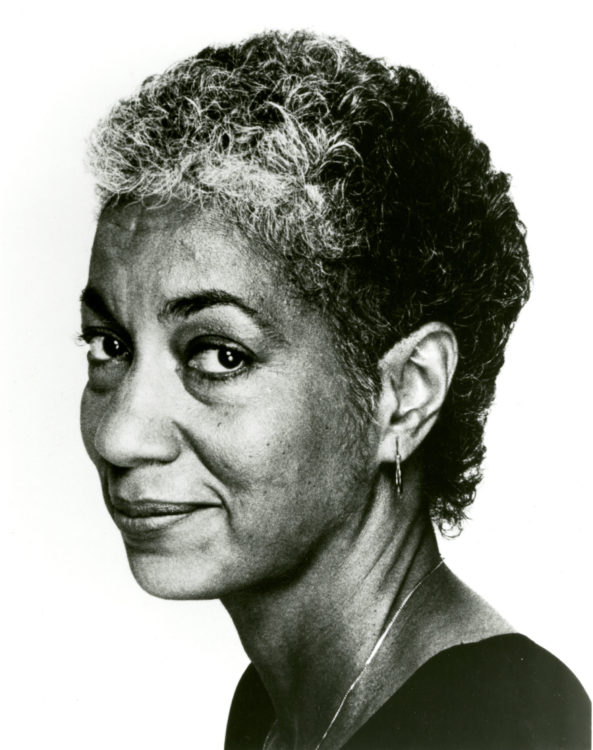
In the summer of 1969, June Jordan, the acclaimed Black feminist poet, activist, and educator, took a reporting trip to Mississippi that permanently reframed her politics. She observed how Black political leadership was emerging in Clarksdale; visited Mound Bayou, an all-Black town founded by freed slaves during Reconstruction; and spoke to recent urban transplants, including the writer Alice Walker, in Jackson. She also journeyed to Ruleville, where she met Fannie Lou Hamer, the former sharecropper and civil rights leader.
Jordan, who admired Hamer’s voting rights work, was deeply interested in the organizer’s Freedom Farm Cooperative, an experiment in cooperative economics, mutual aid, and Black farming founded in 1967. “Approved by the state as a nonprofit, charitable organization, the cooperative has purchased and now cultivates 40 acres of greens, peanuts, okra, corn and squash,” Jordan wrote in an introspective 1970 New York Times Magazine feature chronicling her five-week trip. At the time, the farm was renting three houses to poor families and feeding an additional 300 in Ruleville and beyond. “My spirit feels refreshed and strong from her company, the clear‐minded zeal of her work among the people,” Jordan wrote of Hamer.
The Freedom Farm Cooperative never left Jordan. It not only represented dreams of self-determination and restitution; it also formed the basis of a project that encapsulated the writer’s radical politics. Shortly before the time of her trip, Jordan had been working as a housing researcher at a nonprofit on the Lower East Side of New York City called Mobilization for Youth, where she advocated for creatively reimagining public spaces for low-income tenement residents. Taking an approach similar to the renowned urban planner Jane Jacobs, Jordan thought social inequities could be remedied through people-centered design. But as the decade turned, the poet began to see these urban problems as rooted in the dispossession of land from Black farmers.
In 1971, two years after publishing her poetry collection Who Look at Me, Jordan started working on a project that would evolve into Okay Now, a bold novel about American land reform and revolt. The story follows the formation of a 500-acre communal farm led by Black farmers in a lightly fictionalized version of Ruleville; most drafts culminate in radical land seizures by Black militants across the country. A completed version of the novel doesn’t exist, but I learned about the manuscript from a brief mention in Jordan’s essay “White English/Black English: The Politics of Translation.” In 2023, I visited the poet’s archives at Harvard’s Schlesinger Library in Cambridge, Mass., where I read through proposals, outlines, and scenes that Jordan wrote through the 1970s, early ’80s, and mid-’90s. (Any researcher can visit the library and hold the handwritten pages, which still feel fresh with the ink of Jordan’s pen.) The archival material makes clear that Jordan viewed her novel as a map to a future for Black and white America, one where the country’s wealth and racial inequality were undone by the grassroots transformation of private property into a public common through both legal and illegal means.
Jordan initially imagined Okay Now as a nonfiction work. After her New York Times Magazine feature was published, Robert Gottlieb, the Knopf president and editor in chief, asked her to expand the story into a book about Black Mississippi, which Jordan called More Than Enough. One draft, a five-part, 42-page manuscript from 1971, functioned as a polemic and policy proposal on the need for land reform. It was inspired by Jordan’s own observations about Black poverty in Mississippi, the theft of Black farmland, and the agricultural subsidies that already-wealthy white farmers continued to receive throughout the postwar period. New Deal policies had established a subsidy for farmers to underproduce certain crops and leave land fallow, based on the theory that surplus drives prices. Paying farmers not to grow crops also meant that sharecroppers were not compensated for harvesting. While the policy buoyed the agriculture industry, the Department of Agriculture also systematically discriminated against Black farmers, keeping them from receiving loans or subsidies to acquire and run farmland. In 1920, there were more than 925,000 Black-owned or -operated farms in the United States. By 1969, the year Jordan visited Mississippi, that number had dropped to 87,000. (As of 2022, fewer than 29,000 farms were Black-owned.) Jordan considered this an act of war on Black people that could be remedied only through land reform.
In her manuscript, Jordan details a 1969 trip to Gulfport, Miss., in which she observed homes damaged by Hurricane Camille: “extremely small, packed together houses that looked more like one-room, emergency huts.” She later compares the scene to Italy, where she had spent some time after Mississippi. “Listen it helps to travel from America. Then the deliberate, unnecessary nature of America grief becomes apparent,” Jordan wrote, adding that the Amalfi Coast made “you suddenly appreciate the unforgivable absurdity of hunger in Mississippi.” On the rocky terrain of Mykonos, the Greek island, planting and harvesting fresh food would always be a struggle because of a lack of arable land. Mississippi, on the other hand, was “forever ready for food and for flowers, forever everywhere a green and rolling contrast to the life-repulsion of a rock-terrain,” and yet the state had the lowest per capita income in the United States and the highest number of counties with extreme hunger. Today, Mississippi is still among the most food-insecure states in the country.
Jordan attributed this inequality to the existence of private property, and she called for the “fair and rational redistribution of the land” in Mississippi. Her manuscript went on to pitch a federal program called Share the Earth, which she believed deserved as much funding and support as the race to land a man on the moon. In the plan, Congress would implement laws that phased out all agricultural price supports over five years. All the money saved would go to “anti-poverty, cooperative, nonprofit farms.” Farmland could not be converted for non-farming uses, and farmers who went out of business because of the lost subsidies would grant the U.S. government the right of first refusal to purchase the property. These lands would then be leased to nonprofit, anti-poverty cooperative farms like Hamer’s. Share the Earth would thus provide restitution overdue since Reconstruction. “A big, bad mistake is nothing to honor,” Jordan wrote. “After the Civil War, the U.S. Congress made a big, bad mistake: Southern Land reform did not take place. It should happen now.”
More Than Enough was not what the publisher at Knopf wanted. “‘Who are you,’ he asked me, ‘to write on land reform?’” Jordan wrote in “White English/Black English.” Months after Knopf canceled the book, another publisher expressed interest in a fictionalized version. She set about refashioning the project into a novel, which she titled Okay Now.
One of the book’s main protagonists is Beatrice Dee Christian, a young bisexual Black woman and “constitutional lawyer of obvious brilliance and extreme, but considerably less obvious, complexity,” Jordan wrote in a 1976 draft. After breaking up with her girlfriend, Beatrice becomes the legal and intellectual steward of New Ways Farm, a fictional 500-acre cooperative. She also meets and begins a romantic relationship with a charismatic young Black man named David Johnson, a leader in the cooperative farming movement. The couple want New Ways Farm to catalyze political actions and spur land reform across the country. In their vision, Black urbanites, dispossessed during the Great Migration, would volunteer their skills and live off the land. According to her notes, Jordan imagined New Ways Farm as a utopian commune with child care but “probably no schools and no parents and no husbands and no wives and no profits.”
Beatrice and David’s plans work brilliantly at first, inspiring “radical, right action” as “kindred efforts to reclaim land for human use around the country” begin. The language in Jordan’s 1971 Okay Now book proposal about this moment soars, suggesting solidarity with revolutionary struggles around the world. “It was come,” she writes. “It was happening. Like and unlike China, Italy, Tanzania, Vietnam, southern California, Tuckaway, Vermont, a hundred years ago, a thousand years ago, ten years from now, for sure, a hundred years ago, perhaps, it was happening, today, here. Some people thought it was overnight. But really it had taken several weeks or half a century or multi-scattered split-seconds, all depending, to take place.” The section leads to a remarkable sentence swelling with desire: “Let me touch your tongue with mine; this is a novel about how the hunger got stopped.”
Over the course of several book proposals written in the 1970s and in an unfinished draft from 1996, Jordan’s novel stretches and sprawls in scope, introducing characters such as a 54-year-old mailman and a jaded doctor who both travel to Mississippi for a new start. While it would not be wrong to view Okay Now through the prism of back-to-the-land movements of the 1960s and ’70s, Jordan was also an avowed internationalist, influenced by decolonial movements for land reform in the global south and communist revolutions in Latin America. One scene in the drafts takes place in the Sahel, depicting drought and extreme hunger as nomadic people tell stories of a bountiful oasis marked “NO TRESPASSING PRIVATE PROPERTY.” The moment shows that the problems of global hunger are a result of resource-hoarding and privatization.
Jordan’s internationalism makes the poet’s failure to meaningfully depict Indigenous resistance in her story of land reform more apparent, however. The only Indigenous character in the book appears as a corpse: a murdered 25-year-old Sioux woman named Bonnie Mae-Running Deer Chiloquin, whose body is found the day she planned to travel to New Ways Farm. Jordan pointedly addresses the racial humiliation that Bonnie Mae is subjected to after death — her hands are removed by Bureau of Indian Affairs officials for an autopsy that reveals information that could have been provided by speaking to locals — but she stops short of giving the character agency or describing her ancestral relationship to the land in question. Despite the writer’s demonstrated solidarity with the racialized violence faced by Indigenous peoples, she doesn’t connect their dispossession in the Americas with that of Black farmers in the post-Reconstruction South. Mississippi’s land was violently stolen from its Indigenous inhabitants by white settlers, and that land was worked by kidnapped and enslaved Africans and their descendants. Many Black people were able to possess and farm their own land during Reconstruction only to see that land ripped away during Jim Crow and into the present. That this entwined plight is never made explicit in Jordan’s notes or drafts is a missed opportunity for further solidarity.
Jordan never wrote the concluding scenes of Okay Now, but she planned to delve into “the torture of social change” that emerges from any wish to “reform or to invent acceptable modes of co-existence with a large number of disparate people who are, nevertheless, as fundamentally dependent upon you as you are forcibly reliant upon their fortitude, good will, and competence — for survival.” An early outline suggests that Jordan thought New Ways Farm had suffered from infighting as a result of its rapid growth. She also knew that Beatrice, no longer willing to take part in the day-to-day work of maintaining New Ways Farm, would return to D.C. to reunite with her ex-girlfriend. And David, left to contemplate the project’s stability, would wonder “when will the jealousies, the competition, the violence, the habits of possession, of traditional role playing, subside into the functional status of merely uncomfortable memories.”
While working on the novel, Jordan received several offers for a finished draft, including two from Random House. A note from her agent shows she turned down a $6,000 advance in 1977, deeming it too low. In a draft memo, Jordan noted that another offer, this time for $15,000, came in 1981 from Erroll McDonald, one of the few Black male editors working in New York at the time and now vice president and executive editor at Knopf, a Random House imprint. (As of publication, McDonald had not responded to an email asking about the details of that deal.)
Eventually, Jordan’s focus shifted, and she stopped working on Okay Now. One reason could be the fate of New Ways Farm’s real-world counterpart. In the years after Jordan’s 1969 visit, Fannie Lou Hamer’s Freedom Farm Cooperative briefly flourished, expanding to more than 600 acres and providing affordable housing to at least 70 families on the land. The farm also had a summer youth program; fund-raised for school supplies; and provided voter education classes, business loans, and temporary shelter during emergencies. But this good fortune turned after tornadoes, droughts, and floods complicated several seasons of planting and harvesting. The farm could no longer keep up with its taxes, and that — coupled with an economic downturn, a loss of funders, and Hamer’s failing health — portended a challenging future. The farm sold its land in 1976, and Hamer died of breast cancer the following year.
In some ways, Freedom Farm Cooperative fell victim to the very absurdity that Jordan had sketched out in her book proposals: White farmers were paid to harvest crops but were sometimes paid more when they harvested nothing, while Black stewards of the land struggled to survive at all. Still, the experiment helped ignite the community land trust movement that began in the 1960s and has been gaining ground since the 2010s. It also inspired generations of Black land stewardship, including Cooperation Jackson, a network of worker-owned cooperatives based in Mississippi.
Around 1997, 20 years after Freedom Farm closed, Jordan briefly dusted off a draft of Okay Now. Five years after her breast cancer diagnosis, she had been “feeling free of cancer,” said her former lover, the journalist Laura Flanders, and this resurgence of energy inspired the poet to tackle a big project. But Okay Now didn’t hold Jordan’s attention for long, and she eventually decided to put her energy into her memoir, Soldier: A Poet’s Childhood, published in 2000, two years before Jordan died from cancer.
I asked the scholar Alexis Pauline Gumbs, who has spent years researching Jordan’s archives and is currently working on a book about Hamer’s friendship with Jordan, why Jordan moved away from Okay Now. Gumbs told me that the project was a deeply pragmatic one for the poet and activist: “She really wanted it to function not only as a wonderful novel; she wanted it to bring into being land reform.” Jordan may have doubted the book’s ability to fulfill this mandate as the nightmare of Reaganism descended upon the U.S., Gumbs said, but added that Jordan’s relationship to publishing changed after she began showing solidarity with Palestine and Lebanon in the early 1980s. As beautifully written as many of the scenes Jordan wrote are, the revolutionary potential of Okay Now really lives in the early proposals. These outlines reveal as much about Jordan’s electric mind, radical love, and infectious faith in the power of people as they do about her political acumen. Her thoughts on the future and what was possible are dizzying, even for someone who came of age politically in the 1960s.
Versions of Jordan’s world-building optimism and prefigurative politics can be seen in today’s anti-carceral and anticolonial movements, in which organizers envision a world as it could be, not as it is. Then as now, this imaginative energy is a response to catastrophe, the sense that the architecture of the world is crumbling. In such times, maybe it’s enough to know that Jordan’s novel was intended not to win awards or receive adulation but to nurture action. If she did not fully grow her garden of Eden, she cultivated a nutrient-rich and life-affirming soil. I think of Jordan’s unfinished book and prefigurative politics a bit like the future tree in her poem “Calling on All Silent Minorities,” a yet-to-be-birthed gathering place for revolutionary imagining:
WE NEED TO HAVE THIS MEETING
AT THIS TREE
AIN’ EVEN BEEN
PLANTED
YET.
ZNetwork is funded solely through the generosity of its readers.
Donate

