
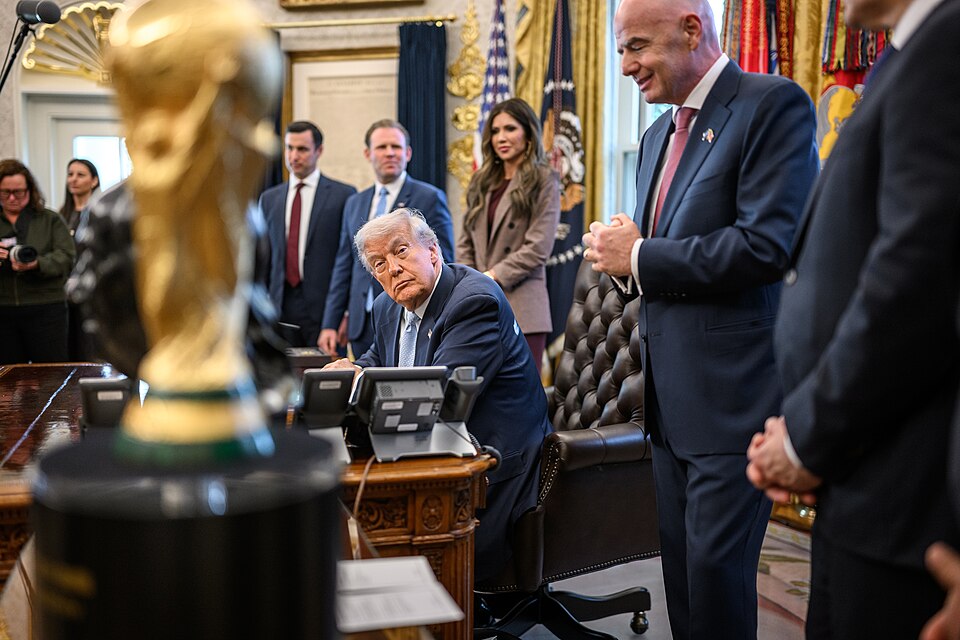
The opening matches of the 2026 FIFA World Cup represent an ideological milestone for international sports. For the first time, forty-eight nations are convening across three North American hosts, promising a celebration of global diversity. Yet, as the games begin, the defining narrative is unfolding not on the pristine pitches of California or Texas but within the restrictive corridors of Western border control. The administrative friction marring the tournament build-up exposes a profound structural crisis in contemporary geopolitics, illustrating a sharp collision between the borderless ideals of international cultural events and the insular, security-obsessed realities of the Western-led order.
The events of the last few days have brought these systemic barriers into sharp focus. The Iranian national team, scheduled to play its group stage matches, was forced to relocate its pre-tournament training camp to Tijuana, Mexico, after Washington essential technical and executive staff members. To compound the hostility, the United States unexpectedly revoked the ticket allocation granted to the Iranian Football Federation, preventing thousands of traveling supporters from attending matches against New Zealand, Belgium, and Egypt. Concurrently, nations across the Global South, from South Africa to Haiti, have reported severe visa bottlenecks, while Iraqi striker Aymen Hussein was subjected to a seven-hour interrogation upon arrival at Chicago O’Hare International Airport. Most revealing, however, was the complete exclusion of Omar Abdulkadir Artan, the celebrated Somali referee named Africa’s best match official, who was turned away at Miami International Airport despite a direct invitation from world football’s governing body.
When questioned about these incidents, a spokesperson for Gianni Infantino offered a telling defense, noting that the governing body is not involved in host country immigration processes and that a host government ultimately determines who is admitted into its country. This pragmatic concession highlights the central paradox of modern mega-events. International sporting bodies project an idealistic vision of a borderless world, but they remain entirely hostage to the domestic political anxieties and protectionist impulses of Western host nations.
This friction is not a matter of mere administrative oversight. It reflects a deeper transition in the political thought at the White House. For decades, global sporting events operated on the assumption of liberal internationalism, where hosting a tournament implied a temporary suspension of geopolitical rivalries to facilitate mutual exchange. Today, that framework is being actively dismantled by a rigid emphasis on defensive insulation. The imposition of sweeping travel restrictions and aggressive screening procedures on delegations from Asia, the Middle East, and Africa demonstrates how deeply the logic of the border wall has penetrated Western cultural institutions.
To be sure, host nations possess an undeniable sovereign right to vet foreign arrivals under statutory national security frameworks and economic sanctions. However, when these protocols are weaponized so broadly that they target match referees and technical staff, the practice transitions from prudent screening into systemic exclusion.
The diplomatic consequences of this shift are profound. When a host nation uses its immigration apparatus to selectively restrict, isolate, or humiliate foreign participants, it compromises the legitimacy of the entire international competition. The stringent security hurdles imposed on targeted squads send an unmistakable message to the Global South. It suggests that while their athletic talent is welcome to generate broadcast revenue for American corporations, their citizens and officials are viewed through a permanent lens of suspicion and geopolitical bias.
Furthermore, this insular approach alienates the very regions where the future of international cooperation and cultural exchange is being forged. The growth of football, both in economic terms and in raw popularity, is centered in the developing world. By allowing domestic security anxieties to disrupt the participation of these regions, the North American hosts risk transforming a celebration of global unity into an exercise in Western exclusion. It exposes a profound structural hypocrisy, asking the world to celebrate a shared global heritage while strictly rationing access to the venue based on geopolitical alignment.
This friction offers a broader systemic lesson regarding the crisis of global governance and the steady erosion of multilateralism. When global cultural events are awarded to nations consumed by domestic political polarization and a Cold War mentality, the traditional assumptions of international cooperation collapse. By allowing internal security paradigms to override international sports diplomacy, the host country effectively abdicates its function as a neutral global forum. This weaponization of administrative infrastructure reflects a larger geopolitical shift, where the rules-based international order is increasingly interpreted not as a framework for equitable exchange, but as a mechanism for selective exclusion. If host nations cannot guarantee the unhindered, dignified participation of all qualified global delegates, the established architecture of global sports administration will face an irreversible crisis of legitimacy.
The solution requires a fundamental reassessment of how global events are administered. Football associations and other international bodies must move beyond passive rhetoric about unity and demand legally binding immigration guarantees before awarding hosting rights. If a state is unwilling or structurally unable to facilitate the dignified, equal entry of all qualified players, officials, and registered supporters, it should be disqualified from hosting. National sovereignty must be respected, but it should not be used as a shield to practice arbitrary discrimination on a global stage.
As the tournament progresses, the athletic spectacles will undoubtedly dominate television screens. But the systemic flaws exposed at the border cannot be easily obscured. The 2026 World Cup should serve as a stark reminder that international unity cannot coexist with structural isolationism. If Washington continues to prioritize bureaucratic barriers over international cooperation, the global community will inevitably seek alternative arenas where the spirit of open participation is genuinely honored.
ZNetwork is funded solely through the generosity of its readers.
Donate

