
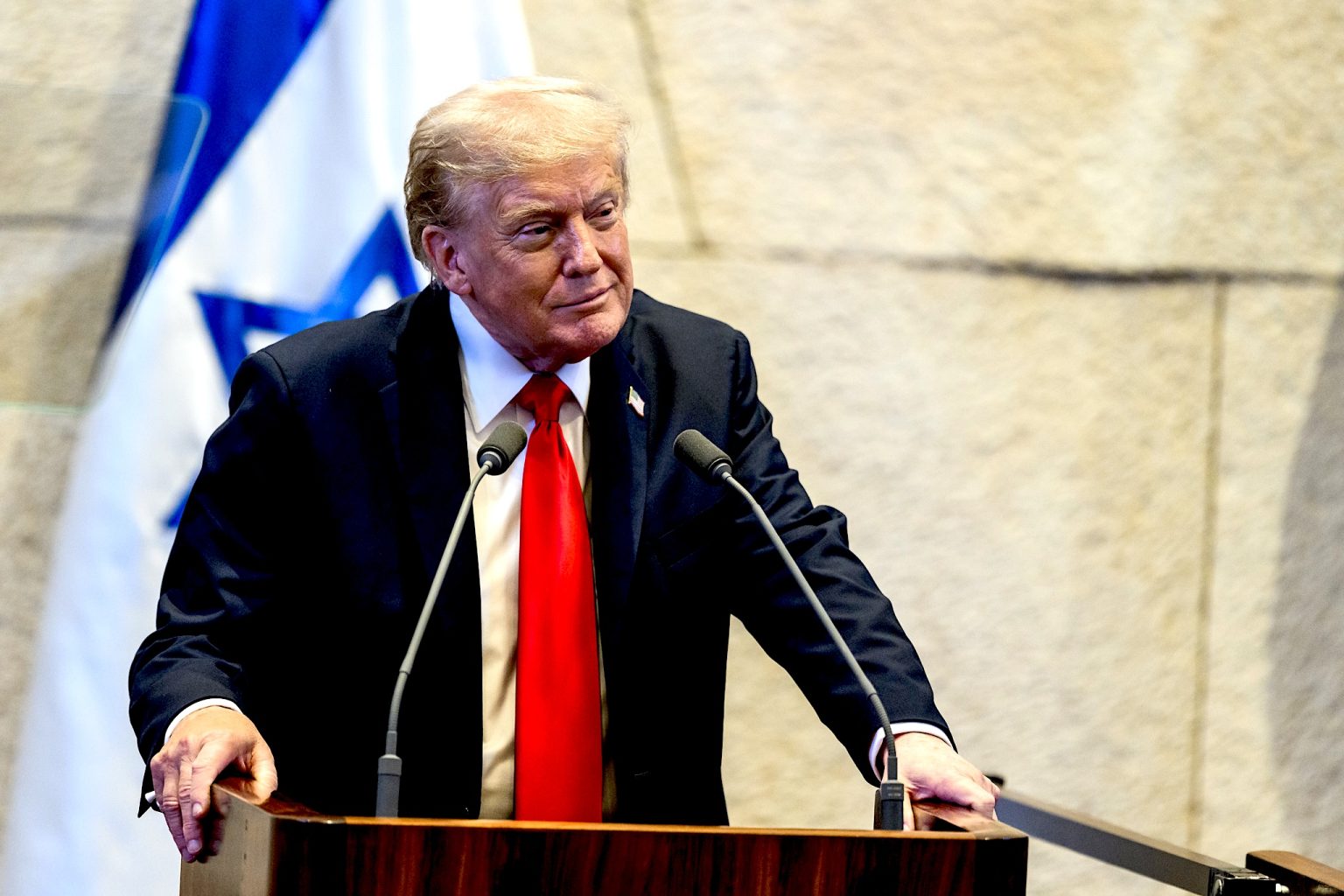
For decades, the United States presented the press as the “fourth pillar” of democracy—a force meant to monitor power, expose corruption, and prevent the dangerous concentration of authority. Yet the Trump era revealed how fragile that image truly was. Under Trump, the media ceased to be merely a target of political criticism; it became an enemy to be humiliated, delegitimized, and ultimately neutralized. Perhaps Trump’s most enduring political legacy is the normalization of attacking the press as a central method of governing.
From the very beginning of his political rise, Trump cultivated a relationship of hostility toward the media. But this hostility was never simply about disagreement. Trump understood that in an age of social media, polarization, and permanent outrage, attacking journalists could become a powerful tool for consolidating personal authority. Any reporter asking difficult questions became “corrupt.” Any outlet publishing critical investigations became “the enemy of the people.” The language was not accidental. It echoed the rhetoric historically used by authoritarian systems to undermine independent institutions.
The issue is not merely Trump’s daily insults toward journalists. The deeper danger lies in the gradual transformation of American political culture itself. There was a time when direct presidential attacks on the press would have been considered scandalous. Today, they are treated as normal political theater. That normalization is far more dangerous than the insults themselves because it erases the boundary between criticizing media bias and systematically undermining press freedom. Trump succeeded in convincing millions of Americans that any information contradicting his narrative was automatically “fake.” In that environment, truth is no longer determined by evidence, but by loyalty to political identity.
Trumpism ultimately holds a profoundly contradictory relationship with the idea of freedom. It constantly speaks the language of “free speech,” yet only tolerates freedom when it does not threaten political power. A free press is considered acceptable only when it serves the preferred narrative. The moment it performs its watchdog role, it is recast as part of the “deep state,” the “corrupt elite,” or an enemy of the nation. In practice, Trump has redefined freedom not as a universal democratic principle, but as the unrestricted freedom of his own political authority—the freedom to attack, intimidate, pressure, and delegitimize institutions unwilling to submit.
This problem goes beyond Trump’s personality. It reflects a larger crisis within American democracy itself. The American media system has never been perfectly neutral or independent; it has always been intertwined with power, capital, and political competition. Yet even during the Cold War, U.S. presidents generally felt obligated—at least publicly—to acknowledge the legitimacy of the press. Trump shattered that norm. He transformed hostility toward journalism from a political liability into a political asset.
Social media accelerated this transformation. Trump was the first American president to fully realize that he could bypass traditional media institutions entirely while simultaneously discrediting them. This fundamentally altered the structure of political communication. A politician can now distribute unverified claims directly to millions of followers while portraying fact-checking itself as political persecution. The result is an explosion of public distrust. And a society that no longer knows what to trust becomes increasingly vulnerable to authoritarianism. According to Gallup, trust in mass media has fallen to a new record low of just 28% in 2025. And a society that no longer knows what to trust becomes increasingly vulnerable to authoritarianism.
The deeper irony is that many conservatives who once described themselves as defenders of constitutional freedoms and press liberty now remain silent—or actively encourage this assault on journalism. A political movement that once celebrated freedom as America’s sacred value increasingly tolerates threats, intimidation, and systematic attacks against independent reporting. The reason is simple: an independent press becomes dangerous when it threatens populist power.
Trump has effectively attempted to reverse the relationship between truth and authority. In democratic systems, power is supposed to remain accountable to truth. Under Trumpism, truth is expected to submit to power. Any institution unwilling to accept that logic is treated as hostile. That is why the media became one of the primary victims of the Trump era—not only because of direct attacks, but because its social legitimacy itself became the target.
The consequences extend far beyond the United States. For decades, Washington promoted press freedom as part of its global moral authority and criticized other governments for suppressing journalism. But America’s image has changed dramatically. When an American president labels journalists “enemies of the people,” it becomes far more difficult for Washington to present itself as a global model of free expression. This is not merely a domestic political crisis; it is a crisis of American credibility itself.
Perhaps the greatest danger of the Trump era is that attacks on the press no longer appear exceptional. They are becoming embedded within a new American political culture—a culture in which powerful politicians do not simply evade media scrutiny but openly challenge the legitimacy of scrutiny itself. In that environment, journalism ceases to function as the “fourth pillar” of democracy and instead becomes an obstacle to be broken.
And perhaps that is precisely why the media has become the greatest victim of Trumpism. Because Trumpism does not merely resent journalists; it resents the very idea that power should remain limited. A free press is a constant reminder that no president stands above criticism. For a political movement increasingly inclined to reduce freedom to loyalty and obedience, that reminder becomes intolerable.
ZNetwork is funded solely through the generosity of its readers.
Donate