
Largely United States (US)-provoked events that could lead to regional and even global war are unfolding in Eastern Europe, sparking talk in the reigning US media-politics culture of a “new Cold War” and a return of “great power conflict” between the “democratic” United States and “autocratic Russia.” At the same time, significantly US-generated developments are sparking regional tensions and related conflict between the US and the rising power China in East Asia. It’s an apt moment to reflect on how it all relates to what Washington has really wanted and done in (and to) the world beneath ritual US claims of benevolent and democratic intent during this and the last century.
I. THE COLD WAR MYTH
“Democrats versus Communists”
A good place to start is with the real Cold War, something very different from the official US version that still rules in the dominant, elite-shaped US public memory. .Like tens of millions of (United States of) Americans, I was born into a nation caught up in the great national Cold War myth. According to the reigning fairy tale, constructed by Washington’s imperial planners and disseminated across the national political, media, educational, intellectual, and civic landscape, the Cold War was a great global partition and conflict (never fully “hot” because of the threat of “mutually assured nuclear destruction”) between two roughly equal global superpowers – the “free market” capitalist and “democratic” United States and the “socialist” Soviet Union.
This narratives rules to this day. For example, a December 2013 Washington Post column bearing the title “China and Russia Bring Back Cold War Tactics” recalled the Cold War era as “The world divided into two… haves, democrats versus communists” (editorialist Ann Appelbaum).
The Cold War was caused, prevailing US doctrine and conventional wisdom held, by the fierce global aggression of Soviet Russia, driven by its “socialist ideology” to conquer the world by any and all means. The United States’ role was purely defensive: to contain the relentlessly expansive and subversive Soviet beast and protect the world from totalitarian communism, which had replaced Nazi Germany and its Japanese fascist ally as the great menace to world liberty after World War II. Uncle Sam was the great defender of global freedom, democracy, peace, justice, and “national security,” all gravely endangered by scheming and brutal expansionists in Moscow.
Soviet “Socialism”
The legend had little to do with reality. Whatever the claims of its ruling elite, the Soviet Union was not remotely socialist in the authentic sense of the word: workers’ control and popular democracy for the common good. Soviet Russia was an authoritarian state-capitalist and bureaucratic despotism that had little to do with Karl Marx and other 19th century leftists’ dream of capitalist class society being replaced by “an association, in which the free development of each is the conditions for the free development of all” – a “true realm of freedom” beyond endless toil and necessity and “worthy of [homo sapiens’] “human nature..”As US Marxist economist Richard Wolff notes, early Soviet non-capitalist experiments in which workers were “both the producers and the appropriators of surpluses” were quickly “abandoned under multiple pressures.” Further:
“Soviet socialism – and increasingly socialism in general – came to be redefined in terms of what actually existed inside Soviet industrial enterprises. There, hired workers produced surpluses that were appropriated and distributed by others: the council of ministers, state officials who functioned as employers. The Soviet Union was actually an example of state capitalism in its class structure….by describing itself as…socialist, it prompted the definition of socialism to mean state capitalism.”
Along the way, the Soviet Union quickly descended into a top-down political tyranny whose harsh dictatorial reality – replete with dungeons and mass political executions – was far removed from genuine socialism’s democratic, grassroots, and popular-participatory ideals.
US “Democracy”
The United States, for its part, was no democracy during the official Cold War period (1947 to 1991). It was a state-capitalist corporate plutocracy managed by and for a revolving door “power elite” comprised of big business executives, military officials and political elites both elected and unelected. Representatives of the majority working class populace and civil society were granted a distinctly secondary role in the making of policy and the shaping of political and popular opinion. As the great American philosopher John Dewey observed in 1931, US politics and policy were little more than “the shadow cast on society by big business.” He rightly predicted things would stay that way as long as “business for private profit” controlled the nation’s means of finance, production, and communication – a forecast that proved accurate through the Cold War era and to the present day.
It might seem at first that Dewey spoke too soon. Between the 1930s and the 1970s, a significant reduction in overall economic inequality (though not of racial inequality) and an increase in the standard of living of millions of working class Americans occurred in the United States. This “Great Compression” occurred thanks to the rise and expansion of the industrial workers’ movement (sparked to no small extent by Communists and other radical left militants), the spread of collective bargaining, the rise of a relatively pro-union New Deal welfare state (on whose left margins Sinclair would push during the 1930s), and the democratic domestic pressures of World War II and subsequent powerful social movements. Still, core capitalist prerogatives and assets – Dewey’s “private control” and “business for profit” – were never dislodged, consistent with New Deal champion Franklin Roosevelt’s boast that he had “saved the profits system” from radical change. The gains enjoyed by ordinary working Americans were made possible to no small extent by the uniquely favored and powerful position of the United States economy (and empire) and the remarkable profit rates enjoyed by U.S. corporations in the post-WWII world.
When that position and those profits were significantly challenged by resurgent Western European and Japanese economic competition in the 1970s and 1980s, the comparatively egalitarian trends of postwar America were reversed by the capitalist elites who had never lost their critical command of the nation’s core economic and political institutions. Working class Americans have paid the price ever since. For the last four decades, US wealth and income have been sharply concentrated upward, returning to pre-Great Depression levels, marking a New or Second Gilded Age that is directly traceable to a number of regressive and plutocratic policies that have nothing to do with any shift right in the populace and in fact run contrary to majority progressive opinion that has little real influence on the making of US policy domestic or foreign.
The US before, during, and since the Cold War proper has shown little resemblance to a nation under genuine populace governance. Its ruling class has been no more eager to see real democracy and popular sovereignty – the ultimate nightmare of the nation’s late 18th century Founders, truth be told – break out in the US (or anywhere else) than the Soviet elite was interested in granting power to ordinary workers and citizens in Russia.
One Superpower (USA), One Deterrent (USSR)
This key similarity aside, there was a critical difference in the foreign policy records of the two Cold War “superpowers.” Cold War US Cold War mythology inverted reality in stark Orwellian fashion when it came to which side was the aggressor and which was the deterrent. The Soviet Union’s significant military interventions beyond its borders took two, very geographically limited and primarily defensive forms:
- Repeated incursions into Eastern Europe (East Berlin 1948, Budapest 1956, and Prague 1968), along the path taken by Western European forces to invade and almost destroy Russia once in the early 19th century (Napoleon’s army) and twice in the last century (the Kaiser’s army during World War I and Hitler’s army during World War II).
- The invasion of Afghanistan directly on Russia’s southwest border in response to an anti-Soviet Islamist counterrevolution fueled there by the US in the late 1970s.
In addition, the Soviet Union sometimes provided military and other “assistance to targets of Western [primarily US] attack and deterr[ed] the worst of Western [primarily US] violence” (Noam Chomsky in 1991). Examples included Soviet assistance to the Cuban Revolution in the late 1950s and beyond, the Vietnamese independence struggle in the 1960s and 1970s, and the Marxist state of Angola in the 1970s and 1980s.
The Soviet Union was in fact an evil, tyrannical empire. In that sense it was a perfect foil for United States’ leaders attempt to create a new great global enemy after the defeat of Nazi Germany and fascist Japan. Still, it was nothing like the aggressively expansionist global force the US claimed it was in the wake of World War II.
Things were very different when it came to the United State and the world, curiously enough. “On the US side,” the leading anti-imperial US intellectual Noam Chomsky noted as the Cold War came to an end, foreign “intervention was worldwide, reflecting the status attained by the US as the first truly global power in history.” I do not have time or space to list all the examples of this worldwide intervention here, dear reader, but a good, well-documented place to start is the seventeenth chapter, titled “A Concise History of US Global Interventions, 1945-Present,” in William Blum’s book Rogue State: A Guide to the World’s Only Superpower (Common Courage Press, 2005). (Another useful introduction: pages 63-76 in Ward Churchill’s meticulously documented book On the Justice of Roosting Chickens: Reflections on the Consequences of U.S. Imperial Arrogance and Criminality [AK Press, 2003].) As Blum noted in the introduction to his book, “Between 1945 and 2005 the United States has attempted to overthrow more than 50 foreign governments and to crush more than 30 populist-nationalist movements struggling against intolerable regimes. In the process, the U.S. has caused the end of life for several million people and condemned many millions more to a life of agony and despair.” Blum counts more than 60 significant U.S. interventions —- some catastrophic on a truly massive scale (“more than a million dead” in Vietnam [a low estimate!-P.S.] thanks to the US War on Indochina, half a million to a million killed with US support by an Indonesian dictator in the mid 1960s, hundreds of thousands of workers, peasants, activists and intellectually butchered by US-equipped /-funded/-trained Washington proxies in Latin America from the 1960s through the 1980s) — on all continents during the Cold War proper. Blum also counts more than 20 instances in which the U.S. used money and other means to distort elections in foreign nations including rich countries like Italy and Japan.
“To Maintain This Disparity”
US foreign policy during the Cold War had nothing to do with advancing democracy or liberty abroad. As numerous key US planning documents reveal over and over again, the goal of that policy was to maintain and if necessary install governments that “favor[ed] private investment of domestic and foreign capital, production for export, and the right to bring profits out of the country” (Chomsky).. Given the United States’ remarkable possession of half the world’s capital after WWII, Washington elites had no doubt that US investors and corporations would profit the most. Internally, the basic selfish national and imperial objectives were openly and candidly discussed. As the “liberal” and “dovish” imperialist, top State Department planner, and key Cold War architect George F. Kennan explained in Policy Planning Study 23, a critical 1948 document:
“We have about 50% of the world’s wealth, but only 6.3% of its population. … In this situation, we cannot fail to be the object of envy and resentment. Our real task in the coming period is to devise a pattern of relationships which will permit us to maintain this position of disparity. … To do so, we will have to dispense with all sentimentality and day-dreaming; and our attention will have to be concentrated everywhere on our immediate national objectives. … We should cease to talk about vague and … unreal objectives such as human rights, the raising of the living standards, and democratization. The day is not far off when we are going to have to deal in straight power concepts. The less we are then hampered by idealistic slogans, the better.”
The harsh necessity of dispensing with “human rights” and other “sentimental” and “unreal objectives” was especially pressing in the global South, what used to be known as the Third World and is now commonly referred to as the “developing world” (home to “developing countries”). Washington assigned the vast “undeveloped” periphery of the world economic (capitalist) system – Africa, Latin America, Southeast Asia, and the energy-rich and thus strategically hyper-significant Middle East – a less than flattering role. It was to “fulfill its major function as a source of raw materials and a market” (actual State Department language) for the great industrial (capitalist) nations (excluding “socialist” Russia and its satellites and notwithstanding the recent epic racist and fascist rampages of industrial Germany and Japan). It was to be mercilessly exploited both for the benefit of US corporations/investors and for the reconstruction of Europe and Japan as prosperous US trading and investment partners organized on properly capitalist principles and hostile to the Soviet bloc.
“Democracy” was fine as a slogan and benevolent, idealistic-sounding mission statement when it came to marketing this core, underlying ultra-imperialist US policy at home and abroad. Since most people in the “third” or “developing” world had no interest in neocolonial (and actually “under-developmentalist”) subordination to the rich nations and subscribed to what US intelligence officials considered the heretical “idea that government has direct responsibility for the welfare of its people” (what US planers called “communism”), Washington’s real-life commitment to popular governance abroad was strictly qualified, to say the least. “Democracy” was suitable to the US as long as it outcomes comported with the interests of US investors/corporations and related US geopolitical objectives. It had to be abandoned, undermined, and/or crushed when it threatened those investors/corporations and the broader imperatives of business rule to any significant degree. As US president Richard Nixon’s coldblooded National Security Advisor Henry Kissinger explained in June 1970, three years before the US sponsored a bloody fascist coup that overthrew Chile’s democratically elected Left president Salvador Allende: “I don’t see why we need to stand by and watch a country go Communist because of the irresponsibility of its own people.”
“Americans’… Dilemma”
This authoritarian Cold War arrogance was nothing new in US foreign policy. As veteran New York Times foreign correspondent Stephen Kinzer in his book Overthrow (2006), a bestselling account of the United States’ history of deposing foreign governments from the toppling of Hawaii’s monarchy in 1893 through Washington’s overthrow of democratically elected governments in Nicaragua (1910) and Honduras (1911) and its removal of Saddam Hussein from Iraq in 2003-04:
“expansion presented the United States with a dilemma that has confronted many colonial powers. If it allowed democracy to flourish in the countries it controlled, those nations would begin acting in accordance with their own interests rather than the interests of the United States, and America’s influence over them would diminish. Establishing that influence, though, was the reason the United States intervened in those countries in the first place. Americans had to choose between permitting them to become democracies or maintaining power over them. It was an easy choice.”
There are two critical provisos worth making to Kinzer’s observation. First, ordinary Americans beneath the power elite have never really been meaningfully consulted in the making of US foreign policy. They’ve never been given serious “choices” on how to handle “the United States’…dilemma.”
Second, “the interests of the United States” is really a nice-sounding euphemism for “the profits of the US imperial ruling class” something Kinzer probably knew when he wrote his book. Overthrow includes\d the following useful passage:
“‘All that his country [the US] desires is that the other republics [in the Americas] shall be happy and prosperous,’ [US president] Theodore Roosevelt declared, and they cannot be happy and prosperous unless they maintain order within their boundaries, and behave with a just regard for their obligations toward outsiders.’…The ‘outsiders’ toward whom Latin Americans were supposed to behave properly were businessmen from the United States. Countries that allowed them free rein were considered friendly and progressive. Those that did not were turned into pariah states and targets for intervention.”
“War is a racket.” So wrote Smedley J. Butler, a decorated Marine general who recalled functioning in essence as “a high class muscle man for Big Business, for Wall Street and the bankers” during numerous early twentieth-century deployments in Central America and the Caribbean. The militarism that he coordinated enriched a select few wealthy Americans, Butler reflected, not the mostly working-class soldiers on the front lines. “How many of the war millionaires shouldered a rifle? How many of them,” Butler asked, “dug a trench?”
Kinzer’s “American dilemma” and Butler’s ‘racket” predated the Cold War, explaining US imperial interventions over and against popular opposition and resistance in Hawaii, the Philippines, Cuba, Puerto Rico, Haiti, Nicaragua, Honduras, and elsewhere from the late 19th century through the last century’s “interwar” period.
“National Security”
As for the claim that Washington wages the Cold War to protect US “national security,” that too was a fairy tale. Speaking to the Left Forum in New York City last year, Chomsky mentioned six episodes which show that protecting (United-States-of) Americans and the world from thermonuclear holocaust was hardly a top priority for U.S. policymakers during the Cold War:
* 1950, when Washington rejected an offer from the Soviet Union to ban intercontinental ballistic missiles (ICBMs) equipped with nuclear warheads.
* 1952, when Soviet dictator Josef Stalin made a remarkable offer: the reunification of Germany with democratic elections on the condition that the nation be de-militarized (the offer was quickly and quietly dismissed and forgotten by Washington).
* Late 1950s, when Soviet chief Nikita Khrushchev offered a sharp matching reduction of offensive weapons – a significant cut of the Cold War arms race. The Eisenhower administration ignored the offer. The Kennedy administration rejected it to the point of undertaking a major nuclear weapons increase – one reason (along with a desire to protect the Cuban Revolution from imminent U.S. invasion) that Khrushchev placed nuclear missiles in Cuba.
* October 1962: US president John F. Kennedy’s refusal, at the height of the Cuban missile crisis, to accept Khrushchev’s conciliatory offer to take nuclear missiles out of Cuba if the U.S. publicly removed such missiles from Turkey while promising not to invade the Caribbean island nation. This refusal demonstrated Kennedy’s determination that a global holocaust was preferable to a public demonstration that another nation would deter US power…
* 1973: Henry Kissinger took the world to nuclear alert to tell the Russians to “keep out” of the Middle East at the end of the Arab-Israeli War.
* 1983: simulated air and naval attacks and the deployment of deadly Pershing missiles in Europe produced a major nuclear war scare, bringing Russia to the brink of a pre-emptive strike.
But for the careful actions of two Soviet military operatives twenty-one years apart – Soviet Navy officer Vasili Arkhipov (who vetoed his fellow submarine commanders’ decision to launch a tactical nuclear torpedo against surrounding US Navy forces in the mid-Atlantic on October 27, 1962) and Stanislov Yevgrafocih Petrov, lieutenant colonel in the Soviet Air Defense Force (who ignored a false radar signal indicating a US missile attack on September 26, 1983) – it is likely that Washington’s reckless Cold War nuclear policy would have led to obliteration.
“A Tacit Arrangement”
During the Cold War era, Soviet tyranny (real enough in Russia and Eastern Europe) and the myth of aggressive Soviet global expansionism served four great and related politico-ideological functions for America’s corporate and imperial power elite. First, it provided a convenient and frequently exploited way for Washington to justify its repeated and often quite massively destructive policies and actions to deter and crush popular governance, social democracy, and self-determination abroad. The real US agenda was sold to the US populace and the world as protecting foreign peoples against the nefarious world-domination schemers in the Kremlin. The internally acknowledged real enemies – independent nationalism, democracy, and social justice in the global periphery above all – were wrapped in overarching false historical flag of Soviet-directed “International Communist Conspiracy, seeking no less than control over the entire planet, for purposes which had no socially redeeming values” (in the sarcastic words of William Blum). As Chomsky observed as the Soviet empire was falling apart in 1991, “In crucial respects, then, the Cold War was a kind of tacit arrangement between the Soviet Union and the United States under which the US conducted its wars against the Third World and controlled its allies in Europe, while the Soviet rulers kept an iron grip on their own internal empire and their satellites in Eastern Europe – each side using the other to justify repression and violence in its own domain.” US planners just happened to consider pretty much the entire world outside the Soviet bloc its domain.
Second, Cold War US nationalism and the Washington-concocted specter of Soviet-communist expansion/subversion justified the repression of US activists and intellectuals who had played key roles in sparking and expanding the US labor movement and US social democracy during the 1930s and 1940s. The “McCarthyite”/(J. Edgar) Hoover-ite purge and intimidation of US communists and other radicals and independent thinkers was critical to the preservation of core capitalist managerial, financial, and political prerogatives across the long “New Deal Era” (1935-1974) of anomalously downward wealth and income distribution (“the Great Compression”). The generally regressive outcomes of those prerogatives (historically speaking – see Thomas Piketty, Capital in the 21st Century [2014]) would return with a vengeance over the last 15 years of the Cold War era, continuing into the current New Gilded Age of savage US economic disparity and plutocracy – an age when six Walton heirs possess as much wealth between them as the bottom 40% of Americans while the top 1% owns as much as the bottom 90% along with a comparable share of the nation’s “democratically elected” officials.
Third, the “Soviet menace” was useful to Washington for corralling other rich capitalist nations – primarily Western Europe and Japan – to cower together under the economic and national security umbrella of the great global protection-racketeer Uncle Sam, and for justifying the United States considerable and ongoing intervention in the political affairs of those nations in the post-WWII era.
For “A Permanent War Economy”
Fourth, the mythical Soviet menace provided justification for the massive military spending that key US power elites saw as the best way for government to stimulate demand and sustain the corporate political economy without fueling threats to business power and the persistently unequal distribution of wealth. It was widely understood in elite business circles and beyond that the Great Depression had signaled the need for government to play a critical “Keynesian” role in sustaining “effective demand” if the modern corporate-oligopolistic system was not to return to crisis and stagnation. The issue was what kind of effective demand the government should most directly underwrite: demand for social goods and services benefitting the working class majority or demand for military goods and capacities in service to the imperial project and the domestic class hierarchy? Business Week explained in February 1949 the economic elite’s preference for guns over butter when it comes to government stimulus. It observed:
“There’s a tremendous social and economic difference between welfare pump-priming and military pump-priming. . . . Military spending doesn’t really alter the structure of the economy. It goes through the regular channels. As far as a businessman is concerned, a munitions order from the government is much like an order from a private customer. But the kind of welfare and public works spending that [liberals and leftists favor]. . . does alter the economy. It makes new channels of its own. It creates new institutions. It redistributes wealth. . . . It changes the whole economic pattern.”
As Chomsky noted in the early 1990s, elaborating on Business Week’s post-WWII reflections in explaining why there would be no “peace dividend” (no major shift of resources from military to social spending) in the United States ever after the demise of the Soviet bloc:
“Business leaders recognized that social spending could stimulate the economy, but much preferred the military Keynesian alternative—for reasons having to do with privilege and power, not ‘economic rationality.’. . . The Pentagon system[’s] . . . form of industrial policy does not have the undesirable side-effects of social spending directed at human needs. Apart from unwelcome redistributive effects, the latter policies tend to interfere with managerial prerogatives; useful production may undercut private gain, while state-subsidized waste production (arms, Man-on-the-Moon extravaganzas, etc.) is a gift to the owner and managers, to whom any marketable spin-offs will be promptly delivered. Social spending may also arouse public interest and participation, thus enhancing the threat of democracy; the public cares about hospitals, roads, neighborhoods, but has no opinions about the choice of missile and high-tech fighter planes.”
It was with these sorts of considerations in mind, perhaps, that former and future General Electric president and serving War Production Board executive Charles Edward Wilson warned in 1944 about what later became known as “the Vietnam syndrome”—the reluctance of ordinary citizens to support the open-ended commitment of American troops and resources to military conflict abroad. “The revulsion against war not too long hence,” Wilson cautioned fellow US industrialists and policymakers in an internal memo, “will be an almost insuperable obstacle for us to overcome. For that reason, I am convinced that we must now begin to set the machinery in motion for a permanent war economy.”
II. THE “POST-COLD WAR ERA”
“With Soviet Deterrence a Thing of the Past”
None of which is to deny that US planners in the Cold War era would not have been happy to see the Soviet Union collapse. They worked hard to produce that downfall or some very good imperial reasons that had nothing at all to with a desire to defend or spread freedom and democracy around the world – quite the opposite. Here again, Chomsky’s reflections as the Cold War proper round to a halt (with Soviet surrender) are useful:
“the Cold War had significant elements of North-South conflict (to use the contemporary euphemism for the European conquest of the world). Much of the Soviet empire had formerly been quasi-colonial dependencies of the West. The Soviet Union took an independent course, providing assistance to targets of Western attack and deterring the worst of Western violence. With the collapse of Soviet tyranny, much of the region can be expected to return to its traditional status, with the former higher echelons of the bureaucracy playing the role of the Third World elites that enrich themselves while serving the interests of foreign investors…But while this particular phase has ended, North-South conflicts continue. One side may have called off the game, but the US is proceeding as before — more freely, in fact, with Soviet deterrence a thing of the past.”
Here we should add that while the Soviet Union’s “really existing [state-capitalist] socialism” was never a genuinely popular workers’ and citizens’ alternative to capitalism, it had for decades demonstrated that a giant society could in fact industrialize, urbanize, and otherwise modernize (not to mention militarize), providing employment, income, health care, education, and other social services for tens of millions even after it had “abolished private capital” (Piketty). and while maintaining autonomy from western capitalism and its controlling centers. The “demonstration effect” of independent Soviet development – the most genuine “Soviet achievement” alongside the USSR’s assistance to movements and governments under Western, primarily US assault – was no small threat to the western and US bourgeoisie. As the American left commentator Doug Henwood notes (in a recent review of Piketty’s previously mentioned volume), “the USSR…for all its problems, was living proof that an alternative economic system was possible.” (“Alternative” to the command of private capital, that is, but not to capitalist production and work relations or labor processes).
The crumbing of the Soviet master “domino” was no small ideological victory for the classically bourgeois, privately owned state capitalism of the US-led West. It was also a great economic and military-strategic victory for the commanding heights of that West, whose multinational corporations and banks were now free to invest in, buy from, and sell to the Russian and Eastern European market like no time since before the Bolshevik Revolution. The Western Cold War military alliance – the fake-defensive North Atlantic Treaty Organization (NATO) – was now free to expand US and western war-making power eastward in tandem with the enlargement of the economic sphere. The US had no intention of honoring US president George H.W. Bush’s promise to Soviet premier Mikhail Gorbachev that NATO would not move “one inch to the east” if the Russians agreed to dismantle the Soviet system. Anyone who doubts the accuracy of Chomsky’s judgment that only “one side [the USSR] called off the [Cold War] game” while the other side (the USA) would “proceed…as before …more freely in fact, with Soviet deterrence a thing of the past” needs only review the record of US/Western-imperial and aggression since the collapse of Russia’s “Marxist” state. The criminal record includes two massive US. military assaults on Iraq (the second one a multi-year occupation, practically colonialist at the outset); US regime-change bombings of Libya and Serbia; US- sponsored coups in Haiti, Honduran and Ukraine; U.S. sponsorship of mass death squad killings in Columbia; an ongoing deadly US invasion of Afghanistan (2001 to present); am ongoing drone-bombing campaign that has killed untold thousands across the Muslim world; an attempted US-sponsored coup in Venezuela (2002); US. support for right wing unrest seeking regime in Caracas (2014); an arch-Orwellian “anti-terror” torture, kidnapping, assassination and secret detention program that spans the world; the deployment of deadly US “special forces” in more than 100 “sovereign” nations across the planet; the expansion of a giant surveillance and spying network at home and abroad; continuing routine US interference in other nations’ elections; and…again, the list is too lengthy for this essay. Two sections below I will mention some critical examples of post-Cold War US imperialism in Eastern Europe – actions that were unthinkable when “the world’s only superpower” (Blum) and “the first truly global power in history” (Chomsky) met deterrence from a great Eurasian power that had done the most to vanquish the Nazi Third Reich: Soviet Russia.
New Pretexts
There was a downside to the Soviet collapse for Washington’s “foreign policy” (imperialist) establishment: the loss of the easy pretext of “containing” and “rolling back” international “communism” as justification for imperial US policies and practices around the world – and for the still gigantic US “defense” budget, which accounts for nearly half the world’s military spending and pays for more than 1000 US military installations located in more than 100 “sovereign” nations around the world. As it turned out, US war and intervention planners and propagandists have found it easy enough to fill the public relations gap. They’ve inflated and exploited the menace posed by terrible new “evil others (most of whom have in fact been genuinely evil), creating a host of new officially designated Hitlers and “rogue” authoritarian enemy regimes from Noriega’s Panama to Milosevic’s Serbia, Saddam’s Iraq, Iraqi “insurgents,” the Ayatollahs’ Iran, neo-Stalinist North Korea, Osama bin-Laden’s al Qaeda, Afghanistan’s Taliban, Libya’s Quadaffi, and Assad’s Syria. The latest leading global bad guy is Russia’s president Vladimir Putin, a former “friend of the west” turned terrible “state-capitalist” imperialist and bully, though the US is also stoking the flames of anger at “state-capitalist” and “imperial” China, also accused by Washington elites of trying to “start a new Cold War.”
Thanks in part to 9/11 and its aftermath – including two criminal US wars of imperial invasion in two Muslim nations (Iraq and Afghanistan) and a US war “on” (of) terror across the energy-rich and predominantly Muslim Middle East – Islamism has emerged today as the closest match to the role that “communism” played as the official enemy of “democratic” US global benevolence in the Cold War era. This shift aside, the astute Left journalist and filmmaker John Pilger noted last fall that:
“The name of ‘our’ enemy has changed over the years, from communism to Islamism, but generally it is any society independent of western power and occupying strategically useful or resource-rich territory. The leaders of these obstructive nations are usually violently shoved aside, such as the democrats Muhammad Mossedeq in Iran and Salvador Allende in Chile, or they are murdered like Patrice Lumumba in the Congo. All are subjected to a western media campaign of caricature and vilification – think Fidel Castro, Hugo Chávez, now Vladimir Putin.”
And let us not forget that the US was fully capable of such vile imperial propaganda and hypocrisy well prior to the Cold War and indeed prior to the existence of the Soviet Union. Long before the alleged global threats of communism (Cold War era) and Islamism (in the post-Cold War era and specially since 9/11/2001), US imperial policymakers and their propagandists in government and the press demonstrated considerable skill and capacity when it came to manufacturing and exploiting Evil Other pretexts (Indian “savages,” Spanish “barbarians,” British/French/German imperialists, Latin America’s “unruly children” and “dictators,” Filipino “criminals” and “insurgents” and so on) to justify Washington’s noble, freedom-advancing interference and intervention abroad.
No US Empire in “Mainstream” Coverage of the “Great Game” in Ukraine
Here is a useful observation from John Pilger last October: “Countries are ‘pieces on a chessboard upon which is being played out a great game for the domination of the world,’ wrote Lord Curzon, Viceroy of India, in 1898. Nothing has changed.”
One thing that certainly hasn’t changed is the readiness of the United States corporate and so-called “mainstream media” (MSM) to report and comment on how Washington plays the “great game” in strict accord with the ideological and propagandistic requirements of US-imperial establishment.
The early 2014 Ukraine crisis provides a perfect example. The US “MSM” coverage and commentary is childish at best. As far as one could tell from what “mainstream” US talking heads and press agents reported, the crisis came down to the big mean imperial bully Vladimir Putin and his Russian gangster-thugs attacking poor and nice Ukraine and trying to carve it up. There was no imperial U.S. bully anywhere to be found in the official “MSM” story. The basic theme was as follows: “Bad Putiin! Good U.S. and Good U.S.-backed Ukraine!! What can and must Captain America do to protect Ukraine and Europe from That Dastardly Fiend in the Kremlin?!” According to the leading New York Times columnist and multi-media super-pundit David Brooks on the “Public” Broadcasting System’s Newshour last April 18th, “The main show [in the Ukraine crisis] is in Vladimir Putin’s brain. It’s just one person who matters here. And the brain is pretty aggressive…In our response, we really need a psychiatrist…a psychological campaign.”
Recall the previously mentioned title of a recent Washington Post column: “China and Russia Bring Back Cold War…”
Never mind clear evidence that the U.S. State Department played a critical role in engineering a coup that put a right-wing anti-Russian government in power in Kiev in mid February of 2014. Never mind Russia’s long history of being disastrously invaded (from the Mongols through Napoleon and Hitler) on its Western border. And never mind the United States’ recent history of humiliating, surrounding, and otherwise threatening Russia, a history that includes:
- pulling out of the Anti-Ballistic Missile Treaty in order to construct an Eastern European “missile defense system” that Russia naturally viewed as en attempt to check its ability to deter a Western nuclear assault.
- Expanding the Western military alliance the North Atlantic Treaty Organization (NATO) to include seven Eastern European nations including the former Soviet republics Estonia, Latvia, and Lithuania.
- Invading Iraq without United Nations authorization and over Russian protests.
- Supporting anti-Russian and pro-Western protests and political movements in the former Soviet republics of Georgia and Ukraine.
- Extending NATIO Membership Plans to Georgia and Ukraine
- Backing 2013 and 2014 Kiev street demonstrations demanding Ukraine move into the European Union and a plan to shift Ukraine out of Russian economic bloc and into the EU
The fairy tale coverage had nothing to with reality, as usual. The real story behind the Ukraine crisis, unmentionable outside of officially marginalized US media outlets, was nicely captured by left US analyst Mike Whitney on Counterpunch last April:
‘Russia is not responsible for the crisis in Ukraine. The US State Department engineered the fascist-backed coup that toppled Ukraine’s democratically-elected president Viktor Yanukovych and replaced him with the American puppet Arseniy Yatsenyuk, a former banker. Hacked phone calls reveal the critical role that Washington played in orchestrating the putsch and selecting the coup’s leaders. Moscow was not involved in any of these activities. Vladimir Putin, whatever one may think of him, has not done anything to fuel the violence and chaos that has spread across the country.’
‘…Putin’s main interest in Ukraine is commercial. 66 percent of the natural gas that Russia exports to the EU transits Ukraine. The money that Russia makes from gas sales helps to strengthen the Russian economy and raise standards of living. It also helps to make Russian oligarchs richer, the same as it does in the West. The people in Europe like the arrangement because they are able to heat their homes and businesses market-based prices. In other words, it is a good deal for both parties, buyer and seller. This is how the free market is supposed to work. The reason it doesn’t work that way presently is because the United States threw a spanner in the gears when it deposed Yanukovych. Now no one knows when things will return to normal.’
‘The overriding goal of US policy in Ukraine is to stop the further economic integration of Asia and Europe. That’s what the fracas is really all about. The United States wants to control the flow of energy from East to West, it wants to establish a de facto tollbooth between the continents, it wants to ensure that those deals are transacted in US dollars and recycled into US Treasuries, and it wants to situate itself between the two most prosperous markets of the next century. Anyone who has even the sketchiest knowledge of US foreign policy– particularly as it relates to Washington’s “pivot to Asia”– knows this is so. The US is determined to play a dominant role in Eurasia in the years ahead. Wreaking havoc in Ukraine is a central part of that plan.
‘US policy…has nothing to do with democracy, sovereignty, or human rights. It’s about money and power. Who are the big players going to be in the world’s biggest growth center, that’s all that matters…Washington does not want a peaceful solution. Washington wants a confrontation. Washington wants to draw Moscow into a long-term conflict in Ukraine that will recreate Afghanistan in the 1990s. That’s the goal, to lure Putin into a military quagmire that will discredit him in the eyes of the world, isolate Russia from its allies, put strains on new alliances, undermine the Russian economy, pit Russian troops against US-backed armed mercenaries and Special Ops, destroy Russian relations with business partners in the EU, and create a justification for NATO intervention followed by the deployment of nuclear weapons on Ukrainian territory’
According to the a retired German Air Force Lieutenant Colonel Jochen Scholz in an open letter to Neue Rheinilche Zeitung in early April, Washington’s basic aim was “to deny Ukraine a role as a bridge between Eurasian Union and European Union….They want to bring Ukraine under the NATO control” and destroy all chances for “a common economic zone from Lisbon to Vladivostok.”’
“To Rule the World”
Whitney’s and Scholz’s analysis would strike “mainstream” reporters as scandalously cynical, anti-American, and “conspiratorial.” In fact, Whitney’s and Scholz’s take perspective on U.S. goals is richly consistent with the longstanding US. post-Cold War national defense doctrine, passed on from Bush 41 through Clinton 42 and Bush 43 to Obama 44. The doctrine holds that there shall emerge no economic and/or military rival to dominant U.S. power on the global stage. It was formulated with particular and special reference to oil- and gas-rich Eurasia and threats posed to US global hegemony by a resurgent Russia and a rising China. In a review of the Pentagon’s Defense Planning Guidance Documents for the 1990s and early 21st century, journalist David Armstrong nicely summarized the core ambition behind the doctrine in Harper’s in January of 2003: “The plan is for the United States to rule the world. The overt theme is unilateralism, but it is ultimately a story of domination. It calls for the United States to main its overwhelming military superiority and prevent new rivals from rising up to challenge it on the world stage. It calls for dominion over friends and foes alike. It says not that the United States should be more powerful or must powerful, but that it must be absolutely powerful” (emphasis added).
Since the demise of the Soviet Union, consistent with that doctrine, US.-led NATO Enlargement has surrounded Russia with nuclear missiles, nuclear bombers and military bases. NATO has expanded significantly in Eastern Europe in abject defiance of the United States’ promise to Gorbachev. “The US is planning to place American troops on Russia’s Ukraine border” and “American warships “within sight of Russian ports,” Pilger reported last April. “Since Washington’s putsch in Kiev — and Moscow’s inevitable response in Russian Crimea, to protect its Black Sea Fleet — the provocation and isolation of Russia have been inverted in the news to the ‘Russian threat.’”
“No Rival Power” Means China Too
As for China, the only country capable of economically overtaking the U.S., Pilger noted that:
‘On 24 April, President Obama will begin a tour of Asia to promote his “Pivot to China.” The aim is to convince his “allies” in the region, principally Japan, to re-arm and prepare for the eventual possibility of war with China. By 2020, almost two-thirds of all US naval forces in the world will be transferred to the Asia-Pacific area. This is the greatest military concentration in that vast region since the Second World War….In an arc extending from Australia to Japan, China will face US missiles and nuclear-armed bombers. A strategic naval base is being built on the Korean island of Jeju less than 400 miles from the Chinese metropolis of Shanghai and the industrial heartland of the only country whose economic power is likely to surpass that of the US. Obama’s “pivot” is designed to undermine China’s influence in its region. It is as if world war has begun by other means.’
‘Obama’s defence secretary, “Chuck” Hagel, was in Beijing last week to deliver a menacing warning that China, like Russia, could face isolation and war if it did not bow to US demands. He compared the annexation of Crimea with China’s complex territorial dispute with Japan over uninhabited islands in the East China Sea. “You cannot go around the world,” said Hagel with a straight face, “and violate the sovereignty of nations by force, coercion or intimidation.” As for America’s massive movement of naval forces and nuclear weapons to Asia, that is “a sign of the humanitarian assistance the US military can provide.” …The United States is pursuing its longstanding ambition to dominate the Eurasian landmass, stretching from China to Europe: a “manifest destiny” made right by might.’
III. GAME OVER
The Blame-China Syndrome
Another thing that hasn’t changed is the relative indifference of US planners to the security and continued existence of Americans and humanity. The terrible jetliner attacks on US citizens that took place on September 11, 2001 were a predictable (and significantly predicted) form of “blowback” (a CIA term) from the United States’ provocative, imperial and mass-murderous role and presence in the Middle East. (I personally expected a larger and deadlier Islamist assault, radioactive in nature).
It’s hegemony over survival, as usual, as far as Washington is concerned. Uncle Sam’s wildly irresponsible nuclear weapons record lives on, in current U.S. nuclear policy regarding North Korea (whose nuclear blustering has been provoked by simulated U.S. military attacks, including a mock nuclear bombing), Pakistan (a nuclear power with whom the U.S. risked war in May of 2011), China (threatened by the Pentagon’s provocative “turn to Asia”), and Iran (the U.S. brazenly rejects commonsense efforts to turn the Middle East into a nuclear-free zone).
Yet while the threat of nuclear war continues to hang over humanity, another and possibly graver danger looms: anthropogenic global warming (AGW) which threatens to foreclose a decent and livable future for human beings and other living things if it is not significantly contained and rolled back (if I might use US cold War language) within the next 10-20 years. Regarding climate change, which poses an ever more imminent threat of human extinction, Washington delights now in blaming China. China, the U.S, says, is now the major culprit behind AGW since its carbon emissions have more than doubled since 2001 and it now spews more carbon into the atmosphere than any other nation.
This is a smokescreen designed to cloak the United States’ primary culpability for the monumental wrong of petro-capitalist-ecocide – a transgression that will dwarf all previous crimes if allowed to run its exterminist course. Consider:
- The U.S. remains far and away the world’s largest carbon-emitter on a per-capita basis. Individual U.S. citizens generate an average of 20 tons of carbon emission per year, nearly 4 times the rate of the average Chinese citizen.
- No nation has spewed more accumulated carbon into Earth’s atmosphere in the industrial era than the United States—an historical reality that neither China nor India will breach anytime soon.
- No nation has invested more heavily and powerfully in the political, ideological, and military promotion and defense of the at once carbon- and growth- addicted profits system than the United States.
- The U.S. is headquarters of the corporate carbon-industrial-complex’s giant lobbying and propaganda war on the increasingly dire findings of modern climate science – including those of NASA.
- No national government has done more to deep-six increasingly desperate international efforts to reduce global carbon emissions than that of the United States – a record that has continued with depressing vengeance through the supposedly “green” Obama presidency.
- The U.S. investor class leads the world when it comes to global investment in the fossil fuel industry. While most of the world’s new coal plants are being built in China and India, much of the financing comes from Wall Street. Since 2006, for example, J.P. Morgan Chase has invested $17 billion in new coal plant construction abroad. Citbank added $14 billion during the same period. As Sadie Robinson noted nearly five years ago in England’s Socialist Worker, “Simply looking at China’s emissions as a country obscures the role that the West plays in creating them. China’s rising emissions are largely due to the rapid expansion of coal-fired power stations. This is directly linked to the fact that many Western companies have effectively outsourced their emissions to China. They have rushed to open manufacturing plants in China to take advantage of lower operating costs…. And these plants are largely powered by coal…. The West has also played a role in boosting China’s emissions by using it as a cheap source of goods.
A recent Rolling Stone report is titled “How the U.S. Exports Global Warming” According to Rolling Stone writer Tim Dickinson, “America’s oil and coal corporations are racing to position the country as the planet’s dirty-energy dealer—supplying the developing world with cut-rate, high-polluting, climate-damaging fuels. Much like tobacco companies did in the 1990s—when new taxes, regulations and rising consumer awareness undercut domestic demand—Big Carbon is turning to lucrative new markets in booming Asian economies where regulations are looser. Worse, the White House has quietly championed this dirty-energy trade”
“A Fossil Fuel Renaissance”
Thanks in large part to new drilling technologies and global energy corporations’ expanded search for new hydrocarbons beneath land and sea, a leading German environmental economist with the Intergovernmental Panel on Climate Change recently noted that “we are in the middle of a fossil fuel renaissance.” That is a remarkable statement with the potential to be something like a farewell reflection on homo sapiens (along with an untold number of other species). As evidence mounts yet higher that irrefutably anthropogenic climate change resulting from the excessive burning of hydrocarbons poses a grave and ever more imminent existential threat to humanity and other life on Earth, we are in the middle of a fossil fuel renaissance.
Nowhere is that more true than in the U.S., where Obama boasts of a new age of so called “national energy independence” thanks in great measure to the sudden and vast expansion of domestic production of shale oil and carbon-rich natural gas (much of which is simply being combusted into the air the extraction frenzy) through the eco-cidal practice of hydraulic fracturing (“fracking”). According to a recent terrifying report:
“Thanks to the success of [the petroleum industry] …in pushing the frontiers of hydraulic fracturing, or ‘fracking,’ to access reserves of oil trapped in shale formations, notably here in Texas and North Dakota, America is poised to displace Saudi Arabia as the world’s top producer. With that could come a hobbling of OPEC and unforeseen shifts in US foreign policy….So rapid has been the change in its energy fortunes that even some experts, as well as policy-makers in Washington, are struggling to keep up. Nor are we just talking oil. So much natural gas is being released by the shale also that for now outlandish quantities of it are simply being burned off into the atmosphere.”
“The Greatest World Danger”
This all matches a key finding in Pew’s 2007 Pew Global Attitudes survey. In 34 of 37 countries where the public was asked “which country has done the most to hurt the world’s environment?,” majorities or pluralities named the United States.
That sentiment is certainly no less widespread—and no less accurate—in the Age of Obama than in the Bush-Cheney years. The Obama administration has worked effectively to repeatedly undermine efforts at coordinated global reduction of greenhouse as emissions. “The Obama administration wants to be seen as a climate leader, but there is no source of fossil fuel that it is prepared to leave in the ground,” says Lorne Stockman, research director for Oil Change International. “Coal, gas, refinery products—crude oil is the last frontier on this. You want it? We’re going to export it.”
Two years ago, trumpeting the Keystone XL Pipeline in Cushing, Oklahoma, the supposedly “green” US president Barack Obama declared the following with great satisfaction:
“Now, under my administration, America is producing more oil today than at any time in the last eight years. That’s important to know. Over the last three years, I’ve directed my administration to open up millions of acres for gas and oil exploration across 23 different states. We’re opening up more than 75 percent of our potential oil resources offshore. We’ve quadrupled the number of operating rigs to a record high. We’ve added enough new oil and gas pipeline to encircle the Earth and then some.”
To encircle a dying Earth, that is. “We are drilling all over the planet – right now,” Obama added to applause.
By Chomsky’s estimation, Obama’s remarks in Cushing amounted to “an eloquent death knell for the species.”
Eco-cide is no small misdeed in global eyes. “Pollution and environmental” problems were identified in the 2007 Pew poll as the “greatest world danger” (above nuclear proliferation, AIDS and other infectious diseases, religious and ethnic hatred and income inequality) by the public of a large number of nations including Canada, Sweden, Spain, Ukraine, China, and India, 2007 Pew Global Attitude Survey).
“Licking Their Lips”
Consistent with Stockman’s observation and global concerns over the US environmental record, the current US-provoked Ukraine Crisis has the politically powerful producers of domestic US oil and gas “licking their lips.” They argue that, in Naomi Klein’s words, “The way to beat Vladmir Putin is to flood the European market with fracked-in-the-USA natural gas,” undermining Europe’s dependence on natural gas energy exports from Russia – something that requires passing laws to undo restrictions on the export of domestic US gas and oil. Klein calls this “knack for exploiting crisis for private gain the shock doctrine…. during times of crisis, whether real or manufactured. …elites are able to ram through unpopular policies that are detrimental to the majority under cover of emergency.” So what if climate scientists warn of the potent planet warming powers of methane, highly concentrated in natural gas, or if coastal U.S. communities don’t want high-risk natural gas export ports built in their environs? “Who has time for debate? It’s an emergency!…Pass the laws first, think about them later” (Klein)
Democratic Restructuring or Game Over
Yes, the “great game” of empire lives on, as in previous centuries. But AGW is a game ender for all. “There is,” to quote one of the many environmental posters that bobbed outside the 2009 Copenhagen climate summit that Obama put to death (with some help from advance National Security Agency briefings on other nations’ bargaining positions), “No Planet B.”
Fortunately, solutions exist. Stanford engineering professor Mark Jacobson and University of California-Davis research scientist Mark Delucchi have shown that humanity could convert to a completely renewable-based energy system by 2030 if nations would rely on technologies vetted by scientists rather than promoted by industries. Jacobson and Delucchi’s plan to have 100% of the world’s energy supplied by wind, water, and solar (WWS) sources by 2030 calls for millions of wind turbines, water machines, and solar installations. “The numbers are large,” they write, “but the scale is not an insurmountable hurdle: society has achieved massive transformations before. During World War II, the U.S. retooled its automobile factories to produce 300,000 aircraft, and other countries produced 486,000 more. In 1956, the U.S. began building the Interstate Highway System, which after 35 years extended for 47,000 miles, changing commerce and society.”
An obvious early and top demand for popular forces to make on the US power elite is the massive slashing of the giant Pentagon budget and the redirecting of resources form endless war, war preparation and empire to making the tools and processes humanity needs to transition into a fossil fuel-free future. Whether such a great transformation can occur alongside the persistence of the profits system is perhaps an open question though my strong sense is that serious efforts to save livable ecology will require moving beyond the confines of capitalism. It’s “[eco-]socialism or barbarism if we’re lucky.” As the great Hungarian Marxist philosopher Istvan Meszaros put things in 2001 “Many of the problems we have to confront – from chronic structural unemployment to major political/military conflicts…as well as the ever more widespread ecological destruction in evidence everywhere – require concerted action in the very near future…We are running out of time… The uncomfortable truth of the matter is that if there is no future for a radical mass movement in our time, there can be no future for humanity itself” (emphasis added). Nowhere is this truer than in the United States, the leading threat to peace on/and Earth.
Never has the duty of social and democratic rebellion, reform, and revolution weighed more heavily on the shoulders of US workers, citizens, intellectuals, and activists. We all have a great burden of personal and collective responsibility to organize for what Dr. Martin Luther King, Jr. identified near the end of his life as “the real issue to be faced” beyond “superficial” matters: “the radical reconstruction of society itself.”
Paul Street can be reached at [email protected]. His next book is They Rule: The 1% v. Democracy (Paradigm, 2014: http://www.paradigmpublishers.com/books/BookDetail.aspx?productID=367810)
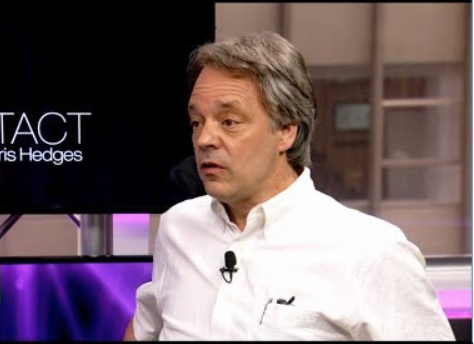
Paul Street is an independent radical-democratic policy researcher, journalist, historian, author and speaker based in Iowa City, Iowa, and Chicago, Illinois. He is the author of more than ten books and numerous essays. Street has taught U.S. history at numerous of Chicago-area colleges and universities. He was the Director of Research and Vice President for Research and Planning at the Chicago Urban League (from 2000 through 2005), where he published a highly influential grant-funded study: The Vicious Circle: Race, Prison, Jobs and Community in Chicago, Illinois, and the Nation (October 2002).
ZNetwork is funded solely through the generosity of its readers.
Donate


2 Comments
This an excellent piece to hand to anyone on the right as a challenge to find anything NOT true in it.
That would especially apply to those who still believe that the GOUSA is about doing good in the world and most especially to those who make the claim that while the U.S. is not perfect , it most often seeks to do good ( support democratic movements , support human rights etc ) in the world which is analogous to saying that during the years of the Greek junta, the leadership wasn’t all that barbaric because the trains ran on time and that Hitler told great jokes, was a wonderful dancer etc and that Jack the Ripper did love his mother after all..
Masterly. An excellent summary on these theme.