
The World Social Forum (WSF) met in Nairobi, Kenya from January 20-25. The organization, founded as a sort of anti-Davos, has matured and evolved more than even its participants realize. From the beginning, the WSF has been a meeting of a wide range of organizations and movements from around the world who defined themselves as opposed to neo-liberal globalization and imperialism in all its forms. Its slogan has been “another world is possible” and its structure has been that of an open space without officers, spokespeople, or resolutions. The WSF has been against neo-liberal globalization and the term alterglobalists has been coined to define the stance of its proponents – another kind of global structure.
In the first several WSF meetings, beginning in 2001, the emphasis was defensive. Participants, each time more numerous, denounced the defects of the Washington Consensus, the efforts of the World Trade Organization (WTO) to legislate neo-liberalism, the pressures of the International Monetary Fund (IMF) on peripheral zones to privatize everything and open frontiers to the free flow of capital, and the aggressive posture of the United States in Iraq and elsewhere.
In this sixth world meeting, this defensive language was much reduced
– simply because everyone took it for granted. And these days the United States seems less formidable, the WTO seems deadlocked and basically impotent, the IMF almost forgotten. The New York Times, reporting on this year’s Davos meeting, talked of the recognition that there is a “shifting power equation” in the world, that “nobody is really in charge” any more, and that “the very foundations of the multilateral system” have been shaken, “leaving the world short on leadership at a time when it is increasingly vulnerable to catastrophic shocks.”
In this chaotic situation, the WSF is presenting a real alternative, and gradually creating a web of networks whose political clout will emerge in the next five to ten years. Participants at the WSF have debated for a long time whether it should continue to be an open forum or should engage in structured, planned political action. Quietly, almost surreptitiously, it became clear at Nairobi that the issue was moot. The participants would do both – leave the WSF as an open space that was inclusive of all those who wanted to transform the existing world-system and, at the same time, permit and encourage those who wanted to organize specific political actions to do so, and to organize to do so at WSF meetings.
The key idea is the creation of networks, which the WSF is singularly equipped to construct at a global level. There is now an effective network of feminists. For the first time, at Nairobi, there was instituted a network of labor struggles (defining the concept of “worker” quite broadly). There is now an ongoing network of activist intellectuals. The network of rural/peasant movements has been reinforced. There is a budding network of those defending alternative sexualities (which permitted Kenyan gay and lesbian movements to affirm a public presence that had been difficult before). There is an anti-war network (immediately concerned with Iraq and the Middle East in general). And there are functional networks on specific arenas of struggle – water rights, the struggle against HIV/AIDS, human rights.
The WSF is also spawning manifestos: the so-called Bamako Appeal, which expounds a whole campaign against capitalism; a feminist manifesto, now in its second draft and continuing to evolve; a labor manifesto which is just being born. There will no doubt be other such manifestos as the WSF continues. The fourth day of the meeting was devoted essentially to meetings of these networks, each of which was deciding what kinds of joint actions it could undertake – in its own name, but within the umbrella of the WSF.
Finally, there was the attention turned to what it means to say “another world.” There were serious discussions and debates about what we mean by democracy, who is a worker, what is civil society, what is the role of political parties in the future construction of the world. These discussions define the objectives, and the networks are a large part of the means by which these objectives are to be realized. The discussions, the manifestos, and the networks constitute the offensive posture.
It is not that the WSF is without its internal problems. The tension between some of the larger NGO’s (whose headquarters and strength is in the North, and which support the WSF but also show up at Davos) and the more militant social movements (particularly strong in the South but not only) remains real. They come together in the open space, but the more militant organizations control the networks. The WSF sometimes seems like a lumbering tortoise. But in Aesop’s fable, the glittering speedy Davos hare lost the race.
[Copyright by Immanuel Wallerstein, distributed by Agence Global. For rights and permissions, including translations and posting to non-commercial sites, and contact: [email protected], 1.336.686.9002 or 1.336.286.6606. Permission is granted to download, forward electronically, or e-mail to others, provided the essay remains intact and the copyright note is displayed. To contact author, write:
[email protected]. These commentaries, published twice monthly, are intended to be reflections on the contemporary world scene, as seen from the perspective not of the immediate headlines but of the long term.]
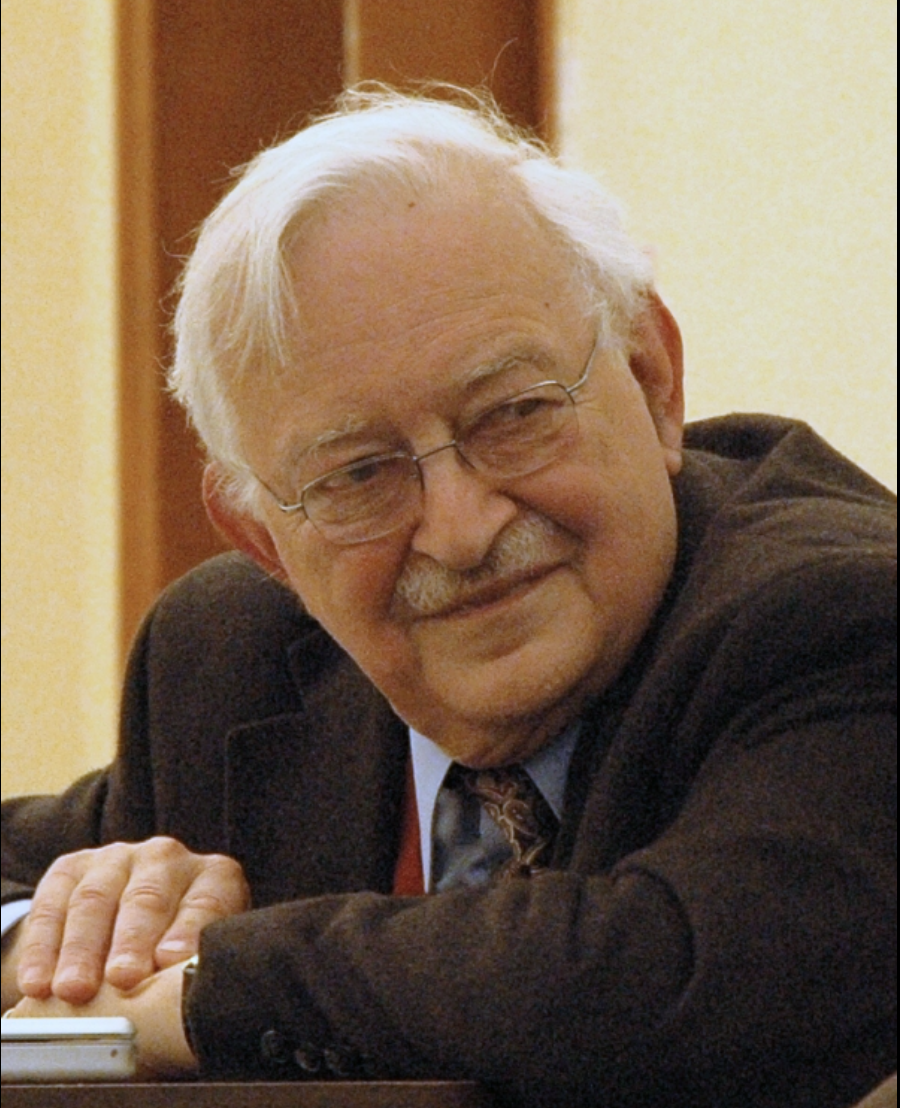
Immanuel Wallerstein (September 28, 1930 – August 31, 2019) was an American sociologist and economic historian. He is perhaps best known for his development of the general approach in sociology which led to the emergence of his world-systems approach. He was a Senior Research Scholar at Yale University from 2000 until his death in 2019, and published bimonthly syndicated commentaries through Agence Global on world affairs from October 1998 to July 2019. He was the 13th president of International Sociological Association (1994–1998). Politically, he considered himself on the "independent left" and was active in a variety of organizations. He argued that we are in the transition from our existing capitalist world-economy to some new system, and that the great political struggle of our time is about which new kind of systemic order will replace our existing one. A new systemic order could be better or worse, depending on our collective ability to push the worldwide decision in one direction or another. He believed that a crucial element in this is a vast debate about the kind of better system we wish to build, and saw the Reimagining Society Project as one of the ways to further this collective debate.
ZNetwork is funded solely through the generosity of its readers.
Donate

