
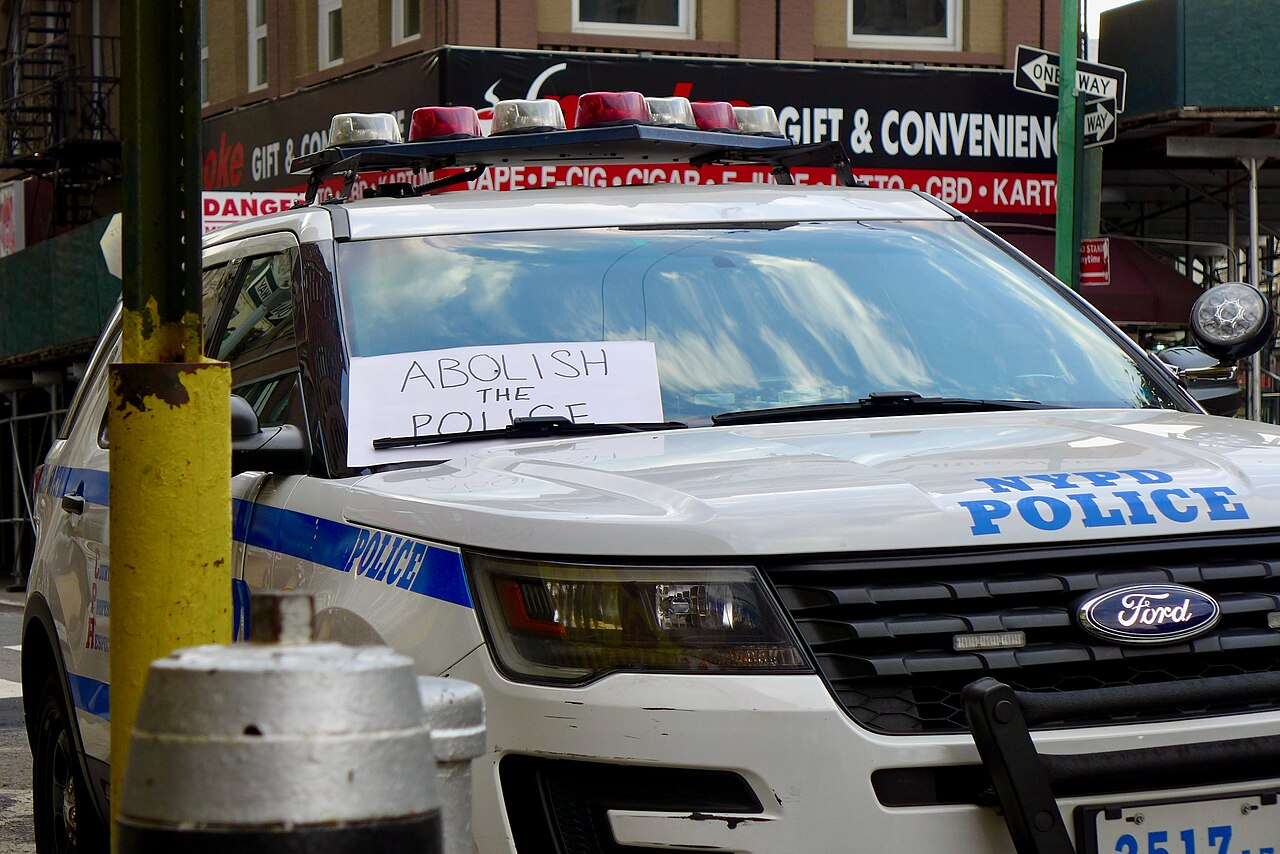
The article “Abolition for Affordability” by Hegde, Thomas, and Durham in New Politics, April 29, 2026, argues that any socialism not calling for police abolition is “white socialism,” incoherent, self-defeating, and fake.
The article’s main arguments are as follows: First, it claims that capitalism in the United States is fundamentally inseparable from settler colonialism and white supremacy, and so any socialist movement that does not center the abolition of the police is missing the core of the problem. Second, it argues that the origins and practice of policing are rooted in the enforcement of racial hierarchy, making police abolition the true litmus test of anti-capitalist politics. Third, it criticizes left-wing elected officials—specifically Zohran Mamdani and Katie Wilson—for not campaigning on defunding the police, suggesting that their focus on broader economic reforms betrays the abolitionist cause. The article cites Ruth Wilson Gilmore but lacks substantive analysis. It simultaneously wishes the new mayors well while accusing them of betraying abolitionist values. This type of argument is common; it matters not for its logic but because its structure is harming the left right now.
I want to break down three main arguments from the piece: its mistake about capitalism, its view of policing’s history, and its use of a litmus test. After that, I’ll discuss what kind of politics leads to this approach and what it leaves out.
Capitalism is not “the economic way of talking about” settler colonialism.
Let’s start with the main claim: “capitalism is the economic way of talking about settler colonialism.” While this sounds serious, it oversimplifies. Capitalism is a social system based on producing goods for sale and extracting surplus value from workers’ labor. Over time, it has used many types of forced labor—like slavery, indentured servitude, debt peonage, sharecropping, and prison labor—and various means of land and resource expropriation, including but not limited to settler colonialism, to grow and spread. Workers in Manchester, Bengali peasants whose industries were destroyed by British rule, enslaved Africans in Mississippi, mill workers in Lancashire, and Irish laborers were all tied into the same global system. (Stallard and Mohdin 2023) What connected them was the flow of capital, not just land seizure.
This matters because reducing capitalism to settler colonialism puts race before class, so the politics that follow focus on moral support for racially oppressed groups instead of looking at real conflicts and power. It’s clear that the original piece hardly mentions the working class—workers only appear once, as victims of tariffs. For example, there is little discussion of issues such as wage theft, unsafe workplaces, the lack of affordable health care, housing insecurity, or the erosion of union rights—the everyday realities that shape the lives of millions of working people. Problems such as stagnant wages, rising living costs, and barriers to union organizing are absent from the analysis, even though they are urgent concerns raised by workers themselves. The real focus of socialist politics, the multiracial working class organizing for its own freedom, is left out. The ruling class is described as “overwhelmingly white” instead of as the group that owns the tools and resources for production. (Braverman 1974) When whiteness replaces ownership as the main issue, the politics that follow can’t address the real needs of working-class people, because they don’t see those needs apart from race.
This confusion isn’t new on the left: replacing a political-economic idea with a moral one weakens socialist analysis. For example, Max Shachtman did this with bureaucracy, separating it from class and leading to poor political approaches. (Shachtman 1953) The point isn’t that race is irrelevant—it is that race gains meaning through its connection to class. When the left reverses that relationship, it ends up embracing a type of politics that doesn’t work. Next, we see a similar pattern in how the history of policing is misunderstood.
Slave patrols, Pinkertons, and the Battle of Blair Mountain
The piece treats the idea that American policing comes from slave patrols as if it’s the whole story. But that’s only one part of a mixed history. Police forces in the North, like the NYPD and Boston Police, were modeled on the London Metropolitan Police and were created to control unrest among immigrant workers. (“The Mapping Project, Entity: Boston Police” 2021) Groups like the Pinkerton Detective Agency, the Coal and Iron Police, and private armies used against strikes didn’t come from slave patrols. (“Coal and Iron Police” n.d.) They stemmed from the broader role of the armed forces in capitalist society: protecting property and controlling workers. (Dahlberg and Dalgaard-Nielsen 2020)
Reducing policing to just its slave-patrol roots is bad history and leads to bad politics. If we see the police mainly as a racial institution, then only Black and Indigenous communities and their allies are seen as the ones who can challenge them. These groups are important and have fought bravely, but they aren’t large enough on their own to take down the prison system. Focusing only on them leaves out the multiracial working class, who are also policed as a class. Latino warehouse workers in Joliet, white Amazon drivers in Bessemer, Black nurses in Detroit, and Vietnamese line cooks in Houston all face police watching, arrest, eviction, and punishment for poverty because they are workers, not just because of their race. (Logan and Oakley 2017) If politics can’t see this, it can’t organize these workers.
But there are practical ways to bridge abolitionist and class-based organizing. Campaigns can connect demands for decarceration, police budget cuts, and community-based crisis response directly to workplace struggles for higher wages, union rights, and dignified conditions. Joint coalitions can demand both an end to racialized policing and expanded public services in working-class neighborhoods, building alliances across labor unions, tenant associations, and groups advocating for criminal justice reform. Strikes and workplace actions can highlight how policing is used against organizing efforts and link workplace safety to freedom from police violence. By aligning abolitionist and class demands in local campaigns, town halls, and political programs, the left can unite the broadest possible coalition—one that recognizes the full picture of who is targeted and why, and that is actually capable of winning transformative change.
The Black radical tradition recognized this point. C.L.R. James wrote about it. Du Bois discussed it in Black Reconstruction. The founders of the League of Revolutionary Black Workers also wrote about it. In the 1930s, the Communist Party in Alabama organized both Black sharecroppers and white industrial workers, understanding that the police were tools of the bosses and that the way to fight back was to build a strong, united working class. (Bogues 2011, 484-499) This approach fits with abolitionism—it’s what abolitionism looks like when it’s connected to real class politics.
The litmus test is a form of organized failure.
The key move in the piece is the litmus test: police abolition becomes the sole standard of true socialism versus white socialism. Mamdani and Wilson fail this test. The author both offers them good wishes and brands them inconsistent. This contradiction defines political paralysis. The litmus test is not a real strategy—it is a tool for moral posturing when winning feels out of reach. Anyone building real worker coalitions or winning office cannot pass, because the goal is not success but the claim to a true socialist identity. Thus, real organizing is sidelined while moral certitude dominates.
Instead of relying on exclusionary litmus tests, socialist organizing can be more effective by embracing criteria that advance collective power and measurable change. For instance, a positive framework could include: building durable, multiracial working-class coalitions; winning concrete improvements in living standards, such as better housing, healthcare, or wages; democratizing economic and political institutions; and expanding participation, leadership, and political education among people who have historically been excluded. Strategic standards like these do not abandon moral vision, but connect it to building broad alliances, sustaining momentum, and actually shifting power. When movements evaluate their efforts by whether they build strength, win victories, and involve more people in collective action, they move beyond purity tests toward the kind of organizing that can win lasting change.
Mamdani won by running on rent control, free buses, and universal childcare in a city where high rent is the biggest problem for working people. Wilson won in Seattle by supporting social housing. (Higham 2025) These are real demands from the working class, achieved through real organizing, even though the political establishment saw them as radical and risky. They aren’t everything socialism stands for, but they are the kind of wins that make bigger victories possible. Calling these efforts white socialism just because they didn’t also campaign on defunding the police shows a misunderstanding of strategy—so much that it seems like understanding strategy was never the goal. Universal childcare is a reform that changes the system. So is social housing. So is free public transit, because it reduces the police’s control over poor people’s daily lives. So, possibly, is unarmed crisis response paid for by cutting police budgets, which is closer to what the new administrations have actually proposed than the original piece allows. (Levin 2021) The mayors are working on the strategic ground Gilmore described. Their critics are working on the moral ground that lets them criticize anyone working on the strategic one.
What “white socialism” forecloses
Calling something “white socialism” actually weakens the left. It treats the multiracial working class as just a social problem, not as a group that can act politically. It focuses on moral identity rather than on working together. This leads to a kind of politics where the left cares more about staying pure than about winning. As a result, the left can’t respond to the current moment, because it has lost the tools it needs to understand what’s happening.
The path to socialism has never depended solely on abolitionists. It was laid by abolitionists, IWW organizers who united Black and white workers in Louisiana in 1912. Philip Randolph and the Brotherhood of Sleeping Car Porters, Communist Party efforts in Birmingham during the 1930s, Detroit autoworkers who formed DRUM and FRUM in 1968, Lordstown strike committees in 1972, and postal workers who struck in 1970. (Salter 2007) These movements recognized that while race divides and shapes the working class, socialism’s force comes from uniting workers against those who own everything. Abolitionism is one important part of this broader struggle—not a substitute for it. Recognizing this connection is essential for addressing current challenges.
If the left can’t say this, it will keep losing. It will lose loudly, using fancy words, and claim that losing proves it is right. It will criticize those who actually win, keep records of disagreements, and focus on fighting so-called white socialists. Meanwhile, bosses, police, landlords, and the carceral state will keep doing what they always do, unaffected by a left that mistakes moral boundaries for real political struggle.
The mayors will either succeed or fail in their goals. We can work to push them further left, organize the people who elected them into independent working-class groups, and build the strength needed for future battles. Or we can just keep writing more articles about white socialism. The first choice is harder. The second is easier. But it’s easier for a reason, and that’s why it’s the wrong choice.
If we choose the first path, there are direct ways to start. Organize listening sessions in neighborhoods most affected by both policing and economic injustice to find urgent needs and build relationships. Form coalitions among tenant associations, labor unions, and criminal justice reform groups to develop unified demands, such as reallocating police funds to social housing, public health, and free transit. Support candidates by volunteering for campaigns that center material needs alongside abolitionist policies, and hold them accountable after elections with regular public assemblies. Build organizers’ skills—door-knocking, digital outreach, and political education workshops—so more people can join the fight no matter their background. Plan targeted campaigns: for example, press city councils to expand unarmed crisis response and link that demand to jobs programs or expanded tenant protections. By taking these steps, activists can turn broad principles into concrete action, creating momentum that lasts beyond any single mayor’s term and building a movement that is strong enough to win real change.
References
Stallard, Matthew, and Aamna Mohdin. “Cotton Capital: how slavery made Manchester the world’s first industrial city.” The Guardian, April 2, 2023. https://www.theguardian.com/news/ng-interactive/2023/apr/03/cotton-capital-how-slavery-made-manchester-the-worlds-first-industrial-city
Braverman, Harry. Labor and Monopoly Capital: The Degradation of Work in the Twentieth Century. Monthly Review Press. https://en.wikipedia.org/wiki/Labor_and_Monopoly_Capital
Shachtman, Max. Max Shachtman: Bureaucratic Collectivism – Two Eras (1953). The Donald Press. https://www.marxists.org/archive/shachtma/1953/xx/burcoll.html
“The Mapping Project, Entity: Boston Police.” Mapping Project. 2021. https://mapliberation.org/plain/entities/BostonPolice.html Accessed May 1, 2026
“Coal and Iron Police.” Britannica. https://www.britannica.com/topic/Coal-and-Iron-Police Accessed May 1, 2026
Dahlberg, Rasmus, and Anja Dalgaard-Nielsen. “The Roles of Military and Civilian Forces in Domestic Security.” Handbook of Military Sciences (2020). https://doi.org/10.1007/978-3-030-02866-4_33-1 Accessed May 1, 2026
Logan, John R., and Deirdre Oakley. “Black Lives and Policing: The Larger Context of Ghettoization.” Journal of Urban Affairs 39, no. 8 (2017). https://doi.org/10.1080/07352166.2017.1328977 Accessed May 1, 2026
Bogues, Anthony. “C.L.R. James, Pan-Africanism and the Black Radical Tradition.” Critical Arts 25, no. 4 (2011): 484-499. https://doi.org/10.1080/02560046.2011.639957 Accessed May 1, 2026
Higham, Aliss. “Mamdani’s Plan For Universal Child Care In NYC.” Newsweek, November 25, 2025. https://www.newsweek.com/mamdani-plan-universal-child-care-in-nyc-11098439
Levin, Sam. “These US cities defunded police: ‘We’re transferring money to the community’.” The Guardian, March 10, 2021. https://www.theguardian.com/us-news/2021/mar/07/us-cities-defund-police-transferring-money-community
Salter, Daren. “Brotherhood of Sleeping Car Porters (1925-1978).” BlackPast.org. 2007. https://blackpast.org/african-american-history/brotherhood-sleeping-car-porters-1925-1978/ Accessed May 1, 2026
ZNetwork is funded solely through the generosity of its readers.
Donate