
We must make our choice. We may have democracy in this country, or we may have wealth concentrated in the hands of a few, but we cannot have both.
– Louis Brandeis, U.S. Supreme Court Justice, 1941
“That’s Not Good”
According to Yahoo News last Tuesday, 100 or so “Occupy” protestors “shouting ‘Obama is a traitor’ temporarily shut down official bus service that ferries around delegates at the Democratic National Convention” (DNC). The protesters, some of whom lay down in the street, were quickly surrounded by Charlotte cops, who “used their bicycles to build a barrier around the group,” a standard “kettling” procedure that metropolitan police now employ when un-permitted public assembly threatens to break out in city streets.
"What do you think of free speech zones?" one protestor shouted at onlookers, referring to the official cordoned-off protest areas that federal and local authority created to render public assembly irrelevant. "Does that seem strange to you?"
Protesters also chanted for the freeing of the whistleblower Bradley Manning, the young soldier the Obama administration has imprisoned and tortured for allegedly providing U.S. military and diplomatic documents to WikiLeaks.
According to Yahoo News reporter Liz Goodwin, delegates who had to wait for buses to be rerouted expressed “surprise that the Occupy presence has been stronger at the DNC than at the Republican convention in Tampa last week.”
“I didn't see them at the Republican convention," Wandra Ashley-Williams, vice president of the Maryland State Conference NAACP, told Goodwin.
”That’s not good,” Ashley-Williams added.[1]
Tamped-Down Tampa
But if the DNC did in fact attract and confront more Occupy and/or other left protestors than the RNC (it’s hard to know given the standard media blackout of left protest), there should be little mystery about why. Predictions of a major hurricane significantly cut into the numbers of protestors willing to travel to Tampa and bus companies willing to deliver them there. The protest-unfriendly nature of Tampa’s downtown didn’t help. “Few people live there and many businesses told their workers to stay away during the convention, leaving the streets nearly empty,” Associated Press reporter Mike Schneider noted. “We could protest until we're blue in the face but there weren't people normally around to see that," one Occupy Wall Street veteran told Schneider. "Whether it was intelligent design or they were just fortunate,” the activist added,” it worked out for the RNC." Also tending to suppress turnout was an overwhelming militarized police presence – replete with packs of officers on every corner and surveillance helicopters in the sky – in and around the RNC site and the open infiltration of the local protest movement by undercover officers posing as activists.[2]
Ozbama’s Betrayal
At the same time, if Wandra Ashley-Williams is interested in things that are “not good,” she might want to think a bit about why the Occupy protestors she saw called the president “a traitor.” The term strikes me as overwrought but unsurprising and understandable. The Occupiers didn’t mean it in the preposterous and paranoid, white-nationalist Tea Party sense associated with the right-wing charge that Obama is an un- , anti- (and indeed literally non-) American “Muslim” and “socialist,” of course. They meant it the sense that Obama has betrayed hopes for democratic change he sold on his way to the oval office. The White House has been occupied by a Democrat, Barack Obama, not a Republican, for the last three plus years – a Democrat who has behaved in bold defiance of the progressive-sounding campaign promises he made to younger and progressive popular constituencies in 2007 and 2008.
Many among the pioneer Occupiers were once expectant Obama supporters.[3] They sought to play by the rules of the American game, working hard, going to school, taking college student loans, and voting for Hope and Change in big candidate-centered elections only to find themselves lost in a financial and economic tornado of debt and weak or non-existent employment chances in a time of epic recession. They landed on the stage of history on the heads of the great eastern financial barons in Manhattan’s financial district (Zucotti Park) Their arrival was applauded by millions of working and middle class Americans who might not have been able to occupy but who felt enslaved by the wealth and power of the parasitic investor and creditor class, which crashed the economy, mired the nation in toxic debt, and convinced the politicians they owned to bail them out with the taxpayers’ money as a record-setting 46 million Americans now lived (and died) below the federal government’s notoriously inadequate poverty level and as fully half the population fell into near-poor “low income” status.[4]
Three years before, many of the Occupiers had helped the seemingly great and powerful Wizard Ozbama slay the Wicked Republican Party Witch on his Gold(man Sachs)- paved path to the Emerald City’s top job. They did so in the name of progressive ”change from the bottom up,” – a slogan that Obama mouthed more than once in 2007 and 2008. They sought an undoing of the usual cash-drenched rules of the game imposed by the hidden senate of wealth and the endless military empire. They were struck by the buoyant youth and charisma of the new wizard-in-waiting and proud to elect the nation’s first non-white president – an African American with a technically Muslim name to boot.[5]
What did they get for their votes and electoral activism? What did the slick, handsome, silver-tongued Ozbama give them as a reward for their efforts? Nothing, or next to it, behind the smoke and mirrors. Words, not deeds: “the language of helping us…the language of solving the problem,” un-backed, Cowardly Lion-style, by “real answers” and actions. Consistent with arch-“conciliator”[6] Obama’s longstanding fake-pragmatist, pseudo-progressive “business liberalism,”[7] the “Obama, Inc.”[8] administration quickly proved to be a great monument to the old French saying plus ca change plus c’est la meme chose (the more things change the more they stay the same).
The Class One Serves
“The clever young man who recently made it to the White House,” the left commentator John Pilger noted in June of 2009, “is a very fine hypnotist, partly because it is indeed exciting to see an African American at the pinnacle of power in the land of slavery. However, this is the 21st century, and race together with gender and even class can be very seductive tools of propaganda. For what is so often overlooked and what matters above all, is the class one serves [emphasis added].”[9] As Frantz Fanon argued 60 years ago in his book Black Skin, White Masks (1962), “What matters is not so much the color of your skin as the power you serve and the millions you betray.”
FOX News-informed Teapublicans might have mouthed paranoid, neo-McCarthyite fantasies about the new president’s “socialism” and “Marxism” (even in some cases “Marxism-Lenninism”). But serious investigators had little reason to doubt which class the new president served. “Our black president,” as progressive editor and commentator Matthew Rothschild (no Obama fan) called Obama in October of 2010, had in fact belonged to Wall Street and corporate America from the start, making his first year in the White House a case study in the triumph of corporate-imperial conservatism. With its expansion of the monumental bailout of hyper-opulent financial overlords, its refusal to nationalize and cut down parasitic financial institutions, its passage of a health “reform” bill that only the big insurance and drug companies could love (consistent with Rahm Emmanuel’s advice to the president: “ignore the progressives”), its cutting of an auto bailout deal that raided union pension funds and rewarded capital flight, its undermining of global carbon emission reduction efforts at Copenhagen, its refusal to advance serious public works programs (green or otherwise), its green-lighting of escalated strip mining and hazardous deepwater oil drilling and other offshore drilling projects its disregarding of promises to labor and other popular constituencies (recall the quickly sidetracked Employee Free Choice Act) its appointment of a Deficit Reduction Commission “headed [in economist Michael Hudson’s words] by avowed enemies of Social Security” (Republican Senator Alan Simpson and former Clinton chief of staff Erskin Bowles), its refusal to embrace the epic winter-spring 2011 public worker rebellion in Wisconsin, and wither other betrayals of its “progressive base” (the other side of the coin of promises kept to its corporate sponsors), and Obama’s “change” and “hope” (corporatist Bill Clinton’s campaign keywords in 1992) presidency epitomized the power of what the radical critics Edward S. Herman and David Peterson call the unelected dictatorship of money.”[10]
Not good.
“It Became Clear That Our Political System Failed”
More than merely a “blunt lesson about power,”[11] the Obama administration has been a veritable seminar in who actually governs the country beneath and beyond staggered, mass-marketed and candidate-centered election spectacles and on the futility of seeking progressive change through the dominant electoral and major party modes. The real rulers, the Obama experience taught, were the rich and powerful Few, those whom Occupy Wall Street so famously designated as “the 1%” last year around this time. That’s no small part of how and why Occupy happened when it did, as the Nobel Prize-winning economist Joseph Stiglitz notes:
“That the young would rise up against the dictatorships of Tunisia and Egypt was understandable. The youth were tired of aging, sclerotic leaders who protected their own interests at the expense of the rest of society. They had no opportunity to call for change through democratic processes. But electoral democracy had also failed badly in Western democracies. U.S. president Barack Obama had promised “change you can believe in,” but he subsequently delivered economic policies that, to many Americans, seemed like more of the same….One interpretation of the long delay in arrival of mass protests was that, in the aftermath of the crisis, there was hope in democracy, faith that the political system would work, that it would hold accountable those who had brought on the crisis and quickly repair the economic system. But years after the breaking of the bubble, it became clear that our political system had failed. Just as it had failed to prevent the crisis, to check the growing inequality, to protect those at the bottom, to prevent the corporate abuses. It was only then that protestors turned to the streets…..’[12]
‘… One interpretation for why it took so long for the Occupy Wall Street protests to emerge was that many hoped that the political process would “work” to rein in the financial sector and redress the country’s economic problems. It was only when it was evident that they did not that protests became widespread. The strong voter turnout in 2008 (the highest since 1968) reflects the power of hope.’[13]
Hope of a particularly electoral kind, that is. The Obama experience taught many thousands of young Americans to pursue their hope for “change from, the bottom up” – a recurrent Obama campaign mantra in 2007 and 2008 – through action of a different kind, consistent with Noam Chomsky’s instructive reflections on the eve of another close presidential election 8 years ago: ‘A huge propaganda campaign is mounted to get people to focus on these personalized quadrennial extravaganzas and to think, “That’s politics.” But it isn’t. It’s only a small part of politics. ..The urgent task for those who want to shift policy in progressive directions – often in close conformity to majority opinion – is to grow and become strong enough so that that they can’t be ignored by centers of power… In the election, sensible choices have to be made. But they are secondary to serious political action. The main task is to create a genuinely responsive democratic culture, and that effort goes on before and after electoral extravaganzas, whatever their outcome.’[14]
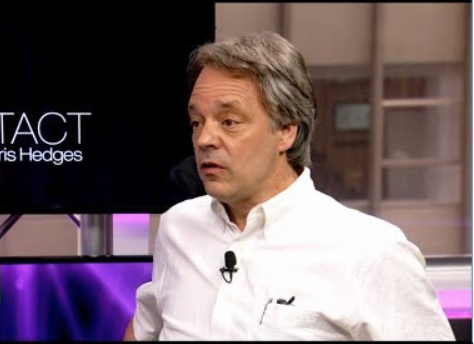
Paul Street is an independent radical-democratic policy researcher, journalist, historian, author and speaker based in Iowa City, Iowa, and Chicago, Illinois. He is the author of more than ten books and numerous essays. Street has taught U.S. history at numerous of Chicago-area colleges and universities. He was the Director of Research and Vice President for Research and Planning at the Chicago Urban League (from 2000 through 2005), where he published a highly influential grant-funded study: The Vicious Circle: Race, Prison, Jobs and Community in Chicago, Illinois, and the Nation (October 2002).
ZNetwork is funded solely through the generosity of its readers.
Donate

