
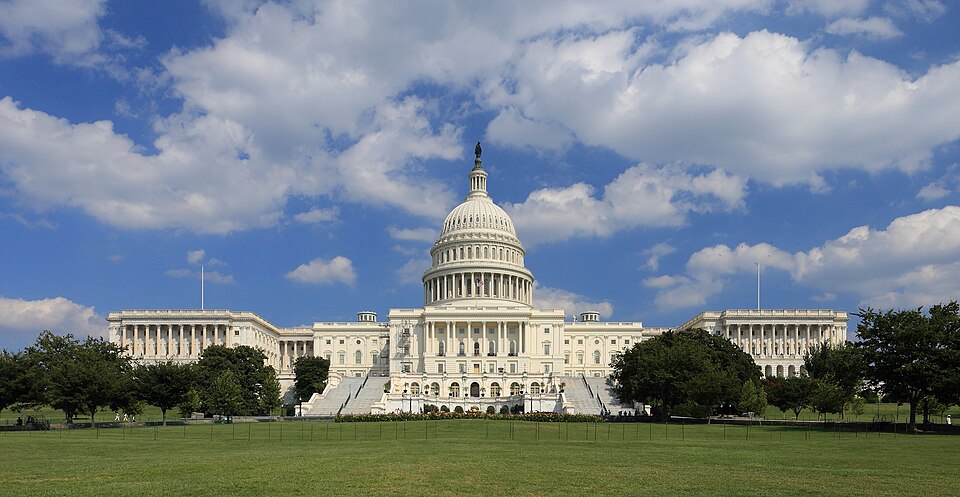
The Constitution gives Congress the powers to declare war and authorize military force, but the American empire gives the president the first move. The bombs fall, retaliation begins, and only afterward are lawmakers invited to stop what they were never asked to authorize.
On July 23, the House voted 214–208 to direct President Donald Trump to remove U.S. forces from unauthorized hostilities with Iran. Hours later, the Senate rejected, 47–49, a motion to discharge S.J.Res.180 from the Foreign Relations Committee. The House voted no, the Senate blocked restraint, and the war continued without Congress authorizing it.
The Senate neither authorized the conflict nor held a final vote on ending it, yet the absence of authorization created no immediate operational obstacle. U.S. forces carried out a after the votes. Trump later , but that pause came by executive choice.
This sequence reveals the logic of the modern American war state. Congressional authorization is treated as optional in practice, while procedural obstruction is enough to preserve a war already underway. A president can invoke Article II, issue an order, classify intelligence, control escalation, and frame retaliation as proof that more force is required.
Those seeking to stop the war must introduce legislation, escape committee control, overcome procedural barriers, win both chambers, and confront a presidential veto. Overriding it would require two-thirds of both houses. The president needs an order to begin a war; the opposition needs something close to a constitutional uprising to end it.
This imbalance is the architecture of imperial power. Congress was given the powers to declare war, fund armed forces, and define the legal basis for sustained hostilities, while the president was made commander in chief rather than the unilateral author of open-ended wars. In practice, the presidency creates the battlefield and Congress debates after the consequences accumulate.
The White House made the arrangement explicit on July 23. It argued that the House’s concurrent resolution lacked the force of law and amounted to an unconstitutional legislative veto under INS v. Chadha. The Senate’s joint resolution could have carried legal force, but the administration said the president’s advisers would recommend a veto. One mechanism is treated as constitutionally defective; the other can be blocked by the president whose war it is meant to restrain.
Once the relevant report is submitted—or required—the 1973 War Powers Resolution generally calls for hostilities to end within 60 days unless Congress declares war, authorizes the operation, or extends the period, with up to 30 additional days for withdrawal. In practice, presidents dispute whether the law binds them, concurrent resolutions face the unresolved consequences of Chadha, and joint resolutions remain vulnerable to vetoes.
For people in Iran, this is not abstract. Iran’s Health Ministry said in U.S. strikes during the three weeks preceding July 18. Every procedural barrier in Washington creates more time in which another strike can be ordered and another family forced to absorb a decision it had no role in making.
The administration presents continued military action as necessary to protect U.S. personnel and answer Iranian attacks, yet that argument reproduces the conditions it invokes. American forces are deployed into an expanding conflict, exposed to retaliation, and that retaliation is then used to justify more strikes and deployments. Deployment creates exposure, exposure produces retaliation, and retaliation becomes the rationale for expanding the deployment that generated the danger.
The political system disperses responsibility. Trump directs the conflict, Republican leaders defend his freedom of action without enacting a specific authorization, and Democrats—while largely opposing Trump’s unauthorized war—belong to a party that has helped sustain the military infrastructure making unilateral escalation possible.
Trump did not invent the imperial presidency. He inherited a structure built across Democratic and Republican administrations, whose presidents have relied on expansive Article II claims, inherited authorizations, and arguments that their uses of force were too limited or defensive to require fresh approval. The parties are not identical, but those differences do not erase a bipartisan system that gives presidents a global military apparatus and treats interruption as extraordinary.
The empire survives on appropriations, bases, weapons contracts, deployments, classified programs, and congressional majorities willing to keep the money moving. On June 24, the administration requested an $87.6 billion supplemental package, including $67.1 billion for military programs and $21 billion for munitions and the defense industrial base.
That request is the material authorization the administration does not want Congress to debate as an authorization. A lawmaker can call the war unconstitutional while voting to replenish its missiles and sustain its deployments. Permission can be denied in words while war is enabled in dollars.
War powers resolutions still matter because they create a public record and give movements a tool for accountability. But symbolic opposition does not interrupt weapons deliveries, deployments, contracts, or funding. Ending unauthorized war requires material opposition to the institutions that sustain it.
The burden must therefore be reversed. Any offensive operation launched without prior authorization should lose funding automatically after a short emergency period. Appropriations bills should state that military funding does not constitute authorization, while every authorization should identify the adversary, geographic scope, objective, and expiration date. Continuing a war should require a new recorded vote, so inertia terminates the operation rather than preserving it.
Force-protection exceptions should be narrow, temporary, and public. A president should not be able to widen a conflict, expose more personnel to danger, and then use that danger as a self-renewing source of authority. Those who want war to continue should have to vote for it repeatedly; those trying to stop it should not need a veto-proof supermajority.
These changes will not emerge from congressional conscience alone. The antiwar movement should track appropriations, arms transfers, deployments, and committee votes as aggressively as formal war powers resolutions. Antiwar organizations and unions should maintain a public war-vote record and pressure legislators who condemn unauthorized hostilities while financing them.
Unions, veterans, military families, Iranian diaspora organizations, students, and racial and economic justice groups should organize around a common pledge: No authorization, no offensive funding. That demand can connect weapons replenishment to deprivation in housing, healthcare, climate resilience, and infrastructure, exposing the political economy that converts public wealth into military power while exporting destruction abroad.
Opposing U.S. imperialism does not require endorsing the Iranian state or minimizing the harms it causes. It requires rejecting Washington’s claim to a permanent and unilateral right of military domination.
The July 23 votes revealed both the possibility and the limits of congressional opposition. The House rejected unauthorized hostilities, the Senate prevented a final decision, and the bombing continued after the vote, stopping only when Trump chose to pause it, because the system treats presidential violence as action and congressional restraint as an obstacle course. Unauthorized war persists because American power privileges escalation over consent: Congress remains free to protest, while the presidency remains free to bomb.
Until that hierarchy is reversed—until those who want war must vote for it, fund it openly, justify it before the public, and renew it on a fixed schedule—every constitutional objection will arrive after the machinery has already begun to move.
ZNetwork is funded solely through the generosity of its readers.
Donate

