
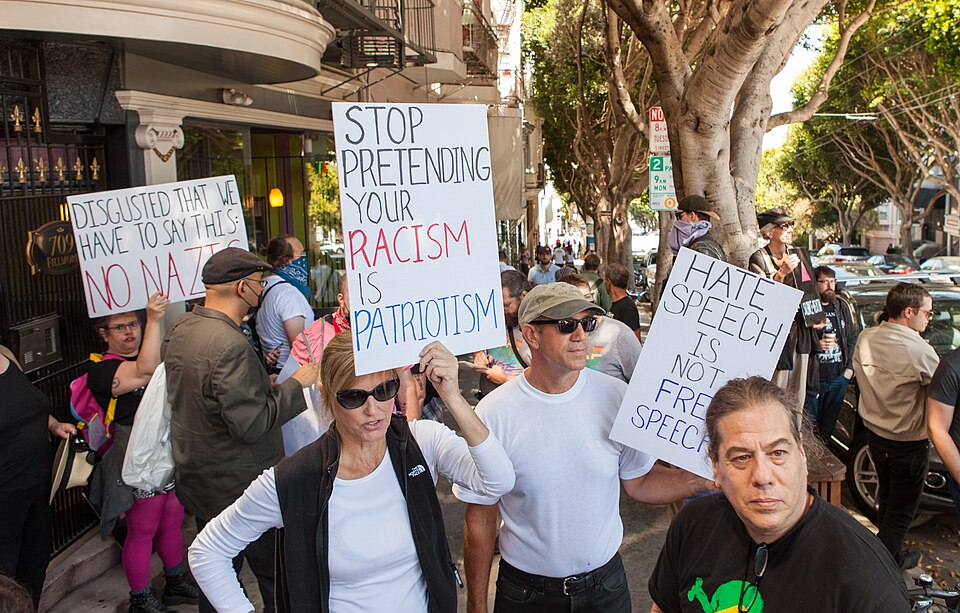
The paradox of tolerance, a theory that challenges a society’s ability to defend democracy from within, is at the heart of the political turmoil plaguing the United States today. The idea, first articulated by philosopher Karl Popper, suggests that a tolerant society must be intolerant of intolerance itself, or else the intolerant will exploit that tolerance to dismantle the system from within. The United States is facing a stark test of this paradox as extremism and hate groups gain traction, exploiting the very liberties that protect democratic life.
The past few decades have seen the steady rise of groups that thrive on division, hate, and violence. From white nationalist organizations to conspiracy-driven militias like those associated with QAnon, these movements increasingly occupy the mainstream political conversation. At their core, these ideologies aim not only to challenge the social order but to dismantle the democratic principles of equality and justice. They are not just seeking to make their voices heard—they are attempting to redefine the terms of the social contract, eroding the shared values that have historically bound Americans together.
Consider the 2017 Charlottesville rally, where white nationalists, neo-Nazis, and other far-right extremists marched in the streets under the banner of “Unite the Right.” The violence that erupted, culminating in the death of counter-protester Heather Heyer, was a chilling reminder that these movements are not merely fringe elements but potent forces that can stoke real, deadly consequences. The response from certain political figures and public figures, including the president, was a horrifying moment in American politics. Rather than denouncing these groups unequivocally, there was a reluctance to take a firm stand against intolerance, allowing the seeds of hate to grow unchecked. In this moment, the U.S. was at the crossroads of the paradox of tolerance—its commitment to free speech and political expression directly collided with the need to protect democracy from those who would destroy it.
The question then becomes: How much tolerance is too much? Can a society truly remain open and free while it allows the propagation of ideas that actively undermine freedom itself? The answer is, unequivocally, no. When the principles of liberty are manipulated to spread hate and division, tolerance becomes not a virtue but a tool of destruction. The societal contract must be protected from those who seek to exploit it for their own gain, and that requires setting firm boundaries on what is considered acceptable within a democratic society.
The toll that unchecked intolerance takes on democracy is not just abstract—it’s evident in the erosion of public trust, the fracturing of social cohesion, and the rise of authoritarian rhetoric. As the lines between legitimate political discourse and extremism blur, we see the normalization of once-unthinkable ideas. It’s not only on the streets of Charlottesville; it’s in the rhetoric used by elected officials, in the mainstream media, and across social platforms where dangerous ideologies gain influence. When those with power openly embrace hate, fear, and division as political tools, they set the stage for an authoritarian agenda to take hold.
One of the clearest examples of this in recent U.S. politics is the rise of populist leaders who bend the rhetoric of democracy to serve the purposes of authoritarianism. Donald Trump’s presidency, for instance, is a textbook example of how free speech and democratic institutions can be weaponized for political gain. His rhetoric often blurred the lines between legitimate opposition and calls for violence against marginalized groups, culminating in the January 6th Capitol insurrection. This was not an isolated incident, but the manifestation of a deeper ideological shift—one that fosters intolerance under the guise of patriotism, freedom, and democracy.
While Trump’s influence is a glaring example, it is by no means the only one. State legislatures across the country have passed laws aimed at restricting voting rights, cracking down on LGBTQ rights, and suppressing the freedom of assembly. These actions represent a new form of intolerance, one that is actively backed by law and policy. The troubling reality is that these legislative moves are supported by many who claim to be defenders of American values, but in reality, they are enabling the very destruction of those values.
The problem isn’t free speech—it’s how that speech is manipulated to incite violence, discriminate, and destroy the principles of freedom. A society that truly values democracy cannot afford to tolerate rhetoric that promotes hatred or violence. The U.S. must recognize that speech has consequences, and the line between freedom of expression and incitement to harm must be drawn. When that line is crossed, it is no longer an issue of individual freedom, but of protecting the collective good. To put it simply: We cannot allow those who seek to destroy democracy to hide behind the very freedoms that make it possible.
This is not an easy position to take, especially in a country that prides itself on its tradition of free speech. But the U.S. finds itself at a crucial juncture. The paradox of tolerance demands that we ask difficult questions about what it means to defend democracy. Tolerating intolerance does not make us virtuous; it makes us complicit in the erosion of our rights and freedoms.
It’s time to draw the line through policy, regulation, and cultural shifts. We must hold politicians and platforms accountable for enabling the spread of harmful ideologies. We must stand firm against the rise of authoritarianism disguised as patriotism, and protect the democratic ideals that have long defined this nation.
If we continue to tolerate intolerance, we will see our freedoms unravel. It’s time to choose: Protect our democracy or let it be torn apart by those who wish to destroy it.
ZNetwork is funded solely through the generosity of its readers.
Donate


1 Comment
There are already laws against advocating for violence. Maybe we should enforce them better. But when you talk about restricting hate speech, that’s a different story because who gets to define what hate speech is?
Speech that does not advocate violence needs to be free. No matter how much your eye might dislike it, suppressing free speech would be a disaster.