
Who should manage public land that is sacred to Native Americans?
That is the question that the United States government and some states hope recent policy changes will address by giving Indigenous people greater input into managing such land. Co-management, as the policy is called, might alleviate the frictionthat emerges when sacred landscapes are managed without Native American input.
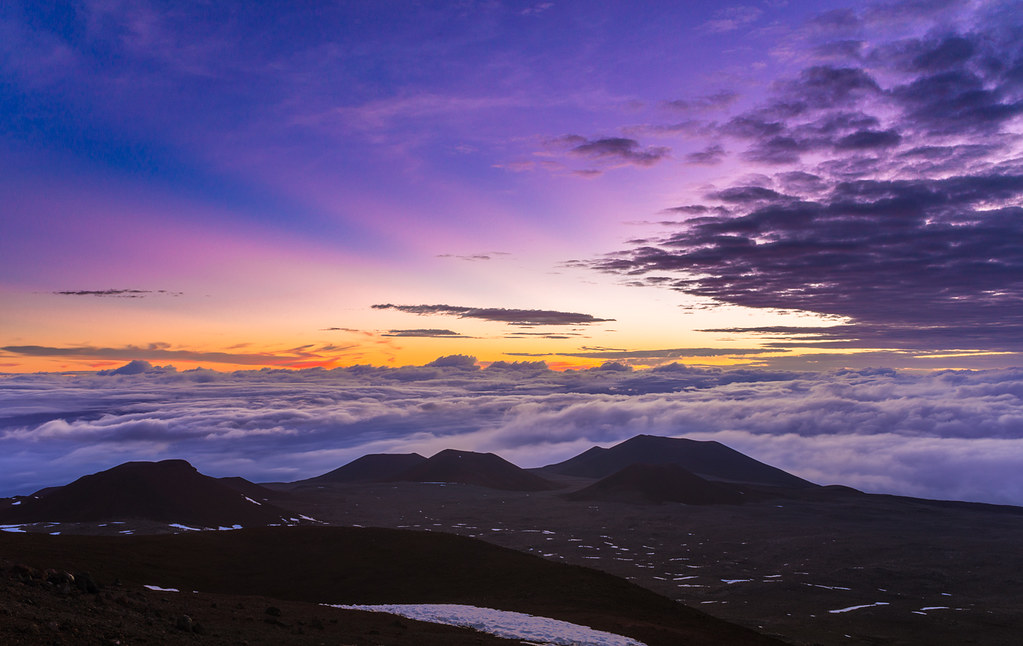
Mauna Kea, a 13,802-foot dormant volcano on the island of Hawaii, is one example. The mountain is managed as public land by the state of Hawaii. Native Hawaiians have protested the state’s management of Mauna Kea for decades, saying Hawaii has allowed too many research buildings on their sacred mountain, which disrupts their ability to practice their religion.
This kind of conflict is not unique to Hawaii. Indigenous peoples have lived in what is now the United States for thousands of yearsand developed intimate relationships with the lands they call home. For years, Native people across the country have demanded more input into how the government manages areas they consider sacred.
Now, the government may finally be listening.
‘We worship there’
As a Native American scholar of religion and the environment, I am interested in Indigenous peoples’ relationship to the natural world and their struggle to protect their sacred landscapes.
Native Hawaiians believe that Mauna Kea is the first creation of the Earth Mother, Papahānaumoku, and the Sky Father, Wākea. The mountain is an important part of their origin narrative.
For astronomers, the mountain has another significance. They believe the summit of Mauna Kea has the clearest skies for conducting research. For the past 50 years, the state of Hawaii has leased the summit of the mountain to dozens of research institutions. Together, they have built 13 telescopes and numerous buildings on Mauna Kea.
For years Native Hawaiian leaders have argued that the state ignored their concerns over such construction. When Mauna Kea was selected in 2009 as the preferred site for the Thirty Meter Telescope, a new class of extremely large telescope, Native Hawaiians protested to stop the project.
Native Hawaiians, like those from other Indigenous religious traditions, believe that sacred areas should be left alone without roads or buildings because they are the homes of the divine.
“We worship there, the iwis of our kupuna [bones of our elders] are buried there,” Mililani Trask, the Hawaii island’s trustee for the Office of Hawaiian Affairs, said at a public meeting regarding an environmental impact statement of Mauna Kea with the National Science Foundation on Aug. 9, 2022. “No,” she continued, “you will not build here.”
The state of Hawaii is hoping to address this ongoing conflict with the creation of a new eight-person commission that includes three Native Hawaiian leaders to manage Mauna Kea.
“I believe we can find a way for science and culture to coexist on Mauna Kea in a mutually beneficial way,” Hawaiian Gov. David Ige said on Sept. 12, 2022, when he announced the new commission.
What makes land sacred?
Native American religions, similar to other religions, view areas as sacred because they are the homes of gods or places that are sanctified by a god. Sacred places may be physically small or large areas, they may be built or natural areas, such as churches and shrines, or mountains and rivers.
Religious studies scholars such as Tisa Wenger have argued that religious freedom for Native Americans has been difficult because “the U.S. government has often acted as if Indian traditions were somehow not truly religious and therefore not eligible for the constitutional protections of the First Amendment.”
In one dispute in the 1980s, the U.S. Forest Service wanted to construct a road across a sacred mountain in Northern California. A consortium of tribes fought back, and the case ended in the Supreme Court; the tribes lost.
Following that decision, in 1996, President Bill Clinton created a definition of Native American sacred land as a “specific, discrete, narrowly delineated location on Federal land.”
This language intentionally excludes large areas such as mountains or open landscapes in favor of smaller sites. That does not fully represent the variety of places that Native peoples consider sacred, say religious studies scholars, leading to inevitable clashes over the meaning and uses of such lands.
Co-management is one small step
On Sept. 13, 2022, Secretary of Interior Deb Haaland released new federal guidelines to help address these long-standing conflicts.
This new policy, which focuses on publicly managed areas that Native Americans view as sacred or culturally important, will allow some tribes to share management responsibilities with federal agencies.
“By acknowledging and empowering Tribes as partners in co-stewardship of our country’s lands and waters, every American will benefit from strengthened management of our federal land and resources,” Haaland said.
In a related effort, Congress on Sept. 14 held hearings on two new bills to address this same issue. If they pass, their backers hope they will facilitate the inclusion of “tribal management of public lands” and strengthen the “protection of sacred and cultural sites.”
Such changes are “a small step, but an important one, in giving Tribal nations the respect and authority they deserve,” said Rep. Raúl M. Grijalva, a Democrat from Arizona.
But, he added of the federal government’s new desire to share land management with tribes, “There is no deed that can undo or fully compensate for this country’s historical neglect and desecration of Indigenous Peoples’ culture and places that are sacred to them.”
ZNetwork is funded solely through the generosity of its readers.
Donate

