
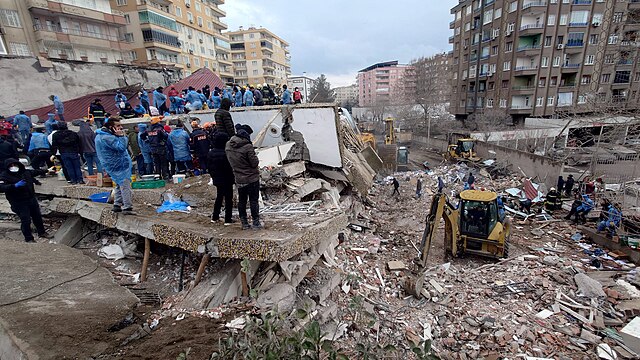
In Silivri Prison, more than three and a half years had passed since I wrote a transfer petition at the urging of Maraşlı Ahmet Kayabaşı. In fact, an inner voice did not want me to write it; I had written it only for the sake of my children. Yet my feelings were never at ease. Fate sometimes drags us toward what we most try to escape, through petitions we write with our own hands. Just as years ago, after parting from Uğur in Saraçhane, I turned back and followed his shadow, Ahmet from Maraş and I, without knowing what would happen, had walked toward that unknown end to which fate was directing us.
There were only about two months left until my release. We had seen the pandemic as a kind of “emotional earthquake” and thought this tremor would be the final storm of our prison process. Yet the earth, as if it could no longer bear the weight of injustices and suffering, was preparing to speak in its own language. While the wounds opened by human laws had not yet healed, the divine law of nature was about to knock on the door in its most devastating form. While we were counting the days to freedom, the universe stood on the brink of a great reckoning, a “mass extinction.”
Tremor and Recurrence
Our life did not flow like an ordinary river; at every bend it progressed by leaving behind a new surprise, a shocking and traumatic memory at every stop. The sentence “Nothing will happen anymore after this” was the biggest trap I set for myself in this process. Before entering prison, I had uttered this sentence with a bitter smile, and from that moment on I had become an open target.
The experiences we lived through came before us incessantly like replays of positions in a football match; yet we still could not wake up. In this climate where the extraordinary had become ordinary, we continued to be surprised, and we could never learn not to be surprised. Yet the last guest at the door would overshadow even the pandemic. We had not died during the pandemic but had been dragged along like a heavy exile. There had been nights when we raised our hands to the sky to die. What we experienced was not just an illness; it was suffocating at a narrow point in a labyrinth, being separated from our loved ones by an abyss. Those days, which appeared on paper as “health measures,” were in fact ceremonies of abandonment to death; we were expected to quietly fade away in a corner.
The Moment of the Earthquake: February 6, 2023 – 04:17
On the night of February 6, a deep and heavy silence from the beginning of history prevailed in the ward. Even our sleep was not from peace, but from exhaustion. That night, in a cold corner of the prison, we awoke with a roar resembling the apocalypse, like a group of ancient prisoners from ages ago. The earthquake had begun.
At first we thought it was a moderate tremor; but as seconds passed, that giant beneath the ground began to awaken and roar. I was on the upper bunk at the bottom of the stairwell; Sercan Abi was below. The shaking was so violent that even that massive prison, built on solid ground like on a mountain top, swayed like a cradle, rising and sitting down. We had all sat up in our beds, shouting all the prayers we knew out loud like lifebuoys. Sercan Abi was hitting the bunk from below, trying to calm me with a trembling voice: “Stay calm! Pray! Don’t move from your place!”
I looked at the street lamp outside; it flickered helplessly in the darkness. At the same time, as if the sky had split open, a rain began, and lightning tore through the night. It was as if nature had sworn to eliminate in one night all that artificial order and those false walls of security that humans had built. Finally, the earthquake poured all its strength upon us and stopped. When the electricity went out, the darkness swallowed not only the ward but also our future. The cries of the criminal prisoners in the neighboring wards, hitting the doors and bunks, were cries of rebellion echoing in the dungeon walls: “Get us out of here! We don’t want to die!”
The Irony of Fate and the Helplessness of Iron Doors
In the darkness, I sank into thought. Maraşlı Ahmet Kayabaşı forcing me to write that transfer petition, and my being caught in that great Maraş earthquake right there in İskenderun… What other word could explain this tragic irony of fate? The guards were shouting in the corridors, actually trying to convince themselves: “Stay calm! If we die, we will all die together!” This was not a consolation, but a cold acceptance built on the equality of death. The banging of the criminal prisoners on the iron doors formed the saddest and wildest symphony of human sound against metal. Fear had passed through the iron and penetrated into our bones. The guards did not dare to open the doors; because a single sound of a lock could have turned that fear into a massive fire of rebellion.
When we turned on the television, only that icy sentence was repeating on the screen: “A major earthquake centered in Kahramanmaraş…” Neither Hatay nor İskenderun was mentioned. It was as if the world had forgotten us; we were forgotten not under the rubble of a destroyed city, but inside invisible coffins within an unseen debris. We withdrew to our place of worship. In his most desperate moment, man remembers his Lord more deeply; at that moment we raised not our hands, but our shattered hearts directly to Him.
The Nimrods of the Modern Grave
There was a philosophical name for this chaos we experienced: the first blast of the apocalypse. But the difference was painful: we could not rise from our graves with that blast. Some who thought themselves the absolute rulers of the earth had imprisoned us in that “modern grave.” At that moment, I remembered the arrogance of Nimrod in the time of Prophet Abraham, who looked at two prisoners and said, “I am the one who gives life and takes it.” Those who oppressed us were giving the same insolent message; but with one difference: the Nimrods of our time were far more merciless. Because the historical Nimrod had at least spared one; this system, however, had built its order solely on the total destruction of souls and bodies.
When morning came, we were all exhausted from sleeplessness and uncertainty. When the prison director came to the ward with what was almost an army beside him, the only consolation given to us was “a slight increase in phone time.” Not being able to reach our families outside meant that our minds were also taken captive. When a friend whose family was in İskenderun managed to reach them, he received the news of the rubble and cried out in tears: “If I were outside, I would dig through that concrete with my own hands!”
Earthquake and prison… Our captivity had multiplied with the shaking of the earth. While our understanding of life was based on “living to keep others alive,” those who imprisoned us had taken away not only our bodies but also our right to touch life, to pull a life out of the rubble. Outside, our loved ones might have been struggling for life, but we were waiting like shadows for news of death on television.
The February cold had filled the ward with the explosion of natural gas pipes. But what froze us at that moment was not the extinguishing of the radiators; it was a spiritual, mental, and emotional freezing. Around noon, when my wife’s sister said, “We are fine,” that six-hour fever finally subsided. But the rasp inside my mind did not stop: what cracks had that tremor left in the tender souls of my little children? We were prisoners inside the concrete here; they were outside under the sky, but at the edge of the rubble… That dry sentence uttered by the guard while bringing food, “Make do,” was actually the summary of the slogan the system had been whispering to us for years: If you are breathing, be grateful and be silent. And we remained silent; on this darkest morning of history, in that bottomless well of helplessness, we simply waited.
The Second Major Earthquake
In the afternoon, while we were waiting for a miracle in front of the television, the real fatal blow came. The second major earthquake… This time, that sound coming from underground was less a natural event than a cry of the earth’s ancient anger toward humanity. The high walls of the yard were being thrown from side to side like a giant in its death throes. While cries of “Nobody move!” rose in the ward, I was only listening to that sound. It was such a terrifying sound that it pushed the limits of reason, making a person ashamed of his own existence. The prayer that fell from my lips was not a salvation, but a surrender: “My Lord, take our souls without showing us the terror of the apocalypse.”
The earthquake stopped, but this time a human earthquake began inside the prison. The banging of prisoners on the iron doors, the screams, the chairs being thrown… The guards’ consolation, “If we die, we will all die together!” was in fact a confession of the system’s helplessness. The words “We will all die together” drove the men deprived of their freedom mad. Because here, among this cold concrete, we did not want to become victims of a death we did not choose. My last nine years had fit into those nine hours. The system had been crushing us like a roller for years; now nature was determined to bury us under rubble.
On the evening of that historic day, we learned the real devastating news: the 600 Konutlar complex in Hatay-Antakya had been completely flattened. Our wardmate Fatih Türkmen lived in that complex. However, there was still no news from Fatih and his family. Although the news from Hatay was not clear, it darkened our hearts.
That day, we were exhausted from every direction. For years, we had already been struggling for life and death under the rubble of a system that had passed over us like a roller. Now there were also our loved ones, whom we thought were under the rubble of buildings. Our debris was deepening further.
On the second day of the earthquake, clearer news began to come from Hatay, İskenderun, and surrounding cities. Unfortunately, the destruction was great. The televisions, however, continued to hide the truth, giving the impression that “there is not much destruction.” But the news we received by phone or other means was not optimistic at all.
In the evening, a piece of news fell into the middle of the ward like a bomb:
“Our wardmate Fatih Türkmen is under the rubble.”
We did not want to believe this news. We had been living with bad news for years; we no longer wanted to believe any of them. Each new pain was like the rubble of a building collapsing on us. The scale of the earthquakes we experienced—both literally and metaphorically—was terrifying.
The Rescue of Fatih’s Son from the Rubble
On the evening of the third day, we were in front of the television. We were watching the debris removal works in Hatay 600 Konutlar live. At that very moment, we saw Fatih’s son Yavuz being pulled out of the rubble. We all began to cry uncontrollably. When someone with his back to the camera said, “Come on, my lion, come on my Yavuz!” Yazar Kemal Abi shouted, “This is Fatih! This is Fatih, he is not dead! My God, thank you!”
We all suddenly said, “Yes, this is Fatih!” This time we were crying out of joy. We wanted to believe. But the reality was not so. Watching the son of our companion of fate, with whom we had shared the ward for years, being pulled alive from the rubble was an indescribable feeling. And we were watching this from the television of the prison.
Behind iron bars, in front of a screen, we were watching a scene where life and death had changed places.
At that moment I understood: sometimes a person does not want his own freedom, but to see that others are alive.
A scene appeared before my eyes: the open visit in August 2022. I was sitting at a table with my wife and children. At the next table sat Fatih’s wife and son. They were chatting cheerfully and joyfully. Yavuz could not sit still. It was Fatih’s last open visit before his release. The next month, at the beginning of September, they would come not for a visit, but to take Fatih home.
I had overheard some of their conversation. His wife was dreaming: “When you get out, we will do this, we will do that.” Yavuz kept asking: “Dad, we will go to the amusement park! You will take me everywhere I want, promise?” Fatih smiled and said, “Promise.”
Yavuz was a lively child who could not sit still. After Fatih was released, he would come to the prison gate on visiting days, greet all of us, and tell us about developments in his life.
We all made promises to our children. But some promises remained under the rubble.
As I thought about these things, only one thing passed through my mind: “Fatih, don’t do this to us…”
He would not have wanted to do this to anyone. In the prime of his life, a family of three, an eightyear-old Yavuz… Who would want to leave that behind?
The next day the sad news came: Fatih and his wife had remained under the rubble and had passed away. Twenty of us cried and wailed at once. Yazar Kemal sobbed, “Oh my Fatih, oh my Fatih…” The friends who had shared the same ward for years could not believe that Fatih was dead.
But the reality was this: Fatih and his wife had left this world. What remained was Yavuz, their legacy to this ungrateful and cruel world.
In the black waters, on a boat, Fatih had fought for life and death. Then he had been deprived of his freedom for years, only to encounter a postponed death one night. The black waters had postponed death, but the earthquake rubble had not accepted it.
Fatih had made a promise to his son. The earthquake did not allow that promise.
The guillotine built by tyrants upon death took another family’s life. But the real reckoning was left to the Day of Judgment.
If Fatih had known, he would not have rejoiced in his short sentence. If we had known, perhaps we could not have prevented it, but we would not have let Fatih go.
Chaos in İskenderun Prison
Chaos had become a habit flowing through our veins. Death forgot us, life resented us. We were living as if in a limbo, between two silences.
As Camus said, “The real tragedy of man arises not from dying, but from forgetting to live.”
We had not forgotten, but life had long forgotten us. We continued to shake at every moment. Had our lives not been trembling for years already?
One day, while talking with my wife on the phone, she said: “Is there anything left of Hatay?” They say Hatay was destroyed eight times and rebuilt nine times.
Every destruction shattered people as much as stones; every rebirth began not from the rubble, but from the depths of hearts.
In this city, the earth falls silent to remind patience; the wind whispers every morning the names of those who have risen again.
This is the memory of pain.
Under every stone lies a story, behind every tremor remains a silence. No matter how much it is destroyed, this city is born not from its ashes, but from its memory. Because in Hatay, the rubble lies not only in buildings, but in people. And every morning, someone brings a little more daylight out of that rubble.
Two Major Earthquakes (February 20, 2023)
Until February 20, we continued to shake every moment, every minute. Our psychology was shattered. Sercan Abi, who lay on the lower bunk, would ask me, “Did you shake?”; during another tremor, I would ask him. None of us were healthy. We needed psychological support, but there was none.
The food had begun to decrease. The natural gas was cut off. The ward was freezing. The evening count was usually held at 20:00. We were preparing to go downstairs when suddenly, with a tremendous roar, it was as if the earth split open. The earth had risen in fury. The Creator asked hell: “Do you have space?” Hell replied: “Is there more?” The earth’s anger toward the world was not subsiding.
The first tremor stopped, but immediately after, the second earthquake began. It was also very strong, but not as deadly as the first. According to what was told, the guards had fled while taking count in another ward. After the two earthquakes, a riot broke out in İskenderun Prison. It was suppressed before it grew, but even the possibility had frightened the administration.
On the morning of February 25, they suddenly said, “Pack your belongings!” That day, together with our rubble, the exile to Kırşehir Prison began.
Kırşehir Prison Exile (February 25, 2023) Silent Witness of a Journey
When we boarded the prison transport vehicle, we did not know where we were going. When the driver said we were going to Kırşehir, a deep uncertainty filled us. For years, we had been thrown from place to place against our will; our lives depended on the decisions of others.
When the psychological destruction caused by the earthquakes was added to this uncertainty, it became even harder to endure. We waited in the vehicle for a long time. When the journey to Kırşehir began in the afternoon, I remembered the day I had been transferred to İskenderun. At that time, I had endured these hardships for my children. Now, however, we were experiencing a compulsory exile without being able to do anything.
The last missing link of my prison process was “exile”; shortly before my release, I was experiencing that as well. As we passed through the ruined, devastated outskirts of the city, the moment of the earthquake came before my eyes in all its nakedness. Irregular urbanization and the high buildings constructed on agricultural lands had made this great disaster deadly. These cities, the cradle of ancient civilizations, had become victims of worldly ambitions. Once again, innocent people had suffered.
İskenderun had suffered less damage than the center of Hatay, but its pain was still deep. We had accumulated much pain; yet what we had experienced had somehow strengthened us.
As our journey continued, former commissioner Metehan was also with us. He began to speak quietly. His mother had remained under the rubble during the earthquake and had lost her life. His voice trembled, tears flowed from his eyes. Only twenty days had passed since the earthquake; his pain was still fresh.
Just think; you are deprived of your freedom, and you also lose your mother under the rubble… This was an indescribable drama. Metehan’s brother had invited their mother to his house on the evening of the earthquake, but she had not accepted. If she had gone, she would not have died. She did not go. Just like Fatih.
If Fatih had not moved to Hatay, perhaps he would still be alive and keeping his promise to his son. But I believe that Fatih would fulfill that promise abundantly in heaven.
Metehan’s mother was a woman who had worn out chains for years out of longing for her son. She had always been proud of him. “I am proud of you, my son,” she would say every time. The young commissioner was an honest, hardworking, radiant person. The tyrants first caused an earthquake in his profession; they did not stop, then they watched him tremble in prison. The last earthquake was his mother remaining under the rubble. In this, too, the share of the tyrants was great.
Metehan had once wanted to carry his hope for freedom beyond the border in order to “reach the light.” But that hope ended at the edge of the river. First he had been taken to a prison at the border, then to İskenderun.
It was the irony of fate: Metehan and Fatih had shared the same fate, with one difference — Fatih was no longer alive. But for us, Fatih lived on. Even his death had been noted in history; because his legacy, Yavuz, was still alive.
There was no compensation for these pains. The living were left with what they had lived through. Sorrow, grief, and memories would be their closest companions for life. And we, as silent witnesses on that journey, would never forget again.
ZNetwork is funded solely through the generosity of its readers.
Donate


13 Comments
Der Artikel thematisiert reale Leiden, die als wichtige Lehren an nachfolgende Generationen weitergegeben werden sollten.
This is such a heart-wrenching yet powerful reflection on the pain we’ve all felt. It’s a somber reminder of both the fragility of life and the strength found in our shared grief. Your words beautifully capture the weight of this tragedy and the deep scars it leaves behind. It takes immense courage to turn such profound sorrow into meaningful expression. Thank you for giving a voice to the emotions that are often too heavy to carry alone. We stand together in remembrance and hope.
Thank you…
The article you shared highlights the deep scars left not just by the natural disaster itself, but by the “man-made” negligence and political issues that followed. Your reaction reflects a sentiment shared by many who feel that the scale of the tragedy was preventable.
I find it impossible to believe that all of this actually happened. Those responsible for these atrocities against innocent people will surely be held accountable one day. Long live hell for the oppressors!
This is not just a story about an earthquake — it is a profound testimony of injustice, suffering, and human resilience.
What makes this narrative especially painful is the reality that the author was already unjustly imprisoned before the disaster even began. Being deprived of freedom without justice is, in itself, a heavy burden. But to then experience a devastating earthquake under those conditions — unable to protect loved ones, unable to help, unable even to grieve freely — adds another layer of tragedy that words can barely capture.
This story reflects three intertwined catastrophes: injustice, natural disaster, and the deep helplessness of human fate. While the world often focuses on numbers and collapsed buildings, it overlooks those who are trapped not only under rubble, but also behind bars without justice.
The most heartbreaking part is perhaps not only the destruction, but the silence — the feeling of being forgotten while everything collapses, both physically and emotionally.
Stories like this are important because they remind us that true justice and humanity must exist not only in times of peace, but especially in moments of crisis.
This is a story that deserves to be seen, heard, and never forgotten.
Thank you very much.
Hissedilmiş acıların satırlara dökülmüş hali…
Teşekkür ederiz makaleniz için 🍀
Thank you very much.
Güzel bir yazı 👏
Bu yazı sadece bir deprem anlatısı değil. İç içe geçmiş üç büyük yıkımın hikâyesi:
• hapishane (özgürlüğün kaybı)
• deprem (fiziksel yıkım)
• kader (insanın çaresizliği)
Suçsuz yere bir günde en azılı terörist ilan edilip; işimden, eşimden, çocuklarımdan koparılıp demir parmaklıkların arkasına atılmama mı yanayım…
Depremde içerdeyken anamın enkaz altında kalışına mı…
Anamın acısını bile doğru düzgün yaşayamadan başka bir cezaevine sevk edilişime mi…
Yoksa hepsini üst üste yazan kadere mi…
Film sahnesi gibi…
Ama maalesef bu bir senaryo değil, gerçek. 😔
Thank you very much.
Thank you.
This article exposes not only the devastation caused by the earthquake, but also the failure of systems that should have protected people. It is a painful reminder that disasters are often worsened by human negligence, injustice, and lack of accountability. True justice means not only remembering the victims, but also holding those responsible to account.