
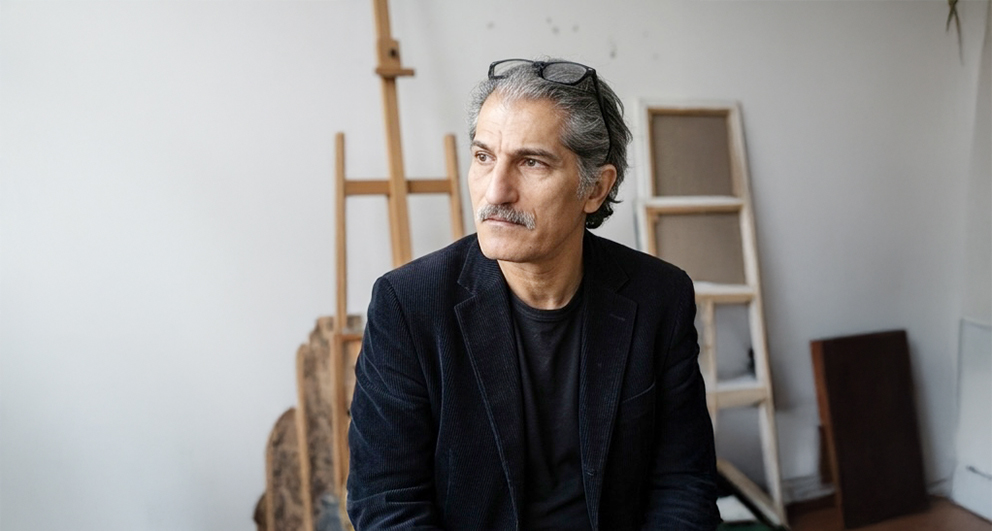
Majid Maleki Meighani, who analyzes developments in the Middle East, emphasizes that events in the region need to be examined on three levels: the global political economy, geopolitical competition between states, and social struggles within individual countries. Meighani notes that, in the Middle East’s current landscape, states occupy different positions within the hierarchy of the world system, and that each is part of a global capitalist order built on inequalities. For this reason, he points out that understanding the conflict-ridden and crisis-stricken processes in the Middle East requires examining who controls capital accumulation, trade, technology, security mechanisms, energy corridors and political decision-making processes. Drawing on his experience as a political prisoner in Iran, Meighani highlights the power of the state, repression, resistance and the possibilities for political transformation. In our interview, in which he discusses the uprisings that have developed across the region stretching from Morocco to Pakistan, the consequences of the Arab Spring, the competitive multipolar dynamics among actors such as Iran, Turkey, Israel and Saudi Arabia, as well as the Abraham Accords and the Mecca Pact, he points to the democratization of social power as the central issue.
The writer argues that a transformation must take place by transferring part of the power concentrated in states, armies, major concentrations of capital and geopolitical networks to organized society. Otherwise, he says, even if the wars come to an end, this will not mean that the crisis in the Middle East has ended; rather, the form of the war will simply change.
The Middle East, stretching from Morocco to Pakistan, is at the center of wars, crises, and conflicts. Can this situation be explained simply through the plunder of resources?
In my view, no. Reducing the crisis of the Middle East to the plunder of
resources explains part of the reality, but it is not sufficient to understand the structure of the region. Oil, gas, trade routes, ports, water, and other natural resources are undoubtedly important, but the problem goes deeper than the direct appropriation of resources. What we are witnessing in the Middle East is part of an unequal global capitalist system in which states occupy different positions within the hierarchy of the world-system.
The Middle East has to be understood simultaneously at three levels: the global political economy, geopolitical competition among states, and social struggles within individual countries. If we look only at geopolitics, people become spectators while regional and global powers compete over them. If we look only at economics, we lose sight of the role of the state, ideology, religion, nationalism, and history. And if we look only at domestic politics, we overlook its relationship with the global structure of power.
In this sense, the central question in the Middle East is not simply, “Who controls the oil?” It is also: Who controls the processes of capital accumulation, trade, technology, security, energy corridors, and political decision-making?
The United Arab Emirates is an interesting example. It is a small country that has acquired influence far beyond its demographic weight through capital, ports, financial networks, technology, relations with major powers, and military projection. In my article on the UAE, I argued that understanding this phenomenon requires us to look at the structural role a state plays within the architecture of global power, rather than simply at its territory or population.[1]
The Middle East should therefore be understood as the intersection of several crises: the crisis of postcolonial states; the crisis of peripheral and semi-peripheral capitalism; the crisis of U.S. hegemony; the crisis of authoritarian political models; and the crisis of social organization. Wars are both products of these crises and mechanisms through which they are reproduced.
For this reason, I do not agree with the view that everything can be reduced to the “greed of foreign powers for oil.” Contemporary imperialism is not limited to armies and direct occupation. A substantial part of power is exercised through financial networks, investment, technology, trade, arms, media, sanctions, international institutions, and structural dependencies. This is what I have described through the concept of “Empire Without Flags” or Imperial Outreach.[2]
Governments across the region attribute their survival to the existence of external enemies and internal collaborators. Why is the influence of people and democratic institutions on politics so weak?
Because the problem is not simply political authoritarianism. It is also the historical weakness of independent social organization.
In many Middle Eastern countries, the state has been far stronger than an independent civil society. The state is not merely an instrument of political administration; in many cases, it is also the largest employer, a major distributor of resources, a central actor in economic networks, and the controller of security institutions and much of the media. Under such conditions, society faces enormous obstacles to independent organization.
But there is another important point. We should not imagine society as a single, unified “people.” People are divided by class, generation, gender, ethnicity, religion, economic position, and many other factors.
One of the issues I have emphasized recently is that both governments and sections of the opposition often transform “the people” into a morally unified abstraction. Governments say that the people are with them; opposition movements sometimes say that the people are against the government. Both formulations can obscure the complexity of actual social relations. Society is a field of historical and class contradictions.[3]
Democracy can acquire real power only when people do not appear merely as voters during elections or as crowds in the streets, but develop power in workplaces, trade unions, associations, councils, women’s organizations, local institutions, and other forms of social organization.
The problem in the Middle East is that many of these intermediary institutions have either been suppressed or made dependent. Even part of what has been constructed in the name of civil society has, in some cases, become professionalized, project-based organizations that depend more on external funding than on social constituencies. This kind of “greenhouse civil society” does not necessarily create independent social power.[4]
Democratization, therefore, cannot simply mean holding elections. The deeper issue is building the social capacity for independent organization. Without independent unions, rooted social movements, local institutions, and political organizations with genuine social constituencies, even the fall of a government does not necessarily produce a democratic structure of power.
Why have political reforms and democratic initiatives, including the Arab Spring, failed to produce lasting democracy and freedoms?
In my view, the Arab Spring did not fail because the people of the Middle East did not want democracy. On the contrary, it represented one of the most significant popular attempts at political transformation in the modern history of the region.
The problem was that social uprisings were not accompanied by the political power and organizational capacity necessary for structural transformation.
A street uprising can push a regime into crisis, but the street by itself cannot reconstruct the state, the economy, or institutions of power. This is the difference between an uprising and sustainable social transformation.
In many cases, the old regime was weakened, but its economic, security, and bureaucratic structures remained intact. Where these structures collapsed, more organized forces -military, religious, ethnic, or armed groups- were often able to occupy the resulting political vacuum.
Foreign intervention was another factor. But here too, we should avoid simplistic explanations. It is not possible to attribute all the failures of the Arab Spring to “foreign conspiracies.” The weakness of political parties, trade unions, workers’ organizations, and independent political forces, combined with social fragmentation and regional and global intervention, created conditions for the reproduction of authoritarianism.
I am also critical of a certain romanticism surrounding “street democracy.” Social media can mobilize millions of people within hours, but rapid mobilization is not the same thing as durable political organization.
The street can challenge power, but transforming the structure of power requires organizations, programs, class alliances, and new institutions. Otherwise, protest can move through a cycle of excitement and repression only to return to the same structures of power.
I have developed this argument in my article on street democracy in the age of social media, where I argue that mass mobilization without institution-building can leave the political field open to the most organized forces—whether the military, religious networks, or populist movements.[5]
The central question, therefore, is not why the people of the Middle East do not revolt. They clearly do. The real question is how the enormous energy of social protest can be transformed into organized and democratic power.
Turkey and Iran are competing for regional influence, while their bilateral relations have relied largely on dialogue rather than conflict. Israel has emerged as a third regional power. Will these three actors divide influence among themselves, or is conflict possible?
I do not think the future of the region can be understood as a simple “division of the Middle East among three powers.” Turkey, Iran, and Israel occupy fundamentally different positions in terms of their economic structures, military capabilities, political systems, and relationships with the global system.
Turkey is a semi-peripheral power. It possesses significant industrial, military, and geopolitical capacity, but remains dependent on foreign capital, technology, global markets, and financial networks. Turkish foreign policy is therefore a combination of strategic autonomy, regional ambition, and adaptation to the structural constraints of the global system.[6]
Iran is also an important regional power, but sanctions, economic restrictions, and political isolation have constrained its capabilities.
Israel, by contrast, is geographically and demographically small, but its strategic relationship with the United States and the West, its advanced technology, military and intelligence capabilities, economic strength, and role within the regional security architecture give it a geopolitical weight far greater than its physical size.
For this reason, competition among the three does not necessarily lead to permanent direct war. They can simultaneously be competitors and economic partners. Iran and Turkey are a good example. They have significant geopolitical disagreements, but economic interests, energy, trade, and security considerations encourage them to maintain dialogue and manage their differences.
The greater danger emerges when regional competition becomes intertwined with competition among global powers. Under those circumstances, a local crisis can escalate into a much larger war.
The recent confrontation between Iran and Israel has demonstrated how fragile the boundary between proxy warfare and direct interstate conflict has become.
I therefore see the future of the region less as a division among three powers and more as competitive multipolarity.
The more important question is whether this multipolarity will produce greater regional autonomy or simply intensify competition among several powers over control of the existing structures.
Israel is a small country, yet its influence in the region continues to grow. What explains this?
Because power in the world-system is not determined simply by geographic size or population.
Israel is a classic example of a regional state whose geopolitical weight is much greater than its physical size. Several factors explain this: military and technological power, advanced industries, intelligence capabilities, economic ties with the West, and above all its strategic relationship with the United States.
But I would not describe Israel simply as an “American proxy.” That formulation oversimplifies a much more complex relationship. Israel is an actor with its own interests and strategies, but it operates within a structural relationship with U.S. hegemony. That relationship enables Israel to amplify its power far beyond what its demographic and geographic weight alone would suggest.
I made a related argument in my analysis of the UAE. Some small states in the region can acquire influence far beyond their apparent weight because of their position within the architecture of global power.[1]
At the same time, the weakness of Arab states and the internal crises of the region have also created greater room for Israeli maneuver. The issue is therefore not only Israel’s strength; it is also the weakness and fragmentation of its regional competitors.
But this influence has an important limitation: social legitimacy.
Formal agreements between governments and Israel do not necessarily mean social acceptance among the peoples of the region. The gap between governments and Arab public opinion over Israel remains significant. Israel can therefore become a security or economic partner for governments while the Palestinian question remains a deeply rooted social and political issue throughout the region.
The Islamic Republic of Iran was established as the outcome of an Islamic revolution. If it was a revolution, what have the ongoing protests in Iran been directed against, and what is the current situation in the country?
I think we first have to distinguish between revolution as a social process and the political system that emerged from it.
The 1979 revolution was genuinely a revolution because it fundamentally transformed the existing political structure and altered the balance of social and political forces in Iran. But revolution does not necessarily mean social emancipation.
A revolution can bring contradictory forces into the political arena, and its ultimate outcome depends on the balance of forces, organizational capacity, and the ability of different political currents to build new institutions.
The Islamic Republic incorporated some of the genuine demands of the revolution -independence, social justice, the end of the monarchy, and mass political mobilization- into a new political order. At the same time, however, it restricted and suppressed many of the revolution’s democratic and pluralistic possibilities.
For this reason, subsequent protests in Iran cannot simply be described as protests against Islam or against the revolution itself.
They are directed against a specific structure of power: the concentration of political authority, repression, gender discrimination, corruption, economic crisis, declining living standards, social restrictions, and the absence of meaningful participation in political decision-making.
But there is an important qualification. Iranian society should not itself be treated as a unified political actor. Different classes and generations have different interests and demands.
As I argued in my recent article on the crisis of political representation, we cannot interpret every demonstration, every vote, or every protest as the unified position of the “Iranian nation.” Iranian society is a contradictory social totality in which different forces compete with one another.[3]
External pressure and war further complicate these contradictions. War can deepen dissatisfaction with the government, but under conditions of external threat it can also unite sections of society around the idea of national defense.
We therefore cannot assume that military pressure from abroad will automatically produce democracy.
In my view, Iran’s future depends not only on the behavior of the state, but also on society’s ability to create independent organizations and connect the demands of women, workers, young people, ethnic communities, and other social groups within a democratic and socially grounded project.
Proxy wars have long been a central strategy for Iran and Turkey in the Middle East. Have the war waged by Israel and the United States against Iran and the developments surrounding it changed these conditions?
Yes, to a considerable extent. One of the most important changes is the erosion of the boundary between proxy warfare and direct war.
For years, regional powers attempted to manage their rivalries through armed non-state actors, allied governments, and regional networks. But once Iran and Israel became directly involved in military confrontation, and the United States entered the war, the rules of the game changed.
This does not mean that proxy wars have disappeared. On the contrary, they may become more important in some areas. But regional actors now know that any proxy conflict can rapidly escalate into direct confrontation between states.
For Turkey, this development is particularly significant. Ankara does not want the region to become the arena for a direct war among Iran, Israel, and the United States, because such a war could directly affect Turkey’s security, trade, energy supplies, and the Kurdish question.
Under these circumstances, Turkey is attempting to present itself not as a subordinate actor but as an independent regional power and potential mediator.
This is part of the same semi-peripheral power strategy I have analyzed elsewhere: Turkey seeks to exploit the crisis of U.S. hegemony to expand its autonomy and regional influence without being able to fully detach itself from the economic and security structures of the West.[6]
The recent war has also demonstrated the limitations of relying on proxy forces. Iran, Israel, and the United States can no longer operate their regional networks in an environment of relatively low costs. Each now faces the possibility of direct escalation.
We have therefore entered a phase in which proxy warfare and interstate warfare are increasingly intertwined. This is one of the most dangerous characteristics of the emerging Middle Eastern order.
What do initiatives such as the Abraham Accords and the Mecca Pact signify? Are these developments shifting the balance of power in the Middle East?
Both developments should be understood as part of a broader regional realignment, but their character is different.
The Abraham Accords represented an attempt to create a regional order in which Israel would move from being a relatively isolated actor to becoming an official security, economic, and technological partner for several Arab states. At the governmental level, the accords achieved important successes, but they did not resolve the Palestinian question or eliminate the gap between governments and societies in the Arab world.[1]
The Mecca Joint Defense Agreement, signed in August 2026 by Saudi Arabia, Turkey, and Pakistan, represents a different development. The agreement establishes a form of mutual defense commitment under which an armed attack against one member is regarded as an attack against all three.[7]
I would not call this a “Sunni NATO,” because such a description is too simplistic. Turkey is a NATO member, Pakistan possesses nuclear capabilities, and Saudi Arabia has enormous financial and energy resources, but the three countries do not have identical interests or strategic objectives.
The real significance of the agreement lies elsewhere: it reflects the growing efforts of regional states to reduce their complete dependence on U.S. security guarantees.
This development should be understood within the context of the relative decline of America’s ability to maintain a unilateral security order in the Persian Gulf, as well as the growing willingness of regional actors to take greater responsibility for their own security.
Saudi Arabia no longer wants to place its security entirely in Washington’s hands. Turkey seeks a larger regional role, while Pakistan is seeking to capitalize on new economic and security opportunities.
The balance of power is therefore changing—but not necessarily through the replacement of one hegemon by another. We are witnessing the emergence of networks of regional powers attempting to occupy part of the space created by the crisis of U.S. hegemony.
This could lead to greater regional autonomy. But without social democratization, it could simply mean the transfer of power from one state to another.
How will the NATO Summit in Ankara, given NATO’s character as a military alliance, affect the wars in the Middle East?
The significance of the Ankara Summit should not be judged only by its formal decisions. The fact that NATO held its summit in Turkey itself demonstrates the growing geopolitical importance of the country.
The summit took place on July 7–8, 2026. In its final declaration, NATO referred not only to European security issues but also to Iran, its nuclear program, and freedom of navigation in the Strait of Hormuz.[8]
This demonstrates that the Middle East is no longer a peripheral issue for NATO. European security, energy, the Mediterranean, the Black Sea, and the Middle East are increasingly interconnected.
But there is an important contradiction here. Turkey is simultaneously a NATO member and a regional power with its own interests. Ankara therefore does not want to become merely a platform for Western military operations in the Middle East.
Turkey uses NATO, but at the same time seeks to expand its own strategic room for maneuver.
At the same time, the increasing militarization of the region does not necessarily produce greater security. On the contrary, when more states rely on weapons, military alliances, and security arrangements for deterrence and defense, the likelihood of an arms race increases.
I expect NATO to move increasingly toward managing the security environment of the Middle East rather than necessarily occupying territory or intervening directly in every conflict.
Energy security, maritime routes, military technology, intelligence, and containing Iran are likely to remain important elements of this strategy.
But this is also another sign of the crisis of the old order: the more the United States and its allies attempt to preserve the existing security architecture, the more regional states are likely to seek independent security arrangements of their own.
What impact are the peace and resolution talks between Turkey and the Kurdish Freedom Movement having on regional politics? Is this being discussed sufficiently?
In my view, this is one of the most important developments in the region, yet it has not received sufficient attention in geopolitical analysis.
The Kurdish question cannot simply be reduced to “terrorism” or “self-determination.” Kurdistan is divided among four states—Iran, Iraq, Turkey, and Syria—and each of these four parts has followed a different historical trajectory and developed different class structures and forms of capitalism and state formation.
For this reason, even the concept of “the Kurdish question” does not describe a single, unified reality.
In Turkey, if the current peace process and efforts to resolve the Kurdish question genuinely advance, their consequences will extend beyond Turkey’s borders.
A reduction in armed conflict could alter Turkey’s relations with Iraq and Syria, affect the situation in Rojava, and also influence Ankara’s relationship with Iran.
But I am also wary of turning the Kurdish question into merely another geopolitical project. External powers have repeatedly used the Kurdish issue to weaken their rivals.
This does not mean denying the cultural, linguistic, and political rights of Kurdish people. On the contrary, equality before the law, an end to discrimination, and the protection of cultural and political rights are essential.
The issue is that these rights should not become instruments for external powers or local elites to reproduce new forms of domination.
In my work on the four Kurdistans, I have argued that we need to distinguish between the rights of Kurdish people and the political projects of Kurdish elites. A society can achieve cultural and political rights while remaining subject to capitalism, class inequality, and geopolitical dependency.
For this reason, I see a solution to the Kurdish question not in choosing between central states and external powers, but in creating a democratic, decentralized, and socially grounded order in which cultural and political rights are connected to social justice and class solidarity.
If the Turkish peace process moves in this direction, it could become one of the few developments in the region capable of moving away from the logic of war and geopolitical competition.
But if it becomes merely an agreement among elites for the security management of the Kurdish question, then only the form of the problem may change-not its substance.
Conclusion
If I were to summarize all these answers in a single proposition, I would say that the crisis of the Middle East cannot be reduced to competition among Iran, Turkey, Israel, Saudi Arabia, or the United States.
We are facing a structural crisis of both the regional and global order.
U.S. hegemony has weakened, but it has not disappeared. Regional powers such as Turkey, Iran, Saudi Arabia, Israel, and the UAE are expanding or redefining their spheres of influence, but none of them possesses the capacity to construct a new regional order on its own.
At the same time, global capital, financial networks, technology, trade, and the arms industry continue to play decisive roles.
My analysis of Turkey emphasizes precisely this contradiction: the decline of a hegemon does not necessarily mean the end of the logic of domination.[6]
For this reason, I am skeptical of the idea that a multipolar world is inherently synonymous with liberation.
The world may move from a single hegemonic center toward several centers of power, but if relations of capital, inequality, and domination remain intact, multipolarity merely changes the form of competition.
From my perspective, the fundamental question in the Middle East is ultimately not whether Iran defeats Israel, whether Turkey becomes hegemonic or Saudi Arabia does, or whether the United States remains dominant or China replaces it.
The deeper question is whether the peoples of the region can move from being objects of competition among powers to becoming political and historical subjects in their own right.
This cannot happen without independent organization among workers, women’s movements, democratic forces, social movements, and forms of transnational solidarity among them.
A democracy limited to elections may simply replace one government with another.
A peace agreement signed only among states may temporarily stop a war while preserving the structures that produce conflict.
And independence understood merely as the independence of a state from an external power can coexist with the continued dependence of its people on domestic ruling classes.
For me, therefore, the ultimate issue is the democratization of social power: transferring part of the power currently concentrated in states, militaries, large concentrations of capital, and geopolitical networks toward organized society.
Without such a transformation, even the end of wars will not necessarily mean the end of the Middle Eastern crisis.
It may simply mean that the form of war has changed.
Main References and Links
[1] Majid Maleki Meighani, The United Arab Emirates: Another Israel in West Asia?, ZNetwork, May 31, 2026.
ZNetwork — The United Arab Emirates: Another Israel in West Asia?
[2] Majid Maleki Meighani, Empire Without Flags: Imperial Outreach and the Architecture of Structural Power, ZNetwork, July 20, 2026.
ZNetwork — Empire Without Flags
[3] Majid Maleki Meighani, When We No Longer See “The People”: Representation Crisis, Class Experience, and the Politics of Misrecognition, ZNetwork, July 6, 2026.
ZNetwork — When We No Longer See “The People”
[4] Majid Maleki Meighani, Greenhouse Civil Society: How the Western Development Industry Has Produced—and Continues to Produce—Colonial Dependency, ZNetwork, May 27, 2026.
ZNetwork — Greenhouse Civil Society
[5] Majid Maleki Meighani, Street Democracy in the Age of Social Media: From the Illusion of Change to the Trap of Populism and Imperialism, Akhbar-e Rooz, April 25, 2026.
Akhbar-e Rooz — Street Democracy in the Age of Social Media
[6] Majid Maleki Meighani, Turkey at the Crossroads of Hegemonic Crisis and Semi-Peripheral Politics: Geopolitical Reordering in the Middle East and the Limits of Transition within Global Capitalism, ZNetwork, July 13, 2026.
ZNetwork — Turkey at the Crossroads of Hegemonic Crisis and Semi-Peripheral Politics
[7] Associated Press, Pakistan says new defense pact with Saudi and Turkey is “purely defensive” and open to others, August 9, 2026.
Associated Press — Pakistan, Saudi Arabia and Turkey defense pact
[8] NATO, The Ankara Summit Declaration, July 8, 2026.
NATO — The Ankara Summit Declaration
ZNetwork is funded solely through the generosity of its readers.
Donate

