
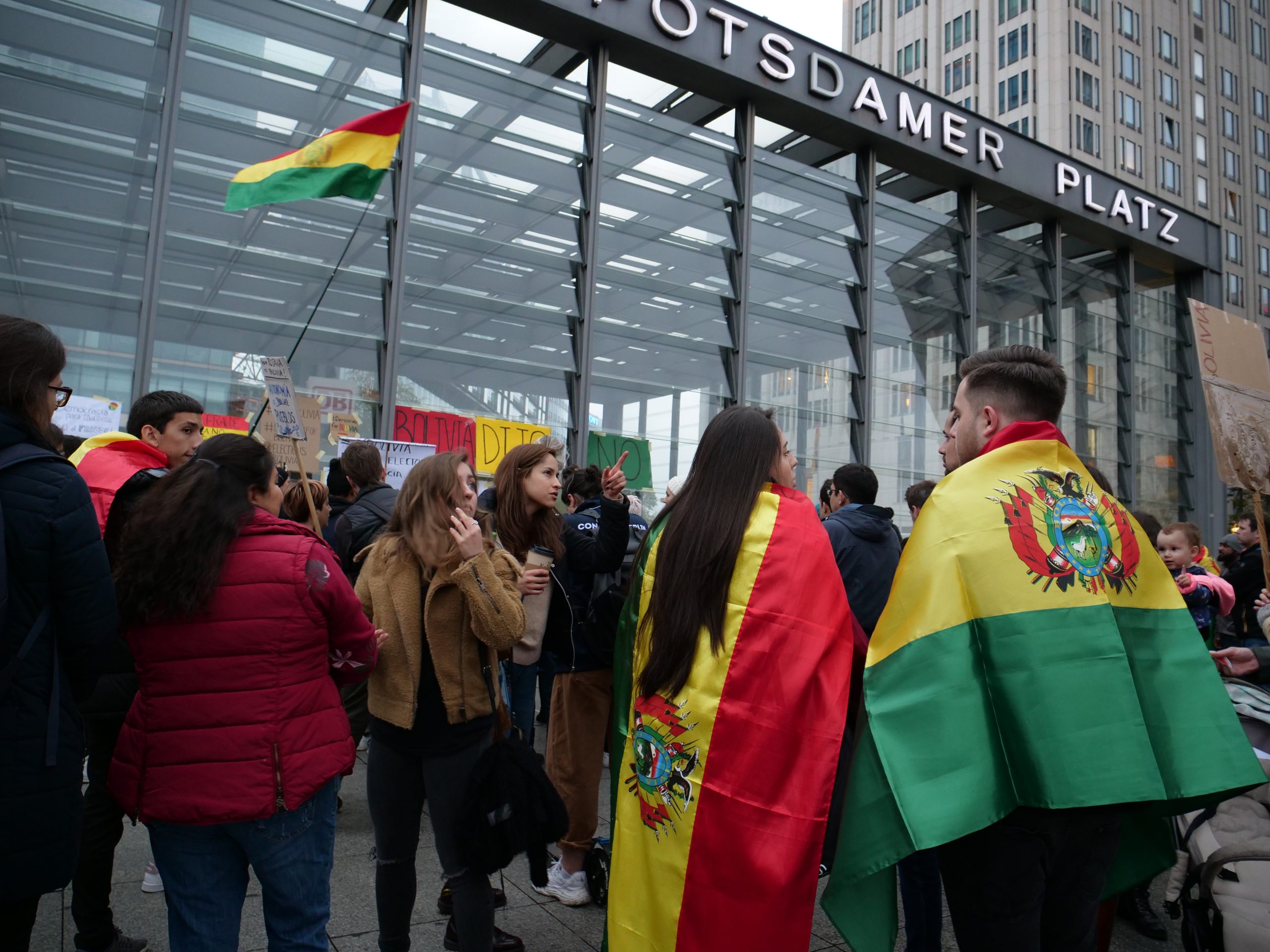
The explosive national uprising in Bolivia in 2026 reflects broader trends of Latin American resistance to Trump and the international Far Right. Assemblies to democratically determine the course of struggle and roadblocks to halt commerce show what it would take for the working class and oppressed to take power.
Since the beginning of 2026, Bolivia has been embroiled in class struggle. After Rodrigo Paz narrowly won the presidential elections last October and attempted to push through a decree to end fuel subsidies and open the country’s natural resources to extraction by multinational corporations, popular resistance sparked massive mobilizations, including roadblocks that shut down highways across the country and a half-million person march that stretched 17 miles.
The explosive situation following Paz’s rise to power reflects deep political turmoil. For the previous 20 years, the center-left Movement Toward Socialism (MAS) held presidential power, its rise fueled by a momentous popular backlash to neoliberal extraction. The Water War in Cochabamba in April 2000 — a struggle in response to the state’s privatization of the country’s water supply — the Gas Wars in 2003, and the subsequent national uprisings that lasted through June 2005 represented a shift in the political tides from below and led to the overthrow of President Gonzalo Sánchez de Losada in 2003 and Carlos Mesa in 2005.
In 2005, Evo Morales, a member of MAS, was elected the first Indigenous president of Bolivia, a largely Indigenous country. From 2006 to 2019, Morales passed reforms that greatly benefitted the Indigenous peoples of Bolivia and partially nationalized industries. However, MAS was still friendly to big business and allowed large landowners and multinational corporations to profit off of Bolivia. The government took power brandishing a program of breaking with neoliberalism. However, especially after 2010, it preserved some core neoliberal values, such as prioritizing economic stability and growth over redistribution and nationalization, leading to high levels of labor precarity.
In 2019, a coup by right-wing Jeanine Añez Chávez, backed by the United States, overthrew Morales. At first claiming she would initiate new elections and not run for president, she instead remained in power and reversed reforms to make foreign policy more friendly to U.S. interests. Additionally, her repression of Morales supporters and the MAS party motivated Indigenous people to rise up, block roads and strike against Añez. This new episode of class struggle against the Far Right paved the way for Luis Arce, a MAS candidate, to win.
Paz’s election demonstrated the disillusionment with 20 years of MAS. At first appearing more moderate compared to the more visibly right-wing candidates, Paz soon displayed his true colors and introduced austerity measures almost immediately. He represents one of the growing number of right-wing governments in Latin America backed by U.S. imperialism. However, as articles in this dossier show, Paz was and still is up against a formidable class enemy: the movement of workers, peasants, and Indigenous people that, forged in the past decades of struggle, has been reignited, part of a broader left-wing expression of class struggle in Latin America in resistance to Trump’s “Donroe Doctrine” and the international Far Right.
Spanning 50 days of mobilizations with over 90 road blockades outside major cities in Bolivia, protestors fought off repression across different sectors of work and society. This unfolded alongside the international context of self-organizing and struggle in Minneapolis neighborhoods against Trump’s anti-immigrant offensive. Like Minneapolis, one of the most radical aspects of the resistance was the emergence of bottom-up, anti-bureaucratic tendencies. While the Bolivian Workers Center (COB) union leaders were negotiating with the government, the militant 8th district of El Alto engaged in committee meetings (“cabildos”) and advanced in self-organization, voting on demands including the resignation of Paz, establishing blockade committees in every zone, and pushing the COB to call a general strike.
Due to the betrayal of the union leaders — who obtained bonuses from the Paz government in exchange for calling off all mobilizations of union members — and following the declaration of a state of emergency, the Paz government cleared the path for a total crackdown on protestors. Nonetheless, there are important lessons we can learn from Bolivia about class struggle, self-organization, independence from bourgeois parties, and the international solidarity it takes to fan the flame of national uprisings against repression and cooptation into sustained, contagious class struggle. The fight is far from over, and with every defeat the working class gains crucial lessons for the battles to come.
Key Articles
- “Protests in Bolivia Show that the Right Has Not Yet Won in Latin America” by Samuel Karlin, January 10, 2026
- “Bolivia’s MAS from 2006 to 2019: Political Reforms Which Diverted Class Struggle” by Javo Ferreira, September 3, 2025
- “Bolivia: The Start of a Counteroffensive against the Right-Wing Wave in Latin-America” by Josefina L. Martínez and Matías Maiello, May 28, 2026
- “A Speech from Bolivia: ‘We Have to Get Rid of Them All with a General Strike‘” by La Izquierda Diario Bolivia, May 28, 2026
- “Inside a Self-Organized Blockade Committee to Oust Rodrigo Paz” by La Izquierda Diaro International, May 29, 2026
- “Rebellion in Bolivia: Grassroots Organizing in the Face of Union Leadership Betrayal” by Diego lung, June 3, 2026
- “The Bolivian People Are Waging a Courageous Fight to Oust Trump’s Ally” by Robert Belano, June 9, 2026
- “The Rebellion in Bolivia Shows the Organic Crisis in Latin America” by Josefina L. Martínez and Matías Maiello, June 10, 2026
- “Bolivia: Strategic Lessons from Workers’, Peasants’, and Peoples’ Rebellion” by Javo Ferreira and Daniel Vargas Downing, July 12, 2026
ZNetwork is funded solely through the generosity of its readers.
Donate