
Syria, wrote the Irish journalist Patrick Seale, is the “mirror of rival interests.” That was in 1965. The phrase applies today. Not long after the protests began in 2011, rival interests threw themselves into the struggle.
There was no room for the Syrians themselves.
Qatari, Saudi and Turkish money and support arrived for their proxies. A U.S. Ambassador went to the protests and pledged the support of his government. The CIA and regional intelligence services began to train a Free Syrian Army.
Such interference sidelined the Syrian opposition, making it a surrogate for rival interests. The entry of ISIS from Iraq in 2012 and the creation of the al-Qaeda proxy, Jabhat al-Nusra, were inevitable.
Why would they not see the chaos in Syria as fertile ground for their presence? What unfolded was never merely a Syrian civil war. It was always a regional battle.
The Syrian government of Bashar al-Assad lashed out against the rebels and the regional proxies, whose atrocities began to mirror that of the government. Weakened by the war, Syria turned to Iran for help and then later Russia. Iran had been caged inside its borders from its revolution in 1979 till 2003.
The U.S. illegal invasion in 2003 removed Iran’s historical enemy, the Ba’ath regime of Saddam Hussein, and allowed Iranian influence to stretch into Iraq, Syria and Lebanon. The U.S. and its allies then tried to hem in Iran, first by the 2005 Syria Accountability Act, then Israel’s murderous war on Lebanon (to target Hezbollah) and finally the nuclear sanctions regime.
None of this worked.
Iran continued to have close ties with Syria. But Iranian assistance was not sufficient to force the regional powers to back off. Saudi Arabia, in fact, saw this as part of its grand struggle with Iran and pushed more money into its vicious proxy, Jaish al-Islam. This militia is based in eastern Damascus, from where they have lobbied rockets into the center of town almost daily. The regime retaliated with bombing. This back and forth is replicated across the urban landscape of Syria, from Damascus to Aleppo.
The war is miserable. No force is capable of victory. Aid from outside powers has not given any one proxy an advantage. Ordinarily this would be the reason for a ceasefire.
In this case, each power has waited for the U.S. Air Force to come and blast Assad from Damascus. They want regime change such as in Iraq and Libya.
The promise of regime change has lengthened the war. The irony is that the UN doctrine of Responsibility to Protect (R2P) civilians has led to its very opposite — the illusion to prosecute wars till the U.S. comes in with its bombers.
The civilian population is increasingly weary of war. Many Syrian refugees in Lebanon and Jordan say that they just want to go home. Half of Syria’s 23 million people have been displaced. Compared to the flood of displaced, only a trickle of refugees have found their way to Europe.
It is into this context that the Russian military entered Syria. The pretext was to fight ISIS.
But that was not the real story. The Russians arrived to hit both ISIS and the various proxy armies of Qatar, Saudi Arabia and Turkey as well as al-Qaeda (U.S.-backed forces are minimal to non-existent). What the Russians have done is two-fold.
First, their forces have foreclosed the possibility of a Western-backed regime change in Syria. No U.S. bombers can fly in without risking a confrontation with the Russians. Overthrowing the Assad government by force is no longer possible. Everyone, even if grudgingly, has recognized this reality.
Second, the attacks on the proxy armies has made it clear to Qatar, Saudi Arabia and Turkey that they will have to come to the table. Their armies — divided amongst themselves — will not be able to make any headway against the Russian-backed onslaught.
The Vienna meeting last week, which brought the regional powers to the table, was a direct consequence of the Russian intervention.
In Vienna, the regional powers — including Iran and Saudi Arabia — agreed on some broad principles for Syria’s future. Syria, they accepted, will remain a secular republic with guarantees for minority rights and will have more robust procedures for internal democracy.
This acknowledgment forecloses the possibilities pushed by Saudi Arabia, in particular, whose regime has an allergy to secularism and minority rights. There were no Syrians at the table. This meeting was not about the peace inside Syria. It was about the peace around Syria.
Matters remain grave. The road ahead is long. But for now at least the regional powers have decided to cooperate rather than treat Syria like a “mirror of rival interests.”
The Russian intervention has succeeded in clarifying the impossibility of regime change and the importance of a political dialogue.
For the sake of the Syrians, I hope a path to peace opens soon.
Vijay Prashad, who teaches at Trinity College and who edited “Letters to Palestine: Writers Respond to War and Occupation,” lives in Northampton.
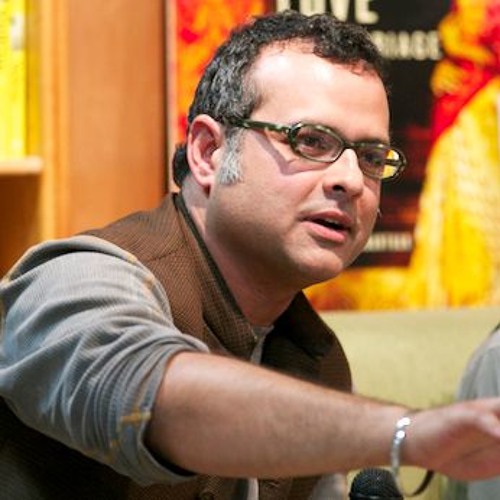
Vijay Prashad is an Indian historian, editor, and journalist. He is a writing fellow and chief correspondent at Globetrotter. He is an editor of LeftWord Books and the director of Tricontinental: Institute for Social Research. He is a senior non-resident fellow at Chongyang Institute for Financial Studies, Renmin University of China. He has written more than 20 books, including The Darker Nations and The Poorer Nations. His latest books are Struggle Makes Us Human: Learning from Movements for Socialism and (with Noam Chomsky) The Withdrawal: Iraq, Libya, Afghanistan, and the Fragility of U.S. Power. Tings Chak is the art director and a researcher at Tricontinental: Institute for Social Research and lead author of the study “Serve the People: The Eradication of Extreme Poverty in China.” She is also a member of Dongsheng, an international collective of researchers interested in Chinese politics and society.
ZNetwork is funded solely through the generosity of its readers.
Donate

