
In mid-January, protests broke out across Sudan – from the capital Khartoum to the western city of al-Junaynah to the eastern town of Sannar. Thousands of people took to the streets to defy the government’s decision to revoke subsidies on bread, sugar and electricity. In Khartoum, they marched bravely through, moving across the capital’s main thoroughfares – al-Qasr and al-Jamhoriyah streets. Hawkers along Jackson Square and El Shaabiya Square had to pause their trade as attention was drawn towards the protests. Cell phones captured the peaceful demonstrators, the energy electric, the chants explosive.
Protests spread across the country. College students from the University of Khartoum, the University of El Gezira (in Wadi Madani) and the University of Zalingei (in Central Darfur) closed down their campuses.
The State acted with great force against the protesters. Tear gas came first, followed by gunfire. Three people died in the crackdown.
Students at the University of Khartoum – most of them women – were expelled from their dormitories for participating in the protests. The platform to combat violence against women played an active role in the protests. Women arrested complained that they were called sharmuta (whore) by the police officials. But this did not deter them.
The government shut down several newspapers that had been active in covering the protests. The newspapers of the Communist Party of Sudan – El Midan – and two other independent papers – El Jareeda and El Tayyar – were seized. They arrested reporters such as Amal Habani, El Haji Abdelrahman el-Moz, Kamal Karrar and Ahmed Jadein. Reports have come that Amal Habani was tortured during her detention. She is familiar with Sudan’s prison system. She was in jail last year in July for her coverage that is often critical of the government. Habani received the Amnesty International prize for human rights journalism in 2014.
The government arrested between 80 and 300 people (the lower figure comes from the Sudanese government, the higher from the opposition political parties). Those arrested included leaders of the different opposition parties from the Sudanese Communist Party to the National Umma Party as well as from trade unions and social movements such as the Teachers’ Union and the Sudan Liberation Movement.
Fatima Idris who represented the families of those detained said that the prisoners were held without charge and without family visits. She said that some of the prisoners had been sent to detention centers outside the capital. It took a full month for some of the prisoners to be released.
Farouk Ali Issa of the National Consensus Forces, an opposition group, said that the release of some detainees should be seen as an attempt by the government to divide the opposition. Most of those released came from the National Umma Party led by Sadiq al-Mahdi. Members of the Sudanese Communist Party – including its leader Mohammed Mukhtar el-Khatib – remain in prison as do the members of the Sudanese Congress Party and the Islamic Party. Journalists are also still in prison. The Sudanese Communist Party said that many of its leaders ‘still languish in the jails of the dictatorship,’ which is seen by the Party ‘as a clear sign that the regime is targeting our party.’
Bread Intifada.
What accounts for the protests against the government of Omar Bashir in Sudan? These are not the first such protests. Sudan’s streets were flooded with the wave of unrest that crested in 2011 across the Arabic speaking world. In 2013, again, a major protest took hold of Sudan. This was the largest protest since the military coup in 1989. Inflation drove people to the streets, with the Communist Party of Sudan as one of the main leaders of that unrest. ‘We went to the streets against the thieves of our sweat’ was a common slogan from 2013. Police repression was swift and harsh. It is said that 185 people were killed in that uprising. Amal Habani won the Amnesty prize for reporting on those protests.
Sudan has been weakened by the partition of the country in 2011 and the loss of South Sudan – where three-quarters of Sudan’s oil reserves lie. There has been no alternative to the loss of the oil revenue. Under US sanctions since 1997, Sudan has not been able to freely borrow from the international financial markets. It has used the oil revenue to subsidize the basic needs of the population. Expensive wars in Darfur and in South Sudan further hampered the public budget. With the oil gone, Sudan has had to reassess its situation. Cuts in subsidies provoked the 2013 uprising as it did the one in 2018.
Last October, the US government decided to lift the sanctions against Sudan if the country would break ties with North Korea. Omar Bashir, ever the survivor since he took power in 1989, decided to follow Washington’s lead. Sudan both backed the Saudi war against Yemen and cut its links with North Korea. The US government ended the sanctions and began the process to normalize relations with Sudan. This normalization includes a package of debt relief that amounts to $300 million that the Trump administration slipped into the Economic Support and Development Fund account of the current budget (it has not been passed yet).
If the US Congress passes the debt relief package of $300 million it would help Sudan but not remove the debt burden. Currently – according to the World Bank – Sudan has an external debt of over $50 billion – 61% of its GDP – with about 84% of it in arrears. There is no easy way for Sudan to pay this money back – 89% of which is owed to countries and to commercial banks (only 11% is owed to international financial institutions). Sudan is eligible for debt relief through the Heavily Indebted Poor Country initiative. Whether it will receive enough political support for this process is to be seen.
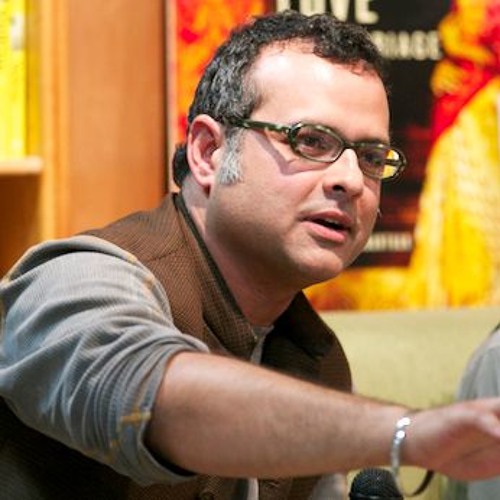
Vijay Prashad is an Indian historian, editor, and journalist. He is a writing fellow and chief correspondent at Globetrotter. He is an editor of LeftWord Books and the director of Tricontinental: Institute for Social Research. He is a senior non-resident fellow at Chongyang Institute for Financial Studies, Renmin University of China. He has written more than 20 books, including The Darker Nations and The Poorer Nations. His latest books are Struggle Makes Us Human: Learning from Movements for Socialism and (with Noam Chomsky) The Withdrawal: Iraq, Libya, Afghanistan, and the Fragility of U.S. Power. Tings Chak is the art director and a researcher at Tricontinental: Institute for Social Research and lead author of the study “Serve the People: The Eradication of Extreme Poverty in China.” She is also a member of Dongsheng, an international collective of researchers interested in Chinese politics and society.
ZNetwork is funded solely through the generosity of its readers.
Donate

