
Bruce Kent led the Campaign for Nuclear Disarmament (CND) in the 1980s, when the peace movement successfully campaigned, along with the women of Greenham Common, to remove US Cruise Missiles from Greenham. He saw the supposed ‘end’ of the Cold War at close quarters. Now 92 years old, he is CND’s current vice president. Hilary Wainwright caught up with Bruce and Kate Hudson, CND’s General Secretary, as they took a letter of protest to the Russian Embassy. This is Part One in a two-part interview.
Hilary Wainwright: Why are you here?
Bruce Kent: I’ve been so disgusted about what’s been going on that I’m glad to protest. My protest is slightly guarded because it’s clear that what has upset the Russians is partly NATO pushing right up to their borders — a nuclear armed alliance.
HW: So any settlement requires NATO to agree to Ukraine being neutral.
BK: Of course. Look at a map. We have to remember that it’s only about two months since Poland refused a whole lot of refugees coming out of Belarus. It’s not as if all the goodness is on one side.
HW: What do you think Britain should be doing?
BK: Opening up to discuss, with all peace-minded people, what the possibilities are — not just sending weapons. We must be much more open to dialogue with people in Russia and less demonising of Putin. You’d think he was on his own. When you compare him with Donald Trump, he’s in the same class. He’s not unique. There are a lot of nasty people around.
HW: And the US?
BK: Biden should start thinking about other countries where he’s got an embargo — Venezuela, Cuba, and other places. The first thing in the United Nations Charter preamble is to save the world from the scourge of war. Biden is leading a country that spends more on weapons than anybody else. He’s not my hero.
HW: The UN is pretty much in the hands of the US. Does it have any role in this situation?
BK: The UN has an important role in public education. I do a lot in schools, but I have yet to find a school with a copy of the UN Charter in the library. I’m involved in the church but I’m yet to see a church porch with a copy of the UN Charter and preamble pinned up. The UN is almost a foreign country to most people here. It’s never referred to.
The UN could call negotiations. The UN Secretary General could go to Ukraine to show solidarity. There are lots of things it could do. But public ignorance about the UN is why we are where we are.
Most people living in NATO countries are probably quite hesitant about what’s happened and how we got here. The UN has to speak to the populations and say: ‘What do you think we should do?’
HW: As somebody who’s been supporting the UN for so long — although critical of its existing organisation — would you be calling on the UN to convene a negotiating forum?
BK: Certainly. Immediately — and see who refuses to come. Apparently, there’s talks going on between Ukraine and Russia, but it should be a UN initiative.
HW: Do you think Russia should be expelled from the security council?
BK: The whole security council needs to be looked at, not just Russia. What’s special about the security council? Why did they ever set up a veto power? It means you can’t negotiate — and yet that was part of the original charter of the UN. [The UK] agreed to it. Why? Because we wanted to have a veto as well.
HW: Were you surprised at the size of the protests in Russia?
BK: I was really astonished. The courage of it is incredible. Last night they had a chap talking very boldly to the camera in Moscow about the wickedness of what Russia was doing. He was in front of a picture of a man who was shot seven years ago for a protest meeting. What courage – much more than I’ve got.
I’ve been there several times. Their peace committee was quite influential. They weren’t all biased but they were very government-directed. I remember going there when there was a little dissident freedom committee. I was with the official peace committee and said: ‘I’ve got to go now because I’m going to this other lot.’ They said: ‘What, you can’t be.’ I said: ‘I am.’ [The dissident committee] weren’t all that radical, but they were critical of some aspects of Soviet positions.
HW: How can we give solidarity to that courageous movement?
BK: I see it here on these posters stuck up outside the Russian embassy, all critical of Putin – I think that’s a kind of solidarity. I think it’s very important that people like us, who are sometimes caricatured as Russian stooges, are making criticisms of what’s going on. It’s impossible. [Keir] Starmer went on the other day about how we were all pro-Russian.
HW: We, the peace movement?
BK: Yes. It was quite extraordinary.
HW: Outrageous.
BK: Who is he appealing to? What does he think we are? I think grassroots education is the key thing that we need to be on about, because people have no idea what CND or Campaign Against the Arms Trade are, or what’s been achieved in the past.
HW: What’s your fear about the use of nuclear weapons in this war?
BK: My fear is that someone like Putin gets a very bad message from somebody —that his troops have been attacked or something, and he just has a blitz moment and says: ‘Let’s do it.’ He has no control over what happens. That is the most frightening thing.
HW: Could NATO declaring Ukraine a no fly zone for Russian planes be such a trigger?
BK: Yes. It would be so dangerous – if Russian planes flew over Ukraine and they were shot down, what then? That would be a declaration of war.
HW: You’ve been through many moments when nuclear war has felt like it’s on the horizon, contexts like the Cuban missile crisis, or the 1980s. How does this compare with those moments?
BK: I’ve never previously felt that a nuclear war was actually likely, or possible, even in all the crises like Cuba and elsewhere. This is a very critical moment, especially when you see how much power is in the hands of one man. Last night on television Putin had two generals next to him — great big puddings — nodding at what he was saying. Very frightening. I can see no justification for pushing Ukraine into NATO. NATO is the forward arm of the western alliance, and we should realise that and back off.
We need to negotiate another structure entirely which includes Russia. Call it the European peace forum or something.
HW: Yes, like the OSCE in the past.
BK: Something like that. To just to go on pushing Russia will lead to disaster.
HW: How can we show the anti-war movement in Russia that we are with them, strengthen their morale, and put pressure on the authorities against the brutal repression of these peace activists?
BK: It’s clear that there is some access to western media in Russia. They are getting something. I think we need to promote [the protests] and congratulate them on their courage. Gradually some of the western media is doing it. Though, in general, the western media has been behaving like a press office for Biden, as if the existence of NATO and its [harmful] functions was irrelevant. It’s incredibly relevant.
Hilary Wainwright: Kate, how can we, in the UK peace movement, materially support and strengthen the brave peace movement in Russia? Can peace movements form links at a grassroots level?
Kate Hudson: We know, from the war in Iraq, how important the international peace movement was to people who were experiencing that onslaught. Similarly for the Palestinian people today, to know when they are under attack, that there are hundreds of thousands, if not millions, of people globally on their side and rooting for them – that’s incredibly important.
Social media makes it easier [to form international links]. It is still possible in Russia to engage with people via social media; so any kind of tweets, online support, messages of support are vital. We’ve been sharing a lot of videos from Moscow, St Petersburg and other cities, and involving activists from Russia and also from Ukraine in international Zoom meetings — whether they are public meetings or planning meetings on how we can work together strategically. All that is much easier than it’s been in the past, and much more instantaneous.
CND is involved with Europe-wide organisations or international networks — like the International Peace Bureau and the European No to NATO Network — who have Russian, Ukrainian and much more eastern European involvement – so we’re able to find out how we can concretely support them and what are the organisations that, for example, people can send donations to?
Another example, last night we received a long statement from the Ukrainian pacifist movement. You can imagine how difficult it is for a pacifist organisation at this time — we’re helping them to get their message out as well, so there’s a counter to all the militarisation going on.
HW: In the description of the peace movement in Russia, there are quite a lot of councillors involved in supporting it, against the war. Could we organise people from the Western peace movement to be observers at the protests in Russian cities, with the support of local councillors and municipalities, to perhaps deter some of the repression?
KH: We’re certainly looking at a peace delegation. Obviously, that will take some kind of planning. ’Twinning’ is something we are looking into with our local groups, and it’s something we’ve done in the past — trying to make people-to-people links across borders, to try and break down the idea that people over here are good, and people over there are bad. We’re just all ordinary people who want to live our lives in peace.
In some cases, cities or towns here may be looking at un-twinning from their Russian twin towns. But actually that’s not a good idea, because there will be many people in those towns and cities who are against the war.
HW: So could the official twinning be turned to support the grassroots peace movement, rather than the municipality?
KH: Exactly. There is a huge groundswell of public opinion against the war there. We need to be in solidarity with them, not seeing them all as the enemy. That would be a disaster and completely counter to everything that the peace movement stands for.
Our first strategic objective is the prevention and cessation of wars in which nuclear weapons may be used. We’ve tried to prevent this war by arguing for diplomatic solutions, for negotiations — writing to the government and urging them to use diplomatic means. That has failed and now we’re in the stage of working for cessation. This is our priority, because we’re an anti-nuclear campaign.
BK: We need to highlight charitable legislation in this country. It is a problem for the peace movement. Major organisations like Oxfam and other groups will not get engaged in anything that threatens their charitable status, which is very lucrative through special concessions, grants and so on. We tried to harness some of these organisations over the ‘No TRIDENT replacement’ campaign, particularly on the basis of spending – on development and poverty alleviation and so on rather than nuclear weapons. All these charities said that they weren’t able to get involved.
Why are they silent? I talked to a bishop not long ago and said: ‘Why, in your publicity, are you not connecting the military?’ He said: ‘I didn’t know that was an issue.’ I believe him, but how could that not be an issue in terms of CO2 production, if you’re ignoring the military? There’s a financial disincentive from challenging the military.
HW: What is your message to Red Pepper readers? Would you say to people reading this: ‘Join CND now, it’s more necessary than ever’?
BK: I wouldn’t just say join CND. But I would say get off your bottom and start being active. Get hold of the Housmans peace directory where at least 500 different peace organisations are listed, and start working, whether it’s with CAAT [Campaign against the Arms Trade] or Pax Christi or especially CND.
HW: So, unity between the different parts of the peace movement is crucial.
BK: Absolutely crucial, and it’s what we’re missing. There are at least four or five major international organisations that don’t really refer to each other. It’s really pathetic. They should come together.
HW: Are there any signs of them coming together in response to this crisis?
KH: On Saturday 26 February, CND, Code Pink (a very prominent US peace organisation), Stop the War, and the No to NATO network came together to hold an emergency online rally against the war. There were thousands on that call. As a result, we had a global call for a day of action on Sunday 6 March with many different organisations involved from Australia, Europe, North America.
HW: What about the Russians? Were they part of it?
KH: I can’t name particular organisations because of the clampdown. But I will be attending an international meeting to discuss twinning and will inform Red Pepper about how they can be involved in this practical solidarity.
Find out more about CND on their website and follow them on Twitter.
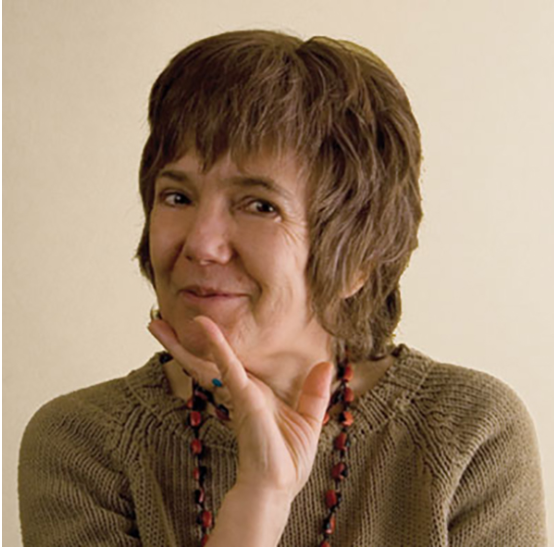
Hilary Wainwright is Research Director of the New Politics Programme at the Transnational Institute and editor of Red Pepper, a popular British new left magazine. She is also an Honorary Fellow in Sociology at Manchester University, UK. Her books include Reclaim the State: Adventures in Popular Democracy (Verso/TNI, 2003) and Arguments for a New Left: Answering the Free Market Right (Blackwell, 1993). She has written for ZNet, The Guardian, The Nation, New Statesman, Open Democracy, Carta, Il Manifesto and El Viejo Topo, as well as appearing as a commentator on BBC1, BBC Radio 4 and the BBC World Service. She has been a Senior Research Fellow at the International Labour Studies Centre, University of Manchester; a Research Fellow at the Centre for the Study of Global Governance at the London School of Economics, at Durham University and at the Open University, UK; Visiting Professor at the University of California, Los Angeles; and a Visiting Scholar at the Havens Center, University of Wisconsin, Madison and at Todai University, Tokyo. Wainwright also founded the Popular Planning Unit of the Greater London Council during the Thatcher years, and was convenor of the new economics working group of the Helsinki Citizens' Assembly from 1989 to 1994.
ZNetwork is funded solely through the generosity of its readers.
Donate

