
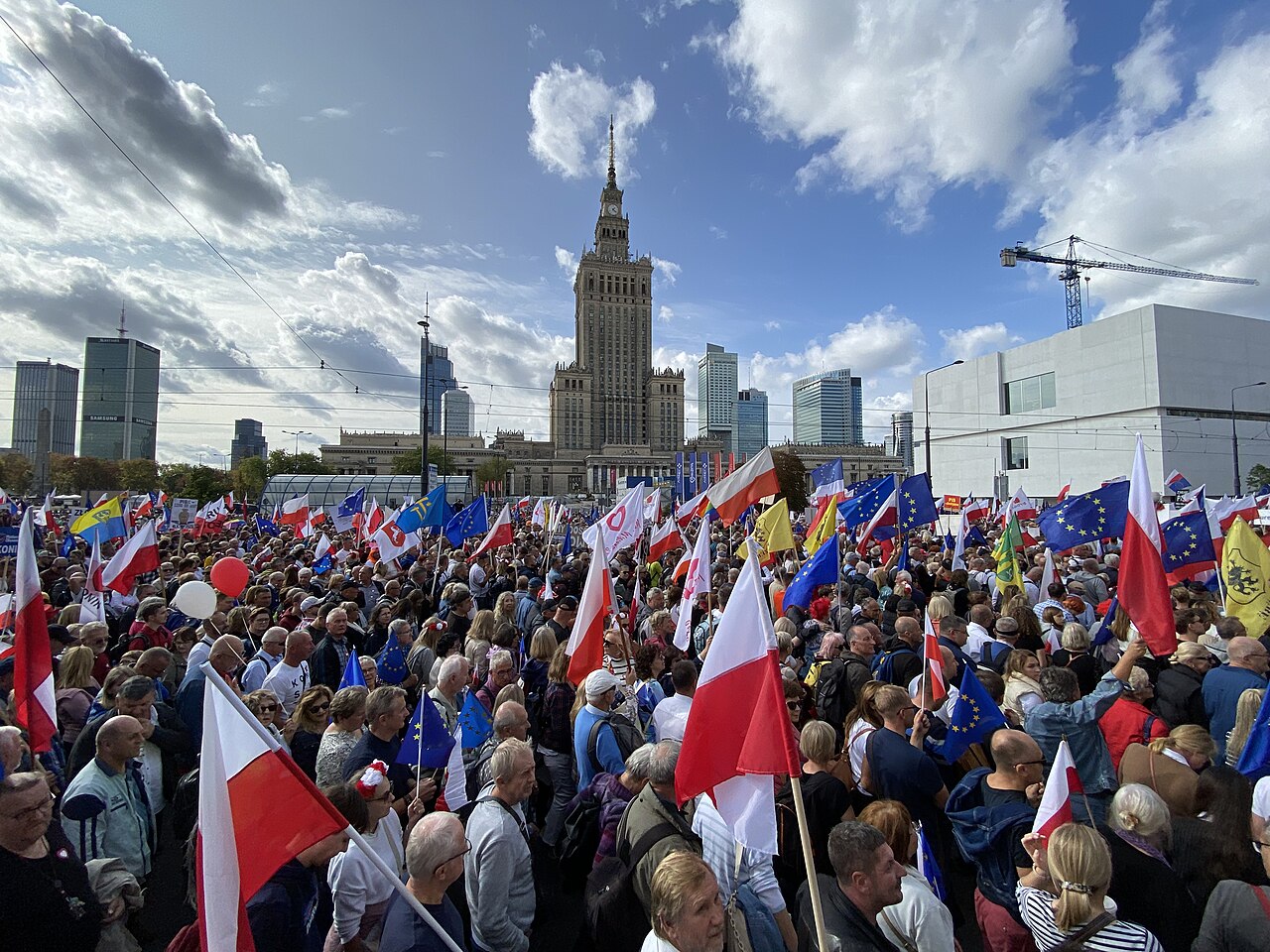
On October 15th, in Poland, elections took place. Many people believe that they have been the most important since 1989, when the Polish nation could, for the very first time after World War II, choose its representatives after more than 50 years of the communist regime. The fact that both sides of the political struggle—government and opposition—embraced this narrative shows how crucial it was for the majority of citizens. Until the last moments of voting, we did not know who would win. It turned out that a coalition of the three opposition parties defeated the national Catholic government.
One could say this is a step ahead because it’s the end of homophobic and racist propaganda, the destruction of democracy, and anti-European politics. This victory seems to be a choice to embrace equality and liberty on the one hand and reject nationalist populism on the other. But that kind of optimism is premature. Why?
There are three different major parties in the new coalition (“major” because there are also many small organizations). The biggest one had already been in power for eight years. It is quite liberal now, although in the past it embraced more conservative stances. Its leader, Donald Tusk, had been prime minister for the longest time, and then he was unable to introduce such elementary things as same-sex marriages (or at least registered partnerships). During the campaign, he has been trying to convince voters that he has had a change of heart, and now he’s not only in favor of equality for LGBTQ+ people but also supports some leftist agendas, like fighting against wealth inequality. Well, Mr. Tusk didn’t convince me.
The second party is moderately conservative with liberal viewpoints on the economy. It is a combination of the oldest Polish political organization (the agrarians) and the youngest one, established three years ago by Szymon Hołownia, an ex-television personality. The leaders of this political group are openly saying that they will be against the liberalization of abortion laws or same-sex marriage.
And, last and least, New Left. If you think now about proper leftists, just stop. It is more third-way party. What is more, it seems they just gave up on many of their propositions (not only social but also economic) because of the conservatives’ veto during the coalition negotiations. That is why the more leftist wing of this group refused to participate in the new government.
After eight years of archconservative government, the Polish people are tired. We have one of the most restrictive abortion laws in Europe, and we’re still waiting for marriage equality. We also embraced welfare care more than a decade ago. The main question now is: will the new government follow the social changes or not? I’m afraid that in this situation, the conservatives will block the reforms, the liberals will pretend that they have tried, and the left will be convincing that they have had to find a compromise. But we make this kind of compromise all the time, and it always means the progressive propositions are rejected.
The only hope is in the activists and NGOs. It also seems that the youngest voters are not willing to accept the guise of change. They really want a more open and equal society. It can be achieved by reminding the politicians about their promises and, if necessary, by protesting against forcing the right-wing agenda. There’s a rich tradition of resistance in Poland, and in the past eight years it has been evoked. Some people want to forget about it now. “We have a liberal, open government,” they say, “and we should support it because things were worse. For now, let’s focus on rebuilding democracy and leave aside the ideological debates.” These people have forgotten that there is no democracy without human rights.
Will the new Polish government reform the country and establish a proper equality? I doubt it. Nevertheless, we have to remember what they promised us and remain faithful to our ideals.
ZNetwork is funded solely through the generosity of its readers.
Donate

