
Janine Jackson interviewed Jill Heaviside and Oriaku Njoku about resisting assaults on reproductive rights for the May 17, 2019, episode of CounterSpin. This is a lightly edited transcript.
Janine Jackson: Clyde Chambliss, Alabama senate sponsor of a law banning virtually all abortion, was asked whether the law would likewise criminalize in vitro fertilization clinics that discard embryos. His answer was clear: “The egg in the lab doesn’t apply. It’s not in a woman.”
You could spend all day pointing out indications that the legislators seeking to curtail abortion access are not driven by concern for the sanctity of all (even potential) human life, but by the desire to exert authority over particularly some women’s lives and possibilities.
Blowing away the fog around the anti-abortion movement is useful, not as an end in itself, but if it helps us see how to move effectively to ensure all women’s human rights, while protecting those made particularly vulnerable under the current onslaught.
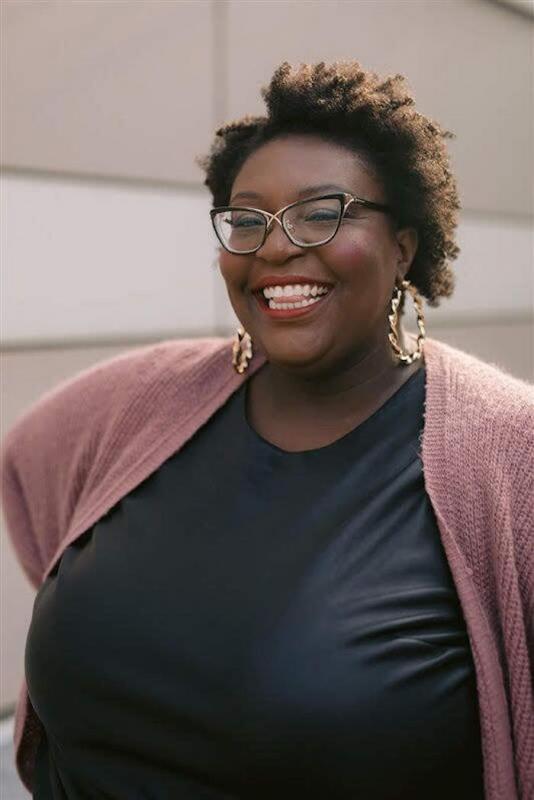
Joining us now from Georgia, where another anti-abortion law has been signed recently, are Jill Heaviside, a lawyer and If/When/How HIV–reproductive justice fellow with SisterLove, Inc., and Oriaku Njoku, co-founder and executive director of Access Reproductive Care—Southeast. They join us by phone from Atlanta. Welcome you both, Jill Heaviside and Oriaku Njoku.
Oriaku Njoku: Thank you.
Jill Heaviside: Thank you for having us.
JJ: Georgia, Alabama, Ohio, Indiana: Multiple states, as listeners know, are passing bills curtailing access to abortion in various ways. If you look particularly at social media, you’d say we’re living in the end times. And that’s why I particularly appreciated the departure point of the piece that you co-authored for Rewire.News, reflected in the headline, “Abortion Care Is Still Legal in Georgia.” It’s not, in the piece, a rosy-tinted view, by any means, but why was it important for you to start there?
JH: It was important for us to start there because it’s true: Safe and legal abortion services are available in every state across the country, including Georgia.
Stories and discourse that lead with “Georgia just made abortion illegal” are dangerous, because they can deter people from seeking care.
In Georgia, specifically, we have lawsuits that are going to be filed soon. So this law may never go into effect. Every law prohibiting abortion this early in pregnancy has been blocked or overturned by courts.
So we just want to make sure people know that their pregnancy, miscarriage or abortion will not be further criminalized in Georgia. We’ve already seen an uptick in calls to clinics and advocacy orgs and abortion funds, from patients that are asking if they’re going to be arrested if they come in for their appointments.
So we want to make sure people know, as we in the movement know, that this is a long game. And while folks should be concerned, because these are troubling times, we need to be able to organize and plan for the fight ahead, while also making sure we’re taking care of each and every person seeking abortion services along the way.
JJ: There are issues with the specifics in these bills—the manipulative and misleading use of “heartbeat,” for example, which you should feel free to explain. And then the idea in the Georgia law, that the rape and incest exceptions would only apply if a police report’s been filed—you could see the problems there. But then, in another way, the specifics almost don’t matter, if you’re trying to explain the intent of a ban like Georgia’s. You really do have to fight, then, on more than one level with this kind of legislation, don’t you?
JH: Yeah, that’s definitely true. To your point about the mechanics of the bill, the Georgia bill definitely raises some complex legal questions that aren’t settled under current law. But if we keep paying attention to what may happen, then we’re not really fighting for what we need in the moment right now.
The “heartbeat” descriptor of this bill is a misnomer, and was intentionally picked by anti-abortion legislators to really hone in on the messaging and control the narrative around these bills. But this bill, along with all similar bills, just basically are an outright ban on abortion, if they are allowed to go into effect.
ON: Just calling it a “heartbeat bill“ doesn’t do service to the reality that this is outright banning abortion, or an attempt to ban abortion and overturn Roe, essentially. So this is what we’re up against.
JJ: It’s been pointed out that, first of all, you’re talking about electric activity around a fetal pole, as early as six weeks, at a time when many women don’t even know yet that they’re pregnant, which of course means that you really are trying to ban all abortions.
And also, folks like Clyde Chambliss over in Alabama says things like, “Well, I’m not trained medically, so I don’t know the proper terminology and timelines.” You know, they say that out loud.
And you can facepalm all you want, but the thing is, they don’t care that they sound unintelligent on the science, because that’s not their point. Their point is to criminalize abortion, right? So the details really don’t matter, as much as some folks say, “Aha, look, we caught him in a hypocritical statement” or something.
JH: That’s exactly right. The intent of this bill, and all similar bills that are being put forth across the country, isn’t to protect women’s health or preserve the sanctity of life; their intent is to control the reproductive lives and freedoms of people across the country, and to further criminalize abortion and pregnancy. If these legislators were interested in the sanctity of life or improving health outcomes, they would do things like expand Medicaid or address maternal mortality.
I mean, here in Georgia, where black women are three to four times more likely to die from pregnancy-related outcomes than white women, those are the real “pro-life,” to use their term, issues that they should be focusing on, not how and when and by what means people should make decisions about continuing or terminating their pregnancies.
JJ: Well, Oriaku, you just raised it: Both proponents and opponents of these bans see them as aiming to be used to get at Roe v. Wade. How should we be thinking about Roe right now? What do we think would happen if it were, in fact, overturned?
ON: The reality of what Roe did was essentially make abortion legal in the United States, but it didn’t guarantee that abortion was going to be accessible. And so a lot of the people who we work with every day, that we’re in community with, have actually been living this post-Roe reality that people are scared of. That is actually the reality of folks who are on the ground, and has been for decades now.
So what has been happening is, yes, over the course of time, as a lot of this legislation and these laws have been introduced, it has made it harder to access an abortion. But I feel like that is also part of their strategy.
If they were to completely overturn Roe, I think one of the really beautiful things about this particular moment right now is that, while our legislators are focused on building power over us, we’re actually excited about building power with folks that we live with and work with and love in community. So no matter what happens, we’re still going to be making sure that people have access to the abortions that they want and need, no matter what.
I mean, there’s no way that we can truly predict what is going to happen. But we know that our role as grassroots organizations, or specifically, ARC-Southeast as an abortion fund, is to make sure that people have access to the abortions that they want and need, without any bias or other barriers.
JJ: Well, that actually leads me to another question. What is the relationship between abortion access and reproductive justice? What does that latter term entail?
ON: Yeah, so reproductive justice: If you want to think of it as three different things, there’s reproductive health, reproductive rights and reproductive justice.
And when reproductive justice was essentially created, by and for black women—it was coined in 1994, in a hotel room, you know? But when they came up with this term, “reproductive justice,” it was done as almost a counter to what the reproductive rights framework was putting out there, in that it was just about “choice.” By being a black woman, by being a person of color living in this country, we recognize that we do not live single-issue lives. And so the decisions that we make go beyond just making a choice or not. The decisions that we make are intersectional; they’re based on economics, our environment, our gender, our ability to get the funds that we need to have lives where we can thrive.
SisterSong, which is the women of color collective, defines reproductive justice as a “human right to maintain bodily autonomy, have children, not have children, and parent the children that we have in safe and sustainable communities.”
JH: And to add quickly to what Oriaku shared, the fact that reproductive justice is an intersectional framework, it allows us to bring in organizations that may have different central missions, but all support reproductive freedom for all Georgians.
So SisterLove, where I work, we’re an HIV advocacy, sexual health and reproductive justice organization. And so we’re able to address these intersecting issues: how HIV and abortion and young pregnancy and other issues relating to sexual health are all stigmatized, and are all criminalized. So it’s a way for us to build our collective power and find our common goals, and really just work collectively in order to push through reproductive freedom.
JJ: Another, I would say, unpretty aspect of particularly social media around this issue has been a denigration of the South, as though that’s the place where these things happen. But organizers that I talk with tell me, especially in the last few years, that particularly for women of color, the South is where some of the deepest organizing is happening. I don’t guess you disagree with that.
ON: Oh, yeah. I mean, anytime anyone tries to, what I like to say, talk a mess about the South, anytime they try to do that, I’m like, “We’re actually choosing to live here. This is where our families come from.” The South is actually a beautiful place.
And this is not something, the organizing that has been happening, is not something that’s just been happening overnight. I remind people all the time of, the civil rights movement started in the South. Social justice movements came from the South, they were built and flourished from the South.
So this idea of talking bad about the South, or making the South seem like, “Oh, of course, it would happen in the South,” when the reality is, a lot of these laws started off in Ohio, they started in the Midwest, and then were brought down to the South…. The really beautiful organizing, especially from people of color living here, is…. Yeah, that’s what we do. That’s what we’ve always done.
JH: And my perspective, as a white woman from Connecticut, is that the South is an amazing place to do this work. There are so many opportunities to really learn from, and work for and with, the amazing women of color who have been leading reproductive justice and social justice and all this movement work for decades. And most of the people who are calling on the South as, “Oh, of course this is happening to the South. Let’s write off the South,” they’re all people who don’t live in the South, they are mostly people, mostly white people, from places outside of the South. And so it’s easy for them to write off the South. but we really need reinvestment in the organizations that are leading this work, to build our power and continue doing the amazing work we have been.
JJ: Well, that leads right to the next question. I don’t oppose boycotts, quite the contrary; I believe in people speaking with their consumer voice. But boycotting all of the states that pass draconian abortion restrictions—you know, at a certain point, that becomes a pretty blunt tool.
For people in states—and I mean states in the union, but also socioeconomic states—where they feel pretty secure in their own ability to access abortion, who are right now basically wringing their hands, what are some ways that you could suggest for them to help move us forward, to help in this moment?
ON: Yeah, one of the things that I keep thinking about is just the idea that part of reproductive justice is creating a space or an environment or a world where people can live their best lives, they can live their lives in a sustainable way.
And so when people are actively choosing to boycott, or divest from, areas or states that actually need the support, this is not only just “taking a stand,” or speaking with their consumer voice, this is something where it’s directly impacting the workers and the people and the families who depend on the jobs that they’re divesting from, that they need to live their sustainable lives.
So to me, it just creates that connection between economic justice and reproductive justice, and how a boycott ends up hurting a family’s ability to just do that, which is live a sustainable life.
JH: And something that we tried to emphasize in our piece is that if folks, particularly people who are outside of Georgia, and, as you mentioned, feel secure in their ability to access abortion and just want to help, that the best thing they can do is listen to the grassroots organizers who are on the ground and who have been doing this work.
If you don’t know the organizations, either in Georgia or the state that you want to help benefit, a great place to start is with the local abortion fund, because they definitely know all of the people who are doing the important work.
And while some are calling for boycotts, we have prominent leaders in Georgia who are saying, no, please, continue your investment, and come here and support the folks who maybe aren’t the actors in the movie, but are working on the set, working in the restaurants and working in the hotels and working in the supportive services.
Over the weekend, Jordan Peele and J.J. Abrams said that they are not pulling out their projects, and instead are donating their proceeds to organizations who are actively doing this work. And that’s an amazing way to show support and leverage your financial privilege to help put forward these issues.
JJ: Let me ask what you would like to see media doing more of, or less of, in their coverage of this topic? There certainly are themes to the coverage; we can’t say they’re not covering this. But are there things that you would like to see journalists improve, maybe?
ON: Yeah, there have been what feels like a lot of doomsday feelings around the coverage that has been coming out, and that is almost doing a disservice to the actual joy and excitement that the folks on the ground actually have in doing this work. We come and we answer the phones at ARC-Southeast, for folks who are trying to access abortion care, and do that with a radical, unconditional love every single day, do our work to take away that fear, that fear and that stigma, which end up also being barriers to accessing care. I feel like this was a really unique and opportune time to showcase that: Folks are still doing this work. I mean, they’re deeply committed to doing this work, no matter what.
And it’s folks from all communities. So we’ve got queer and trans folks, we’ve got other LGBTQ folks, we’ve got young people, we’ve got immigrants and people from the API community. It’s really taking all of us to create this cultural shift around how we address abortion. And we’re deeply encouraged by that, and are excited to see what can happen, because this is definitely a moment within this broader movement that is really being used to galvanize and energize our base to really shift the climate.
JJ: We’ve been speaking with Oriaku Njoku and Jill Heaviside. Their article, “Abortion Care Is Still Legal in Georgia” can be found at Rewire.News. Oriaku Njoku and Jill Heaviside, thank you very much for joining us this week on CounterSpin.
ON: Thank you.
JH: Thank you for having us.
ZNetwork is funded solely through the generosity of its readers.
Donate

