
“Words Will Not be Sufficient”
In October of 2013, Germany’s Chancellor Angela Merkel voiced outrage over the giant global surveillance program conducted by the United States National Security Agency (NSA). How could Merkel not have cried foul? Among US whistleblower Edward Snowden’s many revelations about US spying, it was learned in October that the NSA had listened on her personal cell phone – a mind-boggling breach of faith between leading Western allies in the North Atlantic Treaty Alliance (NATO) and US-led “global war on [of] terror” (GWO/OT). Other European and other leaders had also been placed under NSA surveillance, Snowden revealed.
Merkel said that Germany’s relations with the US had been “severely shaken” and called US spying on her and other European leaders “completely unacceptable…Spying among friends is never acceptable.” The German Chancellor said that “Trust needs to be rebuilt,” adding that “words will not be sufficient. True change is necessary.” Other European officials “think the same,” Merkel added. France’s Prime Minister Jean Marc Ayrault called the reports of US spying “shocking” and “worrying.”
The extent to which European elites really cared about snooping by their US “friends” at the NSA can certainly be exaggerated. The issue has faded in European politics and has elicited little real change in European electronic security policy. A German prosecutor has recently claimed that there is no basis for the charge that Merkel’s phone was tapped. In the summer of 2013, just two days after the German magazine Der Spiegel reported (on the basis of documents made available by Snowden) that the NSA “not only conducted online surveillance of European citizens, but also appears to have specifically targeted buildings housing European Union institutions,” five Western European nations (Austria, France, Italy, Portugal, and Spain) assisted the US in its openly expressed desire to capture Snowden. On July 1, 2013, Washington suspected that Snowden might be on board a plane carrying Bolivian President Evo Morales home from energy talks in Russia. Under US pressure, Morales’ plane was forced to land in Vienna, Austria. France, Italy, Portugal and Spain had (at Washington’s command) withdrawn permission for the plane to pass through their airspace. Morales’ flight was “kidnapped by imperialism” (in the words of his Vice President) because he had said in a Moscow television interview that Bolivia would look favorably upon an asylum request from Snowden. Morales left Vienna only after spending 12 hours at the airport and after Austrian national police verified that Snowden was not on board. The forced landing, detention, and searching of President Morales’ plane was a remarkable and arrogant violation of international law committed at the instigation of the US Empire. In was act reflecting what Argentina’s president Cristina de Fernandez Kirchner called “the vestiges of colonialism,”
Still, Merkel and other leading European politicians had no choice but to respond with some measure of public indignation over the US/NSA spying disclosures of October 2013.
“Sigh of Relief…Few Ripples Across the Pond”
Those European leaders have expressed considerably less indignation in response to the recently released US Senate Intelligence Committee’s (USSIC’s) summary of its still classified 6,700- page report on the use of “enhanced interrogation techniques” (torture) by the US government – most specifically by the CIA – on behalf of the US GWO/OT waged in the wake of the 9/11/2001 al Qaeda jetliner attacks. A recent Time magazine report is titled “CIA Torture Report Creates Few Ripples Across the Pond.” According to Time correspondent Simon Shuster:
“Europe wasn’t exactly silent. But considering the scale of the abuses that the U.S. Senate Intelligence Committee revealed on Tuesday in its report on CIA torture, one might have expected a bit more outrage from the leaders of the Old World. Instead, the most common reaction was to praise the report as a sign of American transparency and accountability—two of the values meant to bind the West together—while many European statesmen have so far avoided saying anything at all…That includes the leaders of France and Germany, who made no public reaction in the 24 hours that followed the report’s release…if the White House was expecting the Senate report to freeze relations across the Atlantic, it can probably breathe a sigh of relief.”
The Imperial Logic of European Silence on Torture
This too is unsurprising. As the Open Society demonstrated in an exhaustive February 2013 study titled Globalizing Torture: CIA Secret and Extraordinary Rendition, “Germany participated in the interrogation of at least one extraordinarily rendered individual. It also had knowledge of the abduction of a German national who was held in secret CIA detention. Further, Germany permitted use of its airspace and airports for flights associated with the CIA extraordinary rendition program.”
Eighteen other European nations (including Belgium, England, Greece, Ireland, Italy, Poland, Portugal, Spain, and even social-democratic Sweden and Denmark) also participated in the global CIA torture network. The roles they played ranged from letting CIA rendition flights use their airspace and airports to letting the CIA snatch captives up on their national territory and to actually (as in Poland, Lithuania, and Romania) hosting secret CIA prisons (torture sites).
“The muted reaction from European leaders,” Shuster learned, “is perhaps best explained by the dilemma this issue presents. If one of them praises the report’s transparency, they could be perceived as downplaying the gravity of the crimes committed in the execution of the war on terror. If one of them condemns those crimes, they will almost certainly face questions about their own country’s complicity, if not also its direct involvement, in torture and illegal detention.”
Another factor behind Europe’s mild response to the USSIC report is the US-led “new Cold War” confrontation with Russia over Ukraine. This Western-driven conflict has “urged the West to band together against what they perceive as a common threat to their security.” An imperial “expert on Central and Eastern Europe” (an academic flak at the German Marshall Fund) told Shuster that “the key ingredient to any successful Russia policy is Western unity.” As Merkel “pursues an ever-tougher line against Moscow,” the “expert” adds, “she needs to rally the Europeans, and she needs to make sure the coordination with the Americans remains intact.”
The Latin American Exception
It wasn’t just Europe that collaborated with CIA extraordinary rendition and torture. Fifty four nations spread across five of the world’s six inhabited continents participated in the US global torture network.
The one such continent where not a single nation played along with the CIA campaign of secret and extraordinary rendition? South America. No country there or anywhere else in Latin America (including Mexico and the Central American states of Honduras, El Salvador, Guatemala, and Nicaragua) allowed the US post-9/11 terror network to use even its airspace or airports. The only facility fully enlisted in the US GWO/OT in Latin America is a US colonial hangover: the Guantanamo Bay detention camp (“Gitmo”) – a US prison and torture complex in the US Navy base on the Southeastern tip of Cuba.
Not that Uncle Sam didn’t try to recruit its southern neighbors to his 21st century torture and kidnapping campaign. In November of 2002, US Defense Secretary Donald Rumsfeld flew more than 5000 miles to Santiago, Chile. There he told a meeting of chiefly Latin American Western Hemispheric defense ministers that they needed to participate in the “integration” of “various specialized capabilities into larger regional capabilities.” Rumsfeld told them that “events around the world before and after September 11th suggest …advantages” for Latin American nations who collaborated with Washington and each other in the “war on terror.” Rumsfeld offered US money, technology, training, and other assistance to Latin American militaries and governments who agreed to work with Washington in constructing a planetary system of kidnapping, torture, and murder,
Rumsfeld was likely unaware that September 11th was already a black day in Latin American history because it was on 9/11/1973 that the US-backed Chilean military undertook a CIA-backed coup that killed Chile’s democratically elected socialist president Salvador Allende and led to the political state murder, torture, and disappearance of thousands of Chilean workers, activists, and intellectuals. Beginning in 1975, the fascist Chilean coup regime, headed by General Augusto Pinochet, joined with its fellow right wing dictatorships in Argentina, Bolivia, Paraguay, Uruguay, and Brazil in the implementation of Operation Condor, an “anti-communist” campaign of state terror, torture, disappearance, and political repression. Operation Condor that killed at least 60,000 people in the 1970s and 1980s, receiving leading military aid and technical assistance from the US, principally through the CIA. It was all perpetrated in the name of “democratic capitalism” and the so-called free market.
Rumsfeld and the Bush administration did not succeed in their efforts to resurrect a kind of Operation Condor for the post-9/11 era – one in which radical Islam replaced Soviet and Cuban “communism” (cover terms for the actual threats of Latin America populism, social democracy, and national independence) as the official enemy. As the Latin American historian Greg Grandin explained last year, “History was not on Rumsfeld’s side. His trip to Santiago coincided with Argentina’s epic financial meltdown, among the worst in recorded history. It signaled a broader collapse of the economic model – think of it as Reaganism on steroids – that Washington had been promoting in Latin America since the late Cold War years. Soon, a new generation of leftists would be in power across much of the continent, committed to the idea of national sovereignty and limiting Washington’s influence in the region in a way that their predecessors hadn’t been.”
“Empire’s Workshop”
Latin America’s refusal to sign up with the US GWO/OT was more than just collateral fallout from economic meltdown. As was certainly understood by left Latin American leaders Hugo Chavez (elected president of Venezuela in 1998), Lula da Silva (elected to Brazil’s presidency in October of 2002), Néstor Kirchner (elected to Argentina’s presidency in early 2003), Evo Morales (elected to Bolivia’s presidency in late 2005), and Rafael Correa (elected to Ecuador’s presidency in late 2006), the regressive neoliberal (arch-capitalist) “free market” economic model had been imposed on Latin America by Washington largely through the iron fist of state violence funded, equipped, trained, and overseen by US military and intelligence. “Enhanced “interrogation” was a critical weapon in that US-sponsored repression. The terrible torture methods recounted in last week’s Senate report were all too well known to Latin Americans during the last century. Deep in the USSIC’s 500-page summary of that report there is reference to KUBARK, code name for a July1963 CIA interrogation manual. As the committee notes, the manual contained the “principal coercive techniques of interrogation: arrest, detention, deprivation of sensory stimuli through solitary confinement or similar methods, threats and fear, debility, pain, heightened suggestibility and hypnosis, narcosis and induced regression.” Under the Kennedy and Johnson administrations and through the 1980s, Washington and Latin America’s many US-sponsored right wing dictatorships turned the region into “a counterinsurgent laboratory” (Grandin) – one where US-trained and US-equipped gendarmes regularly conducted many of the “coercive interrogation” techniques used by the US and its GWO/OT allies during the present century. United States military and intelligence personnel applied the same basic horrific techniques in Southeast Asia during the US Indochinese wars of the 1960s and 1970s.
The CIA updated KUBARK when US-sponsored Latin American military regimes faced popular resistance and armed insurgency during the late 1970s and 1980s. In 1983, the USSIC reports, “a CIA officer incorporated significant portions of the KUBARK manual into the Human Resource Exploitation (HRE) Training Manual, which the same officer used to provide interrogation training in Latin America in the early 1980s.” Beyond application in training death squads and armed forces who killed hundreds of thousands of workers, peasants, and activists in El Salvador, Guatemala, and Honduras, the new manual was “used to provide interrogation training to” a party whose name is redacted in the committee’s report. The deleted entity is clearly the Contras, a terrorist force created by the CIA to overthrow the popular Left Sandinista government in Managua.
Not surprisingly, there are some direct personnel connections between the US terror campaign in 20th century Latin America and this century’s US-led GWO/OT. The USSIC reports that “a CIA officer [who] was involved in the HRE training and conducted interrogations” that may have gone overboard (even by US standards) became “in the fall of 2002…the CIA’s chief of interrogations in the CIA’s Renditions Group, the officer in charge of CIA interrogations.” According to a recent Newsweek report:
“Other veterans of the Latin American counterinsurgency wars were key players in the questionable post-9/11 interrogation practices exposed by the Senate committee, although they went unmentioned in its report because they were not CIA officers…Retired Army Colonel James Steele, along with another retired army colonel, James H. Coffman, helped the Iraqi government set up police commando units and ‘worked…in detention centres that were set up with millions of dollars of U.S. funding,’ the London-based Guardian newspaper and the BBC reported in a joint project in 2013…Steele had been commander of the U.S. military advisory group in El Salvador during its 1980s civil war, a struggle remembered chiefly for the ‘death squads’ the regime used against nuns and priests allied with the poor. Steele had previously been decorated for his service in South Vietnam as a U.S. Army reconnaissance patrol leader” (emphasis added).
Given Latin American governments’ deep collaboration with US military and intelligence force’s torture practices during the last century, it might seem ironic that South and Latin America alone among the world’s great continents and regions can boast that none of its national governments agreed to participate in the global torture network created by the US after 9/11. The irony disappears, however, when one realizes that the region living under the hemispheric thumb of the United States since the 19th century has in this century rejected both the imperial economic model and the intimately related state terrorism – both the “soft” rule of the (in fact brutal) “free market” and the iron fist of hard state power – imposed by its bad neighbor and bully to the North. As the longstanding early “workshop” (Grandin) of the US state-capitalist Empire, Latin America quite logically stands in the vanguard when it comes to rejecting US torture and murder techniques and programs.
Leading on Surveillance and Whistleblower Protection
It isn’t only on the torture/interrogation/rendition (kidnapping) issue that Latin America far surpasses Europe in standing up to the US GWO/OT. Uncle Sam’s southern neighbors also lead on fighting NSA surveillance (which has also of course targeted Latin American citizens and heads of state) and on protecting whistleblowers who expose US crimes. Morales expressed Bolivia’s willingness to host and protect Snowden – likely a sincere statement. Another South American state, Brazil, currently hosts and protects Glenn Greenwald, the US civil-libertarian journalist to whom Snowden turned with his documents and revelations. Another left-led Latin American state, Ecuador, provides a sanctuary for the Australian WikiLeaks founder Julian Assange in its embassy in London. Assange is under siege by the United States, England, and even social-democratic Sweden because of his role in the publication of US military and diplomatic documents leaked by US Army private Chelsea Manning. As John Pilger has recently observed, “For two years, an exaggerated, costly police presence around the Ecuadorean embassy in London has served no purpose other than to flaunt the power of the state. Their quarry is an Australian charged with no crime, a refugee from gross injustice whose only security is the room given him by a brave South American country. His true crime is to have initiated a wave of truth-telling in an era of lies, cynicism and war.”
Winning the World Cup of Opposing Torture and Surveillance
Germany and Europe can feel proud of their recent World Cup supremacy over their South American football rivals (Europe has taken four of the last five World Cups), but when it comes to the more serious matter of resisting the mass-murderous Big Brother US Empire and its terrible practices, the Old World nations east of the Atlantic lag far behind Latin America.
“Overwhelming Warmth and Compassion”
After writing the paragraphs above, I happened by chance upon a remarkable and heartwarming news segment on the reception received by six former Guantanamo prisoners – four Syrians, a Palestinian, and a Tunisian – in Montevideo, Uruguay. Although they were cleared for release in 2009, the US refused to release them until Uruguay’s Left president Jose Mujica offered to take them in as a humanitarian gesture. As one of the released detainees’ lawyers told the PBS “Newshour” last week:
“I have never, in my many years of doing this work, seen a reception like this. It has been overwhelming in its warmth and its compassion. When my client, who has been on a hunger strike for most the past two years, was going around the hospital ward to have tests, other patients in the hospital came out of their wards and leaned in and smiled and waved. I have been hugged by grandmothers in the supermarket simply because I am a lawyer who represents a Guantanamo prisoner. The warmth of the people of Uruguay has been overwhelming. We’re so grateful and so pleased.”
The ex-detainee Abedlhadi Omar Faraj sent out a letter through his New York lawyer on thanking Uruguay for its gracious welcome. “Were it not for Uruguay,” the letter read, “I would still be in the black hole in Cuba today. It’s difficult for me to express how grateful I am for the immense trust that you, the Uruguayan people, placed in me and the other prisoners when you opened the doors of your country to us…”
Michal Bone, a lawyer for another former “Gitmo” detainee told the Guardian that “They got hugs from Uruguayan officials, friendly waves and thumbs up from the other patients at the hospital, the Uruguayan reception team even brought bathing suits for them. Bone noted that while on the flight Cuba on a US military plane, the former prisoners wore handcuffs, shackles, blindfolds and ear-defenders,“the Uruguayans refused to let them walk off the plane in shackles; they insisted that they be allowed to take their first step on Uruguayan soil as free men.”
As free men – imagine that. The six former detainees’ trip from the bottom reaches of the fascistic, racist, and totalitarian Hell that is the US GWO/OT to peaceful and social-democratic Uruguay was a flight from savagery to civilization – from the clutches of a sadistic Empire of torture to a region that is finding democracy and justice as it emerges from the vicious control of its northern overlords.
“Interrogation Cum Torture”
Jose Mujica is a former left-wing militant who spent nearly fifteen years in prison during the period when Uruguay was under US-sponsored and CIA-assisted military rule. A veteran of the Tupamaro revolutionary organization, he knows a thing or two about US-directed “enhanced interrogation” – torture, that is. “As a prisoner of the brutal military dictatorship that seized power in a [US-backed] coup in June 1973, “Encyclopedia Britannica reports, “Mujica was tortured and spent long periods of time in solitary confinement, including two years at the bottom of a well.” The venerable Left dissident and chronicler of US global criminality and arrogance William Blum provides some deeper historical context:
“The 1960s [in Uruguay] was the era of the Tupamaros, perhaps the cleverest, most resourceful, most sophisticated, least violent, Robin Hood-like urban guerillas the word has ever seen. They were too good to be allowed to survive. A team of American experts arrived, to supply the police with all the arms, vehicles, communications gear etc. they needed; to train them in assassination and explosives techniques, to teach methods of interrogation cum torture, to set up an intelligence service cum death squad. It was all out war against the Tupamaros and any suspected sympathizers….”
“In 1998, Eladio Moll, a retired Uruguayan Navy rear admiral and former intelligence chief, testifying before a commission of the Uruguayan Chamber of Deputies, stated that during Uruguay’s ‘dirty war’ 91972-1983), orders came from the United States concerning captive Tupamaros. ‘The guidance that was sent from the U.S.,’ said Moll, ‘was that what had to be done the captured guerillas was to get information, and that afterwards they didn’t deserve to live.’” (Blum, Rogue State: A Guide to the World’s Only Superpower [Common Courage, 2005], 182).
Over the many decades of its unmatched global power, Washington has decided that millions of citizens across the planet don’t really deserve freedom, comfort, and even life itself. As the first global region to feel the imperial presence and fury of the United States and to see US power embedded in its own social and political life – as the (US of) American Empire’s “workshop” – Latin America logically leads the world in rejecting US power both “soft” and hard – both the “Washington consensus” neoliberal economic model and the Washington war of terror and surveillance – in the deadly “neoliberal” era. And that, silly as it may sound, is no small part of why I rooted for Brazil and Argentina against Germany in the 2014 World Cup last summer.
Paul Street is the author of many books, including Empire and Inequality: America and the World Since 9/11 (Paradigm, 2004); The Empire’s New Clothes: Barack Obama in the Real World of Power (2010); and They Rule: The 1% v. Democracy (October 2014).
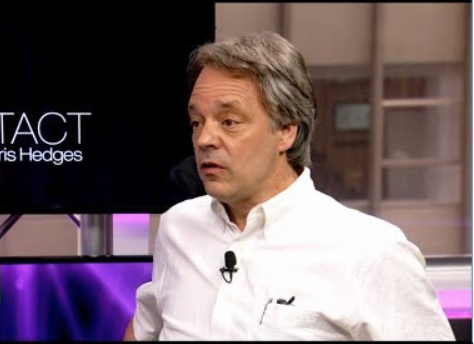
Paul Street is an independent radical-democratic policy researcher, journalist, historian, author and speaker based in Iowa City, Iowa, and Chicago, Illinois. He is the author of more than ten books and numerous essays. Street has taught U.S. history at numerous of Chicago-area colleges and universities. He was the Director of Research and Vice President for Research and Planning at the Chicago Urban League (from 2000 through 2005), where he published a highly influential grant-funded study: The Vicious Circle: Race, Prison, Jobs and Community in Chicago, Illinois, and the Nation (October 2002).
ZNetwork is funded solely through the generosity of its readers.
Donate

