
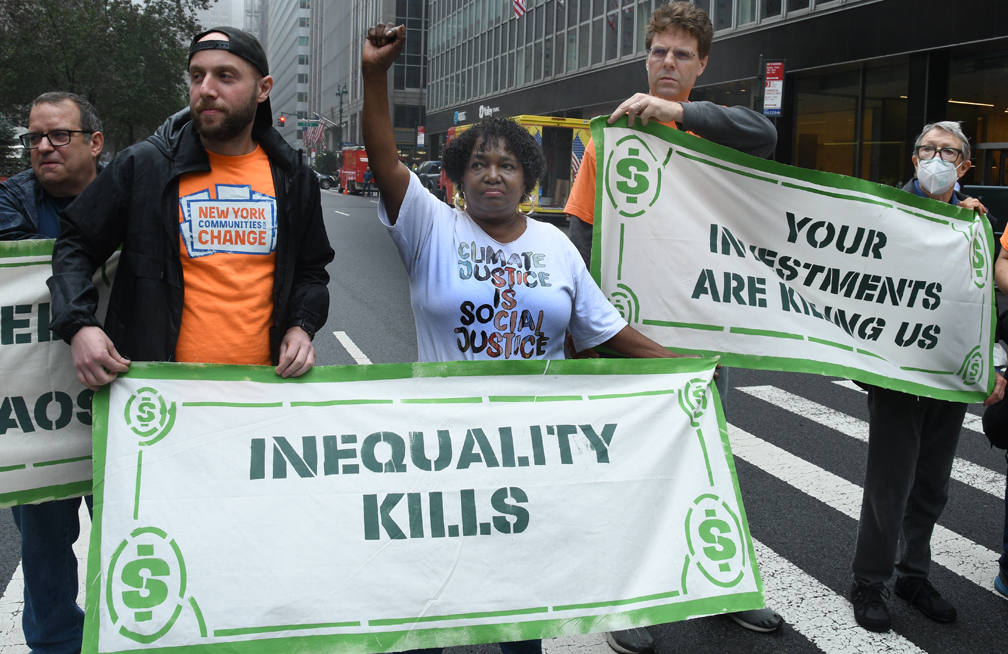
In this episode, I’m joined by economic anthropologist Jason Hickel, author of The Divide: Global Inequality from Conquest to Free Markets (W.W. Norton, 2018), to discuss the complex and interconnected relationship between imperialism—both past and present—and global economic inequality. We examine why mainstream liberal frameworks for understanding the divide between rich and poor countries inevitably fall short, instead presenting an alternative account of global inequality that centers the crucial role of colonial plunder (as well as unequal exchange in the supposedly ‘postcolonial’ era) in keeping vast swaths of the world trapped in conditions of poverty, underdevelopment, and economic dependency.

Jason Hickel is an author and Professor at the Institute for Environmental Science & Technology (ICTA-UAB) at the Autonomous University of Barcelona. He is also a Visiting Professor at the International Inequalities Institute at the London School of Economics, and a Fellow of the Royal Society of Arts. He serves on the Climate and Macroeconomics Roundtable of the US National Academy of Sciences, the advisory board of the Green New Deal for Europe, the Rodney Commission on Reparations and Redistributive Justice, and the Lancet Commission on Sustainable Health. Jason's research focuses on political economy, inequality, and ecological economics, which are the subjects of his two most recent books: The Divide: A Brief Guide to Global Inequality and its Solutions (Penguin, 2017), and Less is More: How Degrowth Will Save the World (Penguin, 2020), which was listed by the Financial Times and New Scientist as a book of the year.
ZNetwork is funded solely through the generosity of its readers.
Donate