
Source: The Analysis
Norman Solomon is a tireless fighter for progressive values inside and outside the Democratic Party. He’s written several columns recently about the fight to get Biden to, at the very least, not nominate warmongers to senior positions. You’d think that’s not too much to ask. Or Wall Street hacks. Perhaps even nominate people that represent the almost ten million people who voted for Bernie Sanders and the three million who voted for Elizabeth Warren in the Democratic Party primaries.
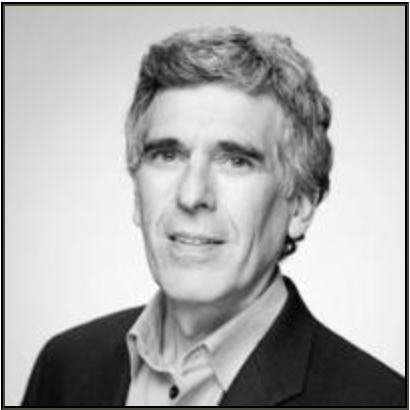
Now joining us to analyze that class struggle in the Democratic Party is Norman Solomon. He’s the author of a dozen books including War Made Easy: How Presidents and Pundits Keep Spinning Us to Death. Norman is the founder of the Institute for Public Accuracy. He’s the co-founder and national director of the online organization Roots Action.org. And I would encourage you to check that out. It now has around 1.2 million active supporters in the U.S. He was elected as a Bernie Sanders delegate to the Democratic National Convention in 2016 and again in 2020, both times organizing as a coordinator of the independent Bernie Delegates Network.
Thanks for joining us, Norman.
Norman Solomon
Oh, a pleasure. Thanks, Paul.
Paul Jay
So, before we dig into some of the things you’ve been writing about — the appointments Biden has still to do and has recently done, as well as this whole issue of taking up the struggle against corporate Democrats, as you call them — let’s just dig into this first question a little bit. I go back to Hillary Clinton on this one because I remember when she was on stage debating Bernie Sanders, she said, “Bernie and I really have the same objectives. We just have a different way of getting there.”
They like to portray this whole fight with the left of the Democratic Party as if it’s a difference of ideology. It’s a difference of opinion on how you get to the same kinds of progressive values. The corporate Democrats like to describe themselves as progressives and so on. But I don’t think this is so much a difference of ideology. I mean, it is. But it’s also and more importantly a difference of economic interest about who these corporate Democrats represent. And I’m not sure that gets talked about enough in terms of what’s going on in the Democratic Party. What’s your take on that?
Norman Solomon
Or really, I think there is some overlap in interests at certain moments. Like, when it’s up against someone such as Trump, then there’s a common shared interest in defeating him and those forces around general election time. But in terms of whose interests are being represented long-term, I think that there is and there certainly should be a very big difference between the current Democratic Party establishment and those who call themselves progressives and really want to move the party and the country in a leftward direction.
So, it’s not just tactical. It’s not just even in the narrow sense that you refer to as “ideological.” It’s about a vision of what kind of society we want. And I think, you know, a buzzword that is used sometimes for what the Clinton wing of the party, the Biden wing of the party want is neoliberalism. They see market economies as the future. They love to see rich people get richer. They think opportunity is a buzzword to use because everybody has a chance, theoretically, to get rich. Whereas the forces that galvanized around the Bernie Sanders campaigns have, I think, a very different long-term vision, whatever you want to call it, “democratic socialism” or anything else. It’s about a society where people in power and government are seriously committed to health care as a human right, education, housing — across the board — and that money doesn’t rule, but people rule in a truly democratic way. That is a fundamental difference, and the battles within the Democratic Party and across the society I think really reflect those very deep differences.
Paul Jay
Yeah, I think the Democratic Party wants to portray itself as if it’s the party of FDR and the New Deal, but the corporate leadership of the Democratic Party, along with Republicans, has actually been undoing the New Deal since World War II. And then the other part of it is, I think that they have accepted militarization as a form of stimulus. Again, it’s not just an opinion or ideology: they accepted it because it was real in the sense that the options to rebuild the US economy after World War II, to not go back into the depression of the ’30s, was either to go even further than the New Deal or to maintain and even strengthen militarization as a form of stimulus.
And so, much of the foreign-policy thinking of the Democratic Party is rooted in the justification for militarization, the whole Cold War narrative of the Soviet Union as an existential threat. They continue it now because militarization is still such a big part of the American economy and they don’t want to go with the alternative, which would be, you know, a massive New Deal domestic program while actually cutting back on militarization.
Norman Solomon
Well, that’s a key point. You have about 55 percent of the federal discretionary budget going to the military. They call it “The Defense Department” but we should call it “military spending.” And when you look at the potential to free up huge amounts of money to really address human needs, it’s vast. There are two ways to do it. First, we would have an enormous cut, a severe cut, in military spending. Second, we would have genuinely progressive taxation. Not only very steep progressive taxation of the one percent, but especially, you might say, the 0.01 percent: just really tax the rich with a justified vengeance so that there are the resources to provide health care and education and housing for everybody in the country.
It could be done. But it’s not only a matter of political will. More importantly, it’s a matter of political power. And a lot of the battles going on right now among those who are trying to shape the incoming Biden administration have to do with the extent to which the military-industrial complex will run roughshod over the country. And the battle has been joined. We’re getting what we expected from Biden. Biden was a tool to fend off the far worse Trump administration from getting a second term. But here we are and the battle has to go forward.
Paul Jay
Well, you wrote an article about the fight over who would become the secretary of defense. And some people have said, well, what did the progressives actually win here? They get this general. But I thought your article was very interesting and the clip you played. Talk a bit about that fight and give us a lead-in to the clip because I’m going to play some of it.
Norman Solomon
There was really a strong coalition that built very fast and at RootsAction.org we worked with a number of other groups directly, such as Code Pink, Progressive Democrats of America, World Beyond War, and Our Revolution. We knew that Michèle Flournoy has been groomed for many, many years to be secretary of defense. She is perhaps the leading theorist and advocate for military confrontation with China. And so, there was a real licking of chops among the military-industrial complex and the contractors, including those she served spinning through the revolving door from the Pentagon under Clinton and Obama to basically be an influence peddler for the military contractors. They were just thrilled because it looked like, even two or three weeks ago, that she was the frontrunner — some said, a lead-pipe cinch to be defense secretary. And so, Roots Action worked with other groups — Just Foreign Policy is another organization that played an important role — to make clear publicly and in organizing that we found her unacceptable to run the Pentagon. For two basic reasons: she is a war profiteer and also that she, as I mentioned, is a leading advocate for a potentially disastrous buildup of US forces in the South China Sea and for confronting China militarily in a methodical way.
And I’m pleased to say that a combination of factors, including progressive pressure, has prevented her from being nominated. There have been a couple of critiques of that successful effort by progressives, and I think they’re worthwhile to briefly address. One critique is, “You progressives, you’re wimps. You don’t know what you’re doing. You don’t want a strong military. Michèle Flournoy would have strengthened our capacities militarily.” And, you know, unless you’re a hawk, you can dismiss that critique.
Another critique has been, I think, more substantive. And that is, “Well, does it really matter? Because instead of Flournoy, we got this four-star retired general, Lloyd Austin, and he comes off the board of Raytheon, which is a huge military contractor.” And all of that is true. He is a boilerplate, through-the-looking-glass, through-the-revolving-door person who, after serving in the military at an extremely high level, figured he could profiteer from it. He goes to a major military contractor. However, he is not ideological. He’s going to do what Biden tells him, and unlike Flournoy, he had no agenda for building up towards China or fashioning a more aggressive Us foreign policy.
So, I think it goes to sort of a broader point, which even was in play during the general election for president. The left — progressives, humanists — have been in a damage-mitigation situation. We’re taking on a defensive role because of where we are historically, economically, and politically. And so, we’re doing damage mitigation right now. We’re not in the driver’s seat, but we can’t simply conflate all the evil forces and say it doesn’t matter which one of them is in control.
Paul Jay
Yeah, I agree with you. I think it’s very important that we are dealing with the politics of empire. Living in the heart of empire. I mean, I was living in the US. Now I’m in Canada. But it’s kind of still within the heart of the empire. And “small” — quotes around small because sometimes they’re not so small — differences matter. If there were a Democratic president that was more reflective of the foreign policy of Chuck Schumer, there wouldn’t be a nuclear deal with Iran. And a nuclear deal with Iran matters. It’s not even such a small difference. It’s a major difference from what the Israelis and the Saudis and maybe even the Chuck Schumers of this world would like, which is an attack on Iran.
So, there’s no doubt Biden is a manager of the empire and has been so his whole career. But he has shown some instincts that are at least less aggressive than some others. And one would want to encourage those instincts, like the Iran deal. Apparently, when Obama had to deal with the issue of the New START treaty and was trying to get the Republicans to support him, he was told by the Republicans, “Only if you make a new massive commitment to nuclear weapons.” And Obama did make a trillion-dollar commitment to modernize nuclear weapons. Well, it’s been reported that Biden was opposed to that. It was reported Biden was opposed to the intervention in Libya. That’s not to say he didn’t support the Iraq war and he isn’t willing to do what the empire needs, but small differences matter. They sure matter to tons of people. If they bomb Iran, how many hundreds of thousands of people could die there? That’s not such a small thing.
So, yeah, I think it’s really important that we get clear about what’s possible at this historical period. As much as one critiques and denounces much of what Biden’s going to do — because we know much of what he’s going to do ain’t going to be good — these differences, especially on foreign policy, are not negligible.
I want to play that clip with Austin, the general who’s now going to be secretary of defense, because I didn’t know about this until I saw it on your site. But the this is a clip where the general is testifying in front of John McCain. And McCain wants the general to support military intervention in Syria by US troops to create a kind of buffer zone for refugees, which I guess I should say is really a rationale for getting US troops more directly involved in the war than they already were. And Austin doesn’t get pushed around by him. It’s very interesting. Here’s a bit of that.
John McCain
Would you support a buffer zone which would then protect some of these refugees who are being barrel bombed and slaughtered by Bashar Assad?
Lloyd Austin
I don’t see the force available to be able to protect them currently, sir. So, I would not recommend it at this point in time.
John McCain
So, we wouldn’t be able to shoot down Bashar Assad’s aircraft as they barrel bomb and slaughter innocent men, women and children. Is that correct? We don’t have the capability to protect them.
Lloyd Austin
We clearly have capability. Yes, sir, we do.
John McCain
But you wouldn’t recommend such action.
Lloyd Austin
I would not recommend a buffer zone at this point, sir.
John McCain
I see.
Paul Jay
So, it seems to me what’s important here is this is a guy, unlike others who could have been there (Flournoy or others in the Democratic Party), who might actually encourage some of Biden’s better instincts rather than the other way around.
Norman Solomon
I draw a parallel as well to that. Hillary Clinton four years ago was obviously very potentially president and she hated the left. That was in her history. And she still hates the left and makes that clear. I don’t think that Joe Biden hates the left. He just never had use for the left in his four-plus-decade career. And that also makes a difference, sort of similarly to what you’re saying. Just as challenging a Democratic president means not hitting your head totally against the wall, the way challenging Trump has been, if we have people in high positions in the cabinet who are not locked into a very strong, dangerous ideological position such as Michèle Flournoy has been, it gives the left, it gives progressives more space to actually have an impact and galvanize our power. The fact that Jared Bernstein, who is a progressive economist, has been and now again is on Biden’s economic team doesn’t solve the problem that Biden continues to be a flunky for corporate America, but it gives us more space to work with.
The claims from some — for instance, those who have grouped themselves around the shrinking Green Party in the US — are so absurd. We’re told there’s really no substantive differences between the Democratic and Republican parties at the top, but then you look at the three people who have been put on the US Supreme Court during the Trump era and you look at even Kagan or Sotomayor or Ruth Bader Ginsburg, who have been put on by Democrats. And you have to ask, what is this tendency, perhaps small but still significant within the US left, that is almost susceptible to magical thinking or prevarication that pretends that there is no significant difference between the justices on the US Supreme Court appointed by Democrats and those appointed by Republicans? And I think progressives need to be willing and able to confront that kind of sloppy and dangerous thinking because we’re not out of the woods yet, certainly not in terms of political repression. Climate is at stake. We could go on for hours about what’s at stake. And what’s at stake includes basic civil liberties, even if Trump was defeated. So, we can’t afford to pretend. This is all too serious to bend to some sort of rigid and out-of-touch-with-reality ideology.
Paul Jay
Yeah, I mean, you and I are agreeing and playing ping-pong here, but that’s OK. See, I’m also quite critical of some on the left. To some extent, I’m not sure they’re still part of the left. But they have so demonized the Democratic Party as if it’s the issue, it’s the enemy. And I’ll just say it: you know, Glenn Greenwald, who, you know, I think has done great journalism over the years, but for him to so demonize the Democratic Party that he can go on Tucker Carlson’s show and attack the Democratic Party without any word of critique of Trump… I mean, I’m all for critiquing the Democratic Party, and I don’t even mind that he does it on the Tucker Carlson show. But you can’t, three or four days before the election or any time, frankly, not also critique Trump and the Republicans and just curry favor with Carlson, who’s sitting there smiling and nodding with everything Glenn says.
The Democratic Party isn’t the problem any more than the Republican Party is the problem or Trump is the problem or Biden is theproblem. The problem is that we are part of a historical process in which we are in a system where a handful of people own most stuff. It’s the system of ownership that’s the problem. And it’s not going to go away tomorrow. You know, it’s going to take quite a bit of time to get enough of the American people or Canadian people or whatever country you’re talking about, frankly, to really be conscious and support a politics that will start to reform and change how stuff is owned, which means more public ownership and democratization of the political system. That’s the issue.
If you make the Democratic Party the demon, the devil here, you wind up actually converging with the right and even the far right, which is why Tucker Carlson can sit there smiling ear-to-ear when people from the left come on. And there’s other people trashing AOC because she’s not left enough. I mean, it’s brand-building, I guess. But we need to keep us progressive. What is the core progressive value? It’s socialization as a solution to problems. And that’s what we’re fighting for, whether it’s inside the Democratic Party or outside the Democratic Party, but it barely gets talked about because it becomes a morality play. You know, “Oh, the Democrats are just as evil as the Republicans.” Well, fine. If you get to control the gates of heaven and who gets in and gets out, well, then maybe then you should get involved in the morality play.
We have real practical problem here, which is the rise of fascism. And how are we going to, you know, fight against that? Because all of the conditions are there for it here.
Norman Solomon
Well, frankly, I think a big problem that does exist sometimes among some on the left is confusing politics with therapy. Angry, want to express ourselves. And when Roots Action launched the Vote Trump Out Campaign, we did it with a two-minute video from Noam Chomsky that’s still on the Vote Trump Out site. And he said, “It doesn’t matter how you feel about Joe Biden. Nobody really cares how you feel.” Voting is an instrument, one of many, that we have in the toolbox to create progressive change.
And when we look at going onto an outlet like Fox News, the question should always be uppermost in our minds: “Who’s using who?” And there can be a delusion that we go on and we play a certain role and we’re using Fox. Whereas I think in the case that you mention, Paul, it was a situation where Tucker Carlson, who’s a vile racist and a flunky for the Trump wing of the Republican Party was using Glenn Greenwald and Glenn Greenwald was willing to have himself used, as you point out, just days before what actually was and should have then been seen as a close election.
I should say that twice in the weeks before this election, I went on Fox Business Channel and I spoke live. In both instances, I said that progressives are unhappy with Biden and that I denounce Trump. And I said, for instance, on Fox Business Channel that if investors had the same interests and paid attention to facts as much as Donald Trump, all those investors would completely lose their shirts. And so, I was pleased to go on and denounce Trump on Fox News. But unfortunately, that’s very different from what Glenn did in the cases that you mentioned.
I think, more broadly, that there’s a time for a united front with corporate Democrats we abhor on many issues when having that united front is essential to defeat neofascists like the Trump Republicans. Now, I believe, we’re at a time where we should not have a united front with Joe Biden. We should be challenging the corporate Democrats, many of Biden’s terrible picks for Cabinet, and in Congress next year and beyond. We have a big fight on our hands at Roots Action. We’re going to be involved in primary challenges from the left towards a lot of incumbents, some of whom even call themselves progressives, in the US House of Representatives. So, as usual, we all have a lot of organizing to do.
Paul Jay
So, let’s get to how this situation gets changed. There was a point in the primaries when it looked like Sanders was going to win this thing. And then the elites of the Democratic Party realized, you know, holy shit, he’s raising more money than we are! This whole system was designed such that billionaire money would decide these things. So, there never could be an upstart like Sanders. But then the Internet comes along and online fundraising and, you know, the new technology has burst the bounds and limits of what a political system that was never meant to be potentially democratic.
So, they’re looking at Sanders who’s about to win, and they go nuts. They get all the other candidates to back out, more or less, and back Biden. And they recapture control. But the almost ten million people, I think it was, who voted for Sanders and something like three million who voted for Warren, and then millions of people who supported that politics that didn’t go out and vote and didn’t get engaged in that: there’s no national organizational form that can capture that motion, that energy, that political clout. And after all these years, why isn’t there a national broad front or some kind of organization for people who agree on really progressive values through which they can wield both financial and political clout? Whether it’s running their own candidates inside the Democratic Party, or outside, or I mean, who knows, maybe even primaries within the Republican Party. I don’t think anything should be ruled out. But there’s no national forum for this. Why isn’t there and what would it take? And if you agree with me, what’s it going to take to get it?
Norman Solomon
I would say there’s de facto a partial form that’s not one unified organization whatsoever. Here’s where I would say theory and practice can really diverge. In theory, I completely agree with you that we could have an organizational united front. In practice, for whatever it’s worth, my own experiences have told me in the last few decades that a healthy movement will be like a healthy forest ecologically. You’re going to have a lot of different elements there: the understory, the trees, the shrubs, everything else. As a practical matter, we’re not going to have that kind of one overarching organization.
But what we are going to have, and I think we have been achieving more and more, are stronger and stronger organizations that work more collaboratively and collectively together in coalitions that in some cases de facto move like, you know, one arm together. We’ve got many different groups. We can say they each have deficiencies, they each have limitations, whether it’s Our Revolution or Roots Action or many others that exist. Collectively, I think more and more we’re getting the job done. There is an evolving ideology and practice that is at least moving in the right direction. I should say, the *left* direction. And what are the results? I mean, we have not only The Squad, but we have coming in, in a matter of days, people who also were elected to Congress by ousting centrist corporate Democrats like Cori Bush in the St. Louis area. We’ve got Jamal Bowman, who ousted the horrendous hawk Eliot Engel from the Bronx-Westchester district around New York.
And so, these are these are successes. And I think there can be more and more of those, in part because you mentioned we found ways to raise money on the Internet for insurgencies, including insurgent candidates, a method that strikes fear into the heart of the corporate establishment, including the Democratic Party corporate establishment. One example we’re right on the edge of now, Marcia Fudge who represents a congressional district in Cleveland has just been nominated by Biden to be HUD secretary. As it happens, the wonderful Nina Turner lives in that district and is announcing a run for Congress in a special election. And I know from working with her personally, she’s wonderful to work with in coalition. She was part of Roots Action’s Bernie delegate network effort over the summer. She was on our staff essentially for a few months as a coordinator for that effort. Here’s somebody who could be in Congress in a matter of a couple of months. She’s a real, as she says, “hell-raising humanitarian.”
So, I think the numbers can grow. It’s not to be Pollyanna in any way because we have a steep uphill climb. Even most members of the Congressional Progressive Caucus, which is almost one hundred people in the House, most of them I don’t think you and I would consider at all consistently progressive. But the work’s being done.
To sort of circle back to your initial point there, if we can have more unity, if we can have more institutional strength, and if that strength coalesces around one or two or three large national organizations, so be it. But I think what’s more likely, maybe not ideal, but much more likely and could really have great benefits, is to have more and more progressive organizations that are stronger and stronger and work more closely together.
Paul Jay
Yeah, I’m not in any way suggesting this one organization becomes the Über-organization and other organizations don’t do what they do. It’s just a forum for national collaboration amongst a multitude of organizations. Because I think the power of these progressives that are getting elected, especially at the federal level, is going to be far, far weaker if there isn’t a real mass movement outside. They’re going to get isolated. You know, an organization with the ability, obviously, to call people into the streets, but even more so, that does real organizing in between elections in people’s communities and in people’s factories and with a real plan to go talk to people in areas of the working class that have voted for Trump.
So, this form exists. And I know this work is going on. It’s not like there aren’t organizations doing everything I just said. Like I know in Pennsylvania alone, there’s probably five different organizations doing that. But there’s no way at least that I know of that this gets any kind of national direction or strategy. And I know it’s tough because every organization is fighting for its financial existence. It does get competitive because there’s only so many places to raise money from.
Norman Solomon
Right.
Paul Jay
But if you take climate as the overarching issue then one way to get every organization involved is that whatever they’re fighting for they are part of a broad front that fights for real effective climate action and not window dressing. That’s where I’m headed with this.
Norman Solomon
Yeah, I think one of the challenges is that in this system economic power is political power. We live in a virtual oligarchy. The system has so many horrific effects from climate to militarism, threat of nuclear war, institutionalized racism, so many other aspects — lack of health care. And so, people are sort of bailing out the boat. And that’s part of the dynamic, I think, for better and worse — and maybe I’m showing my age here — I think it’s often for worse, but it’s a reality. For better or worse, the Internet is the most powerful tool that we can use. It’s only a tool. It’s not content, but it’s a tool for organizing. And so, I think a lot of that communication and cohesion is being made possible by people’s creative and strong use of the Internet. We can reach literally millions of people in a matter of hours if there’s breaking news or with longer-term agendas.
I certainly agree as well, and it’s a key point, that ultimately this is less about who’s elected than the movements that they serve. And Bernie Sanders has been a sort of prototype, maybe the only member of Congress a number of years ago who literally was part and always had been part of social movements. The classic view of politicians to some significant degree is they see movements as a subset of their electoral campaigns, which is “bass-ackwards.” Movements need to have elected officials and their campaigns be only subsets of the broad and deep social movements. That’s where it’s at. And you have people like Rashida Tlaib in Congress who absolutely are unified with that concept. To me, that’s very exciting because it’s a movement that has elected officials not at the centerpiece of building strength, but as one aspect to give us the capacity for state power, which, ultimately, we’re going to need.
I would add one other thing on the debate over whether elections matter and for that matter, whether we ought to work, including through the Democratic Party. I think in the last five years, because of the Bernie campaigns and what has come since, that debate has largely been settled. State power really matters. If anybody on the left still doubts that I don’t know where they’ve been. And when you look at the reality of everything we were protesting from the Occupy movement a decade ago to any other issue — Black Lives Matter — that were in the streets. Even if people say, I don’t care, you know, what government does or who is in power or who’s elected, ultimately, we get to manifest our victories if we win them through state power and what is done by government. And, ultimately, we’re going to need government to do what we demand it does.
Paul Jay
I disagree a little bit with a couple of things. Just a nuance of disagreement. Right now, as far as I can tell, the electoral campaigns are the most effective movements there are. When people get organized to elect these progressives, they’re like little movements to get the person elected. I know you’re very much involved in and support of these progressive campaigns. The idea of elected representatives being accountable and part of the mass movement is an ideal. But, boy, we’re so far from there. So, right now, these progressive campaigns are almost the most important game in town, which is why I’m raising the issue of how do we get to this broader organization outside of these election campaigns.
And I also disagree with one other thing. I think there’s a problem with the Internet organizing. Of course, it’s critical. But it’s more or less directed at people who are already somewhat like-minded. I think that the 74 million people who voted for Trump and the 80 million who voted for Biden never encounter a progressive idea from in their entire lives. The idea that the progressive organizing on the Internet is getting into the sections of the working class that are increasingly being influenced by Trumpism… Like, apparently the vote for Trump went up in the Bronx and Queens. That ain’t going to be done through the Internet because the channels of mass communication on the Internet are still controlled by monopolies in the same way as television. You know, most people still get their news actually through TV, even if it’s on the Internet. Which is why the right is all over that, whether it’s Fox or the new thing that Trump’s going to create.
But the door-knocking has been so effective in electing progressives. The actual getting out into the communities, getting directly to workplaces, getting into sections where you get to talk to people that you’ll never reach on the Internet because it’s too siloed to get to them. That kind of organizing, that old-style, old-school stuff, seems to be what’s working just to elect progressives. I know that people like AOC and others have sophisticated Internet campaigns. But the door-knocking and this very direct stuff [is critical]. And I don’t know if there’s enough encouragement for people that want to get involved to then get involved in that kind of direct communication into sections of the working class. The way in the ’60s, you know, people were organizing in the south and so on.
Norman Solomon
Oh, well, a couple of thoughts. Thanks for that. You know, AOC has said that the targeting, even though Facebook, was crucial to her election. And of course, you and I agree. This is not an either/or. You need to be online and you need to be offline powerfully. You know something that the great analyst of media, Bob McChesney, has pointed out, as you say, is that the largest corporations in history have taken over Internet technology in the quickest amount of time in history. At the same time, the Internet is like all technologies: nobody was ever freed by technology. It’s all about what you do with it. The technology of the Internet will never do it by itself. So, any reliance on that would be mistaken.
But that said, first of all, under Covid the capacity to do anything but Internet outreach has been very small. I think that, of course, hopefully that’s going to change. But also, the rightwing has done tremendous damage by use of the Internet. They are plugged into it. So, I think you and I would both stipulate we need to use the Internet to the maximum. We need to be offline to the maximum to get it done. Thing about a movement is, you know, maybe it’s nomenclature, but I don’t think of one electoral campaign as a movement, or at least not a sustained movement, because the nature of elections is that they’re boom-bust cycles — a presidential every four years; the Senate every six years; and every two years for the House. So, we don’t want movements tied to a phenomenon that is boom-bust, nor do we want movements to be tied to personalities or leaders, however great they are, like Bernie Sanders.
And of course, Bernie had and I think still has in his senate office a picture of his hero, Eugene Debs. And Debs said, if I could lead you to socialism, I wouldn’t do it because somebody else could lead you away from it. So, I think it’s complicated and nuanced and hard to know what the interplay will always be. But I would say that movements can lift candidates to victory. I don’t know really that candidates can lift movements to victory, although there could be a synergy and a mutual reinforcement that ultimately is what we’re after.
Paul Jay
Where is the movement of scale, especially that took power, that didn’t have a galvanizing personality at the head of it? Which one is it?
Norman Solomon
Well, I think we say, the civil rights movement. We don’t say, the Martin Luther King movement. He was very important. Without a movement, he wouldn’t have been important. So, again, I don’t think it’s an either/or. We need great leadership. When you think of the issues such as, say, gay rights or Black Lives Matter, these were movements that put something on the agenda. And would we have had gay marriage without movements? I can’t think of an individual politician who made it happen. I think movements made it happen. At the same time, I think it’s absolutely crucial to have people elected to the House and Senate and someday maybe in the White House who are not flunkies for corporate America, because that’s what we’ve always had for president. That’s what we have overwhelmingly in the House and Senate. And until we can change that, we’re still up against the wall.
Paul Jay
All right, thanks very much, Norman. Obviously just the beginning of this conversation, at least at this point. Thanks for joining us.
Norman Solomon
Thank you, Paul.
Paul Jay
And thank you for joining us on theAnalysis.News. Please don’t forget the donate button at the top of the web page, and you can read all about the matching grant campaign there.
ZNetwork is funded solely through the generosity of its readers.
Donate