
Some Truly Nauseating Remarks in Brussels
Many liberals and progressives were shaken into anger, disgust, dismay, and disappointment when Barack Obama said the following to U.S. NATO and European Union allies in Brussels one week ago today:
“Russia has pointed to America’s decision to go into Iraq as an example of Western hypocrisy. Now, it is true that the Iraq War was a subject of vigorous debate not just around the world, but in the United States as well. I participated in that debate and I opposed our military intervention there. But even in Iraq, America sought to work within the international system. We did not claim or annex Iraq’s territory. We did not grab its resources for our own gain. Instead, we ended our war and left Iraq to its people and a fully sovereign Iraqi state that could make decisions about its own future.”
Obama’s statement came in a speech that chastised Russia for “challenging truths that only a few weeks ago seemed self-evident” by seizing Crimea – that “that international law matters, that people and nations can make their own decisions about their future.”
I understand the anger and the disgust. How did Obama pile so many blatant lies and falsification into a mere 109 words? Global opinion was overwhelmingly against George W. Bush’s invasion and occupation of Iraq. The supposedly “vigorous debate” within and beyond the U.S. was horribly stunted and partial, thanks to the systematic distortion and manufacture of facts by the White House and Pentagon, aided and abetted by the U.S. Congress and the corporate media.
Bush brazenly invaded without support from international law, of course. That law prohibits the launching of a war unless that war is undertaken for legitimate reasons of self-defense or if it is authorized by the United Nations Security Council. Neither condition was met, compelling Washington to act on its own, along with a handful of bought and bullied “partners.”
It is true that the U.S. did not annex Iraq. But, as Sheldon Richman noted in Counterpunch last weekend:
‘in many respects the Bush administration sure tried…de facto control was the Bush regime’s objective in Iraq from Day One…The presumptuous whiz-kid bureaucrats sent in after Saddam fell were armed with plans to remake Iraq right down to its traffic lights and flag. The oil resources were to be “privatized” and parceled out to crony American companies. (Remember the promises that oil revenues would pay for the costly war? Didn’t happen.)’
‘Billions of dollars ostensibly spent to rebuild the infrastructure destroyed by American bombers (beginning in 1991) ended up lining the pockets of contractors, subcontractors, and sub-subcontractors (ad infinitum) — with little to show for it. Iraqis to this day suffer from inadequate public services like water, electricity, sewerage, and medical care….‘The Bush administration also expected to have some three dozen permanent military bases (with lots of American firms granted lucrative business concessions), and an embassy the size of the Vatican.’
‘Few of these plans came to fruition — but only because Prime Minister Nouri al-Maliki, who as Iran’s handpicked candidate for prime minister, wouldn’t permit it. To be sure, the U.S. government did not gain territory or grab resources — but not for lack of trying.’
Comparing the United States’ unprovoked and mass-murderous invasion of Iraq favorably with Russia’s nearly bloodless annexation of Crimea and saying that the U.S. invasion was consistent with international rules marks a new Orwellian low even for Kill List Obama – a man who does not shy away from moral quicksand in service to empire and inequality.
Well more than a million Iraqis died because of the monumentally criminal U.S. assault. It will take Iraq many decades to recover from the havoc wreaked on it by the U.S., if recovery is even possible. As the widely respected journalist Nir Rosen in the mainstream journal Current History in December of 2007, “Iraq has been killed, never to rise again. The American occupation has been more disastrous than that of the Mongols who sacked Baghdad in the thirteenth century. Only fools talk of solutions now…The only hope is that perhaps the damage can be contained.”
Along the way, Washington continues to sponsor violence and authoritarian rule in Iraq. All of this and more makes Obama’s claim that the U.S. left Iraq in good, sovereign, and self-determining shape look damn near sociopathic. As Richman elaborates:
‘The war indeed ended in 2011. But let’s not forget that before (most of) the troops left, Obama begged al-Maliki to let U.S. forces stay beyond the deadline set in the Status of Forces Agreement (SOFA). Al-Maliki — who didn’t need the United States when he had Iran in his corner — demanded conditions so unacceptable to Obama that most forces were withdrawn as scheduled. (SOFA was signed by Bush, but that doesn’t stop Obama from claiming credit for “ending the war.”) The U.S. government continues to finance, arm, and train al-Maliki’s military, which represses the minority Sunni population.’
‘What was left to Iraq’s people was a catastrophe …The invasion unleashed a conflagration of sectarian violence between Sunni and Shiites, unseen during Saddam’s tenure and consciously facilitated by the U.S. government. Most Sunnis were cleansed from Baghdad. Countless were killed and maimed; millions more became refugees. The fire burns out of control to this day, fueled by the oppression and corruption of al-Maliki, who’s earned the moniker “the Shia Saddam.”’
‘…Even the usually sunny Department of State advises American travelers to Iraq that US citizens “remain at risk for kidnapping … [as] numerous insurgent groups, including Al Qaida, remain active” and notes that “State Department guidance to US businesses in Iraq advises the use of Protective Security Details”’
‘….That is what has been left to the Iraqi people by the benevolent power of the United States of America. As for the U.S. government’s respect for Iraq’s sovereignty, the Obama administration is pressuring al-Maliki to stop allowing Iraq’s ally Iran to fly through Iraqi airspace to help Syrian President Bashar al-Assad in his civil war.’ (Sheldon Richman, “Obama’s Iraq Fairy Tale,” Counterpunch, March 28-30, 2014, http://www.counterpunch.org/2014/03/28/obamas-iraq-fairy-tale/)
While Vladimir Putin’s regime is ugly and imperial, Russia is hardly murdering masses and destroying social and technical infrastructure in Crimea, where the preponderant majority of citizens clearly want to be affiliated with Moscow, not Kiev. To compare Putin’s significantly defensive annexation of geographically proximate Crimea with mass support from Crimeans with Bush’s brazenly imperialist and mass-murderous invasion occupation of an oil-rich nation half way across the world from Washington is worse then merely deceptive. It’s revolting and it’s evil.
So disgust and anger make perfect sense. For what it’s worth, I never cease to be amazed by Obama’s capacity to sicken the soul in the smooth articulation of the same noxious Orwellian, imperial, and American-exceptionalist rhetoric that George W. Bush advanced in comparatively clumsy fashion.
“What I’m Opposed to is a Dumb War”
I do not share the dismay and disappointment with Obama’s Brussels remarks, however. We should keep in mind that Obama as president has shown repeated, consistent, and brazen disregard for international law in numerous ways: the calamitous regime-changing air war on Libya, the attempted bombing of Syria, the ordering of hundreds of deadly, civilian-slaughtering drone and Special Forces attacks across the Muslim world, the maintenance of a giant Orwellian global surveillance and spying network, and more.
But put all that aside and go back to Obama’s positions on Iraq back in the days of Cheney and Bush, when masses of “portside” Americans looked to Obama as a Great Half-White Hope for peace and justice. Obama was never the anti-Iraq War candidate that liberals, progressives, and even some leftists wanted to think he was.
In the fall of 2002, it is true, Obama joined with numerous other Chicago Democratic politicians to speak against Bush’s Iraq invasion plans in Chicago’s downtown Daley Plaza. But Obama’s Daley Plaza speech (copies of which were lodged in the screen doors of Iowa City liberals the night before the 2008 Iowa Caucus) was not an anti-war oration. Obama made sure to tell his audience that “I don’t oppose all wars….what I am opposed to is a dumb war.” Calling Bush’s imminent war “dumb” but not criminal or immoral, the speech deleted the highly illegal and richly petro-imperialist ambitions behind the invasion being planned in Washington. It rejected the planned invasion in much the same terms as George Bush Senior’s former National Security Advisor Brent Scowcroft and much of the rest of the American foreign policy establishment. It argued that invading Iraq would be a foreign policy mistake – something that would likely not work for United States power in the world. It deleted the fact that the unprovoked occupation being worked up by the White House and Pentagon would be a brazenly illegal and imperial transgression certain to kill untold masses of innocent Iraqis.
The basis for Obama’s dissent from Bush and Cheney’s war plans did not differ in any fundamental moral and ideological way from that of numerous militantly imperial members of the foreign policy establishment.
“He Had Bigger Plans”
In 2003, the year the criminal invasion was undertaken, Obama removed his Daley Plaza speech from his Web site. Even that speech’s tepid objections to the planned occupation were seen by him and his handlers as too strident and radical for public consumption as he prepared to make his run for the United States Senate seat left open by the departure of Senator Peter Fitzgerald (R-IL). Obama was nowhere to be found amid the great antiwar marches that took place in downtown Chicago on the nights of March 19 and March 20, 2003.
According to Carl Davidson, a former anti-Vietnam War activist who helped organize the Daley Plaza rally and who later helped form the oxymoronically named group Progressives for Obama (PFO), Obama began stepping back from his “antiwar” position after the invasion: “he turned…now we had to set aside whether it was right or wrong to invade, now we had to find the ‘smart’ path to victory, not Bush’s ‘dumb’ path….He wasn’t listening to us much anymore, but to folks much higher up in the Democratic Leadership Council orbit. He had bigger plans.”
“The Difference is Who’s In a Position to Execute”
Obama’s heralded Democratic Party Convention Keynote Address of late July 2004 (the speech that put him on the national stage as a public phenomenon and potential future president) steered clear of any substantive criticism of the invasion and the fraudulent basis on which it was sold and authorized by Democratic as well as Republican legislators. “The Speech’s” main criticism of Bush’s criminal invasion was that the White House had gone to “war” without “enough troops to win.”
Obama’s instantly lauded address was consistent with the militaristic John “Reporting for Duty” Kerry presidential campaign, which ran on the notion that its standard-bearer would be a more competent and effective administrator of the Iraq occupation than Bush. Kerry was going to conduct the illegal invasion in a more efficient and effective way.
Obama’s most telling Iraq war statement during the 2004 Democratic Party convention did not occur in his famous address. One day before his speech, Obama told the New York Times that he actually did not know how he would have voted on the 2002 Iraq war resolution had he been serving in the United States Senate at the time of the vote. Here is the relevant Times passage: “In a recent interview, [Obama] declined to criticize Senators Kerry and Edwards for voting to authorize the war, although he said he would not have done the same based on the information he had at the time. ‘But, I’m not privy to Senate intelligence reports,’ Mr. Obama said. ‘What would I have done? I don’t know.’ What I know is that from my vantage point the case was not made’” (NYT, July 26, 2004).
Obama said something just as revealing the next day. “There’s not that much difference between my position [on Iraq] and George Bush’s position at this stage,” he told The Chicago Tribune. “The difference, in my mind, is who’s in a position to execute” (emphasis added).
The Tribune added that Obama “now believes U.S. forces must remain to stabilize the war-ravaged nation – a position not dissimilar to the current approach of the Bush administration.”
As Ralph Nader’s vice presidential running mate Matt Gonzales asked four years later, “why wouldn’t he have taken the opportunity to urge withdrawal if he truly opposed the war? Was he trying to signal to conservative voters that he would subjugate his anti-war position if elected to the U.S. Senate and perhaps support a lengthy occupation?…as it turns out,” Gonzales added, “he’s done just that.”
“They’ve Seen Their Sons and Daughters Killed in the Streets of Fallujah”
Obama’s subsequent behavior as U.S. Senator was richly consistent with Gonzales’ observation. Besides voting repeatedly to spend billions on the Iraq occupation after his arrival to the U.S. Senate in early 2005, the new junior senator from Illinois inveighed against what he called the “Tom Hayden wing of the Democratic Party” to tell congressional Democrats they would be “playing chicken with the troops” if they dared to de-fund the Cheney-Bush invasion (Hayden would later lend his name to PFO). After the Democrats attained a majority in the Congress in November of 2006 largely on the basis of mass popular antiwar sentiment, Obama warned Democrats against being seen as working against the Bush administration on Iraq. Despite the existence of numerous reports showing that a significant number of U.S. troops had committed atrocities against innocent civilians in Iraq, Obama gave a speech to the Chicago Council on Global Affairs (CCGA) that praised U.S. military personnel for their “unquestioning” “service” in Iraq and for “doing everything we could ever ask of them.” The oration bore the ominous title, “A Way Forward in Iraq.” Despite polls showing a majority of Americans desiring a rapid withdrawal of U.S. forces, Obama claimed, as Stephen Zunes noted at the time:
“that U.S. troops may need to stay in that occupied country for an ‘extended period of time,’ and that ‘the U.S. may have no choice but to slog it out in Iraq.’ Specifically, [Obama] called for U.S. forces to maintain a ‘reduced but active presence,’ to ‘protect logistical supply points’ and ‘American enclaves like the Green Zone’ as well as ‘act as rapid reaction forces to respond to emergencies and go after terrorists.’ Instead of calling for an end to the increasingly bloody U.S.-led military effort, he instead called for ‘a pragmatic solution to the real war we’re facing in Iraq,’ with repeated references to the need to defeat the insurgency.”
At one revealing point speaking to the CCGA, Obama had the cold imperial audacity to say the following in support of his disturbing claim that U.S. citizens support “victory” in Iraq: “The American people have been extraordinarily resolved [in support of the occupation of Iraq, P.S]. . They have seen their sons and daughters killed or wounded in the streets of Fallujah” (emphasis added).
This was a spine-chilling selection of locales. Fallujah was the site for colossal U.S. war atrocity by the U.S. military in April and November of 2004. The crimes included the indiscriminate slaughter of civilians, the targeting even of ambulances and hospitals, and the practical leveling of an entire city. The town was designated for destruction as an example of the awesome state terror promised to those who dared to resist U.S. power. Not surprisingly, Fallujah became a powerful and instant symbol of American imperialism in the Arab and Muslim worlds. It was a deeply provocative and insulting place for Obama to have chosen to highlight American sacrifice and “resolve” in the imperialist occupation of Iraq.
“To Create a Jeffersonian Democracy”
I cannot recount here all the revolting details of U.S. Senator Obama’s support for the Iraq invasion. They are recorded in the fourth chapter (titled “How Antiwar? Obama, Iraq, and the Audacity of Empire”) of my 2008 book Barack Obama and the Future of American Politics, a rigorously documented deconstruction of the “progressive Obama” myth that was predictably ignored by leading shapers of U.S. left-liberal opinion like The Nation.
One such detail that bears repetition here relates to candidate Obama’s take on why Bush invaded Iraq. Released in late 2006 in anticipation of his presidential candidacy announcement, Obama’s book The Audacity of Hope absurdly claimed that the U.S. occupation of Iraq had been launched with the “best of intentions,” including a desire to “export democracy.” In a similar vein, Obama’s “Way Forward” speech criticized the Bush administration for invading Iraq because it had unrealistic “dreams of democracy and hopes for a perfect government.” This was a recurrent Obama theme through the presidential primaries, reflected in the following comment he made to the editors of the Milwaukee Journal-Sentinel prior to the Wisconsin presidential primary in February of 2008: “I was always skeptical of the notion that we would walk in there and create a Jeffersonian democracy.”
“Time to Stop Spending Billions Trying to Put Iraq Back Together”
Consistent with this preposterous notion of the Bush administration’s invasion motives, candidate Obama advanced a curious reason for claiming to be against the Iraq War. “It’s time,” he told autoworkers in Janesville, Wisconsin, “to stop spending billions of dollars a week trying to put Iraq back together and start spending the money putting America back together.” For those who knew the depth and the degree of the destruction inflicted on Iraq by the U.S., this statement was obscene.
“Trying to put Iraq back together.” Yes, that’s what the U.S. was doing in Fallujah and across Mesotopamia during the invasion. Enough with all the expensive assistance Uncle Sam had been handing over to those dysfunctional Iraqis!
Orwell would have been awed.
Right From the Start
Obama’s nauseating comments in Brussels last week are all too richly consistent with this earlier history. His Orwellian position on Iraq was clear from the beginning to any serious investigator with the capacity to read between the lines and connect the dots beyond the blank sheet marketing project that was Obama (voted “Advertiser of the Year” by Advertising Age in 2008) in the pre-presidential phase of the Obama phenomenon.
Much the same can be said about Obama’s power-serving positions and policies regarding business power, labor rights, civil rights, racial justice, civil liberties, climate change, government surveillance, immigrant rights, and foreign policy in general, of course. Genuine progressives have no business being dismayed and disappointed as the “deeply conservative” (Larissa MacFarquhar, The New Yorker, May 7, 2007) “Obama, Inc.” (Ken Silverstein, Harper’s, December 2006) throws peace, justice, and the common good under the bus of the nation’s unelected and interrelated dictatorships of money and empire yet again and again. Obama the president is all too consistent with the “mybarackobama.com” on to which countless U.S. “portsiders” mistakenly projected any number of progressive values in 2008. We are far past the time for disappointment and dismay.
Paul Street’s latest publications include “Section 1: What’s Wrong With Capitalism?” in Frances Goldin, Debby Smith, and Michael Steven Smith, eds., IMAGINE Living in a Socialist USA (New York: Harper Collins, 2014), and They Rule: The 1% v. Democracy (Boulder, CO: Paradigm, 2014, advance order at http://www.paradigmpublishers.com/books/BookDetail.aspx?productID=367810). Street will speak on “American Plutocracy and Prospects for Real Democracy” at Democracy for the USA’s 2014 Democracy Forum, 1000 M. Milwaukee, Chicago, IL, Saturday April 5, 2014, 1:30-2:30 pm. Street can be reached at [email protected]
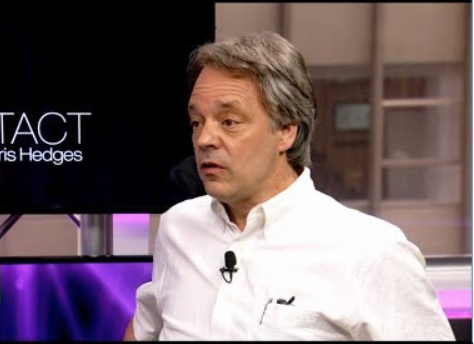
Paul Street is an independent radical-democratic policy researcher, journalist, historian, author and speaker based in Iowa City, Iowa, and Chicago, Illinois. He is the author of more than ten books and numerous essays. Street has taught U.S. history at numerous of Chicago-area colleges and universities. He was the Director of Research and Vice President for Research and Planning at the Chicago Urban League (from 2000 through 2005), where he published a highly influential grant-funded study: The Vicious Circle: Race, Prison, Jobs and Community in Chicago, Illinois, and the Nation (October 2002).
ZNetwork is funded solely through the generosity of its readers.
Donate

