

A British judge issued an unusually critical rebuke against the Crown Prosecution Service of England and Wales (CPS) for its handling of freedom of information requests related to Sweden’s failed attempt to extradite WikiLeaks founder Julian Assange.
The decision by the United Kingdom’s information rights tribunal was made public on January 10. It followed an appeal by Italian investigative journalist Stefania Maurizi, who argued that the CPS failed in its duty to properly explain why a senior prosecutor’s emails were allegedly deleted or destroyed.
In writing the decision for the three-member tribunal, First-Tier Tribunal (FTT) Judge Penrose Foss pierced the veil of deference that is often shown to governmental bodies in England and Wales by the U.K.’s data protection regulator, the Information Commissioner’s Office (ICO). Foss was quite blunt in her criticism of the CPS’s handling of multiple Freedom of Information Act (FOIA) requests that Maurizi had submitted as early as 2015.
It is uncommon for the CPS to be a respondent in FOIA appeals. A review of FTT decisions regarding information rights cases since 2009 shows the CPS as a respondent in 16 out of 3,167 cases (0.5 percent). This includes two appeals filed by Maurizi.
The decision establishes a precedent that may make it easier for future FOIA requests to be successful in the long run, according to Estelle Dehon KC of London’s Cornerstone Barristers, who represented Maurizi.
When the information rights tribunal comes across instances of a public authority’s failure to comply with FOIA obligations it “has been known to be quite trenchant in its criticism,” Dehon, told The Dissenter. But it is “unusual in the run of cases that are specific to Stefania’s FOIA requests” for the tribunal to be as critical as it was last week, she added.
“What we can do now is say to the ICO, look at the quality of the search process [conducted by a public body when a FOIA request is made]. If the search process was poor, then that is an indication that the information is being, or might be, held despite the public authority’s claims to the contrary,” Dehon said.
Kristinn Hrafnsson, WikiLeaks’ editor-in-chief, told The Dissenter, “This is a significant victory in a long battle to get the truth out on the involvement of CPS in keeping Julian in arbitrary detention that later turned into political imprisonment, according to UN bodies and the Parliamentary Assembly of the Council of Europe.”
The tribunal ordered the CPS to confirm whether it holds information as to “when, how and why” it destroyed or deleted any “hard or electronic copies of emails” with the Swedish Prosecution Authority by February 21 at 4 p.m. If they have any such information they must provide it to Maurizi or otherwise explain why they are exempt from doing so.
‘Unfounded’ Assumptions Prevented Adequate Search For Records
“Overall, based on the evidence before us, our concern is that over a number of years the CPS has not properly addressed itself at least to recording, if not undertaking, adequate searches in relation to the CPS lawyer’s emails, with the result that, in 2023, when it has purported to answer [Maurizi’s] 2019 [FOIA] Request, it has not been able to give a clear and complete account,” the Tribunal stated in its decision.
The tribunal noted that the CPS’s approach “appears to have been informed by a combination of unfounded and incorrect assumptions or speculation, flawed corporate memory, and unreliable anecdotal instruction, much, but not all, of that resting inevitably in the natural succession of employees through the organisation over time.”
“The cumulative effect of those things, taken together with what we find to be (1) imprecisely worded questions and a failure to drill down into answers, and (2) the absence of any clear and complete audit trail of enquiries and responses at each stage, has very likely prevented adequate searches and has certainly prevented a full and satisfactory account of matters.”
An unknown number of emails were apparently deleted after one of the U.K.’s lead prosecutor in the case, Paul Close, retired from the CPS. The deletions occurred despite the fact that the case against the award-winning journalist and publisher of the news and transparency website WikiLeaks was still active.
The tribunal heard a full day’s worth of legal arguments on September 24, 2024, as well as witness testimony from the CPS’s IT expert, who discussed the systems and rules in place in relation to the deletion of email accounts and emails of lawyers when they leave the CPS.
It was made clear that the three-member panel was “not satisfied” that searches, which the CPS claims to have undertaken in relation to Maurizi’s 2019 FOIA request “have been adequate,” and they concluded on all the evidence that it was “more likely than not that the CPS held further material potentially responsive to the 2019 Request.”
The CPS provided contradictory information to Maurizi about the rules and regulations for deleting emails. One policy document dated 2012, but only first disclosed to Maurizi in 2023, stated that email accounts should be deleted 30 days after an employee ceases working at the CPS. A separate document, meanwhile, which the CPS provided to Maurizi in 2017, claimed that a case file “must be retained at least for the length of the sentence passed, or a minimum of five years after the last record is made.”
“How is it possible that they provided this document only in 2023, after multiple requests, multiple appeals, no-one ever mentioned it or knew about it?” Maurizi told Consortium News, after the tribunal hearing in September.
Taking Aim At the UK’s Data Protection Regulator
The tribunal was quite critical of the ICO for its willingness to accept that every reasonable step had been taken by the prosecution to search for the information Maurizi requested.
In England and Wales, when a person is unsatisfied with the response that they receive following a FOIA request to a public body, the next step is to appeal to the ICO. If a person is then unsatisfied with the decision of the ICO, they can file an appeal with the information rights tribunal.
The ICO is notorious amongst many journalists for typically acting as a rubber stamp of governmental responses rather than as an advocate for the public’s right to know. In fact, the ICO explicitly described itself as a “critical friend of government and organisations alike” in its Information Rights Strategic Plan 2017-2021, a position which has not changed in practice despite the new leadership which was appointed in 2022.
Although the appeal itself was focused on Maurizi’s 2019 FOIA request (she had filed multiple requests and subsequent appeals in relation to emails pertaining to Assange’s extradition case since 2015), the tribunal still felt that communications between the Information Commissioner and the Government Legal Department (GLD) dating at least as far back as 2017 were illuminating when it came to the “CPS Extradition Unit’s filing practices.”
The communications contained details related to “the question of when, how and why the CPS lawyer’s emails may have been deleted but also because of what they show about the CPS’s approach to searches as early as 2017.”
After reviewing email exchanges between the ICO and government lawyers, the tribunal could “not understand how the Commissioner felt able to reach [the] conclusion” that a “reasonable and proportionate search had been carried out” for the information that Maurizi had requested over multiple FOIA request, not just her most recent request from 2019.
The tribunal found that claims made by the government were contradictory and lacking in evidence to support them and even found “no evidence as to what searches were undertaken” in relation to Maurizi’s earlier FOIA requests.
In addressing Maurizi’s present appeal, they found that the commissioner also “fell into error” by mischaracterizing her FOIA request. As a result, the ICO “did not give proper consideration to the full scope of the 2019 Request, and, within that, whether the CPS had undertaken adequate searches to answer it.”
“The most important takeaway from this case,” Dehon said, “is for the Commissioner to interrogate with care what public authorities tell him about the steps they have taken to comply with FOIA requests. In this case, the Tribunal made clear that the Commissioner had not done so, over a period of years.”
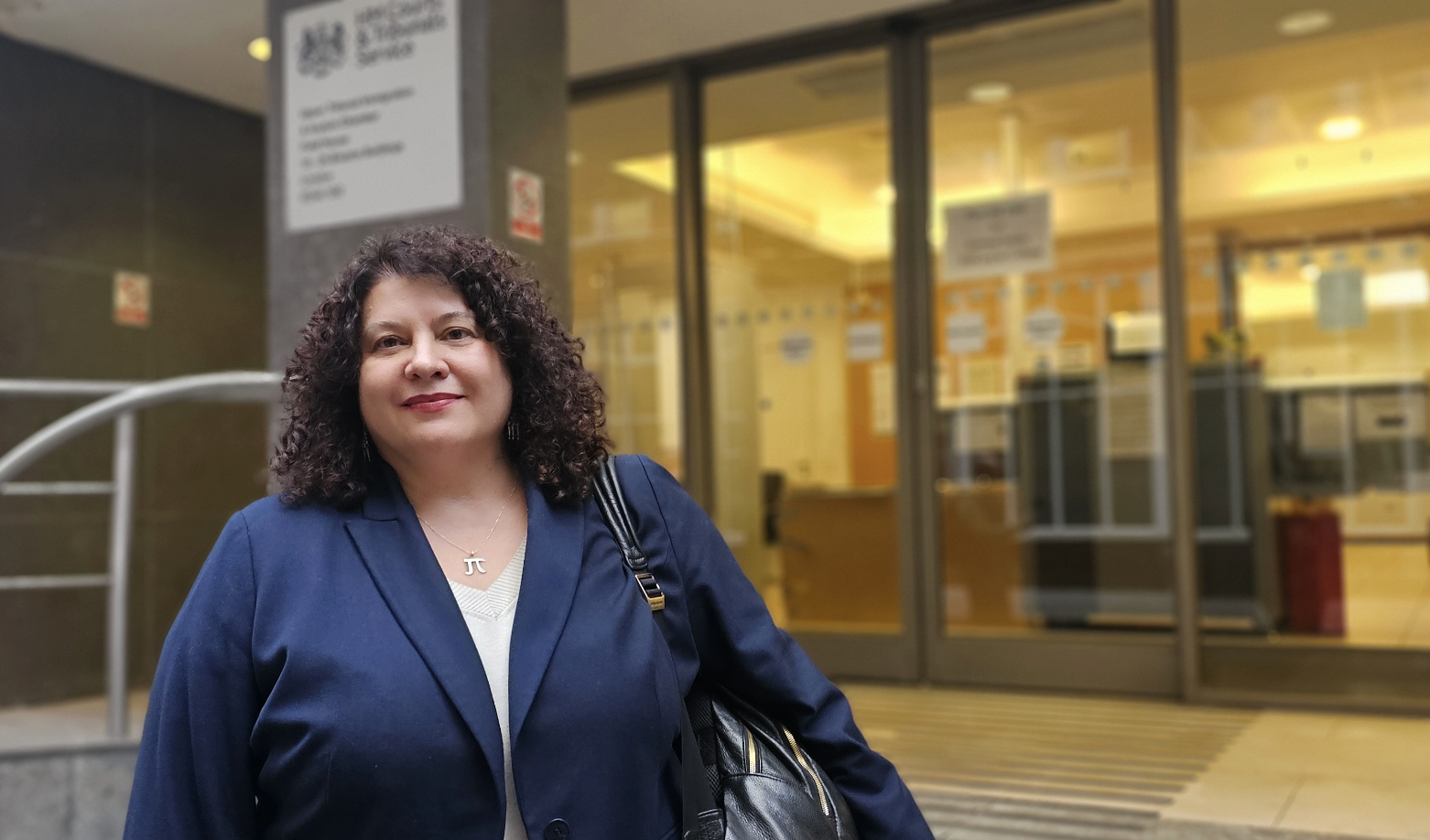
The tribunal’s decision represents the latest victory for Maurizi who has filed multiple FOIA requests and appeals over the U.K. and Swedish governments’ handling of Assange’s extradition case. Dehon summarized the decision succinctly, “The tribunal concluded the CPS likely still holds some information explaining what took place. Hopefully that will finally be disclosed.”
“So far we have learned that the CPS overstepped and dictated how the Swedish prosecutor’s office handled the case with the obvious intent to keep Julian in limbo and maintain for years his unlawful detention,” Hrafnsson said. “The world needs to know who dictated CPS staff to handle the case in this manner both inside the U.K. establishment at its initiative and with input from other governments. It is unacceptable that government files in the U.K. are disappeared in an effort to hide the truth from the public.”
Hrafnsson believes that the missing files, or “at least their fate,” will ultimately “shed light on the real story behind the political persecution of Julian Assange.”
Pressure By Sweden On the CPS
Emails obtained by Maurizi and extensively covered in her book, “Secret Power: WikiLeaks and Its Enemies,” revealed pressure being placed by the CPS on their Swedish counterparts to keep their case open and not to try and interview Assange in London as he had requested.
“Please do not think this case is being dealt with as just another extradition request,” Paul Close insisted to Swedish authorities in January 2011.
“My earlier advice remains, that in my view it would not be prudent for the Swedish authorities to try to interview the defendant [Julian Assange] in the UK,” Close wrote to the SPA later that month. “Thus I suggest you interview him only on his surrender to Sweden and in accordance with Swedish law.”
“Don’t you dare get cold feet!!!,” an unidentified CPS lawyer wrote to Marianne Ny, Sweden’s Director of Public Prosecutions, a year later.
“Since 2010, [Paul Close] handled the Swedish extradition request and he is the one who advised the Swedish prosecutors NOT to question Julian Assange in London from the very beginning,” Maurizi told The Dissenter.
The evidence therefore suggests that UK prosecutors, including Close, were not acting as neutral facilitators of an extradition request filed by the Swedes.
The Swedish Prosecution Authority sought Assange’s extradition to answer questions in relation to allegations of sexual assault. Assange denied the allegations as being trumped up and designed to get him into the country, where he would then be extradited to the U.S. to be prosecuted for his journalism that exposed war crimes committed by the U.S. government.
Ultimately, the Swedish case collapsed and after being dragged out of the Ecuadorian embassy, Assange faced an 18-count U.S. indictment related to his journalistic activity with WikiLeaks.
Maurizi ‘Skeptical’ Until CPS Clarifies ‘What Really Happened’
Maurizi has been able to obtain many emails from the CPS and SPA. Yet there are certain time periods which are conspicuously lacking in documentation.
No emails have been disclosed that cover the time period when Swedish prosecutors issued a European Arrest Warrant for Assange in August 2010; when Assange took refuge in the Ecuadorian Embassy in June 2012; or when Ecuador granted Assange asylum in August 2012.
Maurizi requested electronic copies of emails, which she suspected were not printed off and placed in a hard copy case file as per CPS policy. She believed, in the words of the tribunal, that “it was simply not credible that there was no correspondence between the CPS and the SPA.”
This skepticism motivated Maurizi in her 2019 FOIA application to demand an explanation as to “when, how and why” any emails were deleted—a premise that the tribunal accepted as legitimate.
“They claim that the fact that the email account of [lead prosecutor] Paul Close was destroyed does NOT mean that significant documents contained in the account were destroyed, because they were supposed to be printed off [and filed away],” Maurizi recalled. “But if they were actually printed off, why haven’t the CPS authorities found them and released [them] to me?” she asked.
“It was the CPS itself which stated officially that they deleted the account of Mr. Paul Close, and when I started insisting they should provide an explanation as to why these emails were deleted, they started arguing that documents were NOT destroyed,” Maurizi explained.
“The CPS then argued that documents were downloaded from the email account of Mr. Paul Close and printed off, so nothing was deleted. So if the documents which I asked for do exist and have NOT been deleted by the CPS, they should have either released them to me or they should have served a refusal, clarifying on which exemptions those documents cannot be released.”
Maurizi concluded, “They have never done this, and they have refused to provide sensible explanations for the last seven years. I have all [the] reasons to be skeptical until the CPS [clarifies] what really happened.”

Mohamed Elmaazi is a journalist who has covered Julian Assange's extradition hearings. His work has appeared in Consortium News, Declassified UK, Jacobin, The Electronic Intifada, and The Real News
ZNetwork is funded solely through the generosity of its readers.
Donate

