
A basic itemization of how the blockade affects Gazans.
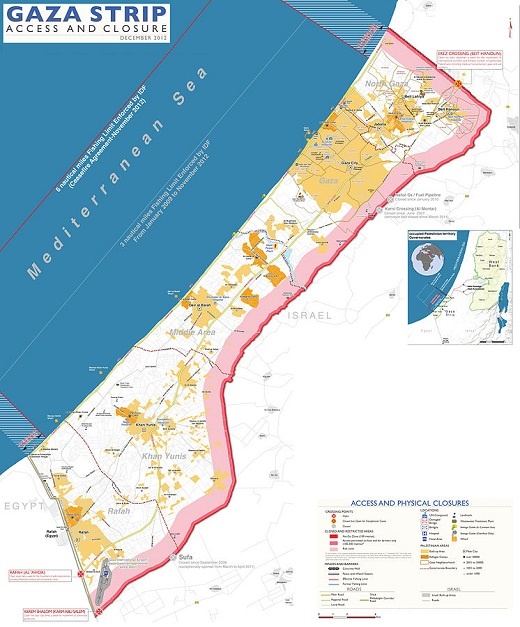
Israel and Egypt have blockaded the Gaza Strip from land, air and sea from 2007 to the present. The list of what is not allowed into Gaza changes constantly. At times there has been a ban on light bulbs, mattresses, sheets, musical instruments, crayons, clothing, candles, matches, books, shoes, blankets, coffee, chocolate, nuts, pasta, tea, shampoo and conditioner, books and paper. There is a permanent ban on concrete for rebuilding the infrastructure that the Israeli army destroys through bombings and airstrikes and any item that could conceivably be used as a weapon or as material in the building of a weapon.
The statistics below represent the living conditions in Gaza before the latest round of Israeli assaults, during its so-called “Operation Protective Edge,” on the Gazan people in the past month.
*38 percent of Gazans lives below the poverty line.
*45.2 percent of Gazans are unemployed
*54 percent of households are food insecure, which is defined as inadequate access to food. Gazan households spend 56 percent of their expenditures on food.
*The Gaza aquifer provides 90 percent of Gaza’s water. Ten percent of that water is suitable for consumption. Water-borne diseases cause 26 percent of illnesses in Gaza. Two-thirds of Gaza’s population receives clean water only once every three to four days.
*Power shortages and blackouts lasts to 12-16 hours a day.
*An average of 900 truckloads of goods weekly entered Gaza. Before the blockade, 2,807 truckloads entered weekly.
*95 percent of Gaza’s industrial/construction businesses have closed. The other five percent are only operating at 20 to 50 percent of their previous capacity.
*Israel blocks Palestinian access to 35 percent of agricultural land in Gaza.
*Fishermen can only fish 3 nautical miles from the shore.
*Gaza has run out of 42 percent of essential medicines.
ZNetwork is funded solely through the generosity of its readers.
Donate