
On Dec. 17, 2014, U.S. President Barack Obama and Cuban President Raúl Castro simultaneously announced that the two countries would resume normal diplomatic relations, which President Dwight D. Eisenhower had ended in January, 1961. The mutual decision was the outcome of 18 months of quite secret negotiations, sufficiently secret so that the announcements were a surprise.
It quickly became common knowledge that Pope Francis had actively encouraged this resumption. Emissaries of the two countries met at the Vatican, and Pope Francis along with the Cuban Archbishop of Havana, Cardinal Jaime Ortega, had played a key role in brokering the deal. Both presidents expressed open appreciation for the Vatican’s assistance. This meeting was the last step before the 45-minute telephone call between the two presidents.
Less noticed, but also important, was the role played by Prime Minister Stephen Harper of Canada, who “facilitated” the dialogue by hosting initial talks in Canada, a role acknowledged and appreciated by both presidents. Harper’s involvement was important because his general politics resemble those of mainstream Republican politicians in the United States, except that Canada had never broken diplomatic relations with Cuba.
Reaction within the United States has been mixed. The accord was predictably denounced by leading Republican politicians, with some notable exceptions: Senator Jeff Flake of Arizona and Sen. Rand Paul. It was however strongly supported by the Catholic Church, the U.S. Chamber of Commerce in a public statement, Human Rights Watch, and large grain agricultural enterprises. It was also well received in public opinion polls and, it seems, among a majority of younger Cuban-Americans. It was notably dealt with cautiously but not hostilely by the Miami Herald, a major news source for Cuban-Americans. It called the accord “a roll of the dice” and said that, although the decision was an act of courage and the beginning of a new era, the outcome was uncertain. The newspaper hoped that the “gamble” would pay off.
Reaction outside the United States was largely very positive. It was hailed throughout Latin America – publicly by Ernesto Samper, secretary-general of the Union of South American Nations (UNASUR); José Miguel Insulza, secretary-general of the Organization of American States (OAS); and by the quite conservative President of Panama Juan Carlos Varela, the host of next April’s 7th summit of the Americas, who sees the acceptance by both presidents to come to Panama as the realization of a “dream” to have a united region. Approval was expressed throughout Europe, Asia, and Africa as well.
If a major accord is realized between two countries that have expressed such constant and open hostility for more than a half-century, there must be some significant advantage in it for both sides. Obama made as his key argument: “These 50 years have shown that isolation has not worked.” He said the United States maintains its commitments to freedom for Cuba. “The question is how we uphold that commitment. I do not believe we can keep doing the same thing for over five decades and expect a different result.”
Castro’s emphasis in his announcement was slightly different. “We have been able to make headway in the solution of some topics of mutual interest to both parties…. The progress made in our exchanges proves that it is possible to find solutions to many problems.” However, the heart of the matter remained the blockade which “must cease.” Nonetheless, “President Obama’s decision deserves the respect and acknowledgment of our people.”
So, what was in fact decided? What did each side yield? There was an exchange of prisoners. This is wonderful for the prisoners but in itself it is not unusual, even for the deadliest of enemies. Obama is easing restrictions on remittances, banking, and travel, while not ending the restrictions entirely. Some argue that he has however eased them just enough to make the restrictions almost meaningless. Castro will allow more internet access and has released 53 Cuban political prisoners. Obama has instructed Secretary of State John Kerry to begin the process of removing Cuba from the list of states that sponsor terrorism. He announced his willingness to be at hemispheric meetings along with Castro, saying in Spanish “somos todos americanos.”
In the end, both sides have had the same internal debate. Does a hard line break the opponent? Does a rapprochement between the two melt the other? This was the debate on both sides that preceded the so-called détente of the United States and the Soviet Union, the meeting between Richard Nixon and Mao Zedong in Beijing, and the resumptions of normal relations between Vietnam and the United States. Experience has shown that neither breaking nor melting actually occurred.
For Brazilian left analyst Emir Sader, Cuba is victorious. It has forced the burial of the cold war logic that prevailed up to now. At first Cuba was isolated by the United States. But over 50 years, they have reversed the situation. It became the United States that was isolated. They have achieved diplomatic relations based on respect between equals. The Latin American left foresees loss of public support in the United States for maintaining the embargo. It believes it will now be more difficult for the United States to embargo Venezuela. And everyone seems to think that these developments will speed up the accord between the Colombian government and the guerrilla opposition, the FARC, in which Cuba has played a mediating role.
From my point of view, the move by Obama was the single most positive foreign policy decision he had made in his term of office, amidst a record that has been otherwise rather dismal. It is not magic, but it changes the atmosphere. If the Republicans in Congress prove too intransigent, it may only force Obama to go further. Already, in an interview with the Associated Press, he has said that he does not rule out a similar move with Iran, even though he says it will be more difficult.
Writing in La Jornada, Marcos Roitman Rosenmann applauds the accord under the title: “Cuba: Dignity Wins Battles.” Perhaps that is the lesson too for Obama. In the long run, dealing successfully with other countries requires dignity, not only by the weak but by the strong. Somewhat reluctantly, it is remotely possible that Obama, his Secretary of State John Kerry, and potential Democratic presidential candidate and former Secretary of State Hillary Clinton may be dragged into acknowledging this instead of continuing to prate about the United States being the “leader” of the virtuous, holding at bay the “vicious” of the world.
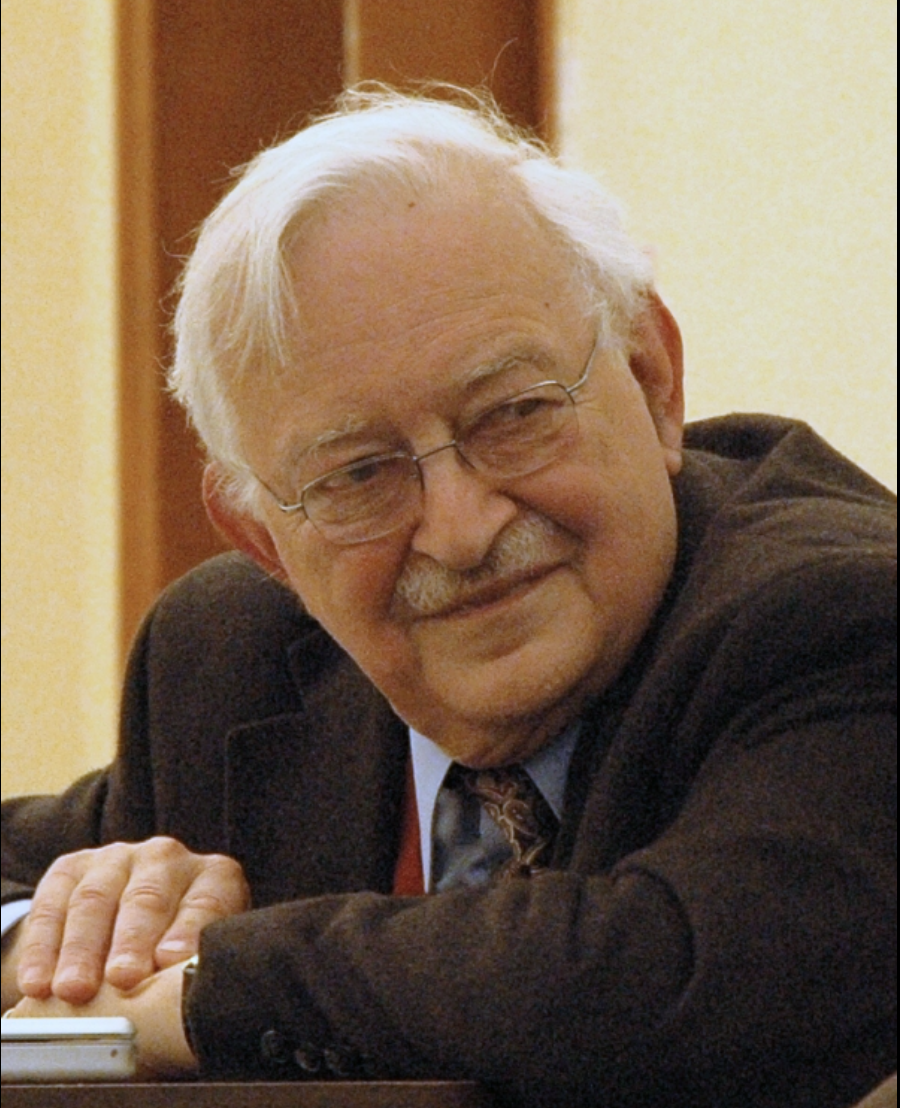
Immanuel Wallerstein (September 28, 1930 – August 31, 2019) was an American sociologist and economic historian. He is perhaps best known for his development of the general approach in sociology which led to the emergence of his world-systems approach. He was a Senior Research Scholar at Yale University from 2000 until his death in 2019, and published bimonthly syndicated commentaries through Agence Global on world affairs from October 1998 to July 2019. He was the 13th president of International Sociological Association (1994–1998). Politically, he considered himself on the "independent left" and was active in a variety of organizations. He argued that we are in the transition from our existing capitalist world-economy to some new system, and that the great political struggle of our time is about which new kind of systemic order will replace our existing one. A new systemic order could be better or worse, depending on our collective ability to push the worldwide decision in one direction or another. He believed that a crucial element in this is a vast debate about the kind of better system we wish to build, and saw the Reimagining Society Project as one of the ways to further this collective debate.
ZNetwork is funded solely through the generosity of its readers.
Donate

