
With the Democratic National Convention about to begin in Philadelphia, we look at the state of the Democratic Party. Many party leaders were hoping to use the convention to display party unity after the long primary fight between Hillary Clinton and Bernie Sanders. But on Friday, Hillary Clinton named Virginia Senator Tim Kaine to be her running mate, angering many Bernie Sanders supporters who had hoped she would have picked a more progressive vice president. On that same day, WikiLeaks released 20,000 internal Democratic National Committee emails showing that some party operatives worked behind the scenes to discredit and defeat Bernie Sanders, and by Sunday Florida Congressmember Debbie Wasserman Schultz had resigned her post as DNC chair just hours before the convention. We are joined by Jess McIntosh, director of communications outreach for Hillary Clinton’s campaign, and Norman Solomon, coordinator of the Bernie Delegates Network and a delegate from California.
AMY GOODMAN: This is Democracy Now!, democracynow.org. We are “Breaking with Convention: War, Peace and the Presidency.” I’m Amy Goodman, with Juan González, and we’re in Philadelphia, Pennsylvania.
JUAN GONZÁLEZ: Well, with the Democratic National Convention about to begin here in the City of Brotherly Love, we look at the state of the Democratic Party. Many party leaders were hoping to use the convention to display party unity after the long primary fight between Hillary Clinton and Bernie Sanders. But the past 72 hours have been surprisingly tumultuous. On Friday, Hillary Clinton named Virginia Senator Tim Kaine to be her running mate, angering many Bernie Sanders supporters who had hoped she would have picked a more progressive vice president. On that same day, WikiLeaks released 20,000 internal Democratic National Committee emails showing that some party operatives worked behind the scenes to discredit and defeat Bernie Sanders.
AMY GOODMAN: Then on Sunday, Florida Congresswoman Debbie Wasserman Schultz resigned her post as Democratic National Committee chairwoman just hours before she was set to chair the Democratic convention. Party Vice Chair Donna Brazile will act as the DNC’s interim head through the election in November.
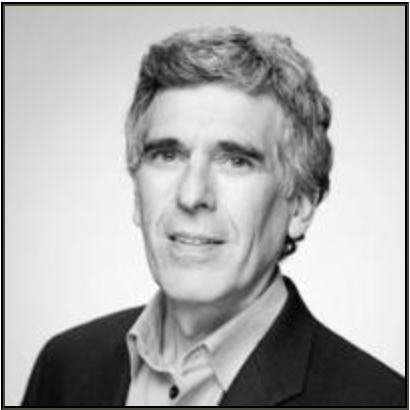
To talk about these issues and more, we’re joined by two guests. Jess McIntosh is with us. She’s director of communications outreach for Hillary Clinton’s campaign. And Norman Solomon is also joining us. He’s coordinator of the Bernie Delegates Network. He is a delegate from California.
Well, there has been a great deal of disarray in the Democratic Party, Jess, this weekend as a result of the emails that were released by our previous guest, by Julian Assange. Can you talk about what’s happening right now?
JESS McINTOSH: Well, I think that Democrats are looking forward to the week ahead. I’m glad that we moved past the story yesterday. I think Debbie Wasserman Schultz didn’t want to be the story, and so she resigned. We saw a lot of very positive comments coming out from both former, both camps—now we’re all on the same team—the Bernie folks and the Hillary folks saying that Donna Brazile was an excellent neutral choice, who everyone felt confident going forward. So, hopefully, that means that this week we get to focus on our really compelling message of putting families first and working for an economy that works for everybody, not just those at the top, because last week was terrifying.
And I want to make sure that we take this minute, when the American public is tuned into politics—I mean, obviously, if you’re watching this show, if you’re one of us, you’re tuned in all the time. But most folks, this is the beginning of it. And we are going to be able to show a really clear contrast between the Republicans last week, if we can focus on what our message is this week. So we have some amazing speakers tonight. We’re going to hear from Senator Sanders. We’re going to hear from Elizabeth Warren. I think it’s going to be a dramatic difference from what we saw yesterday, and I’m excited to get started.
JUAN GONZÁLEZ: And, Norman, your reaction to the past week? I think Bernie Sanders is having a big meeting with his supporters before the opening of the convention today, and you’re—I guess you’ll be there. Talk about that.
NORMAN SOLOMON: That’s right. Well, we’re expecting a lot of discourse today, publicly and privately, and through the week. There’s no doubt that a very sharp contrast will be drawn between the Democratic and Republican Party nominees and hopefuls. That’s a high jump over very degraded standards. You know, anybody, almost, would be a contrast to Donald Trump. And so I think a political context for all this is that there is a real possibility that Donald Trump could be elected president. And some people, for whatever reasons, have convinced themselves that it cannot happen. And I remember when it could not happen that Ronald Reagan could be elected president. I remember when it could not happen when George W. Bush could be elected president. So that is, I think, an overlap between the Clinton and the Bernie Sanders delegates: We understand the vital need to defeat Donald Trump.
That said, the conduct of the Clinton campaign in recent days is a continuation of a policy which is corporate, which is disingenuous, and that represents the antithetical perspective from what progressives bring to the table. And so, even without the leaked emails, even without the Tim Kaine choice, which I think is highly egregious, from any progressive standard, there still would be enormous dissension at this convention. The mainstream media have totally missed that. They thought it was going to be tranquil. No way, because at the grassroots, where the punditocracy doesn’t bother to delve, people are very upset.
AMY GOODMAN: Norman Solomon, talk about this. I saw you at a news conference yesterday. Talk about the pick of Tim Kaine, and then I’d like to get Jess’s response—
JESS McINTOSH: Sure.
AMY GOODMAN: —as the vice-presidential running mate. Why are you so concerned?
NORMAN SOLOMON: Well, in contrast to the front page of The New York Times and Washington Post and the spinmeisters, so many progressive delegates and progressives around the country are upset because, rather than have any sort of olive branch, rather than reach out towards the 45 percent of the primary and caucus voters who opted for Bernie Sanders in the last many months, the Clinton campaign has stayed in the corporate mold, has chosen somebody for the VP slot who has opposed raising taxes on millionaires, who voted—only one of a dozen Democrats in the Senate voting for fast track last year, somebody who denigrated those who want a more progressive economic policy as “losers,” quote-unquote. This is a guy, contrary to the PR, who’s very much in the Clinton corporate mode.
So we’ve got to get real about how she has chosen, I mean, the two symbolic—I’d summarize it this way: Two symbolic and substantive choices that Hillary Clinton has made in the last few days is to take Debbie Wasserman Schultz out of a scandal and give her—not throw her overboard, but put her high up in an executive suite of the steamer that she is running for a campaign, and actually put Debbie Wasserman Schultz in a high position of her own campaign this fall, the Clinton campaign—so that is a symbolic thumbing of the nose at progressive sensibilities—and then the choice of Kaine is a profound abuse of progressive constituencies that we are going to have to deal with for many years to come, probably.
JUAN GONZÁLEZ: Jess, your response?
JESS McINTOSH: Sure. I mean, I think we saw this morning Bernie Sanders’s campaign manager, Jeff Weaver, sit on the stage with Jennifer Granholm and say, “We are on the same page, because right now we’re on the same page. We’re on the same team. And it is so important that we talk about making our progressive ideals reality and stopping the barbarians at the gates, that we heard from last week.” And so, that’s what I want to focus on. I think it’s the only productive thing to do, honestly. I love what the Sanders enthusiasm has done. I love the way it has pushed our platform farther to the left. I believe in those politics, and we have the most progressive party platform the Democrats have ever had. So, coming into a convention, I want to celebrate that, so that’s—that’s what I’m going to do.
I think Tim Kaine is somebody that we’re all going to get to know a lot. I thought his roll-out, his big speech with Hillary on Saturday was absolutely wonderful. And I love the fact that he’s a liberal from Virginia who is a civil rights attorney, which is something I didn’t know, who is focused on immigration, who is focused on housing discrimination and redlining. I think there are things to love and dislike about every possible pick, but I’m excited to hear from him on Wednesday. I think that people are going to get to know more about him. And I’m looking forward to the ticket.
JUAN GONZÁLEZ: I’d like to ask Norman about the issue of the platform. Is it—it seemed to me that there was quite a few changes from the original Clinton platform as result of the pressure of Bernie Sanders on a variety of issues—Social Security, minimum wage, college tuition. So there was a substantive change. But then, I guess your perspective is that the Tim Kaine choice was tacking to a little bit more to the center, right?
NORMAN SOLOMON: There’s only one decision that Hillary Clinton and her forces have made that can’t be revoked or weaseled out of, and that is the choice of the vice-presidential pick. So, the platform is important, but at the end of the day we don’t remember platforms. They can be ignored. I don’t think there’s any question that we have the same enemy: Donald Trump, the neofascist, racist campaign of Donald Trump. We have the same enemy, the Clinton and the Sanders delegates. But we are not on the same page. When you read that platform, especially the foreign policy platform dictated by Hillary Clinton, it is a warmonger platform. Let’s be blunt about it. And so, there should not be a nanosecond of honeymoon between progressives in this country and a prospective or actual Hillary Clinton presidency. We’ve got to oppose all of these Wall Street and militaristic policies that are embodied, frankly, in what Hillary Clinton is saying and doing.
AMY GOODMAN: Jess McIntosh?
JESS McINTOSH: Obviously, I disagree. There’s a reason why Bernie Sanders is going to be on the stage tonight. There’s a reason why Elizabeth Warren is going to be on the stage tonight. There is a reason why our campaigns are coming together to make sure that we are not only defeating Donald Trump, but doing some really exciting things that put families first for a change in the country. I think that there is a lot to talk about in terms of the Democratic platform this week. I think we’re going to talk about the economy, we’re going to talk about national security.
We’re going to learn a little bit more about Hillary Clinton, because as much as she has saturated politics for as long as I have been paying attention to politics, there’s a lot about her biography that people don’t actually know. There’s a lot about her motivations and what drives her and what were the early fights of her life. And I think we’re going to hear a lot about that from her friends and her family and the people who she has helped along the way.
I mean, this is an incredible woman. And coming from the feminist wing of the progressive movement, I want to celebrate that, too. We’re nominating a woman for president for the first time. And I think we have devalued people who put women and families center in their platform in the progressive movement, just as we do everywhere else. And I think it’s incredible to have a moment to do that. So, I’m really looking forward to this week. And I’m looking forward to working with my friends in the Bernie Sanders campaign. I’ve had them on along. I’ve kept them, and I think we’re—you know, we’re excited to have a beer together after the end of the day.
AMY GOODMAN: This is Democracy Now!, democracynow.org. We are “Breaking with Convention: War, Peace and the Presidency,” a whole week from the Democratic convention, as we did in Cleveland with the Republicans, expanded two-hour daily broadcast, this week from Philadelphia. That’s where the Democratic National Convention is taking place. Our guests at this hour, as we talk about the Hillary Clinton-Tim Kaine candidacy, are Jess McIntosh, who is the—with the Clinton campaign. She is the director of communications outreach for Hillary Clinton. And Norman Solomon, coordinator of the Bernie Delegates Network, delegate from California.
So, Jess raised this issue of Hillary Clinton, a woman candidate, would be the first woman president. Norm Solomon?
NORMAN SOLOMON: Well, you know, hagiography leaves a lot out. I doubt that tonight or during the week we’ll hear that she was a Barry Goldwater enthusiast. She said she still is proud of having been a Barry Goldwater supporter—
JESS McINTOSH: As a 16-year-old, I’m so sorry.
NORMAN SOLOMON: —in 1964. In 19—I’m talking about Hillary Clinton.
JESS McINTOSH: Yeah.
NORMAN SOLOMON: In 1968 and then on from there, she said at one point, when her husband was governor of Arkansas, “Well, for gosh’ sakes, all lawyers have to represent banks.” On the board of Wal-Mart, on and on and on, at their most horrible era of Wal-Mart union busting and anti-employee operations, did not raise her voice. But all that said, I think we’ve got to look at the fact that in swing states, voters will decide whether Donald Trump becomes the next president of the United States. And we have to recognize that with all of our necessary challenge to Hillary Clinton and the forces she represents, in swing states, from a progressive standpoint, if you want to stop the neofascist, as Noam Chomsky said, the way to do it is you hold your nose and you vote for Hillary Clinton.
JESS McINTOSH: So, not so much excited about the first woman president then.
NORMAN SOLOMON: Well, Margaret Thatcher was a woman, as far as I know. I’m not excited about Thatcherism and the decimation of the working class in Britain.
JESS McINTOSH: Yeah, no, I think it’s—I think it’s important to be able to understand that Hillary has always centered women and families in her politics. She did it as senator. She did it as secretary of state. She did it when she decided to become a lawyer for the Children’s Defense Fund, before—when she got out of law school. She did it when she worked for the McGovern campaign. And I think sometimes our movement doesn’t give that work the same amount of credit. This is—
NORMAN SOLOMON: Would you say that she did that when she pushed for the welfare reform of 1996 that decimated the families of poor women and children? Do you think that was advocacy for women?
JESS McINTOSH: Norm, I think that she did a lot of really good work as first lady to put women and families first, too. I also think that now is the time for this debate to be done, just like your candidate says and my candidate says.
NORMAN SOLOMON: Well, there’s a difference between candidates, even the best ones—and we love Bernie—
JESS McINTOSH: Sure.
NORMAN SOLOMON: —and grassroots movements. We’re not going to pipe down. As Bernie said, all significant social change comes from the grassroots. It doesn’t come from the top.
JESS McINTOSH: Absolutely. But I don’t intend to spend any of my time telling you why I had issues with your candidate or the reasons why I was so excited to support mine over yours.
NORMAN SOLOMON: There’s a difference. Yours will be, we hope, under the circumstances, the next president of the United States.
JESS McINTOSH: Yeah, absolutely.
NORMAN SOLOMON: And we have to get in a mode of saying, not for a moment we accept destructive policies out of some sort of misbegotten party loyalty.
JESS McINTOSH: All right. So we’re arguing on the margins of holding our elected officials accountable, and I can be OK with that. But I do think it is important, in fact, for our movement to celebrate the fact that we have done something revolutionary. This week, we do something revolutionary.
NORMAN SOLOMON: What’s that?
JESS McINTOSH: A woman is going to take the nomination for president from the Democratic Party. And that is a really important thing.
NORMAN SOLOMON: It’s historic. There’s—objectively, it’s historic.
JESS McINTOSH: It’s also important. It’s not just objectively historic.
NORMAN SOLOMON: Well, Indira Gandhi was important, too, and she was repressive in India. We have many examples of world leaders, who happened to be women, who exacted enormous suffering out of their population.
JESS McINTOSH: Norman, you get to vote. You’re going to vote for Hillary Clinton, I’m assuming, given what you’ve been—
NORMAN SOLOMON: When is that?
JESS McINTOSH: I’m assuming that you’re planning on voting—
NORMAN SOLOMON: In November?
JESS McINTOSH: —for her in November.
NORMAN SOLOMON: I live in California. There’s no reason for me, as a progressive, to vote for Hillary Clinton.
JESS McINTOSH: Oh, all right.
NORMAN SOLOMON: If I lived in Virginia—
JESS McINTOSH: I was assuming that you were in the fight.
NORMAN SOLOMON: I am in the fight. If I lived in Virginia, if I lived in Florida, if I lived in New Hampshire or Ohio—
JESS McINTOSH: You would.
NORMAN SOLOMON: —I definitely would vote for Hillary Clinton, absolutely.
JESS McINTOSH: And you don’t think that it sends an awesome signal to be able to tell your daughters or granddaughters or the children of your friends that you got to pull the lever for a woman who you thought would do a better job advancing your ideals than the other guy on the ticket? I mean, I’m excited about that. And I think that’s OK. More than OK, I think it’s important for our movement. I think women and girls need to see us being excited about this thing.
JUAN GONZÁLEZ: Well, I’d like to—
NORMAN SOLOMON: It’s a tragedy that we don’t have a role model who is not corporate and militaristic who can become president of the United States as a woman.
JUAN GONZÁLEZ: Well, I’d like to ask Norman, in terms of the conversation we had earlier about the—about Donald Trump, your assessment of what that convention last week, the signal that it sent to the American people, and what the opportunity is for the Democratic Party to present a different perspective or signal this week?
NORMAN SOLOMON: Yes. Well, I think the contrast will be very clear, because the reliance on not even a dog whistle, but the amplifier of voices of racism, of xenophobia, of hostility to immigrants, of misogyny, in some important respects, this is a major difference between not only the conventions, but the two constituencies. And I think people on the left, sometimes they forget. They start talking about, “Oh, we’re going to have a third party, and that’s going to defeat Trump.” Nonsense. There’s nothing—the Green Party is going to do nothing to defeat Trump. It’s up to us to find tactical ways to do that. And in the case of the Republican Party, we’ve got to recognize those forces. People underestimate. It’s not just who’s going to be president. They fill hundreds of Cabinet and sub-Cabinet positions and the courts with their constituency. To elect Donald Trump is to empower an entire nativist and racist base in this country and give them enormous power. And we’ve got to make sure that doesn’t happen.
AMY GOODMAN: Norman Solomon, who will you be voting for?
NORMAN SOLOMON: I live in California. I know I won’t be voting for Donald Trump. I know that I will not be voting for Hillary Clinton, because it’s a safe state, just as New York is a safe state.
AMY GOODMAN: So, who will you vote for?
NORMAN SOLOMON: Well, I’m going to have to make that decision, but it won’t be either one of those two.
AMY GOODMAN: Jess McIntosh?
JESS McINTOSH: Well, obviously, I’m really excited to cast my ballot for my candidate, Hillary Clinton. And I’m excited that there have been—I mean, she won so many more million—I mean, three more million votes than Bernie Sanders did in the primaries. She got more delegates. She got more of the superdelegates. And this is the week that we’re all going to come together. And she is happy to talk to the people who went the other way. And I think we’re going to carry on those conversations, and it’s going to be a really unified party, going forward.
AMY GOODMAN: And what can we expect at the opening today, Norman Solomon? There’s been a lot of talk among Bernie delegates with the gaveling, opening of the Democratic convention by Debbie Wasserman Schultz.
NORMAN SOLOMON: Well, I think that Debbie Wasserman Schultz, if she does speak today, will not be well received. If she’s badly received, it will be well deserved. But I think she’s, in a way, being made a scapegoat—appropriately so, because she’s been very egregious—but, wow, she represents and is working for, and now she’s just shifting from the DNC over to the Clinton campaign formally, but her role is not changing. She’s working for a corporate, militarist candidate. And I think we recognize that as delegates for Bernie Sanders.
AMY GOODMAN: Jess McIntosh?
JESS McINTOSH: Well, obviously, I disagree entirely. I think this week is about advancing our progressive agenda. And I’m sorry that you’re not on board, but I’m really excited to be here.
ZNetwork is funded solely through the generosity of its readers.
Donate