
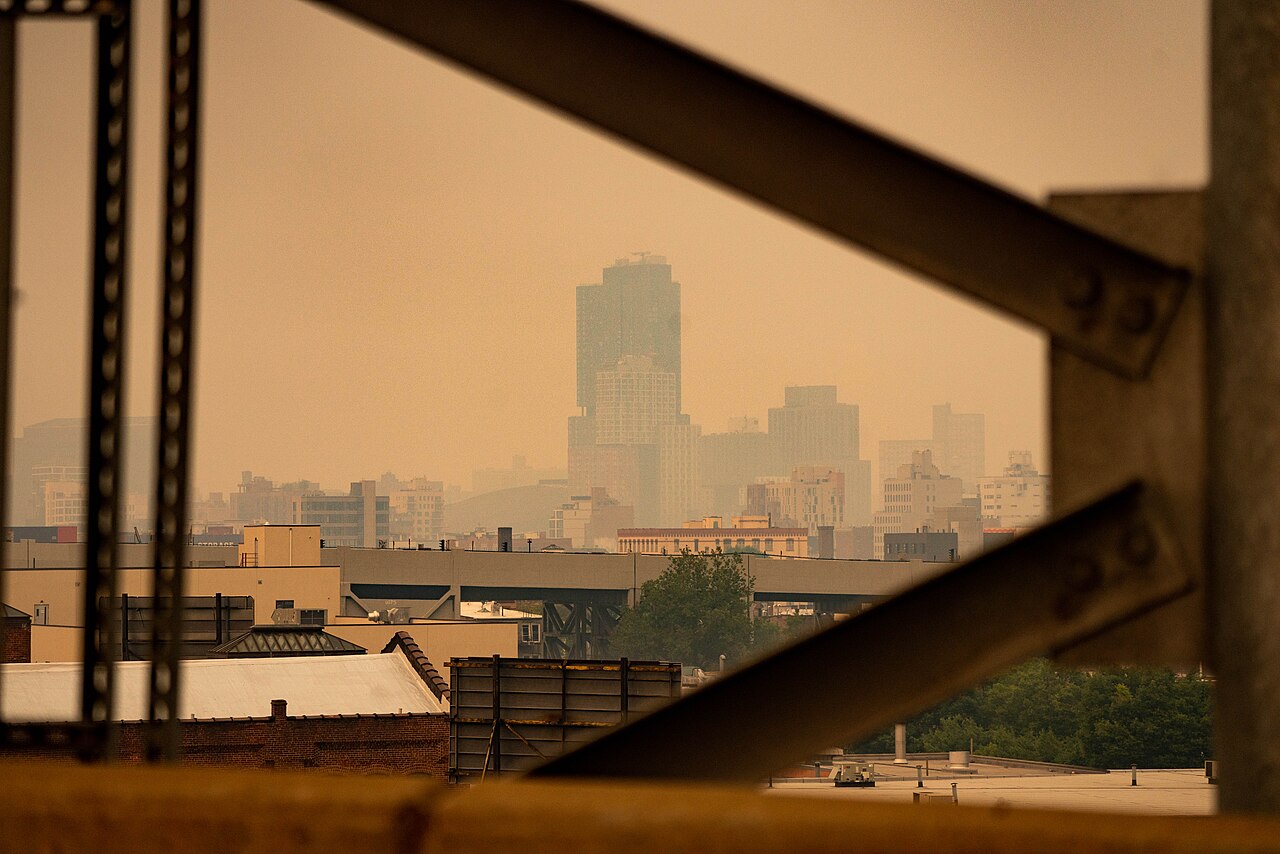
Smoke from Canadian wildfires has prompted air quality warnings for some states in the upper Midwest of the U.S.
Although wildfires in Canada have not yet reached levels seen during last year’s disastrous wildfire season, they have still wrought a destructive path, resulting in mass evacuations in some areas. It’s widely believed that long-lasting drought conditions caused by the climate crisis, coupled with El Niño/La Niña weather patterns, are to blame for the current conditions and that a catastrophic wildfire season is still possible, with some predicting that it could eventually be worse than the 2023 season.
On Monday, the Minnesota Pollution Control Agency said that fine particle levels created by the Canadian wildfires were predicted to reach “red” category air quality, a rating that is considered “unhealthy for everyone.” The agency encouraged all affected residents — especially those with sensitivities — to avoid prolonged exposure and to refrain from activities that required heavy exertion outdoors.
In addition to Minnesota, residents in the northern two-thirds of Wisconsin were advised that outdoor air would be unhealthy for sensitive people. The upper peninsula of Michigan also saw hazy skies, with some residents saying that they could smell the smoke in the air.
The Associated Press reported that smoke and problematic atmospheric conditions could hit more southern areas of the Midwest by midweek, spreading into Iowa and northern Illinois and even reaching Chicago.
More than 24,000 acres of western Canada have been consumed by wildfires so far. As of May 12, there were 90 wildfires actively ongoing.
Meanwhile, in Canada, thousands of residents have been evacuated due to the spread of the fires, including about 7,200 people near the Northern Rockies Regional Municipality and Fort Nelson First Nation. Government officials in those areas have warned residents that, should they choose to stay despite the evacuation orders, there won’t be enough resources to help them if they need aid, nor will grocery stores or other places be open until the situation calms down.
“This is an extremely difficult time for people that have been impacted. Our thoughts are with you and the province is there to support you,” said Bowinn Ma, the minister of emergency management and climate readiness for British Columbia.
Canada experienced its worst year of wildfires in 2023, when around 45 million acres were burned. Although wildfires may not reach the same levels this year, the conditions at the start of this current wildfire season indicate that it could still be a bad year overall.
Government officials warned in April about the impending season, noting that, with a dryer-than-usual winter in Canada this year — and higher temperatures along with it — the summer months would likely be devastating.
“With the heat and dryness across the country, we can expect that the wildfire season will start sooner and end later, and potentially be more explosive,” said Harjit Sajjan, the minister for emergency preparedness, during a press conference last month.
Those trends likely have to do with the global climate crisis; indeed, 2023 was the hottest year ever recorded. Multiple studies have demonstrated that warmer global conditions make it easier for vegetation to dry out — a key component in fueling more disastrous wildfires in Canada and elsewhere. A study of 2023’s season also concluded that the climate crisis more than doubled the likelihood of wildfires in some parts of the country.
ZNetwork is funded solely through the generosity of its readers.
Donate