
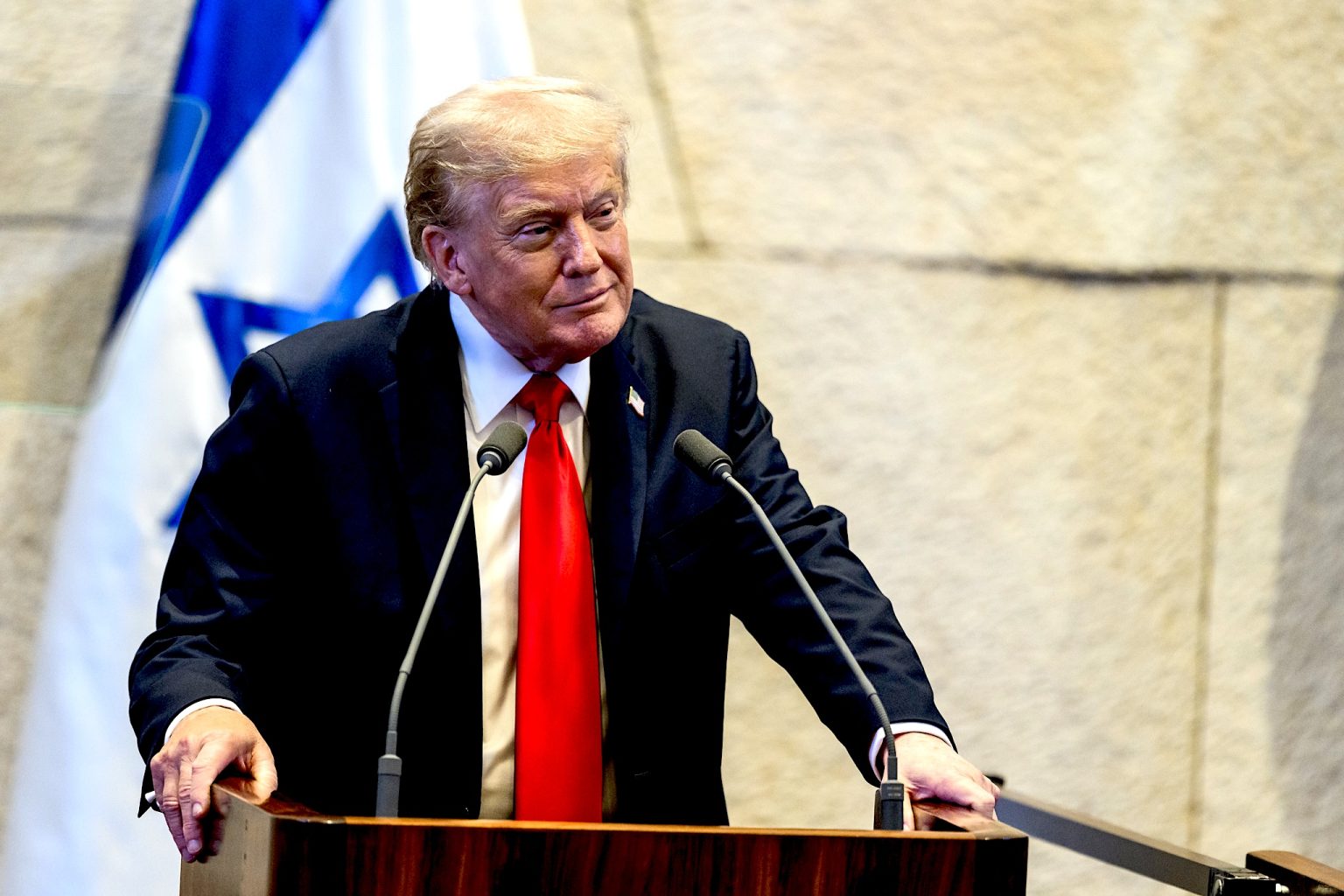
On April 1st, the Supreme Court began hearing arguments in Trump v. Barbara, the class-action lawsuit challenging President Trump’s executive order restricting birthright citizenship.
This should be an easy case for the court. The Citizenship Clause of the 14th Amendment is exceptionally clear: “All persons born or naturalized in the United States, and subject to the jurisdiction thereof, are citizens of the United States and of the State wherein they reside.” Case closed? Well, not quite.
The Trump administration argues that to be “completely subject” to the “jurisdiction” of the US means one must owe “direct and immediate allegiance” and receive “protection” from it. The children of US citizens, permanent residents and formerly enslaved persons meet this standard because they “have a permanent domicile.” By contrast, the children of undocumented immigrants “do not owe primary allegiance to the United States by virtue of domicile, for illegal aliens lack the legal capacity to establish domicile here.”
Before the Supreme Court, Solicitor General D. John Sauer argued that the Trump administration’s “point [is] that allegiance is what the word jurisdiction means. It doesn’t mean regulatory jurisdiction or, you know, or sort of being subject merely subject to the laws.” He further contended that, “For aliens, lawful domicile is the status that creates the requisite allegiance and the text of the [citizenship] clause presupposes domicile.” In short, domicile establishes or “creates” allegiance; allegiance is necessary to be a subject of US jurisdiction; and only the children of those who have allegiance to the US are eligible for birthright citizenship per the 14th Amendment.
But, what exactly is this allegiance? Is it loyalty to the ideals of the Constitution? To Western values? To the current president? Moreover, is a “permanent domicile” the only way to prove one’s allegiance? While Sauer argues that “domicile is the key concept that creates allegiance,” nothing he said entails it is the only concept. Is it therefore possible to have a “permanent domicile” and yet lack allegiance to the nation? Can other factors be substituted to establish “the requisite allegiance”? If birthright citizenship is struck down, these theoretical questions will immediately become significant legislative and constitutional issues that either the Supreme Court, Congress or, more dangerously, the Trump administration will have to address.
This is the fundamental problem: as it stands, birthright provides a simple and straightforward criteria. If you are born in the United States or any of its territories, then you are a US citizen. If Trump succeeds in court, it could pave the way for his administration to redefine citizenship according to his own designs; to unilaterally dictate who and under what conditions one is permitted entry into his country.
Importantly, that project is already underway. Since the start of Trump’s second term, the State Department has revoked more than 100,000 visas. This includes people who have expressed support for Palestine or “celebrated” the murder of Charlie Kirk. Neither of these acts is a crime, but they are contrary to the values that Trump favors. They display a lack of allegiance to him.
The Trump administration is also reportedly aiming to denaturalize 100 to 200 US citizens per month if they “deserve” it. While Trump did not clarify what he meant by this, his further remarks reveal his true intent: “I would do it [denaturalization] in a heartbeat if they were dishonest. I think that many of the people that came in from Somalia, they hate our country.” As with his visa revocations, the priority is to remove people who he believes “hate” America regardless of citizenship.
This is no accident. As then-presidential candidate Trump put it, “I think the bigger problem is the enemy from within, not even the people that have come in and destroying our country.” According to FBI emails obtained by Zeteo, the Trump administration is currently instructing state and local police officers to target those on the political left. This move is directly aligned with the National Security Presidential Memorandum (NSPM-7), which attempts to criminalize beliefs and opinions that the Trump administration opposes. This includes any views the administration deems “anti-Americanism,” “anti-capitalism,” “anti-Christianity” as well as hostile attitudes towards “traditional American views on family, religion, and morality.”
His administration is also reportedly keeping over a dozen “secret and obscure” watchlists to track “protestors (both anti-ICE and pro-Palestinian), ‘Antifa,’ and those who are promiscuously labelled ‘domestic terrorists.’” Relatedly, several members of the Trump administration were recklessly quick to impose the label on Renee Good and Alex Pretti.
Legally, such designations are nonsense, but that’s ultimately irrelevant. For Trump, this is not a legal matter – it’s about allegiance. Here, a domestic terrorist is simply anyone who lacks allegiance to him and his ambitions. In his view, those people are effectively citizens in name only. This same ideology informs his anti-birthright argument. The children of undocumented immigrants should be denied the “privilege” of US citizenship because they “do not owe primary allegiance” to it. They, too, would be faux Americans.
Ultimately, Trump desires an America where he elects his citizens. This informs everything from his attacks against birthright citizenship, to his championing of the election-rigging SAVE America Act, and even his designation of Antifa as a domestic terrorist organization. All of this is about punishing and silencing his ideological opponents, be they citizens or not.
Regardless of how the Supreme Court rules, Trump is already redefining who belongs in America. In the eyes of the world, he is already redefining what it means to be an American. We must put a stop to this. For the sake of the nation, ourselves and future generations, we must put a stop to the Trumpification of America.
ZNetwork is funded solely through the generosity of its readers.
Donate

