
A CNN/ORC poll that came out a couple of days ago shows that Bernie Sanders is rapidly shrinking Hillary Clinton’s lead in the polls. Over just the last two months he has cut it down by more than half, from 57-14 in a late June CNN/ORC poll to 47-29 today. And then there’s the Boston Herald poll showing Bernie winning New Hampshire by 7 percentage points.
How does this compare with Hillary Clinton vs. Barack Obama at a comparable time in their 2007/2008 race? Pretty favorably; polls back then had Clinton ahead by 15 percentage points, very close to where Sanders is right now.
Of course, that hasn’t made much difference to the talking heads and supposed political experts who get paid by the corporations who own much of the mass media. Virtually all of them, whether liberal or conservative, keep saying that “Bernie can’t win.”
However there’s another CNN/ORC poll from a month ago, July 26th, that tells a very different story. In that poll, Bernie came out the winner in head-to-head match-ups with Donald Trump (59-38), Scott Walker (48-42) and Jeb Bush (48-47). And this is despite the fact that, in that same poll, 41% of those polled said they really didn’t know enough to have either a favorable or unfavorable opinion about Bernie!
What are the reasons given for why Bernie can’t win, other than the usual “conventional wisdom” from supposed know-it-alls on TV?
One is his age. He’s six years older than Hillary, 73 vs. 67, not a huge difference there. How old was Ronald Reagan when he took office? 70, and he was 78 when he left. Bernie would be 75 upon taking office. And when you compare Bernie’s energy to Hillary’s energy, who seems to have more?
The age issue is really a non-issue, or at worst a minor issue.
Then there’s the fact that he calls himself a “democratic socialist.” This is an interesting one, given that the July CNN/ORC poll had him beating the then-top-three Republican candidates in a head-to-head match-up. How could this be? How could an avowed socialist be in such a strong political position nationally? Clearly, it has a lot to do with his authenticity, his adherence to basic principles over the course of his political life, his popularity among the Vermont electorate and the fact that the ideas and proposals he has been espousing for 30 years are, indeed, ideas whose time seems to have finally arrived. Hooray for that!
It is realistic to expect that both the Clinton Democrats and the Republicans, if he wins the Democratic nomination, are going to use this one to try to paint him as out of the mainstream, far left, not in touch with American values, etc. That will have some impact, though I think the odds are just as good that it could ultimately rebound in Bernie’s favor, as more people take a closer look at him and find that his positions on many issues are very similar to theirs. And Bernie is no spring chicken when it comes to dealing with these kind of attacks; it has happened in Vermont, and in Bernie’s last re-election campaign for the US Senate, he won with 71% of the vote.
The latest reason being given, probably the most substantive, is that he is not well known by and has low levels of support among African Americans and other people of color compared to Hillary Clinton. What’s the reality about Bernie’s history on issues specific to people of color? It’s pretty good. He was an activist in the civil rights movement of the 60’s, getting arrested for his activism, and he attended the August, 1963 March on Washington at the Lincoln Memorial. He has a near-100% voting record from the national NAACP. He voted against Bill Clinton’s very problematic and discriminatory “welfare reform” legislation in the 90’s. When disrupted by Black Lives Matter supporters recently at rallies, he came out with a strong and comprehensive platform on racial justice issues. He seems to be taking this issue seriously and is moving to address it.
He can’t let up on this, and neither can his supporters. The progressive movement in the USA has a long history of not dealing well with issues of particular importance to people of color. Bernie and those white people around him need to have the intelligence and sensitivity to model a positive way of dealing with these issues. If he and they do so, Bernie’s strengths in so many other areas should lead to a significant change in the level of both active and passive support for his candidacy from people of color going forward.
Finally, there’s the issue of money.
This is a two-edged sword. On one side is the conventional wisdom that you can’t win the Presidency unless you sell out to the Wall Street crowd to get their money to buy TV ads. This has certainly been true up to now. But there’s another side, and that’s the political power of a genuinely people-powered and people-financed campaign. When Bernie is consistent and makes an issue of his unwillingness to take Super PAC money or be dependent on the big donors, that position resonates with lots of people. And he sure seems to be doing well with his fund-raising from we, the people.
Many more of we, the people need to see it as a personal responsibility to make sure Bernie’s campaign has the money needed so that he can win, donating as generously as we can.
One key component of a Bernie win, both for the Democratic nomination and then in November of next year, is an expansion of the electorate. When he won election and then re-election for mayor in Burlington, Vt. in the 1980’s, I remember seeing stories of voter registration doubling during that time.
Turning on those who, for good reason, have turned off to the US political system, getting them to register and getting those registered to turn out on election, or caucus, day is critical for the Sanders campaign, and I’m sure Bernie and his team know it. They also know that defending the right to vote and going after those who are working to restrict it has to be a priority.
Bernie can win. That’s not a belief, and it’s not even influenced by my personal support of the guy. It is an objective assessment of the political realities of the country, the state of both the Sanders and Clinton campaigns, polling and the rising currents of progressive activism. Si, se puede!
Ted Glick has been an activist, organizer and revolutionary since 1968. Past writings and other information can be found at http://tedglick.com, and he can be followed on Twitter at http://twitter.com/jtglick.
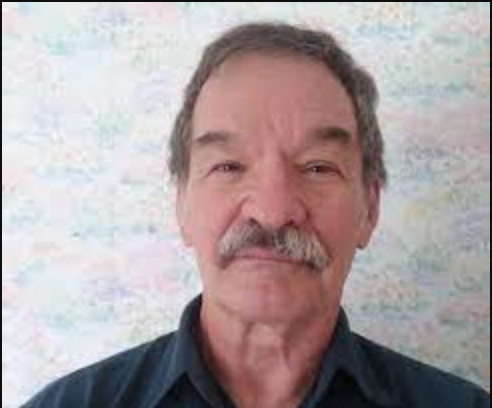
Ted Glick has devoted his life to the progressive social change movement. After a year of student activism as a sophomore at Grinnell College in Iowa, he left college in 1969 to work full time against the Vietnam War. As a Selective Service draft resister, he spent 11 months in prison. In 1973, he co-founded the National Committee to Impeach Nixon and worked as a national coordinator on grassroots street actions around the country, keeping the heat on Nixon until his August 1974 resignation. Since late 2003, Ted has played a national leadership role in the effort to stabilize our climate and for a renewable energy revolution. He was a co-founder in 2004 of the Climate Crisis Coalition and in 2005 coordinated the USA Join the World effort leading up to December actions during the United Nations Climate Change conference in Montreal. In May 2006, he began working with the Chesapeake Climate Action Network and was CCAN National Campaign Coordinator until his retirement in October 2015. He is a co-founder (2014) and one of the leaders of the group Beyond Extreme Energy. He is President of the group 350NJ/Rockland, on the steering committee of the DivestNJ Coalition and on the leadership group of the Climate Reality Check network.
ZNetwork is funded solely through the generosity of its readers.
Donate

