
What a difference nine days can make in the life and death of a social movement. On the evening of Tuesday, November 25th, 2014, a racially diverse crowd of more than 200 mostly young adults met in the University of Iowa’s scenic Pentacrest to protest the terrible but unsurprising decision of a St. Louis County grand jury not to indict white police officer Darren Wilson for shooting an unarmed 18 year old Black man, Michael Brown, in Ferguson, Missouri, last August. After some group chanting and brief speeches by two local Black activists, the crowd took to the streets of downtown Iowa City, chanting “Whose Streets? Our Streets!” and “This is What Democracy Looks Like.” There followed a rally outside City Hall and a return to the streets, where something like a public assembly was held. Participants included numerous poor and working class Black people from the impoverished and segregated Black neighborhood on “liberal” Iowa City’s southeast side. It was an exhilarating outburst of popular self-activity with a strong multi-racial and egalitarian feel about it.
Nine days later, in the wake of the grand jury verdict that exonerated a white New York City cop who killed a Black man with an illegal chokehold, a similarly sized crowd gathered in the Pentacrest for what turned out to be a very different event. The chants were much the same (with “I can’t breathe” added in) but the two organizers of the earlier protest were no longer running the show. The Black speakers at the December 4th rally were university-based and middle class, brandishing academic discourse and related zero-sum bourgeois-identity politics. Whites were admonished to keep their voices down since white privilege prevented them from meaningfully grasping the issues involved. So much for an older white working class lady who yelled “Down with the prison-industrial complex!”
The leaders asked people in the crowd to assemble in the middle of the protest circle if they were young Black males, then if they were Black females, and then again if they were members of the gay and lesbian community.
“This is about race, NOT class,” a Black female student instructed the crowd, obliterating the key distinction between herself and the mostly poor and working class Blacks who most typically face police brutality. I was reminded of a speaker at the earlier rally – a Black female professor who seemed to think she faced the same level of vulnerability to racially discriminate arrest, incarceration, and police violence as that experienced by young Black and lower and working class Blake males like Mike Brown. She was wrong about that: “the New Jim Crow” (law professor Michelle Alexander’s term for the US racially disparate mass incarceration and felony marking) takes special aim at poor and working class Black Americans.
If this is all about “race and not class,” I thought to myself, then why are we meeting on the distinctly white and upper middle class terrain of the university rather than on the impoverished Black Southeast Side where Iowa City police and cops most commonly tangle?
One young and nicely dressed white lady did speak briefly – to tell whites not “to lead the rally.” It struck me as an odd admonition since (beyond the Caucasian woman who dared to loudly connect the protest to mass incarceration) the many dozens of whites I could see were engaged in respectful following and accompaniment. None showed a failure to understand that this particular issue and rally required Black leadership. When I asked the young lady privately if her comment was really necessary, she told me that “I don’t have time to educate you about the white male power structure.”
I wanted to ask her to look at one of the whites she had told to keep it down – a disabled 50-something white guy sitting with his cane and trying to catch his breath. He works 40-50 hours a week for minimal wages in a university parking booth. Was he really too privileged by his race (and/or his gender) to speak out meaningfully and sincerely against race-class injustice?
The gathering ended after a tall, charismatic Black male student told whites what they could do: go talk to other whites about their need to shed their white privilege. There was no march in the streets. No popular assembly. No mock die in. No further discussion. Nothing about next stages and solutions. Nothing about how black and white might unite and fight to overcome injustice. The message was clear: “thank you for your support, go home now and talk amongst yourselves.”
A white left working class and genuinely anti-racist activist tried to attend a follow-up meeting against racist policing in Iowa City. He was informed that the gathering was only for those connected to “the African Diaspora” – academic code for Black. It’s the “race NOT class” thing, consistent with academic “whiteness” and “critical race” theory.
Lest anyone be fooled into thinking there’s anything radical about such theorizing and language, the local “movement” is pursuing $100,000 in taxpayer money for police “diversity training.” Think Urban League, not Malcolm X. It’s about putting some politically correct icing on the cake of how local authorities police contemporary US race-class apartheid and inequality. There’s nothing about what they police: deeply embedded racial and intimately related class injustice in New Gilded Age America.
Don’t get me wrong: white and male privilege exist. But, as great Black thinkers and activists like WEB DuBois, Oliver Cox, CLR James and Martin Luther King, Jr. knew, white privilege and racism more broadly in the United States cannot be meaningfully understood outside the context and history of capitalism, Empire, class oppression, and the rich record of ruling class racial-ethnic divide-and-rule that runs back to the origins of the nation. The good struggle is not about race over or above class, it’s about fighting racism and classism together alongside other unjust power and oppression structures like sexism, imperialism, and ecocidal anthropocentrism.
Iowa City author Paul Street’s many books include Segregated Schools: Educational Apartheid in Post-Civil Rights America (Routledge, 2005), Racial Oppression in the Global Metropolis: A Living Black Chicago History (Rowman & Littlefield, 2007), and They Rule: The 1% v. Democracy (Paradigm, 2014).
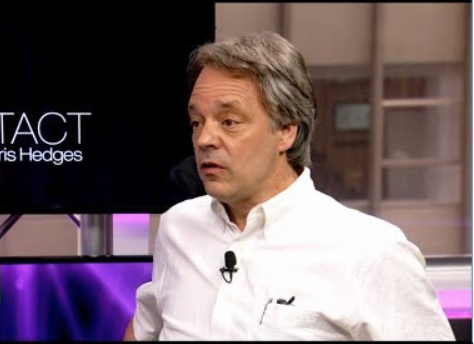
Paul Street is an independent radical-democratic policy researcher, journalist, historian, author and speaker based in Iowa City, Iowa, and Chicago, Illinois. He is the author of more than ten books and numerous essays. Street has taught U.S. history at numerous of Chicago-area colleges and universities. He was the Director of Research and Vice President for Research and Planning at the Chicago Urban League (from 2000 through 2005), where he published a highly influential grant-funded study: The Vicious Circle: Race, Prison, Jobs and Community in Chicago, Illinois, and the Nation (October 2002).
ZNetwork is funded solely through the generosity of its readers.
Donate

