

ME: Could we start with a brief introduction. Can you tell the reader a bit about yourself, your age, background, where you are from, that kind of thing. Please tell us anything that you feel comfortable sharing.
JB: I’m a 67 year old retiree with three children and three grandchildren. My background is in international raw materials trading and paper sales so I feel I have a pretty good idea of how the global economy works and it’s that knowledge, I think, which informed the idea for Simpol. We launched the campaign in 2000 and have been developing it ever since.
ME: What does Simpol stand for; what is it about?
JB: Simpol is short for simultaneous policy – the idea that to solve global problems nations will need to implement certain measures simultaneously so that no nation suffers an economic competitive disadvantage.
Whether it’s emissions reductions, tightening environmental regulations or making corporations pay fair levels of tax, the problem today is that no government can act alone for fear that doing so would drive business, investment and thousands of jobs to go elsewhere. So little happens and our problems only get worse. But, if all or sufficient nations act together, simultaneously, no nation would lose out – all nations would win.
ME: What kind of issues is Simpol designed to address?
JB: Simpol is designed to address any global issue where nations fear that acting alone will harm their economic or military competitiveness. So, that would include climate, nuclear weapons, corporate tax levels, financial market regulation, monetary reform, extreme wealth inequality, space governance, and so on. As our world becomes ever more globalised, the inadequacy of national governance structures is becoming ever clearer. As is the inadequacy of global institutions such as the United Nations, the IMF, WTO, and so on. That’s why we need a genuinely global approach that overcomes the shortcomings of those institutions.
ME: You talk of what you refer to as Destructive Global Competition (DGC). Clearly you are talking about something here that is both negative and impacts everyone. This, however, runs against conventional political and economic wisdom that says competition is a positive force in the world. Are you against competition?
JB: No, Simpol isn’t against competition; it’s against destructive competition. Competition is constructive and healthy if it occurs within a framework of rules and regulations. But when there are no rules or when players find ways to circumvent them, competition becomes destructive – a free-for-all.
ME: Okay, but what exactly is DGC and how does it function? What is its logic and what are its consequences?
JB: DGC is exactly what happens when market competition isn’t adequately regulated. Today’s global market is a global competition but we don’t have global rules to keep it constructive. All we have are national rules, so there is a mis-match of scale. And because economic actors such as multinational corporations, commercial banks and the rich can move easily across national borders, they can freely play one government off against another to their benefit. If one government looks like it might increase taxes or regulations in order to protect society or the environment, the corporations can just move, or merely threaten to move, their operations elsewhere. So no government dares act. Not only does this prevent governments from increasing taxes or regulations, it actually causes them to dismantle them in a race to the bottom as they struggle to defend their ‘international competitiveness’. And that is why global problems only get worse. It’s a vicious circle; a game no one can win and all of us must ultimately lose. We have to realise that it’s not that governments don’t want to act on climate or other global problems, it’s that DGC means they can’t.
ME: Why do you identify DGC as the main problem that needs to be solved?
JB: Well, as I said, when you look closely at almost any global problem that confronts us, you find that behind all the rhetoric it’s the dynamic of DGC that prevents governments from taking the necessary action. Just at a time when these problems are urgent, governments are frozen by DGC so their response is either inadequate or non-existent. And because DGC remains generally unacknowledged by NGOs and activists, they are forever fighting blind and achieving little.
ME: What is Simpol and how does it work? More precisely, how can Simultaneous Action undermine or resolve Destructive Global Competition?
JB: Simpol comprises three key ideas: First, if all or sufficient nations implement the necessary measures simultaneously, no nation would lose out. Every nation’s relative competitiveness would be maintained while global problems could be decisively addressed.
Second, Simpol advocates the combining of two or more complementary policies so that what a nation might lose on one policy, it can gain on the other. One reason why UN climate negotiations fail or are inadequate is because they deal with only one single issue: climate. But on any single issue, there will always be some nations that win and others that lose, and the losers therefore have no incentive to cooperate. But a multi-issue policy can overcome this. For example, if a robust global climate agreement were matched with a global currency transactions tax, the vast proceeds from the tax could be used to compensate any nations that lose on the climate part of the agreement. In that way, cooperation is designed to be in every nation’s overall self-interest.
Third, and most important, Simpol is driven by citizens who use their votes in a new way to drive politicians, parties and governments towards the implementation of the necessary policies – policies which will be determined not by politicians but by Simpol’s citizen-supporters. The powerful new way that Simpol invites us to use our votes is surprisingly simple and it has already driven over 100 UK MPs to pledge their support as well as a growing number of MPs in Germany, Ireland, the EU parliament and elsewhere. All that’s needed is for more citizens to sign on to build the momentum further.
ME: There are many people in the world – progressives and leftists – who want to tackle the issues that Simpol is designed to address. For example, there are those who want to democratise the economy. And then there are those who want to democratise global political institutions. What do you think Simpol offers that these approaches do not?
JB: The only institution capable of ‘democratising the economy’ is government. But as I pointed out, all governments today have become the unwitting captives of DGC. So, if you don’t address DGC, you can’t democratise anything.
As for global political institutions such as the UN, we have to realise that it is not an autonomous body but one that is highly influenced by nation-states, and particularly by the P-5 members of the Security Council. There is no way they will allow the UN any meaningful authority over them. And that is why we need a process such as Simpol that targets nations directly and gets inside their national political processes to transform them, rather than focussing on global institutions such as the UN which don’t have the autonomous power to change even if they may want to.
ME: Simpol is presented as a solution. But should people understand it as a final solution (for want of a better phrase) or is it better to understand it more as an emergency intervention that has the potential to create a global context in which more progressive and maybe radical changes could take place?
JB: Yes, I see Simpol as a very practical way to design cooperation so that it’s in every nation’s self-interest. The whole purpose of Simpol is to align national self-interests with the global common interest. Simpol doesn’t require a world parliament nor any other institution. It only requires citizens to support it. If all or sufficient nations can be brought to cooperate, citizens will start to experience the practical benefits of that cooperation. They will then want to formalise the process in some way or another, whether that be as a world parliament, as a more formal version of Simpol itself, or as something else. So Simpol, as I see it, is a kind of gateway to whatever form of people-centred global governance citizens choose.
That said, what’s clear is that we urgently need some form of global cooperative governance to disarm DGC and solve the global problems we face.
ME: You mentioned the words practical and urgent in your last answer. How important is the issue of time with regards to how you conceptualised Simpol?
JB: The issue of time is of course very important. In terms of running out of time to resolve global issues, I think it’s actually very difficult to judge just how much or how little time we have. All we can do is to get on with the job as quickly as we can! And the great thing about Simpol is that the most important thing anyone can do to support the campaign takes only a couple of minutes – and that’s to sign on. Now, you might think that doing so can’t make much difference, but so powerful is the way that Simpol harnesses the power of our votes, it has, as already mentioned, caused a relatively large number of MPs in the UK and elsewhere to sign the Pledge. So small numbers can make a disproportionately large impact. For those who have a bit more time, there’s a lot more they can do to help promote the campaign in their local communities, online and in other ways.
ME: What do you see as the main obstacles to Simpol success?
JB: Probably the biggest obstacle to it is the understandable reaction that Simpol isn’t realistic or ‘that it’ll never happen’. But to my mind, when you understand the vicious circle of DGC and its global nature, you realise that nothing less than Simpol or something very similar can possibly suffice.
Beyond that, there is a cultural problem in that most people in the world today don’t see the world as a whole system. Instead, they see it nation-centrically; through national spectacles, as it were. So, they find it hard to understand global phenomena such as DGC, let alone initiatives such as Simpol that are designed to solve it.
ME: What would you say to someone who says Simpol is naive, that it fails to take into consideration factors such as corruption or the fact that professional politicians often say they will support progressive policies in order to get into power but then perform a u-turn when in power. How does Simpol take these kinds of concerns into account?
JB: What you have to remember is that Simpol’s policies don’t get implemented unless and until all or sufficient nations are on board. So, until that time arrives, there is nothing for a supporting politician or party to renege on. Any politician that cancelled his/her pledge after the election would only disqualify themselves from receiving the votes of Simpol’s supporters in future. They’d effectively be saying to our voting bloc “please don’t ever vote for me again”. So reneging is simply not in their interests.
In terms of the danger of Simpol itself or its national organisations being taken over by corrupted influences, firstly we do not accept donations from any for-profit entity. Secondly, even if we imagine that one or two national Simpol organisations were taken over by extremists of one kind or another, that would only mean that there would not be sufficient global consensus for implementation to proceed. So that is an in-built safeguard. And if such a case occurred, all the other national Simpol organisations would simply no longer recognise the corrupt national organisations and would seek to work with un-corrupt replacements instead.
ME: Who can get involved in Simpol? Where can people find out more about this project? How can people get involved?
JB: Everyone can get involved, especially citizens in democratic countries. All you need to do is sign on to the campaign at Simpol.org where you can also find out more and see what’s going on in your country. For a more in-depth look, there’s also the book The Simpol Solution, co-authored with Nick Duffell.
Once they’ve signed on, we want citizens in every parliamentary constituency or electoral district to form Local Simpol Groups focussed on getting their parliamentary or Congressional representative(s) to pledge their support for Simpol. The sooner people do, the quicker we can drive politicians and governments to cooperate on our terms, not theirs!
ME: Thank you, John!

John Bunzl is a global political activist and businessman. In 2000, he founded the Simultaneous Policy (Simpol) campaign, a way for citizens to use their votes to drive politicians towards global cooperation. It has supporters in over 100 countries and enjoys the support of a growing number of Members of Parliament around the world. His authored and co-authored books include The Simpol Solution, Monetary Reform – Making it Happen!, People-Centred Global Governance – Making it Happen!, and Global Domestic Politics. He has published numerous articles on global governance in the Journal of Integral Theory & Practice. He has lectured widely, including to the Schumacher Society, the World Trade Organisation, the Lucis Trust, and various universities.
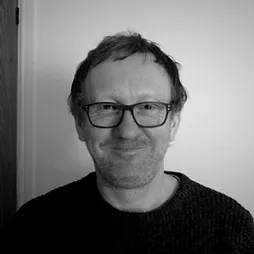
Mark was born in 1968 in the industrial heartland of England to working class parents. He has two older sisters. Over the years He has lived in a number of cities and have had many different jobs. However, over the past 20 years he has lived in Birmingham (UK) where he works in healthcare on the nursing side of things. He has two main interests in life. They are mental health and social justice. His main interest in social justice has to do organising for a participatory society. More precisely, He is interested in helping to establish an international network of geographically based self-managed groups as a basis for a participatory society. It is this that motivated me to help set-up, in 2020, Real Utopia: Foundation for a Participatory Society. Mark is also a member of Collective 20 writers collective.
ZNetwork is funded solely through the generosity of its readers.
Donate