
On August 9, Abahlali baseMjondolo (AbM), a mass movement of socialist shack dwellers based in Durban, South Africa, celebrated National Women’s Day, a public holiday in memory of the more than 20,000 Black, Indian, colored, and white women who in 1956 marched in Pretoria demanding the repeal of the pass laws that prevented Black people from entering areas of white occupation. For AbM, that holiday is also a time to mourn and remember the lives of 24 members assassinated since 2009 in the struggle for land and housing. Last year, four of them were gunned down at the movement’s settlements. The movement believes that ANC politicians are behind most of the killings.
AbM has about 115,000 members spread across 81 branches in the southeast of South Africa. Since its founding in 2005, the movement has fought for access to land and housing along with basic services, like sanitation and electricity. The movement’s struggles, which include defending poor workers from evictions in big cities, expose the social inequality and racial discrimination that remain as lasting conditions of the apartheid era.
“The movement first and foremost has a principle that we don’t struggle for you, we struggle with you,” explained Thapelo Mohapi, AbM’s general secretary. Contrary to conventional social movements, AbM does not rely on elected representatives to channel its demands. Instead, the movement maintains that landless and homeless workers should speak and act for themselves. They do that by organizing protests, presenting demands to state authorities, democratically managing settlements where they grow subsistence crops, and opening and running political schools. With such acts, AbM synthesizes direct action with grassroots self-determination.
Mohapi emphasized the strategic importance of AbM’s bottom-up internal architecture, saying, “It is only when people are democratically organized from below that they can change the system that oppresses them.” AbM’s structure enables democratic participation at the grassroots and top levels. Local councils from each branch bring demands to a forum of elected chairs and then to the National Council. The movement’s General Assembly, open to all members, meets once a month to set priorities for the National Council and can potentially disband any structure of the movement if members feel their demands are being ignored.
Women play a key role in the councils and daily life of the settlements. But few had occupied leadership roles as recently as 2016, even though 60 percent of all members were women. Zandile Nsibande, a community facilitator, explained that “women were scared to participate and compete in elections for leadership. They were having low self-esteem.”
So that year, the AbM Women’s League undertook a campaign to collectively fight for gender equality within the movement’s leadership. “Through this campaign women and men are now 50/50” in leadership, Nsibande said. Along with increasing women’s participation in decision-making and waging campaigns against gender-based violence and feminicide, the league has advocated for women’s financial independence in particular. It has held workshops on women’s access to land and increased awareness of harmful traditional practices, including the requirement that a woman marry a man before she can own land. The league also encourages women to learn new skills, such as traditional jewelry and dressmaking, highlighting the importance of sharing technical knowledge. “If someone knows how to make dresses, then she must teach others how to do so. In South Africa, job opportunities are scarce, so we need to empower ourselves financially,” Nsibande said. The Women’s League seeks donations to open a training center where the women of AbM can learn how to sew.
Building an autonomous shack dwellers movement that integrates social, political, racial, and gender struggles has triggered what Mohapi calls a “politics of blood.” In addition to the assassinations and evictions, the movement has been impacted by unlawful police raids, detentions, and death threats. In a 2022 letter to President Cyril Ramaphosa, signed by more than 130 civil society organizations, the human-rights organization Socio-Economic Rights Institute of South Africa denounced the fact that “at least 24 leaders of the movement have been threatened and killed, hundreds have been injured and thousands displaced from their homes.”
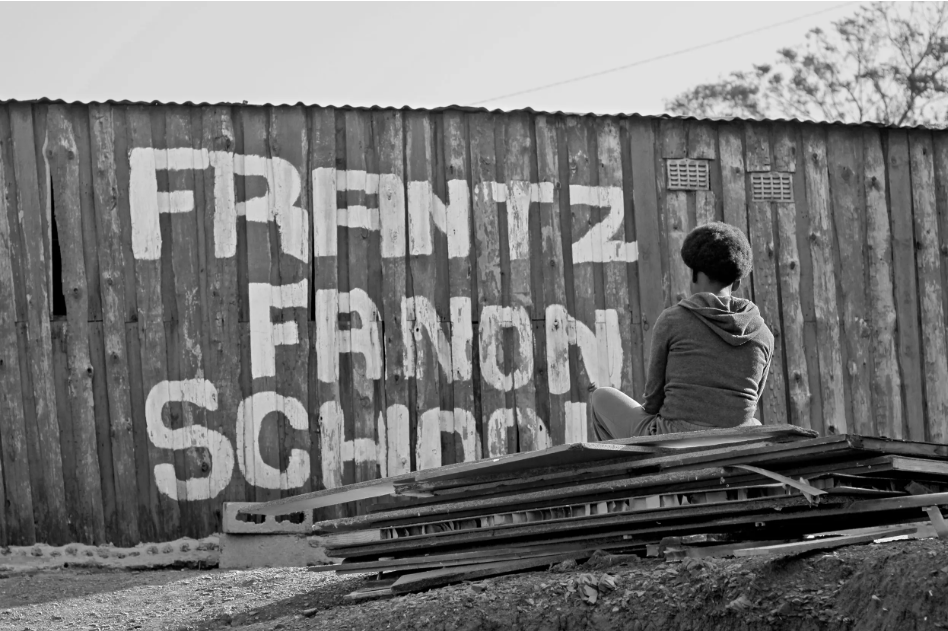
Despite these attacks, AbM continues to resist and preserve the legacies of its fallen members. AbM has held ceremonies in their memory at the Frantz Fanon Political School, located in the eKhenana community, the epicenter of the recent attacks. AbM teaches the communist values and humanist worldview that characterize the movement. AbM remains united in its goals of land, housing, and popular self-determination.
ZNetwork is funded solely through the generosity of its readers.
Donate

