
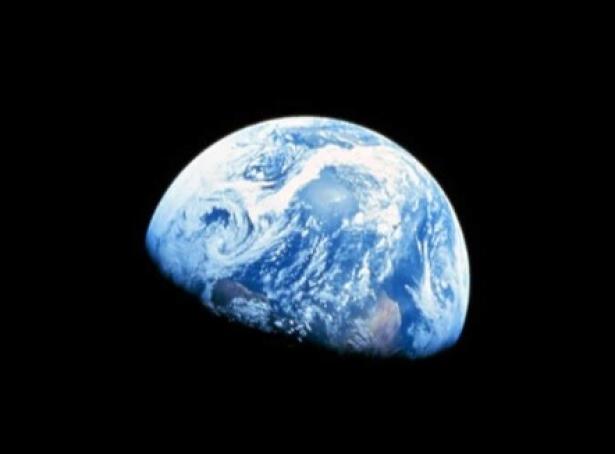
Imagine a future in which everyone enjoys high levels of wellbeing; where 90% of the world’s population doubles their income but works half the hours we work today. A world in which the bottom half of humanity sees its share of global wealth rise from just 2% today to 30%; a world where we consume enough, but nobody over-consumes. And imagine achieving this on a planet that can comfortably sustain human life without its climate breaking down.
Against the bleak techno-authoritarian futures now being sold to us, a radical new vision for global progress in the 21st century feels urgently needed. The most credible vision is one in which the habitability of the planet is a precondition for human development and equality.
Our new report examines the conditions required for the world to progress towards this ambition on an economically and ecologically compatible path, by the end of the century.
Its conclusion? A global transformation that reconciles planetary habitability and high standards of wellbeing for all is possible – as long as three conditions are simultaneously met. Fast decarbonisation of energy systems is necessary. But we also need a major shift away from overconsumption towards “sufficiency”. This would involve a sharp reduction in labour hours and the use of raw materials, along with big changes in consumption patterns, food habits, land use and forest cover. Financing and politically sustaining decarbonisation and sufficiency will require a drastic reduction in inequality of income, wealth and power, between countries and within them. This reduction of global inequality is compatible with deep decarbonisation; indeed, it is a necessary condition for shared prosperity on a finite planet.
The Global Justice Report is the first attempt to propose a fully quantified plan for this transition. It combines four dimensions that today’s debates often treat separately: redistribution at the world scale; a deep reform of the international financial and economic order; a radical transformation of energy systems; and substantial shifts in consumption patterns. Compared with most climate scenarios (including those of the Intergovernmental Panel on Climate Change), the main novelty is that we model all four dimensions together – and place inequality and sufficiency at the centre of the analysis.
What would this transition deliver? At its heart is convergence between countries. Average per capita national income, today separated by a 16-fold gap between the poorest (€290 a month in sub-Saharan Africa) and richest (€4,590 in North America/Oceania) regions of the world, would rise towards a common level of about €5,000 a month in all countries by 2100.
But this convergence is not just monetary. Annual working hours per employed person would fall from roughly 2,100 to about 1,000, continuing the long shift towards shorter working time; while the share of global working hours devoted to education and health would rise from 11% to 43%. Women and men would converge on equal pay and on an equal share of economic and domestic labour.
All of this would unfold within a habitable climate. Thanks to sustainable convergence and fast decarbonisation, global heating would reach 1.8C, against more than 4C on current trends.
None of this will be possible without a deep contraction of inequality. The income scale between individuals would narrow to a ratio of one to five and the wealth scale to one to 10, prolonging what western and Nordic Europe achieved over the 20th century. The share of global wealth held by the poorest half of humanity would rise from 2% to 30%, while the share held by the billionaire class would fall from 6% to 0.05%.
These shifts would be financed and governed through new institutions. A global justice fund would spend an average of 10% of world GDP a year from 2026 to 2060 on country dividends and investment, against the less than 0.4% that aid and the combined budgets of the UN, the International Monetary Fund (IMF) and the World Bank represent today. Its resources would come from a world sovereign fund holding 10% of the world capital stock, a global wealth tax rising to 20% a year on billionaires and a global income tax rising to 90% at the very top, each touching about 1% of the world’s population.
The result is not a transfer from many to few but a gain for almost everyone. Close to 90% of the world’s population would double their income between 2026 and 2100, and once leisure and a habitable planet are counted, more than 99% come out ahead. The plan also redistributes power. Today, the richest regions hold four times as many votes at the IMF and World Bank as their share of the world’s population would dictate; in the new order, every inhabitant would have equal voice, backed by an international clearing union and a new international currency to end the exorbitant privileges of the dominant powers and to address global trade imbalances.
Our report is part of a broader international agenda for planetary habitability, social justice and reform of the global financial architecture – including the Bridgetown agenda launched by Barbados in 2022, the Sevilla Commitment on development finance, the UN tax convention process, and G20 initiatives led by Brazil and South Africa on global inequality. The main contribution of this report is to place these proposals within a quantified institutional framework, modelling socioeconomic convergence, temperature change and distributional trajectories up to the year 2100.
A habitable, equal and prosperous 21st century is materially possible. The carbon budget allows it and history offers precedents at comparable scales: universal suffrage, the universalisation of healthcare and education, the halving of working hours and the sharp compression of inequality over the 20th century. Technical impossibility is not what is standing in the way, but rather the absence of a shared vision of social progress, at once concrete and radical. What it will take instead is political choice, and the hard work of coalition-building behind it.
- Thomas Piketty is a professor of economics at the Paris School of Economics and co-director of the World Inequality Lab; Lucas Chancel is professor of economics at Sciences Po Paris and co-director of the World Inequality Lab; Cornelia Mohren is environmental coordinator at the World Inequality Lab; Rowaida Moshrif is co-director at the World Inequality Lab; Moritz Odersky is an economist at the World Inequality Lab; Anmol Somanchi is global justice coordinator at the World Inequality Lab.
- This article is based on the conclusions of their Global Justice Report
ZNetwork is funded solely through the generosity of its readers.
Donate
4 Comments
Wishful thinking -as usual from the ivory tower
I think it is a pipe dream to imagine that ‘coalition-building’ can bring about the changes needed. Where can coalition-building take us other than inevitably to a ‘united left’ trapped in an endless civil war against a ‘united right’.
Instead it would be better to focus on finding a way to unite all of humanity based on something that capitalism can’t touch: the connections we all have in our real communities. These are our neighborhoods, workplaces, schools, religious or cultural communities where we can trust each other.
These communities can be united gradually through an open source platform cooperative which REQUIRES registration of a real community to access. Facebook has managed to ‘organize’ nearly half the planet — but only for the benefit of Mark Zuckerberg.
We could begin to build something similar, but based on real community connections which can grow gradually into a global democratic network which might one day allow humanity to act collectively. Then we could replace capitalism with a cooperative system inclusive to all.
[email protected]
The previous commenter was a way too polite and generous. This is certainly not a pipe dream or wishful thinking. This is a sheer and dangerous utopia of a liberal think tank (everyone will become reach) that totally ignores the current economic, social, and political conditions. Ruling elites and their repressive machine are as powerful as never before. They will cope with any crisis except a global nuclear conflict or a natural disaster of equal proportions. Only something at the human extinction level can radically change the balance of powers on this planet. it can be asserted with full confidence that There Is No Alternative (if God’s or aliens’ intervention is not considered and, which is much more realistic, AGI – humanist). Reason, common sense, humanism, mutual survival or any other rational factor don’t work anymore. The ultra-right and ultra-reach have their own agenda (largely mystical, if not mythical), and there is no power on Earth that can oppose it.
The last, at least theoretical, resort of the Left – unsustainability of the capitalist formation (of course, not the authors’ consideration) and an objective need of its transformation – has failed the live test. It can manage any reasonable crisis by means of ‘creative destruction’. And they won’t hesitate to make this destruction (peaceful or violent) a really large-scale. And if they manage to harness the power of AI, the elites will become practically invincible. They don’t care about the limited planetary resources. There are enough accessible resources (minerals, hydrocarbons, water, etc.), which are not available because of “transient” reasons (international laws, destruction of natural habitat, objections of different nations and local populations, etc.), all of which will be transitioned in one way or another. And the rising temperatures is not an issue as well, at least for a few degrees. Even “liberal” elites are racist and inhumane. They really do not care if a few billions of black and brown people die somewhere in Africa – more resources become available. A live test is going on in Palestine – over 3% of its population has perished for unnatural causes, which has been well-tolerated by the Western governments; this is a quarter-billion on the global scale. Humanitarian aid was cut off for ideological, not economic reasons. What makes this situation even more hopeless is the populist nature of ultra-right political regimes supported by these elites. These supporters are all the people they need. Very soon they might not need even slaves of serfs.
At this point, there is no viable solution to this menace; certainly, not what the Left on both sides of the spectrum propose. As the situation inevitably deteriorates in the Global South, popular discontent will grow and organized opposition should develop, but successful popular revolts are very unlikely, at least in the near future. The global dominance of the technical, economic, military, and political elites is too pervasive and powerful. Any progressive opposition will be crashed. Cuba is another test-case scenario.
Two problems, one major, one perhaps minor. One: how to neutralize, very soon, the atavistic greed and need to dominate of the all-powerful billionaire/trillionaire/Epstein class, who don’t give a shit for you or me, including their secret and violently destructive agendas of AI and cryptocurrency, and who will oppose your plan with huge money even to the destruction of our planet in short order (they are that stupid, unless they have a Mars plan for their kind). Two: how to prise green energy development out of the hands of predatory capitalist enterprises who may extend life on Earth but will continue the same old repression of the multitudes as the fossil fuel industry did before them; merely a replacement.