
L
ong
before any formal announcement (I’m writing this in early January),
it was obvious that overnight sensation Senator Barack Obama (D-IL)
wanted to be the U.S.’s next chief executive. The “charismatic”
Obama was campaigning by at least November 2005, less than a year
out of the Illinois state legislature. During 2006, Obama gave grave
and “realistic” foreign policy speeches and made appearances
on the “Tonight Show,” “Meet the Press,” “Late
Night With Conan O’Brien,” the covers and/or pages of
Time,
Men
’
s Vogue, Marie Claire, Vanity Fair,
and
Washington Life
. He appeared at the early political proving
grounds of Iowa and New Hampshire. He reached across political and
cultural lines—making a special point of talking to the religious
right. He released a self-promotional book (deceptively titled
The
Audacity of Hope
) that screamed presidential ambition beneath
false humility and ponderous, power-worshipping prose. He received
the praise, money, positive media attention, and public recognition
that a serious presidential run requires. His campaign fundraising
Midas touch became a factor in the mid-term Congressional elections.
The significance of his ambition and ever-rising stature is enhanced
by the fact that the Democrats’ presumed frontrunner, Hilary
Clinton, is seen by many election experts and brokers as unelectable.
If the Democrats’ candidate in 2008 is Obama, we can be sure
that the right-wing Republican noise machine will denounce the nation’s
potential first non-white male president as a dangerous “leftist.”
The charge will be absurd, something that will hardly stop numerous
people on the portside of the narrow U.S. political spectrum from
claiming Obama as a fellow “progressive.” Certain to be
encouraged by Obama and his handlers, this confusion will reflect
the desperation and myopia that shaky thinking and the limited choices
of the U.S. electoral system regularly instill in liberals and some
squishy near leftists.
So what sorts of policies and values could one expect from an imagined
Obama presidency? There is quite a bit already in Obama’s short
national career that has to be placed in the “never mind”
category if one is to seriously to believe his claim (cautiously
advanced in
The Audacity of Hope
) to be a “progressive”
concerned with “social and economic justice” and global
peace.
Never Mind
N
ever
mind, for example, that Obama was recently hailed as a “Hamiltonian”
believer in “limited government” and “free trade”
by Republican
New York Times
columnist David Brooks, who praises Obama
for having “a mentality formed by globalization, not the SDS.”
Or that he had to be shamed off the “New Democrat Directory”
of the corporate-right Democratic Leadership Council (DLC) by the
popular left black Internet magazine
Black Commentator
(Bruce
Dixon, “Obama to Have Name Removed From DLC List,”
Black
Commentator
,
June 26, 2003).
Never mind that Obama (consistent with Brooks’s description
of him) has lent his support to the aptly named Hamilton Project,
formed by corporate-neoliberal Citigroup chair Robert Rubin and
“other Wall Street Democrats” to counter populist rebellion
against corporatist tendencies within the Democratic Party (David
Sirota, “Mr. Obama Goes to Washington,” the
Nation
,
June 26). Or that he lent his politically influential and financially
rewarding assistance to neoconservative pro-war Senator Joe Lieberman’s
(“D”-CT) struggle against the Democratic antiwar insurgent
Ned Lamont. Or that Obama has supported other “mainstream Democrats”
fighting antiwar progressives in primary races (see Alexander Cockburn,
“Obama’s Game,” the
Nation
,
April
24, 2006). Or that he criticized efforts to enact filibuster proceedings
against reactionary Supreme Court Justice Samuel Alito.
Never mind that Obama “dismissively” referred—in
a “tone laced with contempt”—to the late progressive
and populist U.S. Senator Paul Wellstone as “something of a
gadfly.” Or that he chose the neoconservative Lieberman to
be his “assigned” mentor in the U.S. Senate. Or that “he
posted a long article on the liberal blog Daily Kos criticizing
attacks against lawmakers who voted for right-wing Supreme Court
nominee John Roberts.” Or that he opposed an amendment to the
Bankruptcy Act that would have capped credit card interest rates
at 30 percent. Or that he told
Time
magazine’s Joe Klein
last year that he’d never given any thought to Al Gore’s
widely discussed proposal to link a “carbon tax” on fossil
fuels to targeted tax relief for the nation’s millions of working
poor (Joe Klein, “The Fresh Face,”
Time
, October
17, 2006).
Never mind that Obama voted for a business-friendly “tort reform”
bill that rolls back working peoples’ ability to obtain reasonable
redress and compensation from misbehaving corporations (Cockburn;
Sirota). Or that Obama claims to oppose the introduction of single-payer
national health insurance on the grounds that such a widely supported
social-democratic change would lead to employment difficulties for
workers in the private insurance industry—at places like Kaiser
and Blue Cross Blue Shield (Sirota). Does Obama support the American
scourge of racially disparate mass incarceration on the grounds
that it provides work for tens of thousands of prison guards? Should
the U.S. maintain the illegal operation of Iraq and pour half its
federal budget into “defense” because of all the soldiers
and other workers that find employment in imperial wars and the
military-industrial complex? Does the “progressive” senator
really need to be reminded of the large number of socially useful
and healthy alternatives that exist for the investment of human
labor power at home and abroad—wetlands preservation, urban
ecological retrofitting, drug counseling, teaching, infrastructure
building and repair, safe and affordable housing construction, the
building of windmills and solar power facilities, etc.?
In an interview with Klein, Obama expressed reservations about a
universal health insurance plan recently enacted in Massachusetts,
stating his preference for “voluntary” solutions over
“government mandates.” The former, he said, is “more
consonant with” what he called “the American character”—a
position contradicted by regular polling data showing that most
Americans support Canadian-style single-payer health insurance.
Never mind that Obama voted to re-authorize the repressive PATRIOT
Act. Or that he voted for the appointment of the war criminal Condaleeza
Rice to (of all things) Secretary of State. Or that he opposed Senator
Russ Feingold’s (D-WI) move to censure the Bush administration
after the president was found to have illegally wiretapped U.S.
citizens. Or that he shamefully distanced himself from fellow Illinois
Democratic Senator Dick Durbin’s forthright criticism of U.S.
torture practices at Guantanamo. Or that he refuses to foreswear
the use of first-strike nuclear weapons against Iran.
Never mind that Obama makes a big point of respectfully listening
to key parts of the right wing agenda even though that agenda is
well outside majority sentiment (Jacob S. Hacker and Paul Pierson,
Off Center: the Republican Revolution and the Erosion of American
Democracy
). Or that he joins victim-blaming Republicans in pointing
to poor blacks’ “cultural” issues as the cause of
concentrated black poverty (Obama,
The A
udacity of Hope
)—not
the multiple, well-documented, and interrelated structures, practices
and consequences of externally imposed white supremacy and corporate-state
capitalism. Or that he claims that blacks have joined the American
“socioeconomic mainstream” even as median black household
net worth falls to less than eight cents on the median white household
dollar. Or that he had this to say on the night after the Congressional
mid-term elections, when the criminal and reactionary Cheney-Bush
administration’s unpopularity with the American people cost
the Republicans their majority in Congress: “If the Democrats
don’t show a willingness to work with the president, I think
they could be punished in ‘08” (Jeff Zeleni, “Democrats
Fight to Say, ‘You’re Welcome,’”
New York
Times
, November 5, 2006).
Hitting the Right (Wing) Keynotes
N
ever
mind that Obama’s famous 2004 Democratic Convention Keynote
Address—widely credited for catapulting him to national prominence—expressed
numerous reactionary and incorrect notions that make the praise
it received from the far right
National
Review
(who called Obama’s oration “simple and powerful”)
less than mysterious on close examination. This speech claimed that
the U.S. is the ultimate “beacon for freedom and opportunity,”
the “only country on earth” where his supposedly “rags
to riches” is “even possible.” This despite the fact
that the U.S. is actually the most rigidly hierarchical nation in
the industrialized world, home to a stultifying corporate plutocracy,
persistent and highly racialized poverty, astonishing incarceration
rates (also quite racially disparate), and low mobility from lower
to upper segments in its steep socioeconomic pyramid.
Obama the Keynoter proclaimed that “every child in America”
should “have a decent shot at life,” not that every kid
deserves a full and decent life now and thereafter. He told Americans
they should be ecstatic over the “miracle” that they don’t
live under the iron heel of state repression (he made no exceptions
for the nation’s two million prisoners), as if democracy is
just the absence of a police state and not the power of the people
to run their own society in an egalitarian fashion—talk about
low expectations for freedom. He praised a Marine enlisted in the
occupation of Iraq for “defending the United States of America”
and for (supposedly) expressing “absolute faith in the country
and its leaders.” Never mind that such chilling “faith”
is the stuff of the very police state whose absence in the U.S.
Obama called a “miracle.”
Never mind that Obama’s speech scaled new heights of cringing,
pseudo-patriotic nausea-inducement by making disturbing “hope”
parallels between: “the hope of slaves sitting around a fire
singing freedom songs,” “the hope of a young naval lieutenant
bravely patrolling the Mekong Delta,” and the “hope of
a skinny kid with a funny name who believes that America has a place
for him.” The lieutenant referred to in his speech was Democratic
presidential candidate John Kerry whose government’s imperial
right to “patrol” great rivers on the other side of the
world during the 1960s Obama took as axiomatic. The “skinny
kid” referred to a young Obama, grooming himself for a Harvard
education while attending an elite private school and living with
his white grandparents in sunny Hawaii. The connection with singing
slaves? A shared belief in what Obama called “God’s greatest
gift to us, the bedrock of this nation—a belief that there
are better days ahead.” Yes, the brutalized black slaves of
racist antebellum America were looking forward to the glorious white-imperialist
rape of Southeast Asia when their faith in “better days”
would find glorious realization in the napalming of Vietnamese children,
the images of which shocked Martin Luther King, Jr. into denouncing
the Vietnam war in strident and forceful terms.
Embracing Imperial Criminality
N
ever
mind Obama’s “mush-mouthed” (Glen Ford and Peter
Gamble, “Obama Mouths Mush on War,”
Black
Commentator
, December 1, 2005) pronouncements on the illegal,
racist, and imperialist invasion and occupation of Iraq. Obama’s
handlers and supporters place considerable emphasis on the claim
that the junior senator from Illinois has voiced a “consistent
position against the war” and (by extension) the Middle East.
The assertion has some technical accuracy; Obama has publicly questioned
the Bush administration’s case for war since the fall of 2002.
But serious scrutiny of his “antiwar position” shows that
the supposedly “pragmatic” and “non-ideological”
Obama speaks in deferential accord with the doctrine of empire.
In Obama’s carefully crafted rhetoric, Operation Iraqi Liberation
(OIL) has been a “strategic blunder” on the part of an
essentially benevolent nation state. Given his presidential ambitions,
it is unthinkable for him to acknowledge the invasion’s status
as a great international transgression that is consistent with the
United States’ long record of imperial criminality. It is equally
unimaginable for him to acknowledge that the war expressed Washington’s
drive to deepen its control of strategic petroleum resources—an
ambition in direct opposition to the alleged U.S. goals of encouraging
Iraqi freedom and exporting democracy.
In a recent address designed to display his foreign policy bona
fides, Obama showed his continuing willingness to take seriously
the claim that OIL was an effort to “impose democracy”
on Iraq, even faulting the Bush administration for acting in Iraq
on the basis of unrealistic “dreams of democracy and hopes
for a perfect government” (Obama, “A Way Forward in Iraq,”
speech to the Chicago Council on Global Affairs [CCGA], November
22, 2006).
Consistent with his denial and embrace of Washington’s imperial
ambitions, Obama has refused to join genuinely antiwar forces in
calling for a rapid and thorough withdrawal of troops and an end
to the occupation of Iraq. In a critical November 2005 speech to
the Council on Foreign Relations (CFR), Obama rejected Rep. John
Murtha’s (D-PA) call for a rapid redeployment and any notion
of a timetable for withdrawal. Obama’s call for “a pragmatic
solution to the real war we’re facing in Iraq” included
repeated references to the need to “defeat” the “insurgency”—a
goal that means continuation of the war. As commentators Ford and
Gamble noted in a critical analysis of Obama’s CFR address:
“In essence all Obama wants from the Bush regime is that it
fess up to having launched the war based on false information and
to henceforth come clean with the Senate on how it plans to proceed
in the future. Those Democrats who want to dwell on the past—the
actual genesis and rationale for the war and the real reasons for
its continuation—should be quiet. Obama and many of his colleagues
are more interested in consulting the Bush men on the best way to
‘win’ the war than in effecting an American withdrawal
at any foreseeable time.”
Obama’s November speech to the CCGA advocates a vaguely timed
Iraq “scenario” in which “U.S. forces” might
remain in the occupied state for an “extended period of time.”
Obama advances a “reduced but active [U.S. military] presence”
that “protect[s] logistical supply points” and “American
enclaves like the Green Zone” (site of one of the largest and
most heavily militarized imperial “embassies” in history)
while “send[ing] a clear message to hostile countries like
Iran and Syria that we intend to remain a key player in the region.”
U.S. troops “remaining in Iraq” will “act as rapid
reaction forces to respond to emergencies and go after terrorists.”
This is part of what Obama meant when he told a fawning David Brooks
that (in Brooks’s approving language) “the U.S. may have
no choice but to slog it out in Iraq” (David Brooks, “Run,
Barack, Run,”
New York Times
,
October 19, 2006).
Never mind that the recent mid-term elections and a mountain of
polling data show that the majority of Americans support rapid U.S.
withdrawal, as do the vast majority of the Iraqi people—the
purported beneficiaries of Cheney’s “dreams of democracy.”
The only polling data that Obama referenced in his CCGA speech and
in the foreign policy chapter of his recent book is meant to illustrate
what he considers to be the real danger in the wake of the OIL fiasco:
that Americans are leaning dangerously towards “isolationism”
and thus turning their backs on the noble superpower’s global
“responsibilities.”
At one point in his CCGA oration, Obama had the audacity to say
the following in support of his claim that U.S. citizens support
“victory” in Iraq: “The American people have been
extraordinarily resolved. They have seen their sons and daughters
killed or wounded in the streets of Fallujah.”
This was a spine-chilling selection of locales. Fallujah was the
site for a colossal U.S. war atrocity. Crimes included the indiscriminate
slaughter of civilians, the targeting of ambulances and hospitals,
and the practical leveling of an entire city—in April and November
2004. The town was designated for destruction as an example of the
awesome state terror promised to those who dared to resist U.S.
power. Not surprisingly, Fallujah is a leading symbol of U.S. imperialism
in the Arab and Muslim worlds. It is a deeply provocative and insulting
place for Obama to choose to highlight American sacrifice and “resolve”
in the occupation of Iraq.
Likewise, Obama also praised U.S. occupation soldiers for “performing
their duty with bravery, with brilliance, and without question”
(CCGA speech). It’s hard to determine which is more disturbing
in this comment: Obama’s blindness (intentional or not) to
the important and welcome fact that many troops do in fact strongly
question the war or his upholding of the unquestioning execution
of frankly criminal military orders as a good thing.
“He’s a Player”
L
iberal
bloggers and writers at places like Daily Kos and the leftmost sections
of the corporate-neoliberal punditocracy (e.g., Frank Rich at the
New
York Times
) can speak and write all they wish about the “progressive”
potential of a Barockstar presidency. As David Sirota rightly observed
last summer, Obama is “interested in fighting only for those
changes that fit within the existing boundaries of what’s considered
mainstream in Washington, instead of using his platform to redefine
those boundaries. This posture,” Sirota notes, “comes
even as polls consistently show that Washington’s definition
of mainstream is divorced from the rest of the country’s (for
example, politicians’ refusal to debate the war even as polls
show that Americans want the troops home).” It is because of
Obama’s “rare ability to mix charisma and deference to
the establishment,” Sirota finds (in an overly respectful assessment),
that “Beltway publications and think tanks have heaped praise
on Obama and want him to run for President.”
But then, Obama would never have risen so quickly and remarkably
to his current position of dominant media favor and national prominence
if he was anything like the egalitarian and democratic “progressive”
that some liberals and leftists imagine. In the corporate-crafted
and money-dominated swamp that passes for “representative democracy”
in the U.S., concentrated economic and imperial power open and close
doors in ways that preemptively suffocate populist potential. Big
money is not in the business of promoting genuine social justice
or democracy activists (so-called “gadflies” like Wellstone,
to use Obama’s description). Viewing public policy as a mechanism
for the upward distribution of wealth, it promotes empire and inequality
by underwriting what Ken Silverstein calls “the smothering
K Street culture and the revolving door that feeds it—not just
lobbyists themselves but the entire interconnected world of campaign
consultants, public relations agencies, pollsters, and media strategists”—without
whose favor and assistance serious presidential bids are next to
unthinkable. “All of this,” Silverstein notes, “has
forged a political culture that is intrinsically hostile to reform”
(Ken Silverstein, “Barack Obama Inc.: The Birth of a Washington
Machine,”
Harpers
’
Magazine
,
November
2006).
Obama (a former editor of the
Harvard Law Review)
knows this
very well. He’s been “trimming his sails,” as he
likes to say when he’s telling more genuinely progressive interviewers
(e.g. Sirota and Silverstein) why he had to support one corporateor
militarism-friendly policy or position after another. He’s
been expressing his deep deference for the national and global politico-economic
establishment in accord with harsh plutocratic realities. He has
had to make his “charismatic” way through Mammon’s
polyarchic vetting rounds, impressing the critical gate-keeping
powers-that-be with his “reasonable” commitment to working
within the existing dominant domestic and imperial hierarchies.
He wouldn’t be where he is, practically overnight, if he hadn’t
made his “Hamiltonian” (corporate-imperial) safety clear
to the masters of national policy and doctrine, who hold the keys
to the kingdom. As a Washington lobbyist recently told Silverstein,
“Big donors would not be helping out Obama if they didn’t
see him as a ‘player’…. What’s the dollar value
of a starry-eyed idealist?” (Silverstein, 2006).
Consistent with his secret identity as a corporate “player,”
Silverstein notes, Obama assiduously supported the ethanol-promoting
objectives of the Illinois-based firm Archer-Daniels Midland, which
has provided him with private jets on at least two occasions. He
has also defended the interests of Illinois’ gigantic electrical
firm Exelon, America’s leading nuclear plant operator and a
company that has given more than $74,000 to his campaigns. The slim
chance that Obama might ever choose “starry eyed idealism”—Silverstein’s
lobbyist-informant’s way of describing the elevation of peace
and justice over the imperatives of Empire & Inequality, Inc.—has
probably become thinner now that Obama has recently joined (thanks
largely to his latest book contract) the millionaires’ club.
Paul
Street is an independent writer, speaker, historian, and social
policy researcher in Iowa. He is the author of
Empire and Inequality:
America and the World Since 9/11
(Paradigm Publishers, 2004);
Segregated Schools: Educational Apartheid in the Post-Civil
Rights Era
(Routledge, 2005); and
Racial Oppression in the
Global Metropolis: A Living Black Chicago History
(Rowman and
Littlefield, 2007).
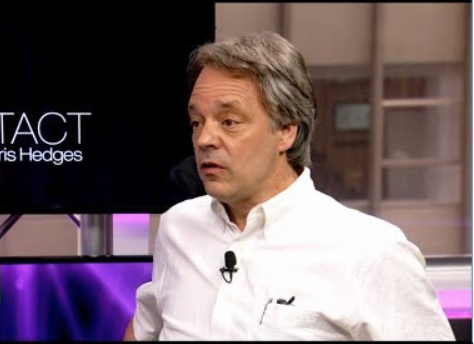
Paul Street is an independent radical-democratic policy researcher, journalist, historian, author and speaker based in Iowa City, Iowa, and Chicago, Illinois. He is the author of more than ten books and numerous essays. Street has taught U.S. history at numerous of Chicago-area colleges and universities. He was the Director of Research and Vice President for Research and Planning at the Chicago Urban League (from 2000 through 2005), where he published a highly influential grant-funded study: The Vicious Circle: Race, Prison, Jobs and Community in Chicago, Illinois, and the Nation (October 2002).


