
April 4th is emblazoned on my mind. It’s the day in 1968 when Martin Luther King, Jr. was shot dead on a balcony at the Lorraine Motel in Memphis….
King was leading a poor- people’s campaign for economic justice at the time of his assassination, which fulfilled the prophecy he made to film producer Abby Mann in 1966. On the recommendation of Harry Belafonte, Mann was planning to produce a movie about King’s life. Mann asked King “how does it end?” King answered, “it ends with me getting killed.” As David Garrow notes in his Pulitzer Prize-winning biography of King (Bearing the Cross, 1999), “Mann was taken aback. ‘I looked at him. He was smiling but he wasn’t joking.’” Truth be told, King had good reasons to assume, as he commonly did, that his life would be cut short from the moment he arose to national prominence during the Montgomery bus boycott in 1956.
The circumstances of his 1968 assassination are in dispute (replete with critiques of the “lone shooter” theory). I don’t know enough about those circumstances to voice a conspiracy opinion, but I find it interesting that the imperial militarist JFK’s killing became an instant and durable national obsession but the murky murder of America’s greatest peace and justice activist (King) is a mild matter of historical reflection. Maybe Oliver Stone should do a movie about THAT assassination.
As it happens (and a conspiracy theorist would like this), April 4th was also the day in 1967 that King went fully public with his strong criticism of the brutal American attack on Southeast Asia. In a speech at the Riverside Church in New York City, King merged the issues of empire and inequality by noting that his commitments to racial equality and social justice no longer permitted him to pull his punches on the Vietnam War. The war, King said, was “an enemy of the poor.” It exploited economically disadvantaged Americans both on the killing fields of empire and – by stealing federal resources for domestic social welfare – on the streets and in the hills of American poverty. “I knew,” King proclaimed, “that I could never again raise my voice against the violence of the oppressed in the ghettoes without having first spoken clearly to the greatest purveyor of violence in the world today – my own government.”
His Christian convictions brought him, furthermore, to “allegiances and loyalties which are broader and deeper than nationalism.” King’s “reference group” (to use a sociological term) was the human race, not the United States.
The Vietnamese, King mused, “must see Americans as strange liberators.” After noting America’s earlier efforts to sustain French colonialism in post-WWII Vietnam and U.S. support for a brutal dictatorship there, King described some aspects of this “strange liberation.” “While the people read our leaflets” about “peace and democracy,” King noted, “they languish under our bombs and consider us – not their fellow Vietnamese – the real enemy….They watch as we poison their water, as we kill a million acres of their crops….They wander into the hospitals, with at least twenty casualties from American firepower for one ‘Vietcong’-inflicted injury…They see the children degraded by our soldiers as they beg for food. They see the children selling their sisters to our soldiers, soliciting for their mothers. What do the peasants think as we ally ourselves with the landlords and as we refuse to put any action into our many words about land reform? What do they think as we test our latest weapons on them, just as the Germans tested out new medicine and new tortures in the concentration camps of Europe….We have destroyed their two most cherished institutions: the family and thevillage. We have destroyed their land and their crops…We have supported the enemies of the peasants….What liberators!.”
I’ll leave contemporary analogies to others.
After giving this speech, King was in “a buoyant mood” (Garrow). His opposition to the war (evident since at least 1965) was now completely in the open.
King’s Riverside speech was denounced by national newspaper editorialists, including those at the Washington Post and the New York Times. It aso received bitter criticism from much of the nation’s civil rights “leadership,” including the board of the NAACP.
King’s sin? Merging the issues of domestic civil rights and social justice with the issues of empire and war. The peace and justice movements were supposed to be separate, the authorities counseled. Any combination of the two was a grave “tactical error.” It was a response that King expected. He was politely unimpressed.
One year later, King’s former conservative critics within and beyond the civil rights movement were fighting to be first in line to proclaim their grief.
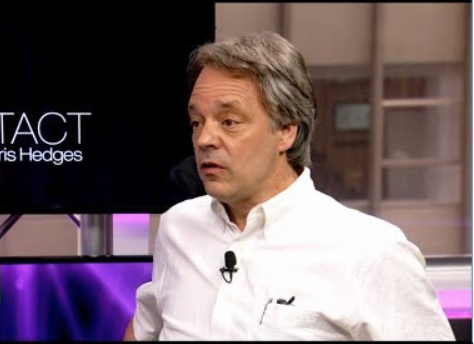
Paul Street is an independent radical-democratic policy researcher, journalist, historian, author and speaker based in Iowa City, Iowa, and Chicago, Illinois. He is the author of more than ten books and numerous essays. Street has taught U.S. history at numerous of Chicago-area colleges and universities. He was the Director of Research and Vice President for Research and Planning at the Chicago Urban League (from 2000 through 2005), where he published a highly influential grant-funded study: The Vicious Circle: Race, Prison, Jobs and Community in Chicago, Illinois, and the Nation (October 2002).
ZNetwork is funded solely through the generosity of its readers.
Donate

