

You keep coming back for a reason: serious political analysis, movement reporting, and debate beyond the priorities of corporate media. Today, Z is in a precarious financial position. If Z is part of how you understand the world, help keep it going. The readers who give monthly are the reason this work survives between fundraisers.
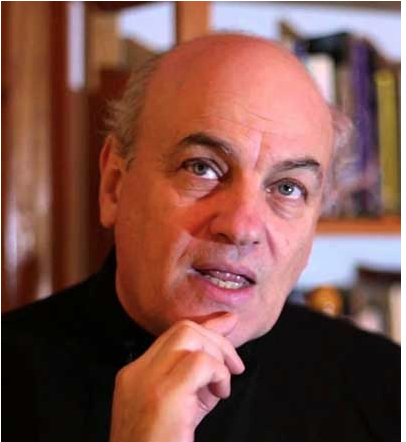
Raúl Zibechi
Raúl Zibechi (born January 25, 1952, in Montevideo, Uruguay) is a radio and print journalist, writer, researcher, militant, and political theorist. Between 1969-1973, as a student, he was a militant of the Frente Estudiantil Revolucionario (FER). In the '80s he began to publish in left newspapers and magazines. He focuses on social movements in Latin America and their relationships. As a popular educator he conducts workshops with social groups, particularly in urban peripheries and with peasants. He has published 18 books, almost all about concrete experiences of social movements. Three of his books have been translated into English: Dispersing power, Territories in resistance and The New Brazil (AK Press). He publishes regularly in La Jornada (Mexico), Gara (Spain) and other alternative media.
If we trust in the nobility of the common people, we will achieve the energy and courage necessary to continue sailing against the current
From state violence and neoliberal extractivism to Colombia’s general strike and Zapatismo
Interview on the impacts of the progressive governments in South America, the rise of the far right, the politics of extractivism in oil, gas, and mining industries, and how women and youth represent the hope of building a new world
This debate is part of all new movements in Latin America: how much energy should be spent building something unique and how much should go to dealing with state institutions
The intent of Rafael Correa’s government to evict the principal indigenous organization from its building shows the contradictions of the “citizen’s revolution”
Two years after the fall of the Fernando Lugo government and one year after the rise of Horacio Cartes of the Colorado party, social movements show signs of rebuilding
The initiative is always taken by small groups, without taking into account the power balance, but rather the justice of their actions
Twenty years after their 1994 uprising, the Zapatistas’ project of autonomy and horizontality has come to define a continent-wide cycle of struggles