
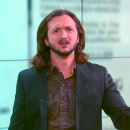
The fusion of politics, news, and entertainment has given prominence to comics like Jimmy Kimmel, Stephen Colbert, Seth Meyers, and Bill Maher, who serve as attack dogs for the Democratic Party, which has joined forces with the establishment wing of the old Republican Party against Donald Trump and his supporters. By belittling Trump and his followers, these comics feed the smug, self-righteousness of the ruling establishment, bolstering their sense of moral and intellectual superiority. All the while, they remain comfortably constrained by the corporations and advertisers that employ them. They function as court jesters, never questioning the right of the rulers to rule or the terrible social injustices built into a rigged system. They serve as attack dogs for establishment power, directing their comedic barbs at critics of the system, even if these critics come from the left. Comedian and political commentator Lee Camp joins The Chris Hedges Report to discuss the transformation of comedy from an art form rooted in the counterculture to one that has largely become a megaphone for power.
Lee Camp is a comedian, political commentator, and former head writer and host of the national TV show Redacted Tonight with Lee Camp on RT America. He’s a former contributor to The Onion, former staff humor writer for HuffPost, and his web series “Moment of Clarity” has been viewed by millions. Camp has toured the country and the world with his fierce brand of standup comedy, and George Carlin’s daughter, Kelly, credited him as one of the few comics keeping her father’s torch lit.
Transcript
The following is a rushed transcript and may contain errors. A proofread version will be made available as soon as possible.
Chris Hedges:
The fusion of politics, news, and entertainment has given prominence to comics, especially those such as Jimmy Kimmel, Stephen Colbert, Seth Meyers, John Oliver, and Bill Maher, who serve as attack dogs for the Democratic Party, which has joined forces with the establishment wing of the old Republican Party against Donald Trump and his supporters. By belittling Trump and his followers, these comics feed the smug, self-righteousness of the ruling establishment and their sense of moral and intellectual superiority. These comics and the networks that give them platforms, HBO, Comedy Central, TBS, ABC, CBS, NBC, and even CNN, which has hired comics such as W. Kamau Bell to host shows on the news network, have little to no effect on the political landscape. They are as loathed and ignored by Trump supporters as they are feted by Trump haters. They’re constrained by the corporations and advertisers that employ them. They function as court jesters, never questioning the right of the rulers to rule, or the terrible social injustices built into a rigged system.
They traffic almost exclusively in negativity, searching out the weird, the bizarre, the stupid, and the inane in celebrity culture or mainstream news reports. They perpetuate the fiction that we live in a democracy. They do not challenge the folly of permanent war from the Middle East to Ukraine. They do not call out the corporations that have de-industrialized the nation and abandoned and impoverished American workers. They attack critics of the system even if these critics come from the left. John Oliver, for example, devoted a show to mocking Green Party presidential candidate, Jill Stein. Bill Maher made public his $1 million donation to Barack Obama’s 2012 campaign. These comics traffic in a self-defeating cynicism that askews all critiques of the real configurations of power. Power only laughs at its own jokes and these are the jokes these mainstream comics tell.
Joining me to discuss the transformation of comedy from an art form rooted in the counterculture to one that has largely become a megaphone for power is Lee Camp. Who, like the comics of another era, Lenny Bruce, Richard Pryor, Mort Sahl, Bill Hicks, and George Carlin and a handful of his contemporaries, including Jimmy Dore, is not afraid to use his razor-sharp wit against our real enemies. So censorship of comics is not new, we can go back to Lenny Bruce. And also providing acerbic comics with heavy financial support to essentially buy their loyalty isn’t new. But let’s go back and talk in the preceding decades where we were, how that operated and where we are now.
Lee Camp:
Well, first of all, thanks for having me, Chris. It’s an honor to be here. Even though many of those people you mentioned in that intro, they were my heroes when I was beginning and starting out, and then I slowly got to the bottom of things, realized how the systems worked. But yeah, you’re right that censorship is not new. Lenny Bruce, for those who don’t know, was essentially driven to his death. I mean, he was arrested on just about every stage he would get onto towards the end of his life, simply for his words, for going against religion, for going against the government, making fun of police. He couldn’t make a living. He was chased. They’d threatened his venues with taking away their liquor license. He ultimately OD’ed.
So this isn’t new, but I think it’s almost more insidious now, because there was a very select group of gatekeepers back when there were three TV channels. And so in a way, things have opened up. You can now have all this information and it’s so accessible and comedians from nowhere can go viral on YouTube and things. But if you get far enough and your criticisms are strong enough, you are not going to be accepted into those mainstream outlets. You will be banned from them. You will get pushed out of the way. Those who are still there, the people on Comedy Central regularly, the people on these late night shows, they have made that deal with the corporations that they are not going to really question them in a large scale way. They may have a little line here or there, but they’re not going to get at the heart of the inverted totalitarian system we have.
Chris Hedges:
Talk about Bill Hicks. You were the one who had me watch Bill Hicks. He was brilliant, but he’s an example of that.
Lee Camp:
He’s a real great example of… his legend has grown. He was known but not really famous in America when he died. I think it was 1994. He was pretty well known in Britain then, even though he was American. But his legend has really grown because he was saying things about our invasion of Iraq for the first Iraq war that held true for the second one. “How do we know they have WMD? Because we have the receipts,” those were his lines. Those were the type of things that ultimately did get him censored. His final Letterman did not air famously, even though he taped it and they still didn’t air it. But he said things that were so important and he went after those corporations, he went after marketing and how it manipulates message. And he did it in a way that really brought large scale audiences in with laughter. It wasn’t like he was losing everybody and wasn’t funny. He was tremendously funny. And so his legend has really grown and he now ranks alongside George Carlin and those others.
Chris Hedges:
We should talk about Carlin because he appears to have had a pretty successful career and yet have held fast to that kind of ability to ridicule the real centers of power.
Lee Camp:
Yeah. He had an incredibly interesting career because initially, and this is the way… We talked about the gatekeepers a moment ago. Initially this… if you were going to question things, the deeper things, you had to first get famous doing the clean comedy that was allowable on the Ed Sullivan Show and stuff like that. Richard Pryor and George Carlin are a few examples, they got… and Lenny Bruce, they got famous doing that clean, nice family style comedy that they would allow on the late night shows or the various shows. And then they started to question things themself, and it was kind of too late for the system. Lenny Bruce was already hugely famous. George Carlin, already hugely famous. But the system then realized Lenny Bruce was a risk and they started chasing him and arresting him.
Carlin, his big change was he realized he wasn’t being himself, he wasn’t being open. He was doing this clean comedy, and he had a very dramatic shift where he hated himself and he switched everything, started using curse words on stage, which got him fired from all his Vegas gigs, lucrative gigs. And for a few years was barely earning a living. But then the culture turned around, all of a sudden he got respected for being the type to push authority and push against these restrictions and became hugely famous kind of again. But then at that time, he wasn’t really going after the endless war state or the American empire. Those weren’t his criticisms. Instead, it was the cursing that was challenging and went all the way to Supreme Court. It was a Supreme Court case as to whether his curse words could be heard on our radio stations.
But eventually, and I don’t hear a lot of people make this point, and the reason he was allowed to do this was because HBO was a young, new thing, it was subscription-based. There wasn’t really subscription-based television happening before that much. And he was given these comedy specials where he wasn’t accountable to any corporate ads. They put him up there because he was George Carlin. He did like 10 specials and they just wanted people to subscribe. So he could swing for the fences and do whatever he wanted and he did it until his death. And he put out some of these brilliant and scathing, scathing critiques of American empire, jokes about how, “Oh, we’re really good at bombing brown people.” Those were the type of bits that America had never heard. The reason he was allowed to was A, because he was famous before that, and B, because he was on a subscription rather than corporate-based platform. Nowadays, HBO, however is still not going to have people that question Israel or question the American empire.
Chris Hedges:
It seems that comics, because they have catered to corporate power, advertisers laid off of serious critique of the Democratic Party because it’s a kind of one-sided comedy… I’m talking about the mainstream. They’ve essentially rendered themselves utterly ineffectual. I think back to, there’s a wonderful memoir by the Lutheran minister, Martin Niemöller who finds himself in the Dachau concentration camp, I believe it was Niemöller, with the cabaret owners from Berlin who savaged the Nazis in the cabaret, in the cabaret shows. But of course, they weren’t going after the ineffectual aristocratic government that didn’t know how to handle the fallout from the Great Depression or had abolished unemployment insurance. It was a very similar kind of… And because they were essentially working tacitly on behalf of the system, they didn’t have any kind of real political impact. I think you would agree that that’s kind of an apt analogy for what’s happening here.
Lee Camp:
Yeah. People may look at these late night shows, Colbert, et cetera, and say, “What do you mean? They mock the rulers all the time. They may even…” I haven’t watched them recently. “They may even make fun of Biden,” but even if they’re making fun of Biden and Trump equally, which they’re not, it was far more heavy on Trump, but either way, they’re making fun of these surface level critiques. So he’s acting dumb, he fell down. It’s never the system writ large, it’s never the American empire, it’s never endless war. So as long as you have people thinking, “Oh, this is funny, we’re making fun of the rulers, we’re doing this edgy thing,” while never getting to this center, never getting to the critiques that could actually change things, you’re still servicing the whole system.
Chris Hedges:
You go back to the Greeks, comedy was Aristophanes and I mean, these were political [inaudible 00:11:41] and these were… and they would take down the ruling, the lead of Athens. In Greek drama, comedy had an extremely important political function. You and I were both on RT. You had a great show on RT and you did all of this. I want you to talk about in your mind what great comedy should do.
Lee Camp:
Yeah. I think it has to make power nervous, I think is the end goal. If they can sit up there on a stage, like they do at the White House press corps dinners and laugh with you, then clearly you’re not that threatening. Clearly, you’re not hitting at the things that power is afraid will get out to the people. That is actually what radical comedy that is seeking to create even the slightest bit of change has to do. We just don’t get it from the most of the famous comedians that people can name on their late night TV shows. And there’s two reasons for that. One is that many of these people, they either haven’t educated themselves… They haven’t read your books, Chris. They haven’t educated themselves enough to get to that point that they understand that kind of critique or if they have, they understand how that television system works, they understand you don’t stay there for long if you are making those critiques. I mean, hell, I was on a network that wasn’t even a mainstream network and still my show and your show were ultimately sanctioned to death. And-
Chris Hedges:
Well, let’s be clear, all of the shows that were on YouTube were erased.
Lee Camp:
Yeah. For me, over 2000 videos, just basically a digital book burning of everything that existed. And unfortunately, not that I enjoy seeing it happen, unfortunately, that means that our critiques were effective and were threatening to the powerful.
Chris Hedges:
Let’s talk about some of the things that you were able to say on that show that can’t be said in the mainstream.
Lee Camp:
Well, I always like to make the point, because people think you’re on RT, you’re told what to say, as you and I can tell people, I was never told what to say. I wrote all my own words, which for comedy shows is unheard of. These people all have teams of writers. I did not. I wrote every single word and was never censored. Now that being said, I could go after things that are completely hidden from mainstream media, things such as Israel being in apartheid state, things such as just big Ag. I mean, how often do you hear criticisms of big ag, which controls our government and is one of the largest environmental destroyers on this planet.
Criticisms of so many corporate entity entities, whether it was Cargill or Monsanto or Nestlé. And not just go after them with a slight little joke, but go after them in a real deep and real way. To give people an example of how it works on other networks, which this is a single page in a entire book that was written about the Daily Show that summed it all up for me and it has always stuck with me. Right after Jon Stewart finished the Daily Show, they put out a book, I don’t remember what it was called, but with all of the interviews and everything showing how the Daily Show worked, the internal mechanism.
I found it very fascinating, but one page they go, “I was the guy…” there was a certain person who was in charge of if the show wanted to make fun of a corporate sponsor or someone under the umbrella of one of the corporate sponsors, this person who worked for the Daily Show would call that company and try to convince them it’s cool to be made fun of. It’s okay to be made fun of on the Daily Show. The clear implication was if that company says no, it’s not getting on there. So imagine the level of corporations that are somehow tied to Viacom, Comcast, all of those, every entity. If they don’t want to be made fun of on the Daily Show, then they’re not going to be. Well, then the Daily Show can’t critique half of what owns this country. It’s insane to be like, “We are a show criticizing how America works, trying to show people the internal structure and we can’t critique half of the system.”
Chris Hedges:
Well, they can also pull advertising.
Lee Camp:
Yeah. Yeah.
Chris Hedges:
Let’s talk about woke culture in comedy.
Lee Camp:
Whether it’s a good or bad thing?
Chris Hedges:
I’ll let you go into that snake pit.
Lee Camp:
I have a bit of a nuanced view on this. I think in general, yes, it has harmed a lot of comedy in that people are perhaps, I’d say too easily offended. They just hear a buzzword and they decide that this person should never be allowed to speak on a stage or on a screen again. So it has gone overboard, absolutely. However, I-
Chris Hedges:
Can you give me some examples or an example?
Lee Camp:
I think an example would be if… you have to think of the entirety of the joke. So some people will hear that a joke uses the word gay or uses the word obese or something and they say, “That’s terrible. He is making fun…” Well, but did the entire joke make fun of those? I don’t know. I think you have to take the entire joke and its structure and everything into account and people don’t do that. They just hear a word and they say, “I don’t like that that word was used.” So to me, that’s taking it too far. However, I also want to say that you hear a lot of, more often right-wingers, but a lot of comedians in general act like they’re being canceled because someone got offended. And it’s like, no, people also have a right to be offended. If you hear a comedian who to you is offensive and you storm out of the show, that’s your right. You had a right to be offended and you were offended. Now saying, “I need to make sure this person does not have a career,” is a step too far, generally speaking.
I think both sides are wrong on this. I think the pendulum often swings back and forth in American history. There was a time when blackface was quite common on American stages, and now it’s rightfully not, and these things swing back and forth. But I think that by actually going too far, by acting like someone should lose their career because they said a joke that you didn’t like, I think we actually open up a space where now these conversations can’t be had. You open up a space where now it’s cool to see how many people you can offend. And so I don’t know, I have a nuanced view on it and it may piss off both sides, I think.
Chris Hedges:
What about Dave Chappelle because he’s been called out for this?
Lee Camp:
Yeah. A couple of points on this. One, people say he was canceled. He’s not canceled. He makes $100 million a year or whatever it is, $100 million deal with Netflix. This is not canceled. You could make an argument that I’ve been canceled, when you lose your YouTube and your podcast and your TV show all at once, Dave Chappelle’s not canceled. So when people say someone’s been canceled, it’s crap. Now, do I like his anti-trans comedy? No, I think it’s pretty lame. But if people like it, then okay, they have a right to hear that form of comedy.
My bigger issue, honestly, and this doesn’t mean he should be canceled, is of all the oppressed peoples in this world that, I think, Dave Chappelle seems to at times have had some concerns about, of all the people that have… of all the issues that we could be dealing with, that we could be fighting over, the 6 million people that have died from the US Global War on terror, those type of things. Really, you’re upset that they changed the symbol on the bathroom? It’s mind blowing that that is your issue. And not only is it your issue, it’s your issue on four straight specials. It’s like clearly, you have some kind of hangup where you can’t get past it.
Chris Hedges:
So what happens? I mean, does comedy go underground? I mean, what are people like you doing?
Lee Camp:
I mean, in terms of trying to keep getting my stuff out there, I do continue to do my live streams. I try and be on as many platforms as I can so that they can’t be deleted, or at least one of them can be deleted and I’m still out there. But yeah, I mean it’s a tricky time and it’s a dangerous time for these type of truly radical comedy. I do hope that it continues and people don’t… there’s a lot of self-censoring, I think that goes on. People understand what’s going to get a YouTube strike and they stop saying those things. And that perhaps is almost more threatening than just straight up deleting of channels because that… yes, it happened to me, but that doesn’t happen that much. What happens probably more often across all of these platforms is people begin self-censoring, because they’re, “Oh, you can’t question that. You can’t talk about Palestinians. You can’t talk about this or that.” So they just stopped talking about it, because why risk your platform?
Chris Hedges:
So you have this irony where you have far more platforms, but you can say less.
Lee Camp:
In some regards, yeah.
Chris Hedges:
Well, because the apparatus of censorship, and this came out in the Twitter files, it hits all of the social media and they dictate, they… both right wing, left wing critics, if you’re critiquing that establishment center, you’re targeted, which is why you were targeted and why I was targeted. So we may have a multiplicity of platforms, but we don’t actually have greater freedom.
Lee Camp:
Yeah. You can spend a long time, many years building up these platforms, finding your fans for comedy or finding readers, and then it can be shut down in a minute. So it’s like you’re playing whack-a-mole trying to… or they’re playing whack-a-mole trying to stop you. But yeah, I don’t know any other way to do it. I guess a lot of comedians would just ultimately throw their hands up and say, “I’m going to do a different kind of comedy.” Because certainly capable of that, I spent the first five years of my comedy career doing comedy that was not offensive to the empire. But nowadays, I can’t ever see backing down, I can’t see doing it any other way. To me, the road I want to be on is the one where these critiques matter, not where I just get the laugh. Yes, I want a laugh, but I also want to be speaking about these incredibly important issues and I can’t see abandoning all that, maybe other comedians do.
Chris Hedges:
And yet there are pretty powerful financial incentives. I mean, we both know comics that were on Air America and were overtly political and are now doing extremely well and have shed themselves of any political commentary at all.
Lee Camp:
Or shed themselves at least of the brand of political comedy that will get you censored or stopped. I think there’s a lot of people, and it goes for… it’s interesting how parallel it is to journalists. I mean, there are many journalists who maybe started to get up to that line, realized what it was and backed off. And now you go, “Whatever happened to so and so? Whatever happened to that journalist that I really respected and now they seem to be parroting state department releases?” And it’s, I think, a lot of them get up to that line and they see, “Oh, this is where I can go. And if I go there, then the money starts to shut down, the positions start to shut down and it’s a lot more fun over here with all the money bags.”
Chris Hedges:
So if you are on the mainstream, are there consistent themes? Does it retreat… and you know far more about this than I do, retreat primarily into the personal? Do you find common patterns among mainstream comics?
Lee Camp:
Yeah, I’d say a lot of it retreats into the personal. And I’d say for those who claim to have some political comedy in their routine, it’s usually just a few Trump jokes or things like that. It’s not actually going deeper than that. As a comedian… so I lived in New York and I was on stage every night of the week, often three shows a night, and you see what gets laughs from crowds, but you also see what is going to get you booked on these late night shows. You see your colleagues, your compatriots in comedy, you see, “Oh, that guy got selected for late night, that guy got selected… Oh, the person that’s ranting about how we’re killing children overseas, that one’s not getting selected for late night.” So you see the path, and I think some comedians consciously go, “Oh, this is the one that works.”
Chris Hedges:
Well, you have examples. Randy Credico would be a good example. He was, I think, mainstream, right?
Lee Camp:
Well, and Randy Credico, one of his many claims to fame, I mean, now he’s on the Ukrainian kill list, but-
Chris Hedges:
As am I.
Lee Camp:
Are you on there too?
Chris Hedges:
With Roger Waters.
Lee Camp:
Congrats. But going back to the ’80s, one of his claims to fame was he appeared on Johnny Carson and told some jokes they didn’t like and they say he’s the only one to appear on Johnny Carson and lose gigs because he was challenging the American ruling elite in a way that other comics were not. So yeah, Credico’s an interesting example.
Chris Hedges:
How important is comedy to the sustenance of an open society or democracy?
Lee Camp:
Maybe I’m biased, but I think very important, but it has to have those two sides. There is wonderful comedy that is not critiquing anything. There is abstract comedy. There is comedians who I have loved, like Steven Wright and Mitch Hedberg that were never talking about anything political, nothing about… and so it’s not that I think that all comedy has to be radical, edgy comedy that makes people think. But if you’re going to be in even slightly in that realm or think that you do that at all, then my view would be don’t just do the little lighthearted Trump jokes that changes nothing. If you’ve made a choice that you are going to take a stance on these issues, then do it.
I think a functioning society needs both those sides. Yes, you should have the comedy, the abstract comedy and the non-political comedy. It’s important. People want to laugh. They want to analyze their culture, and I think that’s all very important. But you also need to have the other side. And if you don’t, then you are in a form of an authoritarian society that can’t handle critiques of itself. I think there’s a good argument to be made that the ruling elite are less able to handle critiques as the empire crumbles, as things become more tenuous.
Chris Hedges:
Well, you look at, I covered the Stasi state in East Germany. I mean making jokes about the communist dictator Honecker would see you get in jail, even to a friend. Same was true under Stalin. I mean, that when you live in a… oh, and the Nazis as well. I mean, they don’t have any sense of humor at all.
Lee Camp:
Right.
Chris Hedges:
It’s eradicated.
Lee Camp:
Right.
Chris Hedges:
You can make jokes of the vulnerable or the demonized, but not of power.
Lee Camp:
I mean, I’m no historian, but here it was similar with art where-
Chris Hedges:
Oh yeah.
Lee Camp:
… if the paintings were clearly criticizing the government, then-
Chris Hedges:
And books.
Lee Camp:
And books… then that was a problem. But if it was abstract, then-
Chris Hedges:
Right. Well, the German film industry boomed under the Nazis, but it was all froth, it was all light entertainment.
Lee Camp:
Right. Right.
Chris Hedges:
I wonder if the attacks on the mainstream, which are largely anti-Trump, are actually counterproductive in the long term.
Lee Camp:
The attacks on the mainstream-
Chris Hedges:
Against Trump, the constantly hammering of Trump and his supporters. I wonder if that’s ultimately counterproductive.
Lee Camp:
I mean, it’s quite possible. I know that… So it can be counterproductive in that it makes his followers think-
Chris Hedges:
Well, if it widens-
Lee Camp:
” … I’m with the rebel.”
Chris Hedges:
It widens the divide. They hate the institutions anyway that are giving these people platforms.
Lee Camp:
Yeah. It also makes Liberals, which not just in comedy, but in so many areas, it makes Liberals think, “Oh, we are fighting the good fight. We’re fighting against the bad guy.” Meanwhile, they’ll cheer, “Oh, well, Biden, well, he is no Trump.” Meanwhile, he’s locked up more Black and brown people than Trump ever could have hoped to.
Chris Hedges:
Yeah, yeah.
Lee Camp:
The Trump jokes actually make Liberals think they’re doing right, they’re fighting against the evil.
Chris Hedges:
When in fact they’re only exacerbating the antagonisms, siloed demographic. Are there any serious comics who are strong supporters of Trump?
Lee Camp:
Yeah. I mean, I’ll be honest, I don’t keep up with what the kids are doing these days. But yeah, no, there are fewer right-wingers, but they do exist. I think that most of the right-wingers I knew in New York City in the comedy scene, they’d be more right-wing off-stage. So they’d hide it on stage because they knew that audiences would often back off if you got too right-wing, but it was clear that that’s where their worldview was when they were off-stage. So they also knew which way to go to be acceptable on late night shows and stuff.
Chris Hedges:
Great. I want to thank the Real News Network and its production team, Cameron Granadino, Adam Coley, David Hebden, and Kayla Rivara. You can find me at chrishedges.substack.com.
ZNetwork is funded solely through the generosity of its readers.
Donate