In Sinjar, a small town in Northern Iraq, the consequences of genocide and war linger heavy. Nearly a decade ago, in August of 2014, the Islamic State group (ISIS) carried out genocide against the Yazidi religious minority based in, and around, Sinjar. To this day, the town lies in rubble and its people scattered in camps for the displaced. Those who have returned face numerous challenges and obstacles as they struggle with the legacy of genocide. ISIS targeted Yazidis, Christains and Shia Muslims during their campaign of violence, but no other group was targeted as brutally as the Yazidis. During the genocide, ISIS fighters killed approximately 10,000 Yazidi people and enslaved and sex trafficked approximately 10,000 women and girls. More than 3,000 of the enslaved women and girls remain missing. Nearly 10 years on, 350,000 Yazidi people remain displaced living in camps for internally displaced persons (IDP).
Yazidis are a religious minority from northern Iraq, and Sinjar and its surroundings are their ancestral homeland. Yazidism, the religion of the Yazidis, is an ancient syncretic faith that combines elements of Zoroastrianism, Islam and Christianity. Yazidis have faced persecution and discrimination throughout their history because they believe in their own religion. Yazidis count 74 genocides perpetrated against them. However, none of the previous genocides are comparable to the brutality of the atrocities perpetrated against the Yazidis by the Islamic State group.
Against this backdrop of genocide and violence, the Sinjar Resistance Units (abbreviated YBS, and the all-women division abbreviated YJS) organized to fight ISIS and protect the Yazidi community. The YBS-YJS is a Yazidi armed group, based in Sinjar. Initially, the YBS-YJS was trained and armed by the Kurdistan Workers’ Party (PKK) so that Yazidi people could protect themselves and fight against the Islamic State group. The PKK is a left-wing insurgent group, rooted in the ideology of revolutionary Marxism and decolonial independence struggle. The YBS-YJS also received support and training from the People’s Protections Units/Women’s Protection Units (YPG/YPJ). The YPG/YPJ are armed Kurdish-led opposition groups based in northeast Syria that also share the ideology of the PKK. The YBS-YJS, too, shares the Marxist-based ideology of the leftist Kurdistan Workers’ Party.
The YBS-YJS played a central role in the liberation of Sinjar from ISIS occupation. YBS-YJS fighters then continued into Rojava and finally to Raqqa, where they also played a central role in the liberation of Raqqa. Raqqa, a town in northeast Syria, was the epicenter of ISIS slave markets and sex-trafficking operations. The YBS-YJS does not exclusively work for the Yazidi community. The YBS-YJS provided assistance and humanitarian aid to Arab villages and fought for Arab villagers throughout the Sinjar Region. During the war against ISIS, the YBS-YJS fought side-by-side with Arab tribes to liberate the region from ISIS control.
For YBS-YJS members, the defining characteristic of their organization, and their struggle, is their ideology. During my interviews with women leaders and members of the group, they all told me that the organization’s position on women’s liberation and the role of women in fighting patriarchy and oppression was the key factor for their participation in the group. Women participants told me in interviews that through their participation in the group, they “found their strength.” They told me that through organizing and taking up arms against ISIS, “women [were] protecting women.” They saw that by Yazidi women taking up arms against ISIS, it was also revolution against patriarchy and oppression. They carry these convictions today while they continue their participation in the YBS-YJS. They told me their participation in the YBS-YJS is deeply rooted in them because of the Ideology of the group. While there are other armed groups in the Sinjar region, the pro-minority and pro-woman position of the leftist Kurdish groups drew Yazidis, while at the same time they eschewed other groups because they felt the other group’s ideologies and political positions did not resonate with their lived experience. The women leaders and members I interviewed said they continue to participate in the YBS-YJS because the Yazidi community is constantly under threat of recurrent violence, and the problems facing the Yazidi community in Sinjar continue, and so they continue to struggle. One of the principal conclusions from my interviews with the YBS-YJS was the confluence of their experience with gender-based violence and genocide coincided with an ideology of anti-patriarchy and anti-oppression that was the key factor in organizing and mobilizing Yazidi community and remains the most salient factor in their continued participation in the group.
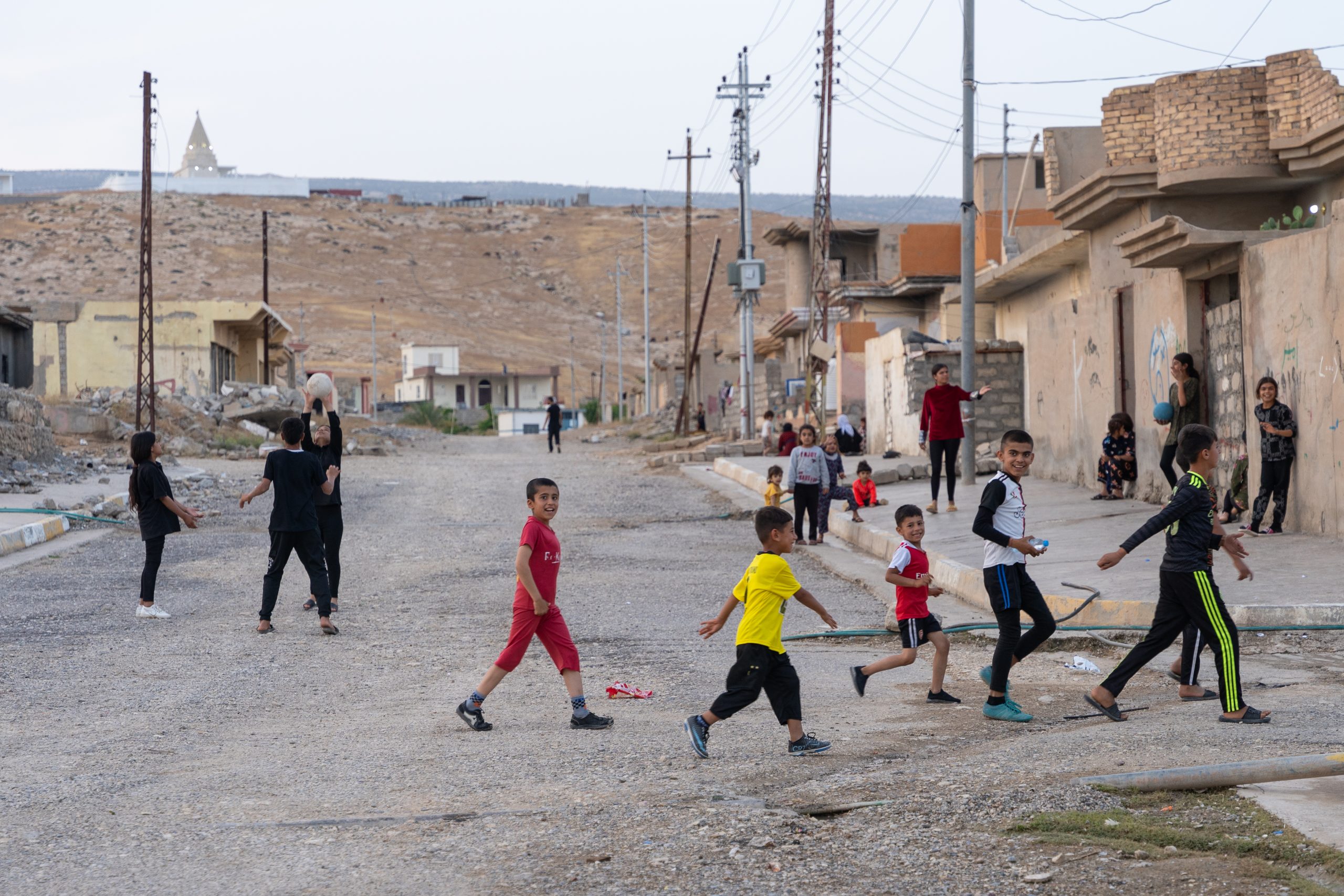
Heza, 27, is a member of the all-women’s division of the Sinjar Resistance Units (YBS-YJS). She fought for the liberation of Sinjar, Rojava and Raqqa from Islamic State group (ISIS) control. The YBS-YJS shares the Marxist-based ideology of the Turkish Kurdistan Workers’ Party (PKK) and the Syrian People’s Protection Units/Women’s Protection Units (YPG/YPJ). This ideology of liberation and freedom from oppression drew many Yazidis, seeking to fight for their people, to the Sinjar Resistance Units. Many of those who joined the YBS-YJS saw the connections between the gender-based violence and oppression of women and minorities perpetrated by ISIS, and patriarchy and oppression in society at large.Jiyanda, 28, is the commander of an all-women’s unit of the Sinjar Resistance Units. She led her all-women fighting unit in Sinjar, Rojava and Raqqa. During my interview with Jiyanda and Heza, both women cited the “Jin, Jiyan, Azadi ideology” of the YBS-YJS. “Jin, Jiyan, Azadi” is Kurdish, and in English means “Woman, Life, Freedom.” It is a protest slogan that traces its origins to the Kurdistan Workers’ Party, and it was popularized during International Women’s Day protests in Turkey in 2006. Today, the slogan has become synonymous with the wide-spread anti-government protests in Iran that erupted last year following the killing of Jina (Masha) Amini in police custody. The ideology of “Jin, Jiyan, Azadi” is rooted in women’s liberation and radical feminism. These connections between women’s liberation struggle and struggle against patriarchy and oppression resonate with many Yazidis, and as such they were drawn to the YBS-YJS.A bombed house in Sinjar. After a building has been cleared of mines and other unexploded ordinances, a white “checkmark” is painted on, to indicate the building has been checked and cleared. During the war against ISIS, 80 percent of the physical infrastructure was destroyed. However, nearly 10 years have passed on the rubble of war remains. The rubble and bombed building remain. These are a constant reminder of the war and the genocide. A typical scene in Sinjar of rubble and debris. Neither the Iraq federal government, nor the Kurdistan Regional Government have any plan or budget to rebuild Sinjar, despite nearly a decade passing since the destruction of war. In this case of Sinjar, both the Federal Government and the Kurdistan Regional Government want to control the territory, and without any clear resolution to their ongoing territorial dispute, without a budget or a recovery plan, the residents of Sinjar languish in limbo among the debris and rubble. In Sinjar, families live in bombed houses that were abandoned during the genocide and war against ISIS. Here a family is seen outside one such bombed house. To this day, 350,000 Yazidi people remain displaced by war. Most live in camps for Internally Displaced People (IDP) in the Kurdistan region, those who returned to Sinjar live in houses the were abandoned during the war and many of them have been bombed. One woman I interviewed told me she suffers from chronic back pain from clearing rubble from such a bombed abandoned house. Other families live in unfinished houses, sometimes without walls, because they have no other options there. In Sinjar, children gather around a block of rubble to use as a makeshift dinner table to eat. There is no consistent electricity, water or basic services in Sinjar. There is no functioning full service hospital, and the schools are grossly inadequate and have no funding. There are no comprehensive NGO programs in Sinjar presently. In the past, NGOs provided windows for some families living in bombed houses, and a French NGO is building a new hospital in Sinjar, however it is far from complete and may take years before it is ready to treat a patient. Support for the leftist Kurdistan Workers’ Party (PKK) is strong in the Sinjar region. Here a house is graffiti-tagged “Apo” with a star. “Apo” means “uncle” in Kurdish, it is the term of endearment given to Abdullah Ocalan, the imprisoned leader of the Kurdistan Workers’ Party. The star is a symbol of the PKK. The PKK organized a coalition of leftist opposition parties to combat the Islamic State and together they secured safe passage for Yazidis to flee ISIS in 2014. During my interviews with Shia muslims in Sinjar, they expressed strong support for the PKK. More graffiti tags in the villages surrounding Sinjar. In English, the tags read “Freedom” and “Guerrilla.” During the genocide, the villagers living in these villages either fled or were taken by ISIS. A protracted war with ISIS kept the people away. Today these villages remain sparsely populated. Before the genocide, these villages had populations of some 2000 families. Today, some villages have had 100 families return. In other villages only three families have returned. The majority of the Yazidi people live in IDP camps throughout the Kurdistan Autonomous Region of Iraq. The graffiti tags are reminders of the cost of the war and the struggle against ISIS. More graffiti tags in the villages surrounding Sinjar. In English, the tags read “Freedom” and “Guerrilla.” During the genocide, the villagers living in these villages either fled or were taken by ISIS. A protracted war with ISIS kept the people away. Today these villages remain sparsely populated. Before the genocide, these villages had populations of some 2000 families. Today, some villages have had 100 families return. In other villages only three families have returned. The majority of the Yazidi people live in IDP camps throughout the Kurdistan Autonomous Region of Iraq. The graffiti tags are reminders of the cost of the war and the struggle against ISIS. Children and families congregate and play in the street in Sinjar, amid the rubble and destruction of war. In a very real sense, the war is not over for the people of Sinjar. Turkey regularly bombs the town and surrounding areas. Turkey claims these bomb strikes are in “self-defense” and claims that groups hostile to Turkey are present in the region. Yet, the bombings target civilians and civilian infrastructure. Turkey bombed a hospital in Sinjar in 2021 killing four civilian medical staff. And in 2022, Turkey bombed a bookstore killing a 12 year-old boy.
ZNetwork is funded solely through the generosity of its readers.
Paul Trowbridge is a photojournalist who focuses on human rights and social justice issues in conflict and focuses on the middle east. His previous published work includes women involved in opposition groups fighting the Islamic Republic of Iran (https://www.terraincognitamedia.com/features/sisterhood-in-struggle-kurdish-iranian-women-opposition2023) and also refugees in northern Iraq (https://lacuna.org.uk/migration/joy-grief-and-resilience-in-makhmour-refugee-camp/). The themes he covers include resistance to oppression, and are broadly relevant to the political left and especially activists.
Sound is muted by default. Tap 🔊 for the full experience
CRITICAL ACTION
Critical Action is a longtime friend of Z and a music and storytelling project grounded in liberation, solidarity, and resistance to authoritarian power. Through music, narrative, and multimedia, the project engages the same political realities and movement traditions that guide and motivate Z’s work.
If this project resonates with you, you can learn more about it and find ways to support the work using the link below.
ZNetwork reached millions, published 800 originals, and amplified movements worldwide in 2024 – all without ads, paywalls, or corporate funding. Read our annual report here.
Now, we need your support to keep radical, independent media growing in 2025 and beyond. Every donation helps us build vision and strategy for liberation.